To insulate your attic, you can choose materials like fiberglass batts, spray foam, cellulose, or mineral wool based on your budget and needs. Doing it yourself can save money, but it requires proper safety gear, ventilation assessment, and careful installation to avoid gaps and moisture problems. Hiring a professional ensures ideal results, especially for removing old insulation and installing ventilation. Keep exploring to discover how the right approach can improve your home’s energy efficiency and comfort.
Key Takeaways
- Choose suitable insulation materials like fiberglass batts, spray foam, or cellulose based on cost, R-value, and ease of installation.
- Ensure proper attic ventilation before installing insulation to prevent moisture buildup and maximize efficiency.
- DIY installation can save money but requires safety gear, proper sealing, and attention to gaps; professional help ensures optimal results.
- Removing old or damaged insulation is essential and can be done DIY with caution or by hiring professionals for thorough clearance.
- Proper insulation and ventilation improve home comfort, reduce energy costs, and prevent attic damage over time.
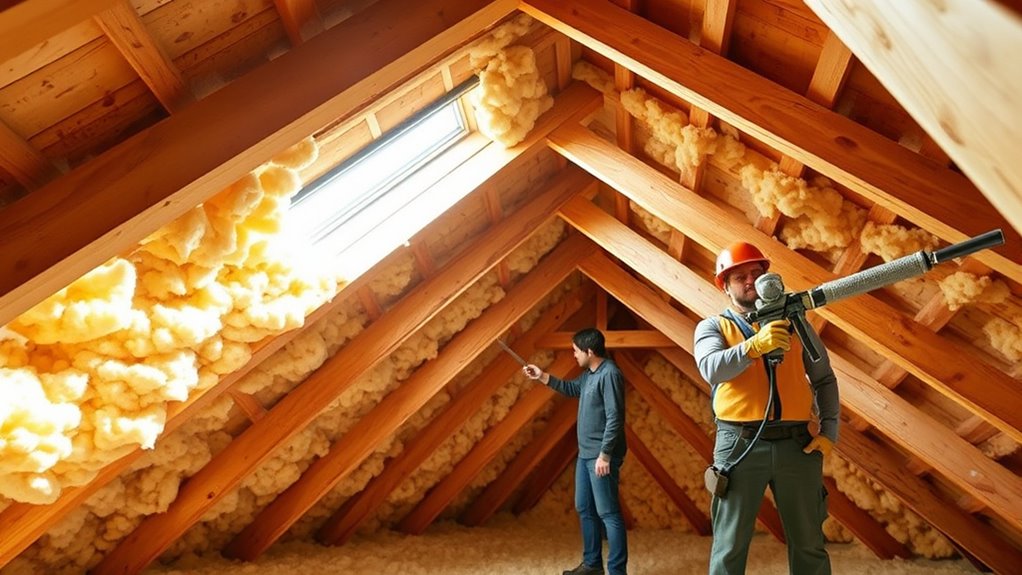
Have you ever wondered how to keep your home warmer in winter and cooler in summer? One of the most effective ways is by properly insulating your attic. But before you plunge into installing new insulation, it’s important to consider ventilation strategies and whether you need to remove old insulation. Proper ventilation is key to preventing moisture buildup and maintaining energy efficiency. Without adequate airflow, heat can get trapped, leading to increased energy costs and potential damage. If your attic has poor ventilation, adding insulation alone won’t be enough; you need to improve airflow first. This might involve installing vents, soffit vents, or ridge vents to promote proper circulation. Once your ventilation strategies are in place, you can focus on insulation.
If your existing attic insulation is old, compacted, or damaged, insulation removal becomes necessary. Old insulation can lose its effectiveness over time, and it may even pose health risks if it contains mold or pests. Removing outdated insulation clears the way for new, more efficient materials and ensures you’re not trapping moisture or contaminants inside your attic. You can choose between DIY removal or hiring professionals, but keep in mind that insulation removal can be messy and labor-intensive. Wearing protective gear and following safety protocols is essential if you decide to do it yourself. Once the old insulation is cleared out, you’ll want to thoroughly clean the space to prepare for the new installation.
When it comes to choosing materials, there’s a wide variety of options, including fiberglass batts, spray foam, cellulose, and mineral wool. Each has its pros and cons related to R-value, cost, and ease of installation. For DIY projects, fiberglass batts are popular because they’re affordable and relatively simple to install with some basic tools. However, achieving a tight seal and proper coverage can be tricky, especially if you’re not experienced. Spray foam offers excellent insulation and air-sealing properties, but it’s more expensive and usually requires professional installation. Cellulose is eco-friendly and provides good coverage, but it can settle over time, reducing effectiveness. Additionally, understanding cookie categories like necessary, functional, and analytics cookies can help you optimize your website’s performance if you’re managing an online platform.
Deciding whether to go DIY or hire a professional depends on your comfort level, budget, and the complexity of your attic. While DIY insulation can save money, improper installation can lead to gaps, air leaks, or moisture issues. Professionals, on the other hand, bring expertise in ventilation strategies and insulation removal, ensuring your attic is properly sealed and ventilated for maximum efficiency. No matter which route you choose, focusing on proper insulation and ventilation will help keep your home comfortable year-round.
Frequently Asked Questions
How Often Should Attic Insulation Be Replaced or Upgraded?
You should consider replacing or upgrading your attic insulation every 15 to 20 years, depending on its insulation lifespan. Over time, insulation can settle, compress, or become less effective, reducing its energy efficiency. If you notice increased heating or cooling costs, drafts, or mold issues, it’s a sign to upgrade sooner. Regular inspections help determine the right upgrade frequency, ensuring your home stays comfortable and energy-efficient.
Are There Government Rebates for Attic Insulation Improvements?
Your best bet is to take advantage of government rebates for attic insulation improvements, which can help you save big. Many regions offer insulation incentives to encourage energy efficiency, so check with local programs or utility companies. These rebates make upgrading more affordable, and it’s a win-win—improving comfort and cutting costs. Don’t let this opportunity slip through your fingers; now’s the time to act and reap the benefits.
What Are the Safety Precautions for DIY Attic Insulation?
You should prioritize hazard prevention by wearing proper personal protective equipment, like gloves, goggles, and a dust mask, to avoid irritation and respiratory issues. Make certain of good ventilation and be cautious of electrical wiring or structural hazards. Use a sturdy ladder and work slowly to prevent falls. Keep your work area clean and organized, and follow manufacturer instructions carefully to stay safe while insulating your attic yourself.
How Does Attic Insulation Affect Home Resale Value?
Ironically, neglecting attic insulation can actually hurt your home resale value, while investing in quality insulation boosts it. Attic insulation impact is significant—buyers see energy efficiency as a big plus. When you improve your attic, you make your home more appealing and reduce future energy costs, increasing resale value. So, skipping insulation might save money now, but it could cost you more when selling.
Can Insulation Improve Indoor Air Quality in My Home?
Yes, insulation benefits your home’s air quality by reducing drafts and controlling humidity, which can prevent mold and dust buildup. Proper attic insulation keeps indoor air cleaner and healthier by blocking pollutants from entering through gaps or leaks. Investing in quality insulation improves air circulation and traps allergens, making your home more comfortable. Overall, insulation is a key step toward better indoor air quality, so make certain your attic is well-insulated for ideal health benefits.
Conclusion
Insulating your attic can cut your energy bills by up to 20%, making it a smart investment. Whether you choose DIY methods or hire professionals, ensuring proper insulation keeps your home cozy and efficient. Remember, a well-insulated attic not only saves you money but also reduces your carbon footprint. So, take action today—your wallet and the environment will thank you for it!