To balance safety and aesthetics in your indoor pool design, focus on seamless integration of features like non-slip flooring, clear glass barriers, and secure handrails that blend in with your style. Incorporate layered lighting to enhance ambiance while ensuring visibility and safety. Choose high-quality, durable materials that resist mold and look elegant. Combining functional hydrotherapy elements with attractive finishes creates a relaxing, secure oasis — and there’s more to creating a stunning, safe space if you explore further.
Key Takeaways
- Integrate safety features like non-slip flooring and secure handrails seamlessly into the overall aesthetic.
- Use transparent barriers such as glass panels to maintain open sightlines while ensuring safety.
- Choose high-quality, non-porous materials that are durable, easy to clean, and visually appealing.
- Incorporate layered, adjustable lighting to enhance ambiance without compromising safety visibility.
- Balance hydrotherapy features with safety considerations, ensuring they complement the design without creating hazards.
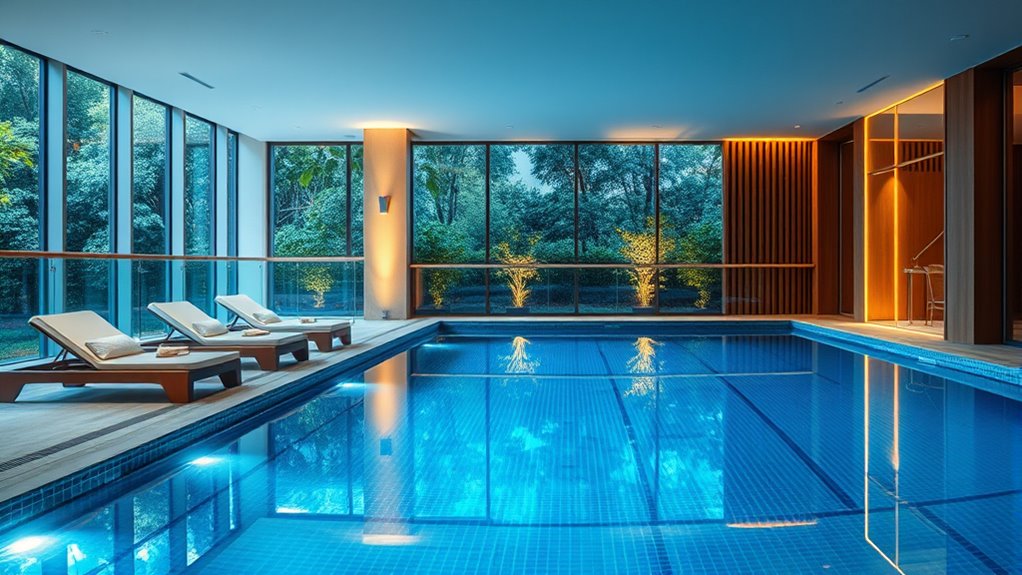
Creating an indoor pool that seamlessly combines safety and aesthetics requires careful planning and thoughtful design. When you focus on blending functionality with visual appeal, you create a space that’s both inviting and secure. One key aspect to contemplate is how your pool can maximize hydrotherapy benefits, which are increasingly popular for relaxation, pain relief, and improved mobility. Incorporating features like adjustable jets, targeted seating, and warm water temperatures can enhance these benefits, transforming your pool into a personal wellness retreat. However, these therapeutic elements must be balanced with safety measures. For example, installing non-slip flooring around the pool and ensuring stable, secure handrails can prevent accidents, especially when hydrotherapy jets make the surface slippery.
Design your indoor pool with safety and hydrotherapy in mind—non-slip floors and secure handrails ensure a relaxing, secure wellness space.
Lighting aesthetics also play a vital role in achieving this harmony. Thoughtful lighting design not only illuminates the pool for safety but also creates a calming, luxurious atmosphere. You can use layered lighting—combining overhead, underwater, and accent lights—to highlight the pool’s design features while providing enough visibility. Soft, dimmable lights enhance relaxation and can be adjusted to suit different moods or times of day. Additionally, color-changing LED lights can add a touch of elegance or fun, depending on your preference. When you integrate lighting aesthetics carefully, you not only improve safety by reducing shadows and blind spots but also elevate the overall ambiance, making your indoor pool a stunning focal point in your home.
Materials and finishes also influence safety and style. Choose high-quality, non-porous surfaces that resist mold and are easy to clean, guaranteeing a healthy environment and reducing hazards. Glass panels or transparent barriers can help maintain open sightlines, increasing safety without sacrificing style. Remember, the visual harmony of your space is enhanced when these elements are coordinated with your lighting choices and hydrotherapy features. Ensuring proper hydraulics design is essential to maintain water flow and circulation, which directly impacts safety and water quality.
Finally, consider how all these components work together to create a cohesive environment. Your goal is to design a space where safety features are unobtrusive yet effective, and aesthetic elements enhance the overall experience. When you thoughtfully incorporate hydrotherapy benefits and lighting aesthetics into your indoor pool design, you guarantee a beautiful, safe, and functional environment that invites relaxation and promotes wellness. The end result is a personalized oasis that reflects your style while prioritizing your safety and health needs.
Frequently Asked Questions
What Are the Latest Safety Regulations for Indoor Pools?
You need to stay updated on the latest safety regulations for indoor pools, including installing pool alarm systems to prevent accidents. Make certain you follow chemical safety guidelines to avoid hazards, such as proper storage and handling of disinfectants. Regularly inspect safety equipment, ensure proper fencing, and maintain clear signage. These measures help keep your indoor pool safe and compliant with current standards, protecting both swimmers and your property.
How Can I Incorporate Natural Lighting Without Compromising Safety?
Did you know that natural light can reduce energy costs by up to 40%? To incorporate natural lighting without safety concerns, opt for tempered or laminated glass near the pool area. Use strategically placed skylights or large windows with secure, tamper-proof fastenings to enhance visual appeal. Guarantee structural integrity by consulting a structural engineer, so your design remains safe while maximizing the benefits of natural light and maintaining aesthetic charm.
What Materials Are Best for Slip-Resistant Pool Decks?
You should choose non-slip tiles or textured concrete for your pool deck. Non-slip tiles provide excellent traction and come in various styles to match your design, ensuring safety without sacrificing aesthetics. Textured concrete is durable and slip-resistant, perfect for high-traffic areas around the pool. Both options minimize slip hazards, giving you peace of mind while maintaining a visually appealing pool environment.
How Do I Choose Aesthetic Features That Also Serve Safety Purposes?
You should choose aesthetic features that also serve safety purposes by selecting lighting accents that enhance visibility without creating glare, and decorative barriers that add style while preventing accidents. Opt for fixtures with warm, inviting light to improve safety and ambiance. Incorporate stylish, yet sturdy barriers that complement your design, ensuring they’re easily visible and accessible. These choices help you create a beautiful, safe indoor pool environment effortlessly.
What Are the Maintenance Challenges of Integrating Safety Features?
Think of maintenance challenges as steering a delicate dance. You’ll need to regularly monitor chemical balance to prevent corrosion or buildup, which can compromise safety features. Drainage systems require consistent cleaning to prevent clogs and water damage. Keeping safety features in top shape demands attentive upkeep, but if you stay proactive, you’ll guarantee your indoor pool remains both beautiful and safe, avoiding costly repairs and ensuring peace of mind.
Conclusion
Remember, designing your indoor pool is like crafting a fine tapestry—you want safety woven seamlessly with beauty. Prioritize slip-resistant surfaces and proper lighting, but don’t neglect to add that timeless touch, like a vintage lantern or classical tiles, to elevate your space. Striking this balance ensures your pool remains both stunning and secure, so you can enjoy your personal oasis without risking a “faux pas.” Embrace the art of thoughtful design, and make your indoor pool a masterpiece.