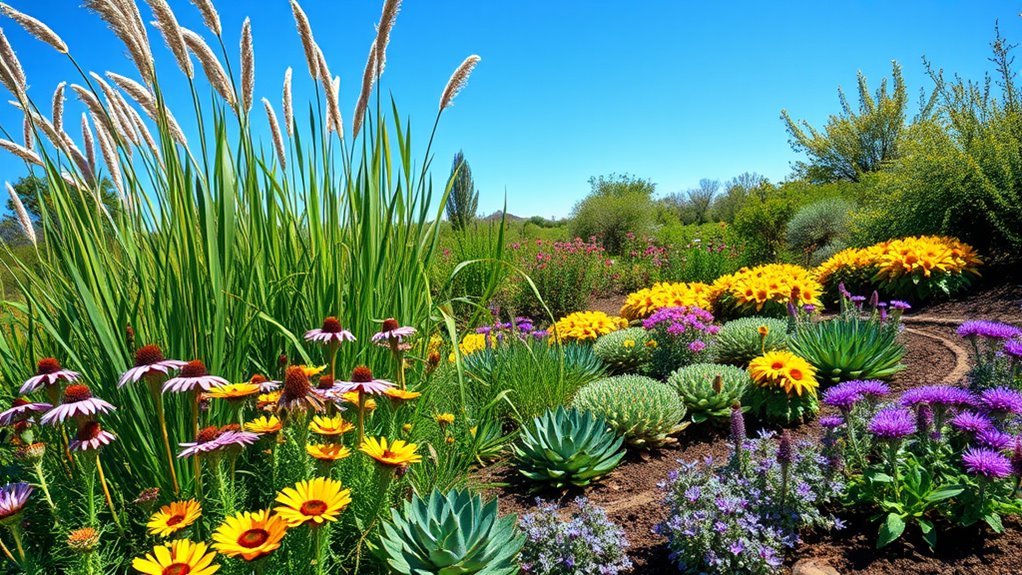
Choosing native plants suited to your local climate is key to creating a resilient garden. They adapt better to your soil and moisture levels, requiring less watering, fertilizers, and maintenance. Native plants also support local pollinators and biodiversity, making your garden more vibrant and eco-friendly. They handle droughts and heavy rains well, reducing overall effort. Keep exploring to learn how to select the best native plants for your specific climate and garden goals.
Key Takeaways
- Choose native plants adapted to your local soil and moisture conditions for better resilience.
- Select species that tolerate drought and heavy rainfall to handle climate extremes effectively.
- Prioritize plants that support native pollinators to enhance biodiversity and ecosystem health.
- Opt for low-maintenance native species to reduce watering, fertilizing, and intervention needs.
- Incorporate region-specific plants to promote conservation and create a resilient, sustainable garden environment.

Creating a climate-resilient garden begins with choosing the right plants, and native species are your best option. When you select native plants, you’re giving your garden a better chance to adapt to local soil conditions. Native plants are naturally suited to the soil types and moisture levels found in your area, which means they require less amendment and maintenance. This soil adaptation allows the plants to establish strong roots quickly, making them more resistant to drought, pests, and diseases. As a result, your garden becomes more resilient over time, needing fewer interventions and less water. Plus, native plants often have deeper root systems that improve soil stability and help retain moisture, further enhancing your garden’s ability to withstand climate stresses.
Beyond soil adaptation, native plants excel at attracting pollinators like bees, butterflies, and hummingbirds. When you choose species that naturally occur in your region, you’re supporting local ecosystems and promoting biodiversity. These plants have evolved alongside native pollinators, offering the nectar, pollen, and habitat they need to thrive. By planting native species, you create a vibrant, dynamic environment where pollinators are drawn in naturally. This not only benefits the insects but also boosts pollination for other plants in your garden, leading to healthier, more productive flowering and fruiting plants. The more pollinators you attract, the more your garden flourishes, and the greater the contribution to local conservation efforts.
Selecting native plants also simplifies your gardening routine. Since these plants are adapted to your soil and climate, they’re less likely to require fertilizers, soil conditioners, or extensive watering. They’re resilient enough to handle periods of drought or heavy rainfall, which are becoming more common with climate change. This means you can spend less time on maintenance and more time enjoying your garden’s beauty. Additionally, native plants often have fewer pest issues because they’re part of the local ecosystem, where natural predators keep pest populations in check.
native drought-tolerant garden plants
As an affiliate, we earn on qualifying purchases.
As an affiliate, we earn on qualifying purchases.
Frequently Asked Questions
How Do Native Plants Adapt to Changing Climate Conditions?
Native plants adapt to changing climate conditions by developing drought tolerance and temperature adaptation. You’ll notice they require less water, thriving during droughts, and can withstand temperature fluctuations better than non-native species. These plants naturally evolve to survive local weather extremes, so by choosing them, you help your garden stay resilient despite climate shifts. Their adaptability guarantees your garden remains sustainable, vibrant, and low-maintenance over time.
Can Native Plants Be Combined With Non-Native Species?
Yes, native plants can be combined with non-native species in your garden design, but you should consider plant compatibility to make certain a harmonious and resilient landscape. Focus on selecting species with similar water, sunlight, and soil needs to prevent competition and promote healthy growth. Mixing native and non-native plants can enhance biodiversity and visual appeal, creating a sustainable garden that adapts well to changing climate conditions.
What Are Common Challenges When Establishing Native Gardens?
When establishing native gardens, you might face challenges like poor soil or inconsistent watering. Think of soil preparation as building a sturdy foundation—without it, your plants struggle to thrive. Watering techniques matter too; overwatering or underwatering can stress native species. I once struggled with dry soil, but adding compost transformed my garden. By preparing soil properly and adopting consistent watering techniques, you’ll set your native plants up for long-term success.
How Do Native Plants Support Local Pollinators?
Native plants support local pollinators by providing essential pollinator habitats, offering nectar, pollen, and shelter throughout the year. Their diversity attracts a wide range of pollinators, including bees, butterflies, and hummingbirds. By planting a variety of native species, you create a balanced ecosystem that sustains pollinator populations, enhances plant reproduction, and promotes overall garden health. This diversity guarantees pollinators have food sources and habitats, strengthening local biodiversity.
Are Native Plants More Resistant to Pests and Diseases?
You might think native plants are immune to pests and diseases, but they’re actually more resistant than non-natives. Their pest resistance and lower disease susceptibility come from evolving alongside local pests and pathogens, creating a natural defense. While no plant is completely pest- or disease-proof, native species typically require less chemical intervention, making your garden more resilient and eco-friendly. So, choosing natives helps keep pests and diseases in check naturally.
pollinator-friendly native plants
As an affiliate, we earn on qualifying purchases.
As an affiliate, we earn on qualifying purchases.
Conclusion
By choosing native plants, you support local ecosystems, conserve water, and reduce maintenance. You create a resilient landscape that withstands changing weather, promotes biodiversity, and nurtures your environment. You foster beauty, foster sustainability, and foster harmony in your garden. When you select native plants, you embrace adaptability, encourage growth, and inspire change. Ultimately, your choices shape a resilient garden that benefits nature, benefits your community, and benefits future generations.
low maintenance native plants for garden
As an affiliate, we earn on qualifying purchases.
As an affiliate, we earn on qualifying purchases.
climate-resilient native plant seeds
As an affiliate, we earn on qualifying purchases.
As an affiliate, we earn on qualifying purchases.