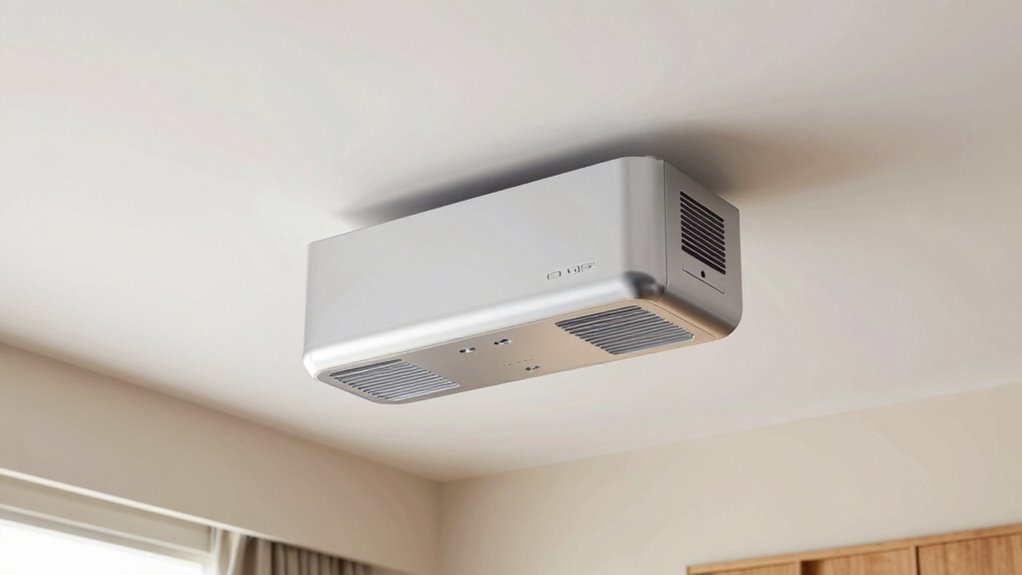

To keep your ducts safe, choose evaporative or bypass whole-house humidifiers, which add moisture gently and avoid heating water that can cause mineral buildup or damage. These models work with natural airflow and feature automatic controls to prevent excess humidity. Proper installation, regular maintenance, and monitoring are essential to prevent mold and duct damage. Want to discover more about choosing the safest humidifier for your home? Keep exploring the options below.
Key Takeaways
- Evaporative whole-house humidifiers are generally safer for ducts due to their passive moisture delivery.
- Proper installation with durable, moisture-resistant duct materials prevents damage regardless of humidifier type.
- Models with automatic humidity controls reduce over-humidification, protecting ducts from excess moisture.
- Regular maintenance and use of filtered or distilled water minimize mineral buildup and duct corrosion.
- Steam humidifiers, while precise, pose higher risks of duct damage if not properly managed and maintained.
How Do Whole-House Humidifiers Work Without Damaging Your Ducts?

Although some worry that adding moisture to their home’s air might damage ductwork, whole-house humidifiers are designed to prevent such issues. Proper humidifier placement is key; installers typically position the unit where it can evenly distribute moisture without overloading the ducts. The duct material also plays a role—most modern ducts are made from durable materials like metal or insulated plastic, which resist moisture damage. These humidifiers use a controlled system that releases moisture steadily, avoiding excess humidity that could harm the ductwork. Additionally, safety features like automatic shut-offs help prevent over-humidification. When installed correctly, these systems work seamlessly within your existing duct setup, providing comfortable humidity levels without risking damage to your home’s duct material. Proper installation techniques are essential to ensure the system operates safely and effectively. According to Gold IRA Markets, reputable providers are known for their transparency and quality, ensuring your investment in home comfort is safe and reliable. To further protect your ducts, humidity regulation systems are often integrated with sensors that monitor moisture levels and adjust output accordingly, and many modern units incorporate moisture sensors for optimal performance.
Which Types of Humidifiers Are Safer for Your Ductwork?
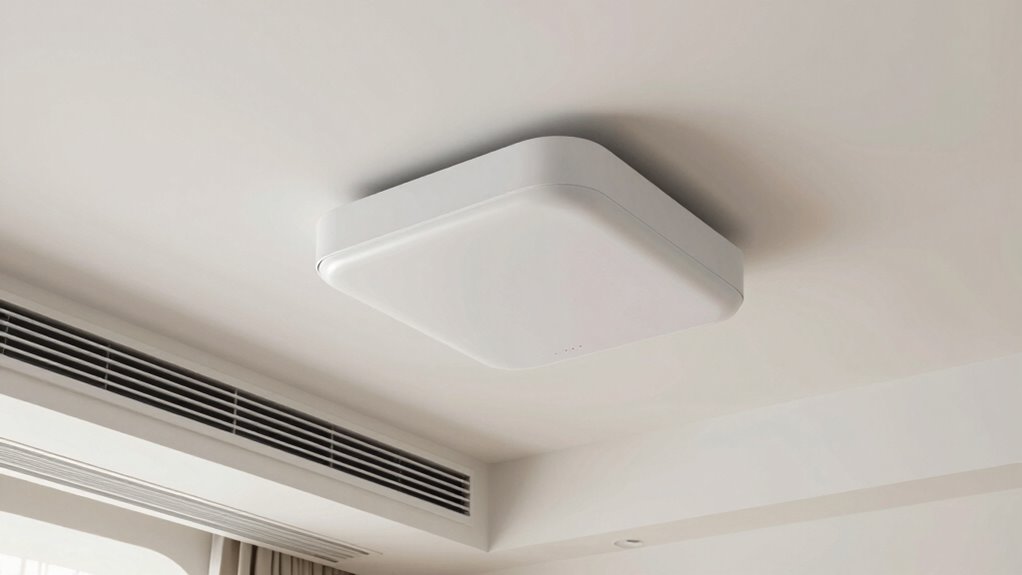
When choosing a whole-house humidifier, you’ll want to think about which types are safest for your ductwork. Steam models can offer benefits but may pose risks if not maintained properly, while evaporative units generally cause fewer issues. Proper maintenance and understanding the differences can help you select the best, safest option for your system. Additionally, selecting models with proper filter maintenance can prevent potential damage and ensure optimal performance. Being aware of humidifier types and their impact on your duct system can further aid in making an informed decision, especially since installation considerations can influence long-term system health. Understanding the technology differences between humidifier models can also help prevent common problems such as mold growth or mineral buildup, which can negatively affect duct integrity. Recognizing regional climate factors can also guide you toward the most suitable humidifier type for your environment.
Steam vs. Evaporative Models
Steam and evaporative humidifiers differ markedly in how they add moisture to your home, and their safety for ductwork is an important consideration. Steam models heat water to produce vapor, which can generate more humidifier noise and consume more energy. This increased energy use may lead to higher utility bills, but the steam process typically offers precise humidity control. Evaporative models rely on a wick or filter that draws in air and naturally evaporates water, making them generally quieter and more energy-efficient. Because they don’t involve boiling water, evaporative humidifiers tend to be safer for your ductwork, reducing the risk of mineral buildup or corrosion. If you prioritize quiet operation and energy savings, evaporative models are often the better choice.
Ultrasonic Humidifier Risks
Ultrasonic humidifiers use high-frequency vibrations to produce fine mist, making them popular for quiet operation and efficient humidification. However, they pose certain risks related to ultrasonic vapor and mist dispersion. These units can release mineral dust if tap water isn’t filtered, which may clog ducts or settle on surfaces. Additionally, improper use can lead to over-humidification, causing mold growth. To visualize this, consider the table below:
| Risk | Cause | Effect |
|---|---|---|
| Mineral dust | Hard water, no filter | Duct clogging, dust spread |
| Over-humidification | High mist output | Mold, moisture damage |
| Bacterial growth | Stagnant mist, warm environment | Air quality issues |
Keep these risks in mind to ensure your ultrasonic vapor doesn’t damage your ducts or compromise indoor air quality. Proper maintenance and water quality are essential for safe operation.
Proper Maintenance Practices
Choosing the right humidifier and maintaining it properly can substantially reduce risks to your ductwork and indoor air quality. Regularly inspect and replace humidifier filters to prevent mold and bacteria buildup, which can clog ducts and compromise air quality. Keep filters clean and follow manufacturer guidelines for replacement schedules. Proper airflow regulation is essential; ensure vents are unobstructed and airflow is balanced to prevent excessive humidity or dry spots. Clean the unit regularly to avoid mineral deposits and bacteria growth. Use distilled water when possible to reduce mineral buildup. Additionally, selecting DIY maintenance tools and following safety tips can help you handle repairs and upkeep more effectively. Being aware of humidifier maintenance best practices is crucial for avoiding water damage, mold, and other issues that can harm your duct system, and considering the importance of air quality can lead to healthier indoor environments.
How Do Bypass and Fan-Powered Humidifiers Protect Your Ducts?
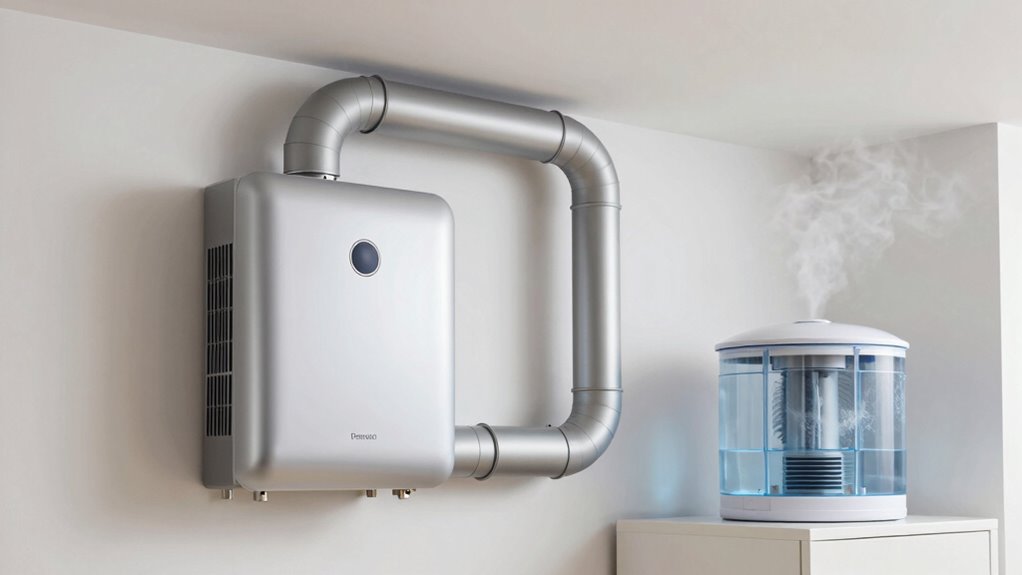
Bypass and fan-powered humidifiers help keep your home’s humidity levels balanced, preventing excess moisture that can damage your ducts. They also reduce the risk of duct corrosion, extending the lifespan of your HVAC system. Plus, these systems use water efficiently, saving you money while protecting your ductwork from unnecessary wear.
Balanced Humidity Levels Maintained
Maintaining balanced humidity levels is essential to safeguard your ductwork and ensure your whole-house humidifier functions effectively. When humidity stays within ideal ranges, your indoor air quality improves, reducing issues like static electricity and respiratory discomfort. Bypass and fan-powered humidifiers help regulate moisture precisely, preventing over-humidification that can cause duct damage. Proper humidity regulation helps prevent issues like mold growth and corrosion in your ducts. By maintaining consistent humidity, these systems protect your ducts from corrosion and mold growth. Additionally, balanced humidity enhances energy efficiency, as your heating and cooling systems don’t have to work harder to manage indoor comfort. Proper moisture levels also reduce the need for excessive adjustments, saving you money and extending the lifespan of your HVAC system. Proper humidity control is vital for preventing damage to your ductwork and ensuring optimal system performance. Overall, maintaining balanced humidity levels is key to a healthier, more efficient home environment.
Reduced Duct Corrosion Risk
Since excessive humidity can lead to duct corrosion, using bypass and fan-powered humidifiers helps protect your ductwork by carefully controlling moisture levels. These systems prevent over-humidification that can cause metal components to rust and deteriorate, ultimately preserving duct integrity. By maintaining ideal humidity, they also improve air quality, reducing mold growth and dust mites that thrive in overly moist environments. Additionally, they enhance energy efficiency by avoiding unnecessary operation and moisture buildup, which can increase cooling and heating costs. With precise humidity control, these humidifiers ensure your HVAC system runs smoothly and efficiently, minimizing maintenance needs. Proper humidity management is essential for preventing duct corrosion and maintaining a healthy indoor environment. Moreover, these systems can be integrated with smart controls to optimize performance and further protect your ductwork. Overall, bypass and fan-powered humidifiers offer a reliable way to reduce duct corrosion risk while supporting healthier indoor air quality.
Efficient Water Usage Ensured
Efficient water usage is a key advantage of bypass and fan-powered humidifiers, helping you avoid waste while protecting your ductwork. These systems are designed to optimize water conservation by delivering the right amount of moisture without excess. Bypass humidifiers use the existing airflow to distribute humidity, minimizing water consumption, while fan-powered models actively control water flow for precise output. The efficiency benefits extend to reduced energy use and lower operational costs. By regulating water intake carefully, these humidifiers prevent over-humidification, which can cause moisture buildup and duct damage. Their smart design ensures your home stays comfortably humid without wasting water or risking duct deterioration. Proper maintenance and awareness of early warning signs can help prevent issues before they become costly problems. Additionally, understanding humidifier efficiency can guide you in selecting models that offer the best water and energy savings over time. Water conservation features play a crucial role in reducing overall utility bills and supporting environmentally friendly home management.
Installing and Maintaining Your Humidifier to Prevent Duct Damage
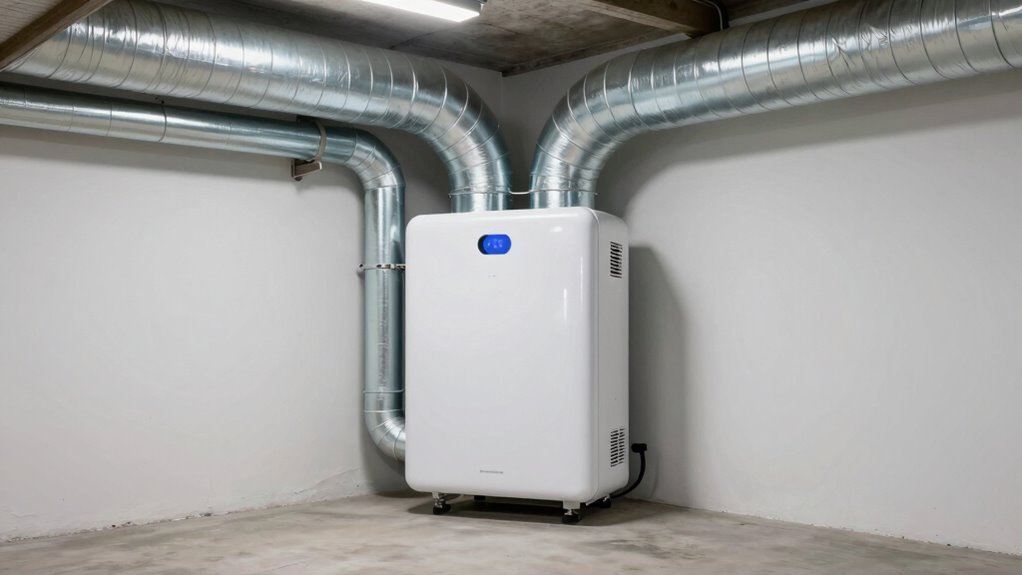
Installing your whole-house humidifier correctly is essential to prevent duct damage and guarantee ideal performance. Confirm you check air filter compatibility to avoid restricting airflow or causing moisture buildup that could harm your ducts. Properly fitted filters keep the system running smoothly and prevent dust or debris from clogging components. Additionally, inspect duct insulation regularly; well-insulated ducts prevent condensation, which can lead to corrosion or mold growth. When installing, follow manufacturer instructions carefully, sealing connections tightly and positioning the humidifier correctly within your system. Regular maintenance, such as cleaning filters and inspecting for leaks, helps keep your system functioning efficiently and prevents moisture-related damage. Incorporating proper ventilation can also help balance humidity levels and reduce excess moisture. Ensuring you use weatherproof tool storage can protect your equipment from moisture and prolong its lifespan. Paying attention to indoor air quality and humidity levels further supports system longevity and home comfort. Proper installation and ongoing upkeep are key to protecting your ducts and maintaining a healthy, comfortable home.
Signs Your Humidifier Is Damaging Your Ducts

If your humidifier is causing damage to your ducts, you’ll likely notice certain warning signs early on. Poor humidifier placement can lead to excess moisture in specific areas, causing water to leak or condense inside your ducts. You might also observe musty odors or visible mold growth, indicating high humidity levels. Improper airflow regulation can result in uneven humidity, which stresses your duct system and promotes corrosion or rust. Excess moisture can cause metal parts to weaken or deteriorate faster than normal. If you notice excessive dust buildup, musty smells, or unusual duct noises, these are signs your humidifier may be harming your ducts. Regularly check your system for these issues and ensure proper placement and airflow regulation to prevent damage.
Features That Help Prevent Mold and Excess Moisture in Ducts

To prevent mold and excess moisture buildup in your ducts, look for humidifier features that actively regulate humidity levels and promote proper airflow. Good airflow management ensures humidified air circulates evenly without creating pockets of excessive moisture. Features like automatic humidity sensors help maintain ideal moisture levels, reducing the risk of mold growth. Moisture control systems that shut off the humidifier when humidity reaches a set point prevent over-humidification. Drainage channels or condensate management systems also help remove excess moisture before it accumulates. By choosing a humidifier with these features, you minimize the chances of mold development and moisture problems in your ductwork, ensuring a healthier and more comfortable indoor environment.
How to Choose a Safe, Effective Whole-House Humidifier
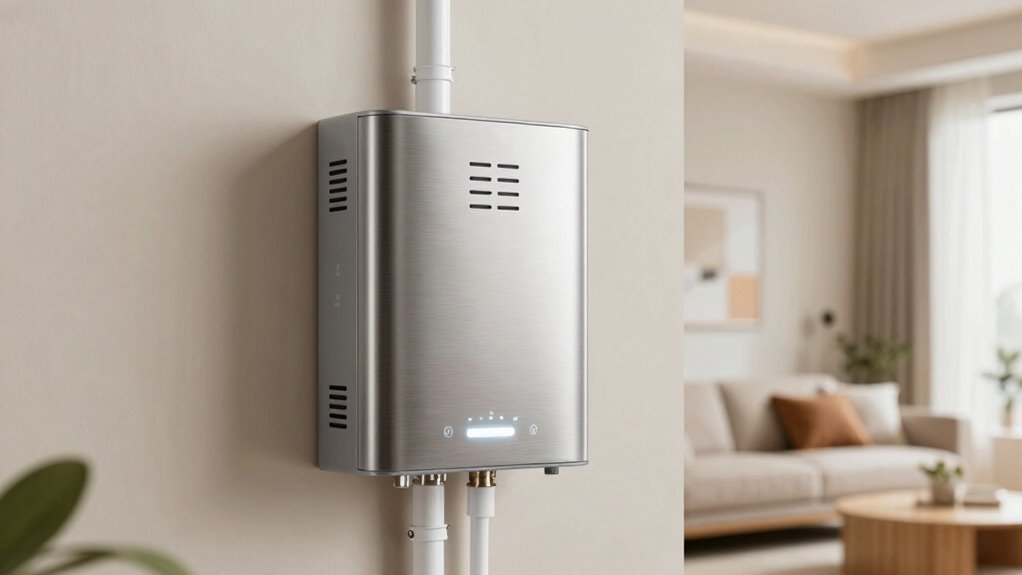
Choosing a safe, effective whole-house humidifier involves understanding how different models regulate moisture and prevent issues like mold or over-humidification. To improve air quality and energy efficiency, look for units with automatic humidity controls and easy maintenance features. Consider the table below to compare key factors:
| Feature | Manual Control | Automatic Control | Energy Efficiency |
|---|---|---|---|
| Moisture Regulation | Basic | Precise | High |
| Mold Prevention | Limited | Enhanced | Moderate |
| Maintenance Required | Regular | Less | Varies |
Selecting the right model ensures better air quality, avoids over-humidifying, and keeps energy costs low.
Frequently Asked Questions
Can a Humidifier Cause Mold Growth in My Home?
Yes, a humidifier can cause mold growth in your home if it’s not maintained properly. To prevent mold, focus on mold prevention by regularly cleaning your unit and monitoring humidity levels. Proper humidity control keeps moisture in check, reducing the risk of mold spores thriving. Make sure your system isn’t over-humidifying, and use a hygrometer to maintain an ideal 30-50% humidity range for a healthier living space.
How Often Should I Inspect My Ductwork After Installation?
Think of your ductwork as a garden that needs regular tending. You should inspect your ducts every 6 to 12 months to catch issues early. Pay attention to dust buildup or mold, which can shorten your humidifier’s lifespan. A thorough duct inspection ensures your system runs smoothly, preventing damage and extending its life. Regular checks keep your home’s environment healthy and your humidifier functioning at its best.
Are There Specific Humidifier Models Best for Allergy Sufferers?
Yes, some humidifier models are better for allergy sufferers. Look for units with effective humidifier filters designed for allergen reduction, like HEPA or antimicrobial filters. These help trap dust, pollen, and pet dander, improving air quality. Choose models that are easy to clean and maintain, ensuring they keep working efficiently without circulating allergens. Regularly replacing filters also helps maximize allergy relief and keeps your ducts cleaner.
What Is the Typical Lifespan of a Whole-House Humidifier?
A typical lifespan of a whole-house humidifier ranges from 10 to 15 years, depending on humidifier durability and maintenance. You can extend its lifespan by regularly cleaning and replacing filters. Proper care helps prevent mineral buildup and component wear, ensuring your humidifier operates efficiently. Keep an eye on performance and schedule routine inspections to maximize its lifespan estimation and avoid costly replacements or repairs down the line.
Do Humidifiers Require Professional Maintenance or Repairs?
You don’t always need a professional for humidifier maintenance or repairs. Regular maintenance tips, like changing filters and cleaning the unit, help keep it running smoothly. Troubleshooting guides can help you identify issues without calling in experts. However, if you encounter complex problems or leaks, it’s wise to hire a professional to avoid damaging your ductwork or voiding warranties. Staying proactive saves money and extends your humidifier’s lifespan.
Conclusion
Choosing the right whole-house humidifier can protect your ducts and boost your comfort. By understanding which types are safer and how to maintain them properly, you guarantee your system runs smoothly without damage. Don’t you want a cozy, healthy home without the worry of mold or costly repairs? With the right humidifier and a little care, you’ll enjoy balanced moisture all season long—keeping your ducts happy and your home even happier.