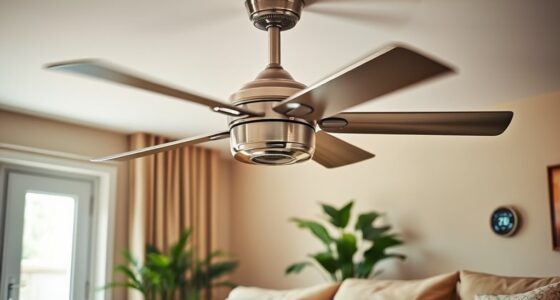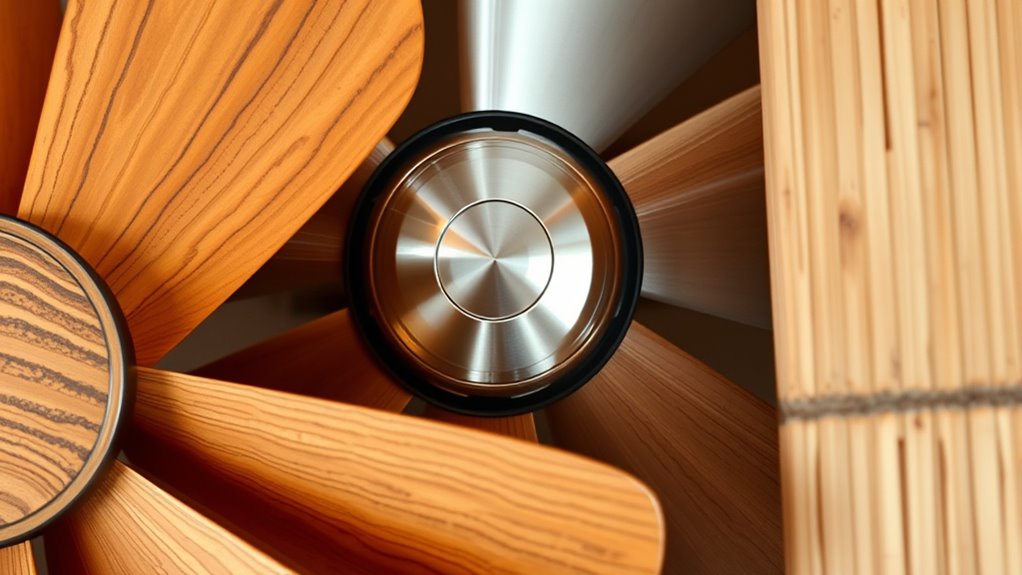

When choosing a fan blade material, consider your style, durability needs, and energy efficiency. Wooden blades offer a natural look and smooth airflow but need proper treatment for moisture. Metal blades are durable and modern, ideal for contemporary spaces but may use more energy. Bamboo blades are lightweight and eco-friendly, reducing motor load. Each material has pros and cons, so understanding these factors can help you select the best option for your space and enjoy ideal performance.
Key Takeaways
- Consider aesthetic style: wood offers warmth, metal provides a sleek look, and bamboo adds an eco-friendly, organic vibe.
- Evaluate durability needs: metal blades are highly resistant to environmental factors, while bamboo and treated wood require specific maintenance.
- Prioritize energy efficiency: lightweight bamboo blades reduce motor load and energy consumption; wooden blades also move air effectively with minimal resistance.
- Assess safety and environmental impact: metal blades are sturdy and pest-resistant; bamboo is sustainable and moisture-resistant when properly maintained.
- Match material choice to space: wooden and bamboo blades suit rustic or eco-modern decor, whereas metal blades complement modern or industrial interiors.

Choosing the right fan blade material is essential for guaranteeing ideal performance, durability, and safety. When selecting between wood, metal, or bamboo, you should consider how each material influences energy efficiency and aesthetic appeal. Your choice affects not only how well the fan moves air but also how it complements your space’s style and atmosphere. For instance, lightweight materials like bamboo can significantly reduce energy consumption due to their material weight, enhancing overall efficiency. Wooden blades are a popular choice because they strike a balance between natural beauty and functionality. They offer excellent aesthetic appeal, bringing warmth and character to any room. Their natural grain patterns and finishes can match rustic, vintage, or modern decor styles. In regard to energy efficiency, wooden blades tend to be effective at moving air with minimal resistance, especially if they’re lightweight and well-designed. This means the fan doesn’t need to work as hard, which can reduce energy consumption over time. However, keep in mind that wood is susceptible to moisture and temperature changes, so proper treatment and maintenance are necessary to ensure longevity and safety. Metal blades are known for their durability and sleek appearance. They often provide a modern or industrial aesthetic, making them suitable for contemporary spaces. Metal blades are generally more resistant to environmental factors like humidity and pests, which can translate into a longer lifespan. From an energy efficiency perspective, metal blades tend to be heavier, which might require more motor power to operate effectively. If not designed carefully, this can lead to higher energy use. On the upside, their sturdy construction can also ensure safer operation, especially in settings where safety standards are paramount. The shiny, polished finish of metal blades can add a striking visual element, but it’s important to choose a design that doesn’t compromise airflow efficiency. Bamboo blades combine natural appeal with sustainability. They’re lightweight, making them highly energy-efficient because they require less motor power to rotate. Their eco-friendly aspect appeals to environmentally conscious consumers. Aesthetically, bamboo offers a unique, organic look that can enhance bohemian, tropical, or eco-modern interiors. They’re also resistant to moisture and pests, making them durable in various environments. In regard to energy efficiency, bamboo blades excel because their lightweight nature reduces the load on the fan’s motor, leading to lower energy bills. They also add a distinctive style that can serve as a focal point in your decor.
Frequently Asked Questions
How Does Climate Affect Fan Blade Material Choice?
Climate considerations greatly influence your fan blade material choice. In humid environments, you should prioritize material durability, opting for metal or bamboo that resist warping and mold. For dry, hot climates, wood can be a good choice due to its stability, but verify it’s treated for heat resistance. Understanding your climate helps you select a fan blade material that lasts longer and performs better, maintaining comfort and efficiency.
Are There Eco-Friendly Options Beyond Bamboo?
Think of eco-friendly options like a garden in full bloom—there’s more than just bamboo. You can opt for fan blades made from recycled plastics or metals, which are recyclable and reduce waste. Sustainable harvesting practices ensure that wood and bamboo come from responsibly managed sources. These choices not only diminish environmental impact but also promote a greener future, giving you stylish, eco-conscious options beyond bamboo.
How Does Maintenance Differ Between Materials?
Maintenance varies based on blade material. Metal blades are durable and resist warping, needing only occasional cleaning with a damp cloth to maintain their look. Wood blades require gentle cleaning and periodic polishing to preserve aesthetics and prevent damage. Bamboo blades are eco-friendly and lightweight but can stain or crack if not cleaned carefully. Consider blade durability and material aesthetics to decide which requires less upkeep and suits your style best.
Can Fan Blade Materials Impact Indoor Air Quality?
Ever wondered if your fan’s material impacts your indoor air quality? It definitely can. Some materials, like certain metals or treated woods, emit particles or volatile organic compounds (VOCs), affecting air quality impact. Bamboo is often more eco-friendly and emits fewer pollutants. So, choosing a blade material isn’t just about style—it’s about ensuring your home stays healthy and free of harmful emissions. Think carefully; your air quality depends on it.
What Are the Safety Considerations for Each Material?
When choosing fan blade materials, safety considerations focus on blade durability and material safety. Metal blades are strong but can cause injuries if broken or if you touch moving parts. Wood blades are durable but may splinter or crack over time. Bamboo blades are lightweight and safe but require proper treatment to prevent mold. Always guarantee blades are securely attached and made from non-toxic, durable materials to avoid hazards.
Conclusion
Ultimately, choosing the right fan blade material comes down to understanding your needs, considering durability, aesthetics, and environmental impact. Whether you prioritize the warmth of wood, the strength of metal, or the sustainability of bamboo, each material offers unique advantages. By weighing these factors carefully, you guarantee your fan performs efficiently, complements your space, and aligns with your values. Make an informed choice, embrace quality, and enjoy the perfect blend of function and style in your home.