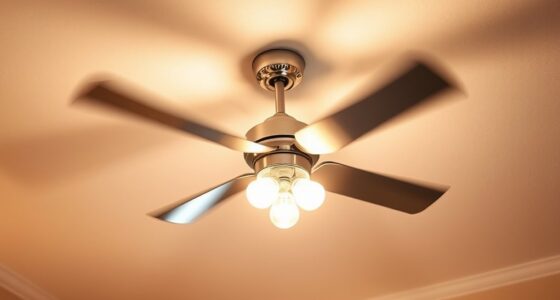
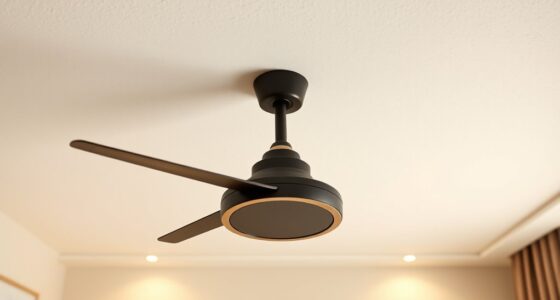
To install a fan on high or sloped ceilings, start by choosing adjustable or angled brackets that fit the ceiling’s pitch. Measure the slope accurately and make sure your electrical box is rated for ceiling fans or reinforce it if needed. Carefully follow the manufacturer’s instructions, securely mount the fan, and use supports to prevent wobbling. For extra safety and stability, there are specific techniques you can apply—keep going to learn all the essential steps.
Key Takeaways
- Use adjustable or angled mounting brackets to accommodate ceiling slope and ensure a level fan installation.
- Measure the ceiling pitch accurately and select brackets that fit the ceiling’s angle and extension rods.
- Secure the mounting bracket to a fan-rated electrical box or add a support brace if necessary for stability.
- Have an assistant hold the fan during installation for safety and proper alignment on high or sloped ceilings.
- Verify the fan is level, balanced, and securely mounted before installing blades and testing operation.

Installing a fan on high or sloped ceilings can be challenging, but with the right tools and techniques, you can do it safely and effectively. The key to a successful installation starts with understanding how to properly secure the mounting brackets and handle the electrical wiring. These steps are vital for ensuring your fan works efficiently and remains safe over time.
First, you need to choose the right mounting brackets. Since high or sloped ceilings are often difficult to reach, consider using an adjustable or angled mounting bracket that can accommodate the ceiling’s pitch. These brackets provide a secure base for attaching the fan and help guarantee it hangs level, even on a sloped surface. Before installing, measure the slope of your ceiling accurately. This helps you determine the appropriate bracket type and any extension rods you’ll need. Once you have the right bracket, attach it to the electrical box, making sure it’s firmly secured. Many high or sloped ceilings require additional support, so double-check that the box is rated for ceiling fans and can hold the weight.
Handling electrical wiring is the next essential step. Turn off the power at the circuit breaker before touching any wiring. Carefully remove the existing fixture if necessary, exposing the electrical box. Check that the wiring inside matches the new fan’s requirements. Typically, you’ll connect black or red wires for hot, white for neutral, and green or copper for ground. Use wire nuts to secure these connections tightly, ensuring there are no loose strands. If your ceiling has a fan-rated electrical box, it will provide better support and safety. If not, you might need to upgrade to a fan-rated box or install an additional support brace. When wiring, avoid rushing; double-check each connection against the fan’s instructions. Proper wiring ensures the fan will operate safely and reduces the risk of electrical issues later. Additionally, consider installing a security system or monitoring device to enhance safety and deter theft, especially on higher ceilings where access is more challenging.
Once the mounting brackets are in place and the electrical wiring is correctly connected, you can hang the fan itself. Follow the manufacturer’s instructions closely. Use a sturdy ladder or scaffolding if necessary, and have an assistant hold the fan during installation. After mounting the fan, test the connections by turning the power back on and using the fan’s remote or wall switch. Confirm that it operates smoothly and quietly. If everything works correctly, finish by installing the fan blades, ensuring they’re balanced to prevent wobbling.
Frequently Asked Questions
Can I Install a Fan Myself on High or Sloped Ceilings?
You can install a fan yourself on high or sloped ceilings, but you need to be cautious. First, guarantee you use a sturdy mounting bracket designed for high or sloped ceilings. Then, attach the fan blade carefully, making sure it’s balanced and secure. If you’re not comfortable with heights or electrical work, consider hiring a professional to avoid safety risks and ensure proper installation.
What Safety Precautions Are Needed During Installation?
You need to prioritize ladder safety and electrical precautions during installation. Make certain your ladder is stable and on a flat surface before climbing. Turn off the power at the circuit breaker to avoid electrical shocks. Use insulated tools and double-check wiring connections. Wear gloves and safety glasses for added protection. Always follow manufacturer instructions and, if unsure, consult a professional to prevent accidents and ensure safe installation.
How Do I Choose the Right Ceiling Fan for My Ceiling Type?
Did you know that choosing the right ceiling fan can cut your cooling costs by up to 40%? To pick the perfect fan for your ceiling type, consider styles like flush mount or angled mounts for sloped ceilings. Also, match the fan materials to your room decor for durability and aesthetic appeal. Guarantee the fan’s size and blade span suit your space for ideal airflow and safety.
Are Special Tools Required for Sloped Ceiling Fan Installation?
Yes, you need slope-specific tools for sloped ceiling fan installation. These include angled mounting brackets that help secure the fan properly on an incline. You might also require a level and adjustable wrench to make sure the fan is mounted evenly. Using these slope-specific tools makes installation safer and more straightforward, preventing wobbling or instability. Always follow the manufacturer’s instructions and safety guidelines for a secure, professional-looking setup.
How Often Should I Maintain or Inspect My Ceiling Fan?
Think of your ceiling fan as the heart of your room—you need to check it regularly. You should inspect it every 6 to 12 months, focusing on fan blade cleaning and motor lubrication. Dust and debris can cause imbalance, and lack of lubrication might lead to squeaking or inefficient operation. Regular maintenance keeps your fan running smoothly, extending its lifespan and keeping your space comfortable and cool.
Conclusion
Installing a fan on high or sloped ceilings might seem tricky at first, but with the right tools and approach, it’s totally doable. Some believe fans on sloped ceilings don’t circulate air as well, but that’s only true if you don’t install the right pitch or angle. When done correctly, your fan will run smoothly and keep your space comfortable, proving that a little effort really does go a long way in making your home more cozy.