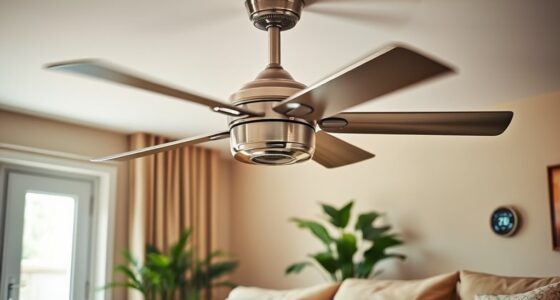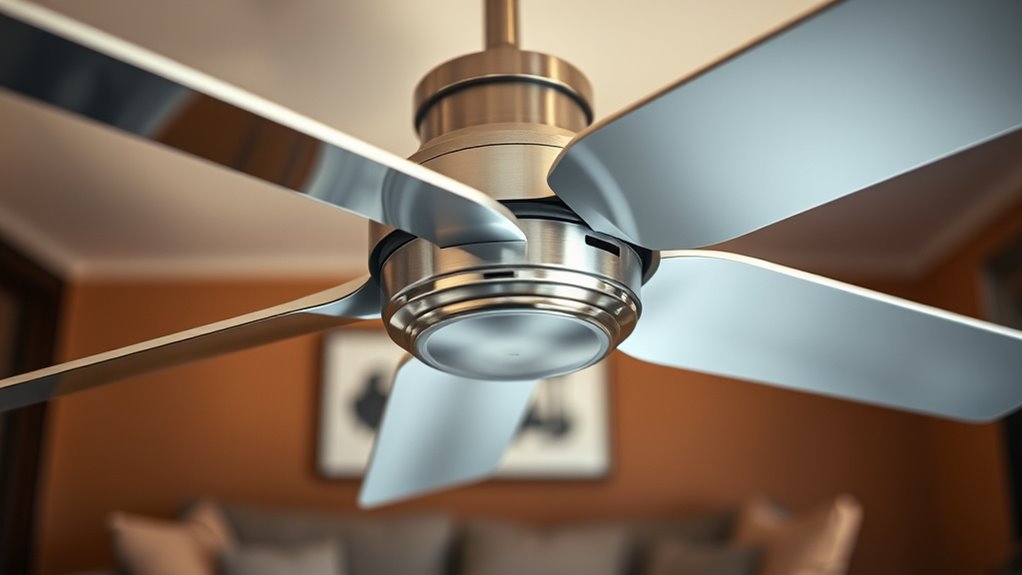

Reversible fan direction allows you to control airflow to match the season. When set to clockwise, your fan pushes warm air down, helping heat your room during winter. Switching to counterclockwise creates a cool breeze for summer comfort by pulling air downward. Using this feature reduces your need for extra heating or cooling and saves energy. If you want to know how to change the direction and get the most out of your fan, keep exploring more tips.
Key Takeaways
- Reversible fans change blade direction to optimize airflow for different seasons, enhancing comfort.
- Clockwise rotation pushes warm air downward in winter, while counterclockwise cools during summer.
- Switch the fan direction using a simple switch on the motor housing, usually without tools.
- Proper fan direction reduces energy costs by aiding heating and cooling efficiency.
- Regular maintenance and correct installation ensure the fan functions effectively for seasonal comfort.
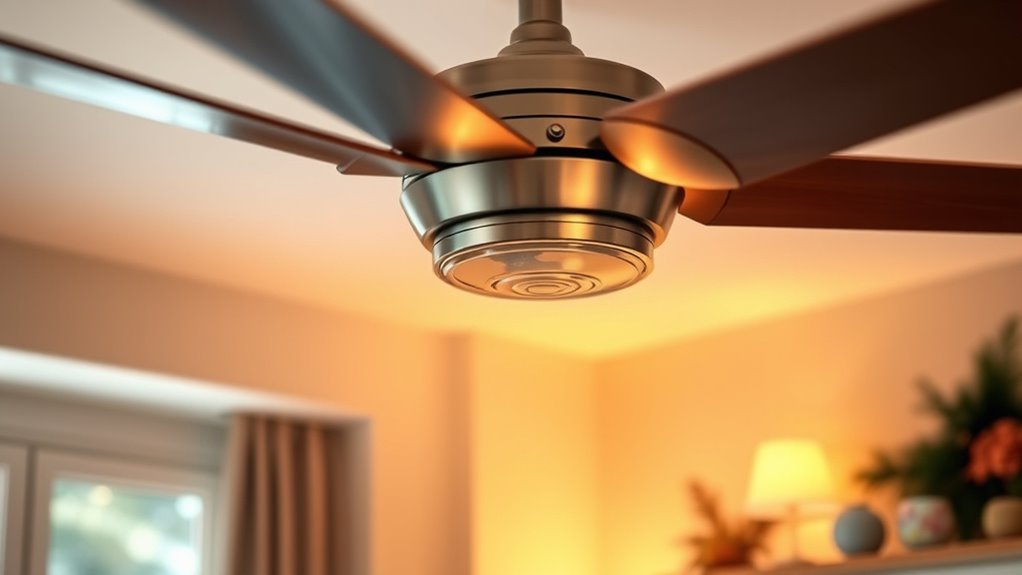
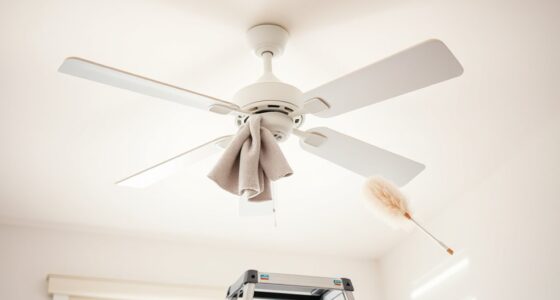
Reversible fan direction allows you to control airflow to suit different seasons and needs. This feature isn’t just a convenience; it’s a smart way to improve your home’s energy efficiency and comfort year-round. When you switch the fan blades to spin clockwise, you create an upward airflow that helps push warm air near the ceiling down into the living space. During colder months, this can make a noticeable difference in your heating bills because it helps distribute heat more evenly without needing to turn up the thermostat. Conversely, reversing the fan to spin counterclockwise pulls air downward, creating a cooling breeze that makes hot days more bearable. This simple adjustment can reduce your reliance on air conditioning, saving you money and lowering energy consumption. Many modern fans come with a small switch on the motor housing, making it straightforward to toggle between directions without having to take the fan down. When installing or replacing a fan, check the manufacturer’s instructions carefully to confirm the proper wiring and switch placement. Proper installation not only guarantees the fan operates smoothly but also maximizes its efficiency in controlling airflow. Additionally, ensure that the blades are balanced and clean, as debris or imbalance can reduce airflow effectiveness and increase energy usage. Understanding how to adjust your fan’s direction can have a significant impact on your comfort and energy bills. Keep in mind that the ideal setup depends on your home’s layout and climate. During winter, aim for that clockwise rotation with the blades running slowly, which gently circulates warm air trapped at the ceiling level. In summer, switch to counterclockwise, increasing airflow to promote cooling. Regular maintenance, like cleaning the blades and checking the switch, keeps your fan operating efficiently and prolongs its lifespan. By mastering these installation tips and understanding the importance of proper direction, you’ll be able to enjoy a more comfortable home while making smart energy choices. Proper fan installation can also help ensure safety and optimal performance, especially during seasonal changes. Reversible fan direction isn’t just a feature—it’s a practical tool that adapts to your seasonal needs and helps you save energy all year long.
Frequently Asked Questions
Can a Reversible Fan Save Energy Year-Round?
Yes, a reversible fan can save energy year-round. By switching the fan’s direction seasonally, you improve energy efficiency and reduce heating and cooling costs. In summer, it cools you down by creating a breeze, while in winter, it helps distribute warm air more effectively. This flexibility means you use less energy overall, leading to significant cost savings on your utility bills throughout the year.
How Do I Know if My Fan Has a Reversible Motor?
You can tell if your fan has a reversible motor by checking the switch mechanism on the fan itself. Look for a small switch on the motor housing or near the fan control panel; if it exists, it allows you to change the fan’s direction. If you’re unsure, consult the user manual or product specifications. Reversible fan motors are common in many ceiling fans, making seasonal adjustments easy.
Are Reversible Fans Suitable for Both Ceiling and Floor Setups?
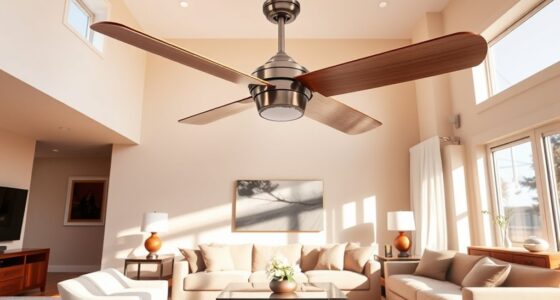
Reversible fans work well for both ceiling and floor setups, but installation considerations matter. For example, a homeowner installed a reversible ceiling fan in their living room, choosing one with sleek aesthetic options that complemented their decor. Floor fans with reversible features are more limited but can be effective in certain spaces. Always check compatibility and installation needs to guarantee your reversible fan fits your setup and style.
What Safety Precautions Should I Take When Changing Fan Direction?
When changing fan direction, you should turn off the fan and disconnect it from power to guarantee electrical safety. Before flipping the switch, inspect the fan blades for damage or debris, which could cause imbalance or noise. Always handle the fan carefully, and if you’re unsure, consider consulting a professional. Taking these precautions helps prevent accidents and keeps your fan functioning safely and efficiently.
Do Reversible Fans Require Special Maintenance or Servicing?
Reversible fans generally don’t require special maintenance beyond regular motor maintenance and fan lubrication. You should periodically check the motor for dust or debris and lubricate moving parts to guarantee smooth operation. Investigating this, you’ll find that proper maintenance helps prevent motor burnout and keeps your fan running efficiently. Regularly inspecting and maintaining the fan ensures longevity, regardless of its reversible feature, making sure it performs well season after season.
Conclusion
So, the next time you flip your fan’s direction, remember it’s not just about comfort — it’s a little coincidence that adjusting the fan can make your home feel just right, no matter the season. You might find that a simple switch can unexpectedly save energy or boost coziness, aligning perfectly with your needs. Sometimes, it’s the small changes we make that turn out to be the smartest ones, all thanks to a little reversible fan magic.