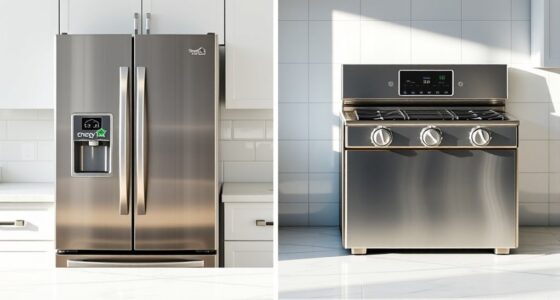
To maximize energy efficiency with smart appliances, you should enable automation features that connect devices to your home system for seamless coordination. These appliances analyze your routines and adjust settings, like delaying cycles during off-peak hours, to save energy automatically. By leveraging user behavior insights, they continually optimize performance and reduce waste. Staying updated with these smart strategies helps you cut utility bills and lower environmental impact—discover more ways to make your home smarter and greener.
Key Takeaways
- Integrate appliances with home systems for seamless automation and coordinated energy-saving actions.
- Analyze user behavior and routines to enable appliances to adapt and optimize power usage automatically.
- Utilize automated decision-making to schedule tasks during off-peak hours and reduce manual management.
- Continuously refine automation strategies with real-time data for sustained energy efficiency improvements.
- Enhance user experience with intuitive displays and monitoring to facilitate smarter, more cost-effective appliance management.

Smart appliances are transforming the way you manage energy in your home by offering innovative features that optimize power use. These devices don’t just perform their core functions; they actively work to reduce your energy consumption through automation integration. By connecting with other smart home systems, your appliances can communicate and coordinate to operate more efficiently. For example, your smart thermostat might adjust the temperature based on your daily schedule, or your intelligent washing machine could delay cycles to times when energy costs are lower. This seamless automation integration means you don’t have to micromanage each device; instead, they work together behind the scenes to conserve power without sacrificing comfort or convenience.
Smart appliances collaborate seamlessly to optimize energy use without manual effort.
A key advantage of smart appliances is their ability to learn from your user behavior analysis. Every time you adjust your thermostat, run appliances, or change settings, your devices gather data to better understand your routines. Over time, this information enables them to anticipate your needs and make intelligent decisions that save energy. For instance, if your smart refrigerator notices that you typically open it during certain hours, it can optimize cooling cycles during off-peak times, reducing energy waste. Similarly, a smart dishwasher might delay a wash cycle until electricity prices drop, thanks to insights gained from your usage patterns. User behavior analysis allows these appliances to adapt dynamically, ensuring they operate at peak efficiency tailored to your lifestyle.
The beauty of this technology lies in its ability to automate routine decisions that traditionally required manual intervention. Instead of setting timers or constantly adjusting settings, your smart appliances learn and adapt, freeing you from ongoing management. This automation not only boosts energy efficiency but also enhances your overall home experience by making your appliances smarter and more intuitive. As they analyze your habits, they become better at predicting when to perform energy-intensive tasks or when to conserve power, leading to lower utility bills and a smaller environmental footprint. Additionally, the integration of high contrast ratios in some smart displays can improve visibility and usability, making it easier to monitor and control your devices.
Moreover, with ongoing updates and improvements in automation integration and user behavior analysis, your smart appliances become more effective over time. They continuously refine their strategies based on new data, ensuring your home stays optimized for energy savings. This proactive approach means you benefit from smarter, more efficient home management without needing to constantly tweak or monitor each device. Ultimately, embracing these features helps you contribute to energy conservation efforts while enjoying the convenience and cost savings that come with a well-connected, intelligent home environment.
Frequently Asked Questions
How Do Smart Appliances Integrate With Existing Home Automation Systems?
Smart appliances integrate smoothly with existing home automation systems by ensuring device compatibility through compatible protocols like Wi-Fi, Zigbee, or Z-Wave. You can control and monitor them via a unified user interface, making management simple. Just check if your appliances support your system’s standards, then connect them. Once integrated, you’ll enjoy seamless automation, energy savings, and easy control, all from one centralized platform, enhancing your home’s efficiency and convenience.
What Are the Initial Costs Versus Long-Term Savings of Smart Appliances?
You’ll find that smart appliances often have higher initial costs compared to traditional ones, but the energy savings they provide make up for it over time. A clear cost comparison shows reduced utility bills, helping you save money long-term. While the upfront investment might seem steep, the convenience and efficiency benefits lead to significant savings, making smart appliances a smart financial choice in the long run.
Are Smart Appliances Secure From Hacking or Data Breaches?
Think of smart appliances as digital guardians, but like any fortress, they need strong defenses. Yes, they’re secure from hacking when protected with robust data encryption and user authentication. These security measures act like a digital lock and key, keeping your data safe from intruders. Regular updates and strong passwords further fortify your appliances, ensuring your smart home remains a secure sanctuary in the connected world.
How Often Do Smart Appliances Require Software Updates?
Smart appliances typically require software updates every few months, depending on the manufacturer and device type. Regular software update frequency is vital for effective security patch management, helping protect your devices from vulnerabilities. You should check for updates regularly, either manually or through automatic updates, to guarantee your smart appliances stay secure and operate efficiently. Staying proactive with updates minimizes security risks and keeps your appliances functioning at their best.
Can Smart Appliances Be Used Effectively in Off-Grid or Rural Areas?
Think of smart appliances as resilient explorers steering uncharted territories. In off-grid or rural areas, they can be quite effective, especially if they’re solar compatible and equipped with low-power modes. Your challenge is rural connectivity; without reliable internet, their full potential is hindered. However, with standalone features and offline controls, these appliances can still manage energy efficiently and improve your daily life, even in remote locations.
Conclusion
So, you’ve invested in smart appliances, thinking they’ll save the planet—and your wallet. Ironically, without proper use, they can still waste energy just like old models. But with a little effort, you can truly maximize their efficiency, proving that technology alone isn’t enough. It’s not about having the smartest gadgets; it’s about making them work smarter. After all, in the end, it’s up to you to turn innovation into real savings.