To optimize natural light in your home, position windows strategically—large south-facing windows for winter sunlight, while shading east and west sides to prevent summer heat. Incorporate diffusing methods like sheer curtains or light-colored walls to create even, glare-free illumination. Use overhangs and operable windows to manage light movement and temperature. Thoughtful placement and diffusion techniques help you enjoy bright, cozy, energy-efficient spaces—learn more about designing your ideal luminous home.
Key Takeaways
- Strategically position windows on south-facing walls to maximize winter sunlight and passive solar heating.
- Use shading devices like overhangs and awnings to block summer heat while allowing winter light penetration.
- Incorporate skylights and clerestory windows to enhance daylight distribution in spaces lacking wall windows.
- Employ light diffusion methods such as sheer curtains and reflective surfaces to create soft, even indoor lighting.
- Balance window placement and diffusion techniques to optimize natural light, energy efficiency, and indoor comfort year-round.
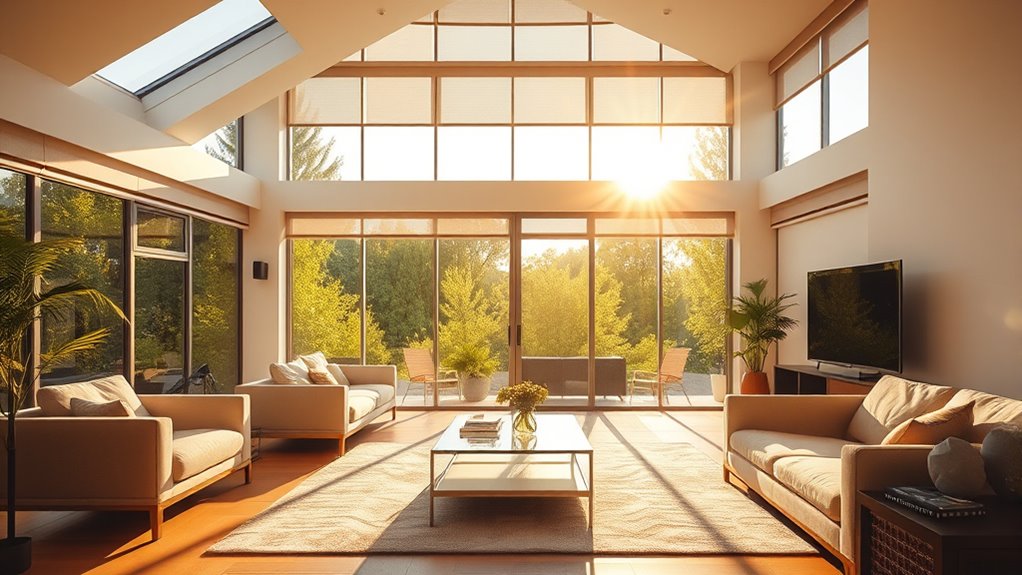
Natural light can transform your home, making it feel brighter, more inviting, and energy-efficient. When designing your space, paying attention to window placement is essential. Strategic positioning of windows ensures that sunlight enters at ideal angles throughout the day, reducing the need for artificial lighting and creating a warm, welcoming atmosphere. For instance, placing larger windows on the south-facing walls allows maximum sunlight during winter months, while smaller or shaded windows on the east and west sides can prevent overheating during summer afternoons. Proper window placement also enhances privacy and offers better views, all while balancing natural light with energy efficiency.
Light diffusion plays a critical role in creating a pleasant and consistent illumination inside your home. Instead of harsh, direct sunlight that can cause glare and uneven lighting, you want to achieve soft, even light distribution. Incorporating elements such as sheer curtains, blinds, or light-filtering window films helps diffuse sunlight and prevents it from bouncing directly into your eyes or creating sharp shadows. Additionally, interior design choices like light-colored walls and reflective surfaces can bounce light around the room, amplifying the benefits of natural illumination and reducing the need for electric lighting during the day.
When planning window placement, consider how light moves across your space at different times of the day and year. For example, high clerestory windows can introduce daylight deep into a room while maintaining privacy, and skylights can bring in overhead light in areas where wall windows aren’t feasible. Combining various types of windows and openings allows you to control light diffusion more effectively. You can use operable windows to regulate airflow and light levels, especially in rooms where direct sunlight might be overpowering. Incorporating water parks into nearby areas can provide relaxing water features that reflect natural light, enhancing the overall ambiance of your outdoor spaces.
Balancing window placement with light diffusion also helps in controlling temperature and glare. Properly positioned windows prevent hot spots and reduce cooling costs by maximizing passive solar heating in winter, while shading devices or overhangs can block intense summer sun. By carefully designing your windows and incorporating diffusion strategies, you create a space that feels naturally bright without sacrificing comfort or energy efficiency. Ultimately, thoughtful window placement paired with effective light diffusion techniques will ensure your home remains luminous, cozy, and environmentally friendly all year round.
Frequently Asked Questions
How Can I Maximize Natural Light in Small or Windowless Rooms?
To maximize natural light in small or windowless rooms, you should choose light-colored interior paint that reflects more light, making the space feel brighter and larger. Incorporate reflective surfaces like mirrors, glass, or high-gloss finishes to bounce light around the room. Additionally, use strategically placed lighting fixtures to supplement natural light, and keep window treatments minimal or light-filtering to allow as much light in as possible.
What Are the Best Window Placements for Different Climate Zones?
You should position windows based on your climate zone’s sun path. In colder regions, orient windows to the south for maximum solar gain and add solar shading to prevent overheating. In hot climates, north-facing windows minimize direct sunlight, while east and west windows should have shading devices to reduce heat gain. Proper window orientation and solar shading help optimize natural light while maintaining energy efficiency.
How Does Natural Light Impact Energy Efficiency and Utility Costs?
Think of your home as a well-tuned orchestra, where natural light plays a crucial role. By maximizing daylight harvesting systems and integrating solar panels, you reduce reliance on artificial lighting and heating, lowering utility costs. Ample sunlight not only boosts energy efficiency but also helps regulate indoor temperatures naturally, making your home more sustainable. This harmony of light and energy saves you money and creates a brighter, more comfortable living space.
What Materials Enhance Natural Light Reflection Inside the Home?
You can enhance natural light reflection inside your home by using reflective surfaces like mirrors, glass, or metallic fixtures, which bounce light around rooms effectively. Light-colored paints, such as white or soft pastels, also maximize brightness by reflecting more light than darker shades. Combining these materials creates a brighter, more welcoming space, reducing the need for artificial lighting and improving overall energy efficiency while making your home feel more open and airy.
How Can I Balance Natural Light With Privacy Concerns?
Did you know that 60% of homeowners prioritize privacy without sacrificing natural light? To achieve this balance, you can use privacy screens or frosted window coverings that let light in while blocking views from outside. Strategically placing these features on windows facing neighbors or busy streets guarantees privacy. You could also opt for adjustable window coverings to control light levels throughout the day, maintaining both brightness and your privacy.
Conclusion
By thoughtfully designing your home to maximize natural light, you create a space that feels warm, inviting, and alive—much like a sunflower turning toward the sun. When you consider window placement, open layouts, and reflective surfaces, you’re not just illuminating your rooms, but boosting your mood and energy. Remember, a well-lit home isn’t just about visibility; it’s about transforming your everyday space into a sanctuary that nurtures and inspires you every single day.