
Many people neglect their reverse osmosis filters, risking poor water quality and system damage. Regularly changing filters—usually every 6 to 12 months—is essential to keep your system running efficiently and water tasting fresh. Track your filter lifespan, watch for signs like reduced flow or strange tastes, and follow manufacturer guidelines. Staying on schedule prevents costly repairs and ensures safe drinking water. Keep going, and you’ll discover simple steps to make filter maintenance easier and more effective.
Key Takeaways
- Regularly check filter lifespan, typically every 6-12 months, based on water quality and usage.
- Follow manufacturer’s instructions for specific filter replacement intervals to avoid premature failure.
- Create a maintenance schedule with reminders to ensure timely filter changes and prevent water quality decline.
- Watch for signs like reduced flow, bad taste, or increased pressure as indicators for filter replacement.
- Properly dispose of used filters and sanitize the system after each change to maintain optimal performance.
Why Regular RO Filter Changes Are Essential

Regularly changing your RO filters is essential because over time, they become clogged with contaminants, reducing the system’s efficiency. As filters age, their filter lifespan shortens, making it harder to remove impurities effectively. When filters are overdue for replacement, water quality declines, and you may notice a change in taste or clarity. Dirty filters can also strain the system, leading to increased energy use and potential damage. Additionally, high-quality projectors rely on clean filters to maintain optimal performance and image clarity. By sticking to a regular filter change schedule, you ensure your system continues to operate at its best, providing clean, safe drinking water. Keeping track of your filters’ lifespan helps prevent unexpected issues and maintains the high water quality you expect from your reverse osmosis system. Regular maintenance is key to long-term performance, and understanding the importance of filter lifespan can help you plan replacements more effectively. Moreover, adhering to a maintenance schedule can extend the overall lifespan of your entire RO system, saving you money in the long run. Proper filter monitoring ensures consistent water quality and system reliability over time. Implementing a preventative maintenance approach can further reduce the risk of system failures and costly repairs.
How to Know When Your RO Filters Need Replacing

Knowing when to replace your RO filters is key to maintaining ideal water quality. Typically, filters have a specific lifespan, often around six to twelve months, depending on usage and water quality. You’ll notice changes in water taste, such as a metallic or salty flavor, signaling filter degradation. Reduced water flow or increased pressure can also indicate it’s time for a change. Regularly testing your water helps identify when contaminants start to bypass the filters. If your water quality declines despite scheduled replacements, it’s a sign your filters might need changing sooner. Monitoring these signs ensures your system functions efficiently, protecting your health and maintaining the purity of your water. Staying aware of your filter lifespan helps you avoid unexpected filter failure and costly repairs. Additionally, understanding the appropriate maintenance schedule can extend the lifespan of your filters and improve system performance. Being familiar with regeneration and cleaning routines can further enhance filter longevity and system efficiency. Moreover, following proper filter replacement protocols ensures optimal system operation and water safety. Regular maintenance, including system flushing, can also help prevent buildup and maintain water flow.
Common Mistakes When Maintaining Your RO Filters: And How to Avoid Them

One common mistake is neglecting to follow the manufacturer’s instructions for filter replacement, which can lead to filter neglect and premature failure. Improper disposal of used filters can also harm the environment. To avoid these pitfalls, consider these points:
- Ignoring recommended replacement schedules increases the risk of water contamination.
- Using incorrect filters damages the system and reduces efficiency.
- Failing to sanitize or disinfect filters can cause bacterial buildup.
- Disposing of filters improperly pollutes, so recycle or dispose of them responsibly.
- Regular maintenance includes monitoring for signs of contamination to ensure water safety.
- Understanding filter lifespan helps maintain optimal system performance and prevent unexpected failures.
- Staying informed about system performance indicators can help identify issues before they become serious.
How to Change Your RO Filters Step-by-Step
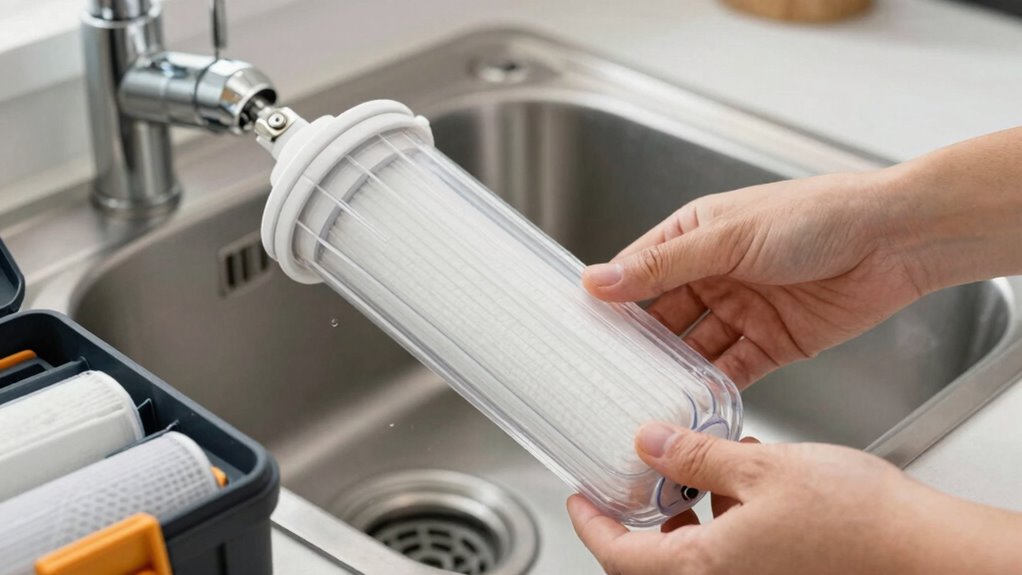
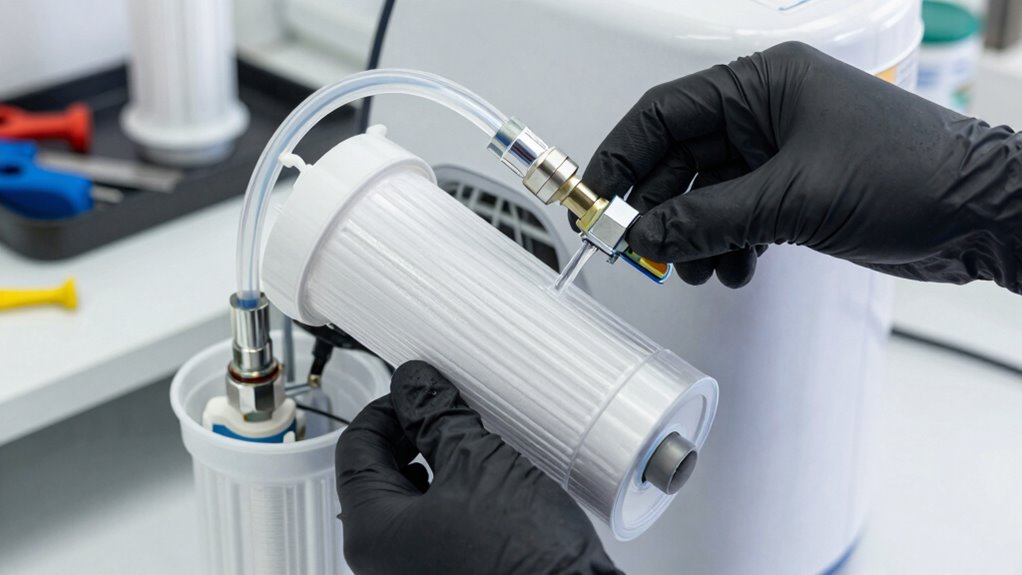
Changing your RO filters is a straightforward process if you follow the right steps. Start by turning off the water supply and relieving pressure from the system. Next, open the filter housing using a filter wrench, and carefully remove the old filters. Take note of the filtration technology used to guarantee you replace the filters correctly. Rinse the housing to remove any debris or buildup. Then, install the new filters, making sure they fit securely and match the proper filtration technology for your system. Once everything is in place, close the housing tightly and turn the water back on. Allow the system to run briefly to flush out any air or loose particles. Regular filter changes maintain water quality and keep your reverse osmosis system operating efficiently. Remember to consult your system’s manual for specific filter replacement instructions and recommended schedules to ensure optimal performance. Additionally, staying aware of filter lifespan can help prevent unnecessary system issues and ensure continuous clean water. Proper record-keeping of maintenance history can also help you stay on top of future filter replacements. To further ensure optimal performance, consider system diagnostics periodically to identify potential issues early.
Easy Tips to Schedule and Keep up With Your Filter Maintenance
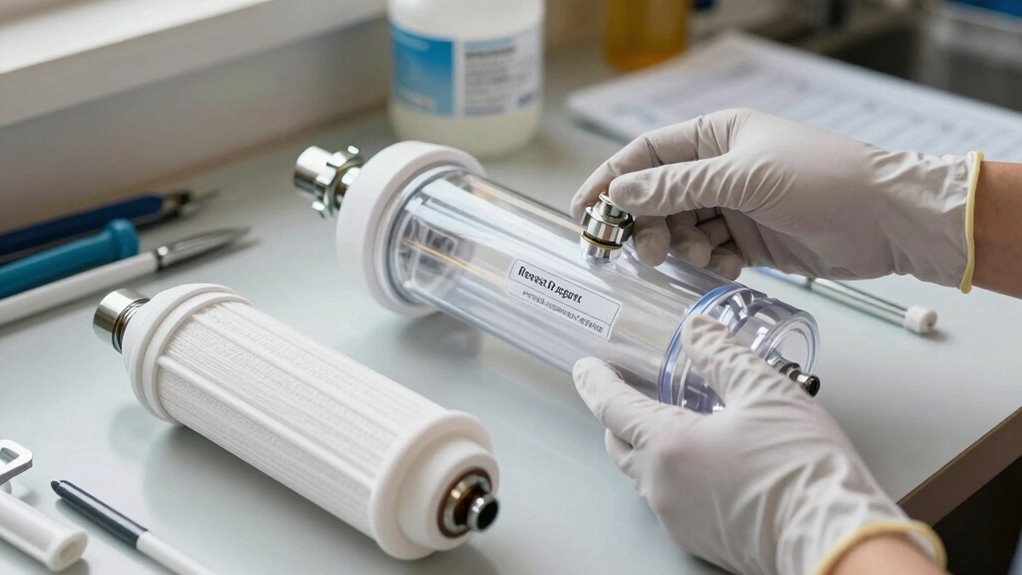
Scheduling and staying on top of your filter maintenance doesn’t have to be complicated. The key is to create a system that fits your routine and keeps your system running smoothly. Use a maintenance checklist to track filter lifespan and mark when each filter needs replacing. Set reminders a week before the due date to give yourself ample time. Regularly reviewing your checklist helps prevent neglect and extends your filter’s life.
Here are some easy tips:
- Keep a visible maintenance calendar.
- Replace filters based on manufacturer’s recommended lifespan.
- Automate reminders through your phone or calendar app.
- Always log each filter change for future reference.
Following these simple steps ensures your filters stay effective and your water quality remains high without stress or guesswork.
Frequently Asked Questions
Can I Extend My RO Filter Lifespan With Additional Treatments?
Yes, you can extend your RO filter lifespan with certain treatment options, like pre-filters and water conditioners. Regularly using these treatments reduces sediment, chlorine, and other contaminants, which helps your filters last longer. However, it’s vital to follow manufacturer guidelines and avoid over-treating, as improper treatments can harm your system. Proper maintenance and periodic filter changes remain essential to guarantee peak performance and water quality.
What Are the Signs of Hidden Contamination Despite New Filters?
You might have hidden contamination despite new filters if you notice a strange taste or odor, reduced water flow, or persistent cloudiness. Contamination detection becomes tricky once filters are changed, but monitoring water quality regularly helps. These signs indicate your filter lifespan might be compromised, and bacteria or other pollutants could still be present. Stay vigilant, and consider professional testing if you suspect concealed contamination to ensure safe, clean water.
Are There Eco-Friendly Filter Options for Reverse Osmosis Systems?
While conventional filters often harm the environment, eco-friendly filters offer a sustainable alternative. You can choose biodegradable membranes and eco-friendly filters designed specifically for reverse osmosis systems. These options reduce plastic waste and minimize ecological impact without sacrificing water purity. By switching to biodegradable membranes, you’re making a conscious choice that benefits the planet, ensuring cleaner water and a healthier environment for future generations.
How Do Water Temperature and Pressure Affect Filter Longevity?
Water temperature and pressure notably impact your reverse osmosis filter lifespan. High water temperatures can cause the filter materials to degrade faster, while low temperatures slow down filtration efficiency. Excessive pressure can strain the filter, leading to quicker wear and tear. To extend your filter’s life, confirm your system operates within recommended temperature and pressure ranges, and regularly monitor these factors to prevent premature filter replacement.
Is Professional Maintenance Necessary or Can I Do It Myself?
Sure, you can try DIY tips for filter changes, but let’s be honest — do you really want to risk a costly mistake? Professional services make sure your reverse osmosis system stays in top shape, saving you time and hassle. While it’s tempting to do it yourself, expert maintenance guarantees proper filter installation and longer system life. So, unless you’re comfortable with plumbing, calling in pros is your best bet.
Conclusion
Sticking to a regular filter change schedule might seem like a hassle, but it’s vital for clean, safe water. Some believe that skipping changes saves money, but it often leads to costly repairs or health risks. By staying consistent, you make certain your system runs efficiently and your water stays pure. Think of it like tuning a car; a little effort now prevents bigger problems later. Prioritize your filter maintenance—your health and wallet will thank you.