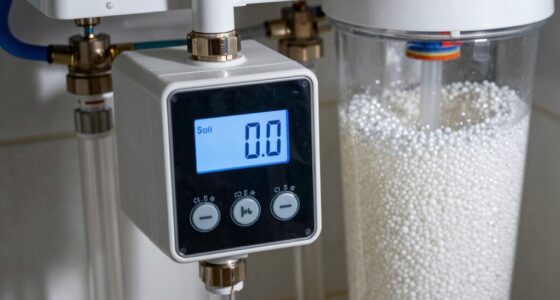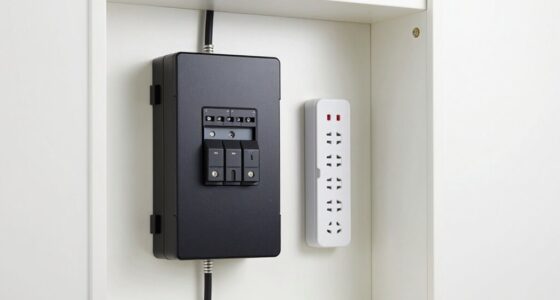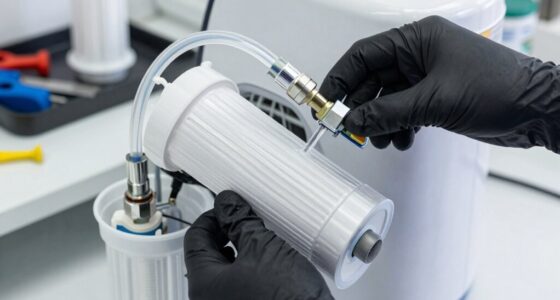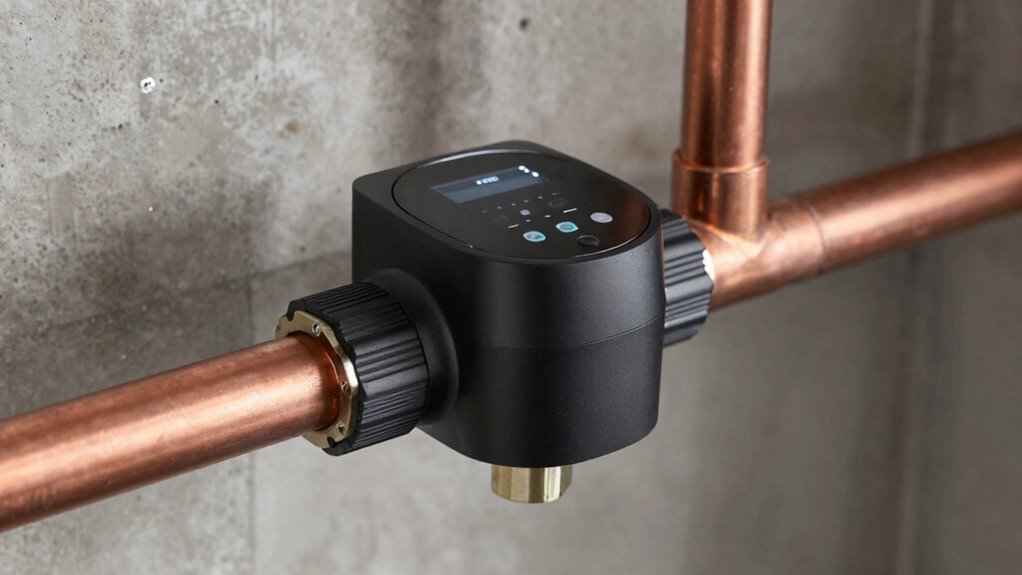
To prevent false alarms with your smart water shutoff valve, position sensors strategically near high-risk areas like under sinks, near water heaters, or around appliances, and avoid installing them on unstable or humid surfaces. Make sure to calibrate the system correctly by establishing a water flow baseline during normal use. Proper installation and regular maintenance are key, and if you follow these steps, you’ll improve detection accuracy—keep exploring for more expert tips.
Key Takeaways
- Properly position sensors away from appliances with condensation or vibrations to reduce false alarms.
- Install sensors at strategic low points and critical locations near shutoff valves for accurate detection.
- Calibrate sensors regularly and adjust sensitivity settings to distinguish leaks from normal water flow.
- Avoid placing sensors on unstable or dirty surfaces that can impair readings and cause false triggers.
- Ensure all connections are secure and check for leaks before restoring water to prevent false alerts.
Where Should You Install Your Water Shutoff Valve for the Best Results?
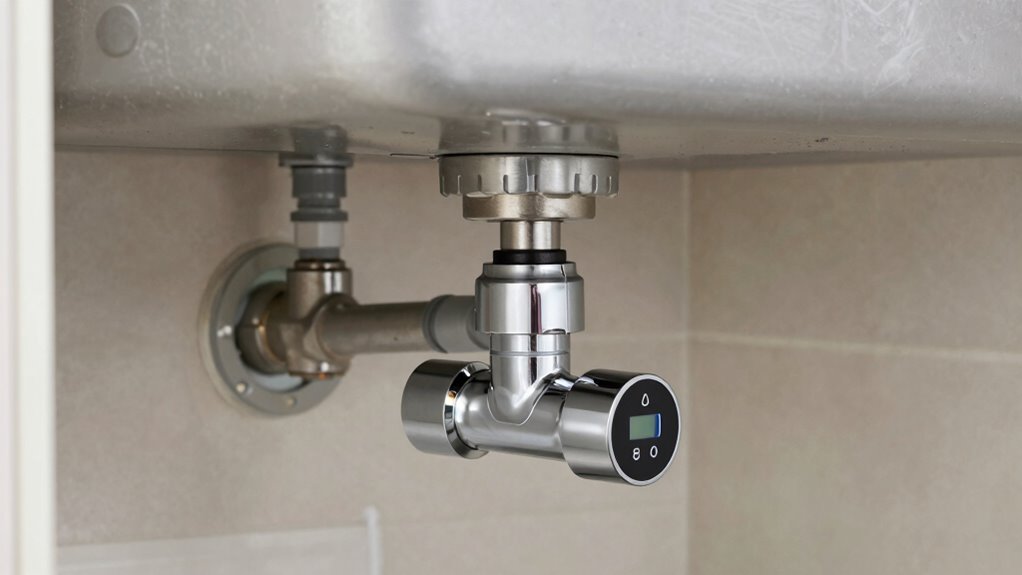
To guarantee your water shutoff valve works effectively when needed, it’s essential to install it in the right spot. Typically, placing it close to the main water supply line ensures quick shutoff during leaks or emergencies. This placement helps you conserve water by minimizing wastage and simplifies plumbing maintenance, making repairs easier and faster. Avoid installing the valve downstream of appliances like water heaters or fixtures, as it could delay shutoff or complicate repairs. Proper placement also reduces false alarms caused by pressure fluctuations or minor leaks. Additionally, considering the type of valve and its compatibility with your plumbing system can further improve reliability and performance, especially when selecting valves with advanced sensing technology. Ensuring your installation adheres to water damage prevention tips can further protect your home from costly repairs. Proper placement also helps prevent pressure-related issues that might cause false alarms or damage to the system. Choosing the optimal location can also improve system responsiveness and ensure your smart water shutoff system functions reliably, providing peace of mind and efficient plumbing management.
How Do You Place Sensors to Detect Leaks Accurately?
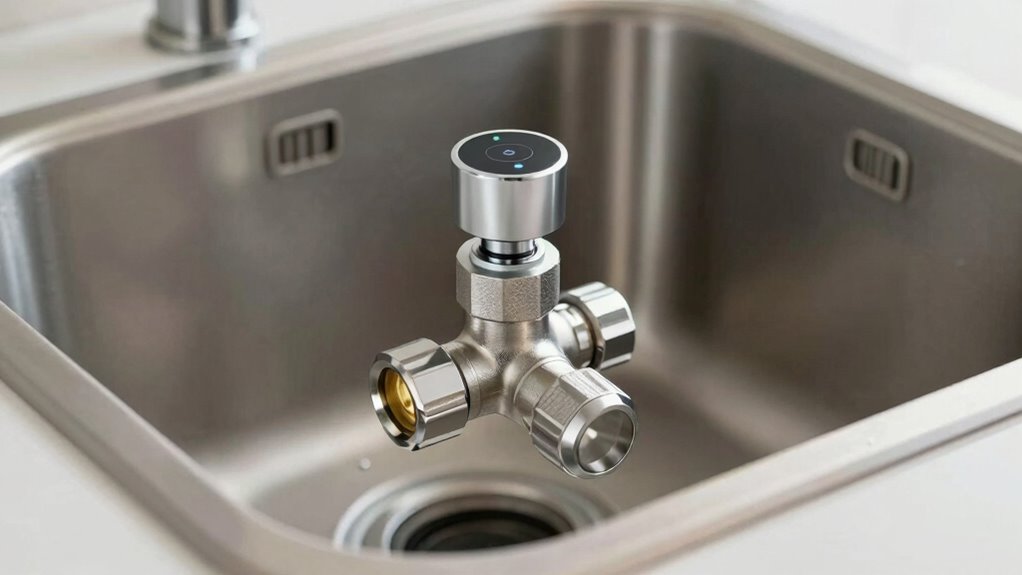
To detect leaks accurately, you need to position sensors strategically around your plumbing system. Follow ideal placement strategies to guarantee reliable alerts and avoid common mistakes like placing sensors in high-traffic or damp areas. Proper placement is key to catching leaks early and preventing water damage. Additionally, ensuring sensors are installed in appropriate locations can significantly improve leak detection accuracy. Using advanced sensor technology can also help detect even the smallest leaks more effectively. Incorporating smart home integration can further enhance your leak monitoring capabilities and system responsiveness. Being aware of water pressure zones can help optimize sensor placement and improve overall leak detection performance.
Optimal Sensor Placement Strategies
Placing sensors strategically is essential for detecting leaks accurately in smart water shutoff systems. Proper sensor placement ensures reliable leak detection and helps prevent false alarms. Focus on key areas where water flow or pipe damage is most likely, such as beneath sinks, around appliances, and near water heaters. Position sensors at the lowest points of the plumbing system to catch slow leaks early. Use the table below to guide your placement choices for ideal sensor coverage and false alarm prevention:
| Area | Placement Tip |
|---|---|
| Under sinks | Near drain pipes for quick leak detection |
| Around water heaters | Close to the base for early leak detection |
| Near appliances | Adjacent to washing machines and dishwashers |
| Main water line entry | Right after the shutoff valve |
| Basement or crawl spaces | At low points where leaks tend to accumulate |
This strategic placement maximizes detection accuracy and minimizes false alarms. Proper sensor placement techniques are crucial for optimizing system performance and enhancing leak detection efficiency. Additionally, considering water flow dynamics in your layout can further improve detection reliability, especially when accounting for water pressure variations. Incorporating comprehensive installation strategies ensures optimal sensor coverage and reduces the likelihood of missed leaks or false alerts.
Common Placement Mistakes
Incorrect sensor placement often leads to missed leaks or false alarms, undermining the effectiveness of your smart water shutoff system. One common mistake is placing sensors too far from potential leak sources, reducing their ability to detect small drips early. Avoid placing sensors directly under appliances or pipes with frequent condensation, as this can cause false alarms. Proper sensor placement depends on understanding valve positioning; sensors should be installed near shutoff valves to monitor critical areas like bathrooms, kitchens, and laundry rooms. Ensure sensors are mounted securely on flat, clean surfaces for accurate readings. Keep sensors away from areas with high humidity or temperature fluctuations, which can interfere with detection. Proper placement also involves considering the environmental conditions that could affect sensor performance, ensuring early and reliable leak detection. Additionally, understanding sensor sensitivity helps optimize placement for consistent results. Regularly testing your sensors and adjusting their position as needed can further improve leak detection accuracy. Using proper mounting techniques ensures the sensor remains stable and functions correctly over time. Accurate placement is essential for effective leak detection, ensuring early alerts and preventing water damage. Correct placement maximizes leak detection accuracy and minimizes false triggers.
How to Calibrate Your Smart Water Shutoff System Properly?

To calibrate your smart water shutoff system correctly, you need to adjust the sensor sensitivity to avoid false alarms or missed leaks. Establishing a baseline water flow helps your system distinguish normal usage from potential issues. Fine-tuning these points guarantees your system responds accurately and reliably. Additionally, understanding the challenges in nanotech fabrication can inform better sensor design for improved durability and precision.
Sensor Sensitivity Adjustment
Calibrating your smart water shutoff system’s sensor sensitivity is essential to guarantee it responds accurately to leaks without causing false alarms. To do this, start with sensor calibration by adjusting the sensitivity settings on your device. Find the balance where the system detects genuine leaks but ignores minor fluctuations or water flow from everyday activities. Typically, you can tweak alarm sensitivity through the app or control panel, increasing it if the system is too slow to respond or decreasing it if false alarms occur. Test the adjustments by running water intentionally and observing the system’s response. Proper sensor calibration ensures reliable leak detection, minimizes false alarms, and maintains your confidence in the system’s performance. Additionally, understanding sensor sensitivity helps optimize the system’s effectiveness in various household conditions. Knowing how to adjust sensitivity settings effectively can also extend the lifespan of your device by preventing unnecessary activations.
Baseline Water Flow
Have you properly established the baseline water flow before fine-tuning your smart water shutoff system? Setting an accurate baseline ensures your system reacts only to genuine leaks, not normal fluctuations. Start by measuring water pressure and observing flow during typical usage. Ensure your pipes are insulated properly to reduce temperature-related pressure changes that could skew readings. To visualize, consider this:
| Condition | Water Flow Description |
|---|---|
| Normal household use | Steady, predictable flow |
| No activity | Minimal, consistent flow |
| Sudden leak detection | Spike in flow, beyond baseline |
| Pipe insulation effects | Slight pressure variations |
| System calibration | Adjust based on stable flow |
This helps you calibrate accurately, preventing false alarms caused by pressure swings or pipe insulation effects.
How to Connect Your Valve to Your Plumbing and Power?

Connecting your smart water shutoff valve to your plumbing and power sources is a straightforward process, but it’s important to follow each step carefully. First, assess your pipe materials—whether copper, PVC, or PEX—to verify compatibility with the valve’s connectors. Turn off the main water supply before installation. Attach the valve securely to the existing pipe, making sure to account for water pressure to avoid leaks. Use appropriate fittings and ensure tight connections. For power, connect the valve to a nearby electrical outlet or hardwire it if required, following the manufacturer’s instructions. Double-check all connections for stability and leaks before restoring water pressure. Proper setup guarantees reliable operation and helps prevent false alarms caused by unstable connections or pressure issues.
How to Test Your System to Avoid False Alarms?

To make certain your smart water shutoff system functions correctly and avoids false alarms, it’s crucial to thoroughly test it after installation. Begin by checking sensor calibration, ensuring the sensors accurately detect water leaks without false triggers. Proper sensor calibration involves verifying that the sensors respond correctly to moisture, so you might need to adjust sensitivity settings if available. Next, inspect the valve placement to confirm it’s correctly positioned and unobstructed, allowing for smooth operation. Test your system by intentionally activating the sensors to see if the valve responds appropriately. If the valve triggers unexpectedly, revisit sensor calibration and placement to eliminate false alarms. Proper testing ensures your system is reliable, reducing the risk of unnecessary water shutoffs.
How to Maintain and Fine-Tune Your Shutoff Valve Over Time?
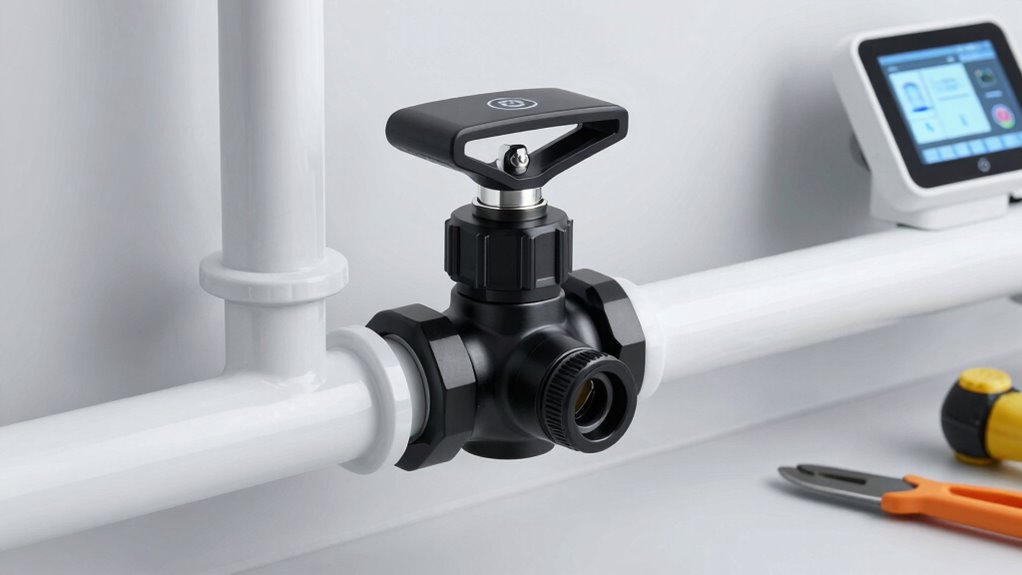
Regular maintenance and fine-tuning are essential to keep your smart water shutoff valve operating reliably over time. Start by regularly inspecting the valve for any debris or buildup that could affect performance. Sensor calibration is vital—ensure your sensors are correctly aligned and responsive by following manufacturer instructions. Proper valve maintenance involves checking for leaks, lubricating moving parts if needed, and verifying electrical connections. Keep the system’s software updated to maintain accuracy. If you notice inconsistent responses or false alarms, recalibrate the sensors and adjust the sensitivity settings. Routine checks help prevent malfunctions and false alarms, ensuring your system responds accurately to actual leaks while avoiding unnecessary shutoffs. Consistent upkeep maximizes your valve’s lifespan and reliability.
Common Mistakes That Cause False Alarms and How to Prevent Them?
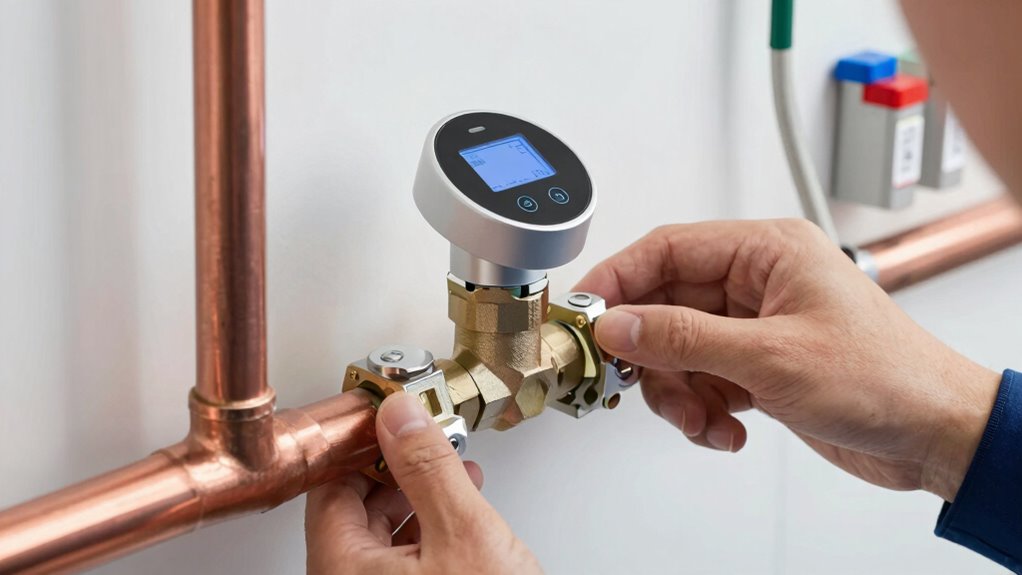
Many common mistakes can cause false alarms in your smart water shutoff system, leading to unnecessary shutoffs and inconvenience. One key mistake is poor sensor placement; if sensors are installed in areas prone to vibrations or drafts, they may trigger false alarms. Make sure sensors are positioned away from moving objects, pipes, or sources of water flow that could cause fluctuations. Additionally, improper calibration techniques can lead to inaccurate readings. Always calibrate your sensors according to the manufacturer’s instructions, ensuring they accurately detect real leaks or abnormal activity. Regularly checking and adjusting the calibration helps prevent false alarms. By paying attention to sensor placement and following proper calibration techniques, you considerably reduce unnecessary shutoffs and maintain reliable system performance.
When Should You Call a Professional for Help?
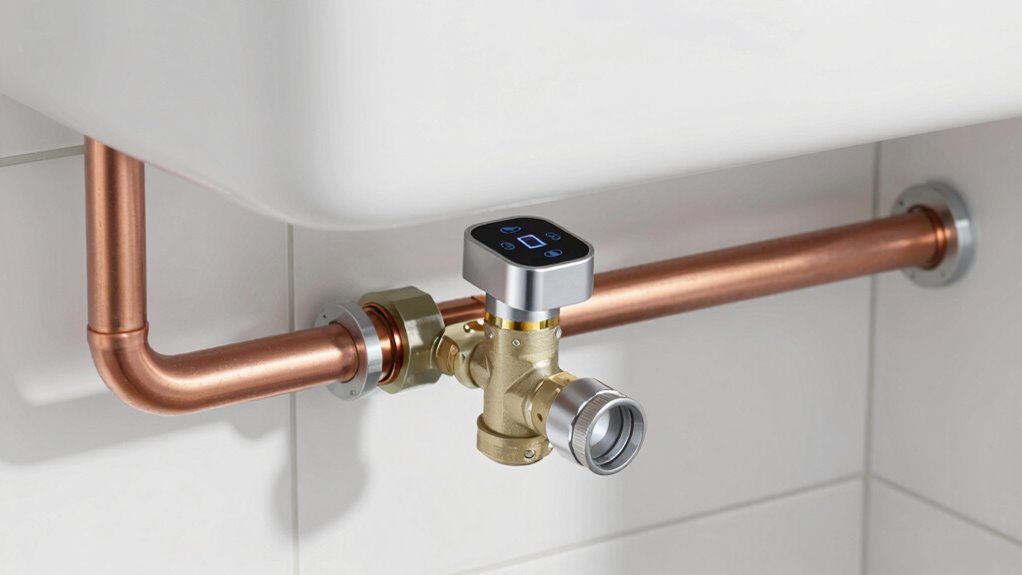
Knowing when to call a professional can save you time, money, and potential water damage. If troubleshooting scenarios become complex or if you’re unsure about installation or diagnosis, it’s best to seek professional assistance. You should call a plumber or water system specialist if you encounter persistent false alarms, difficulty calibrating your smart water shutoff valve, or signs of underlying plumbing issues. Avoid attempting repairs beyond your expertise, as improper handling could worsen the problem or cause leaks. Professional help guarantees proper installation, accurate diagnostics, and reliable operation of your system. If you’re ever in doubt about your ability to troubleshoot or fix the issue, don’t hesitate to contact an expert. Their experience provides peace of mind, preventing costly mistakes and water damage.
Quick Tips for Reliable Water Leak Detection?

To guarantee your water leak detection is reliable, start by regularly inspecting visible pipes and connections for signs of moisture, corrosion, or water stains. Keep an eye on water pressure; sudden drops can indicate leaks. Understanding your pipe materials helps too—metal pipes may corrode, while plastic ones might crack or become brittle over time. Make certain your water pressure isn’t too high, as excessive pressure stresses pipes and increases leak risk. Use a water pressure gauge to monitor it regularly. Additionally, listen for unusual sounds like hissing or banging, which can signal leaks or issues. Combining visual inspections with pressure monitoring gives you a thorough approach to early leak detection, helping prevent damage and false alarms.
Frequently Asked Questions
How Does Sensor Placement Impact False Alarm Reduction?
Proper sensor positioning directly impacts false alarm reduction by ensuring accurate water flow detection. If you place sensors too close to potential water sources or in areas with frequent vibrations, alarm sensitivity increases, leading to false alarms. Conversely, ideal sensor placement balances sensitivity and accuracy, reducing false triggers. You should carefully select locations that monitor main water lines without interference, enhancing reliability and preventing unnecessary shutdowns.
Can Environmental Factors Trigger False Alarms in the System?
Think of your system as a finely tuned instrument—environmental interference can indeed trigger false alarms if you’re not careful. High sensor sensitivity may pick up on vibrations, temperature changes, or nearby water sources, causing unnecessary alerts. To prevent this, you should adjust sensor sensitivity and make certain environmental factors like drafts or external vibrations don’t interfere. Proper placement and calibration help your system distinguish between real leaks and harmless environmental noise.
What Are the Signs of a Miscalibrated Water Shutoff Valve?
You’ll notice signs of a miscalibrated water shutoff valve when it triggers false alarms or fails to activate during leaks. Check if the sensor sensitivity is set too high or too low; improper sensitivity causes issues. Regular calibration frequency is essential to maintain accuracy. If alarms become inconsistent or the valve doesn’t respond correctly, it’s time to reconfigure and guarantee your system works reliably.
How Often Should System Calibration Be Performed?
You should perform system calibration every 6 to 12 months to keep your smart water shutoff valve functioning accurately. Follow a regular maintenance schedule and check calibration frequency based on your system’s usage and environmental conditions. Proper calibration ensures the device detects leaks correctly and prevents false alarms. Don’t wait too long; timely calibration helps maintain ideal performance and avoids unnecessary water shutoffs or missed leaks.
Are There Specific Brands Better at Preventing False Alarms?
You get what you pay for, and when it comes to preventing false alarms, some brands shine brighter than others. Look for brands known for reliable performance and strong false alarm prevention. Trustworthy brands often have better sensors and calibration features, reducing unnecessary shutoffs. Do your homework, read reviews, and choose reputable options—this way, you’re less likely to be caught off guard by false alarms, and your system will perform as expected.
Conclusion
Now that you know how to install and fine-tune your smart water shutoff valve, you’ll prevent false alarms and protect your home like a modern-day Robin Hood. Keep an eye on sensor placement, calibration, and maintenance—think of it as your personal water watchdog. With a little care, you’ll avoid unnecessary chaos, just like a vigilant town crier alerting you to trouble. Stay sharp, and your plumbing will thank you for it!