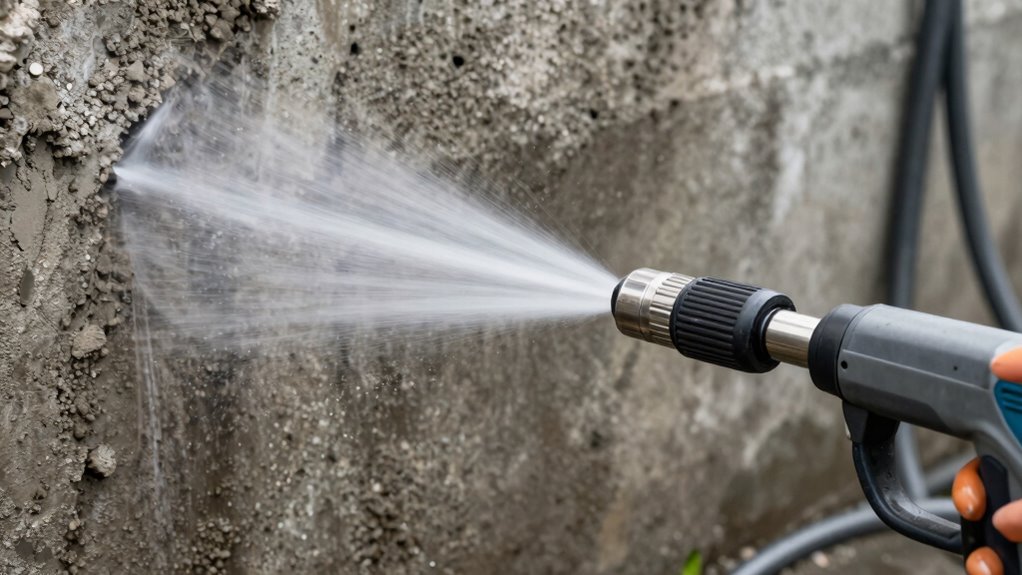
When choosing a pressure washer for concrete, focus on both PSI and GPM. PSI measures the cleaning power or how hard the water hits the surface, while GPM indicates how much water flows to rinse away dirt and debris. A balance of high PSI and GPM guarantees effective cleaning without damaging your surface. To get the best results and avoid mistakes, understanding these specs is key—keep exploring to learn more.
Key Takeaways
- PSI determines the cleaning pressure, while GPM controls water volume; both impact cleaning effectiveness on concrete.
- Higher PSI offers deeper cleaning but risks damaging concrete; balance with GPM to prevent surface harm.
- Increasing GPM improves rinsing, debris removal, and efficiency, especially on porous or stubborn stains.
- The ideal combination depends on concrete condition, dirt level, and environmental factors for safe, effective cleaning.
- Properly matching PSI and GPM with nozzle type ensures thorough cleaning without surface damage or equipment issues.
What Do PSI and GPM Mean on a Pressure Washer?
Understanding what PSI and GPM mean on a pressure washer is essential for choosing the right equipment for your cleaning tasks. PSI (pounds per square inch) measures the pressure the washer applies, affecting how forcefully it cleans surfaces. GPM (gallons per minute) indicates the water flow rate, determining how much water is used during cleaning. Both metrics are key factors in pressure washer technology, influencing cleaning efficiency. When selecting a unit, consider how PSI and GPM work together to deliver the right power for your cleaning solution. Higher PSI can remove stubborn dirt, while a higher GPM covers more area quickly. Knowing these specifications helps you match the pressure washer to your specific needs, ensuring effective and efficient cleaning. Proper pressure washer specifications are crucial for achieving optimal cleaning results and protecting your surfaces. Additionally, understanding how these specifications impact surface damage prevention can help prevent unintentional harm to delicate surfaces. Balancing PSI and GPM appropriately can also improve energy efficiency during operation, saving water and power while maintaining cleaning performance. An awareness of water consumption and how it relates to GPM can further optimize your cleaning process and reduce environmental impact.
How Does PSI Impact Concrete Surface Cleaning?
The PSI setting on your pressure washer directly affects how effectively you can clean concrete surfaces. Higher PSI increases pressure impact, helping to remove stubborn stains, dirt, and grime more efficiently. However, too much pressure can harm surface durability, causing cracks or etching if not used carefully. Finding the right PSI ensures you get deep cleaning without damaging the concrete. Low PSI may be ineffective for tough grime, while excessively high PSI risks surface damage. It’s essential to balance pressure impact with the surface’s resilience. Adjusting PSI based on the concrete’s condition and cleaning needs guarantees a thorough job while preserving the integrity of the surface. Proper PSI selection maximizes cleaning power while maintaining the longevity of your concrete. Understanding early warning signs of surface damage helps prevent costly repairs and ensures safe cleaning practices. Regularly inspecting the condition of the concrete can help identify surface vulnerabilities before they worsen. Additionally, considering pressure washer features like adjustable nozzles can help tailor the cleaning process to different surfaces and conditions. Familiarity with the recommended PSI range for concrete surfaces can further optimize your cleaning effectiveness while safeguarding the material. Using the appropriate pressure settings can also extend the lifespan of your equipment and prevent unnecessary wear.
Why Is GPM Important for Effective Power Washing?

Having a high GPM (gallons per minute) is essential because it determines how much water flows through your pressure washer, directly impacting cleaning efficiency. A higher GPM means more water hits the surface, helping to rinse away dirt, grime, and debris more effectively. This increased water flow can also assist in dirt removal and ensure a thorough clean. This not only improves cleaning results but also reduces the time and effort needed for each job. Additionally, selecting a pressure washer with the right GPM can make pressure washer maintenance easier, preventing buildup and clogs that can impair performance. From an environmental impact perspective, higher GPM models can use water more efficiently, reducing waste while still achieving thorough cleaning. Ultimately, GPM plays a key role in ensuring your power washing is both effective and eco-friendly. Proper water flow management is also crucial for preventing equipment wear and ensuring consistent performance over time. Optimizing water pressure alongside GPM can further enhance cleaning power without risking damage to surfaces.
How to Choose the Right PSI and GPM for Concrete Cleaning?
Choosing the right PSI and GPM for concrete cleaning depends on the surface’s condition and the level of dirt or stains you’re tackling. For surfaces with chemical sealants, lower PSI helps prevent damage while maintaining cleaning power. If your concrete has rough surface textures, you may need higher PSI to remove embedded grime effectively. Consider the age and durability of the surface; older or delicate concrete benefits from moderate PSI to avoid erosion. GPM influences how quickly dirt gets rinsed away, so a higher GPM can improve efficiency. Match your pressure washer’s specs to your specific needs, ensuring enough power to clean thoroughly without harming the surface or sealants. Adjusting PSI and GPM accordingly gives you optimal cleaning results tailored to your concrete’s condition. Understanding pressure washer capabilities can help you select the best settings for your project. Additionally, understanding the appropriate PSI and GPM ranges for different surfaces can prevent costly mistakes and extend the life of your concrete. Recognizing the significance of proper water pressure and flow ensures effective cleaning while protecting your surfaces from damage. Being aware of surface material considerations can further guide you in choosing the correct pressure levels to avoid surface damage. Moreover, considering the power-to-flow ratio can optimize cleaning performance while maintaining safety standards.
What’s the Best Pressure Washer GPM for Cleaning Concrete?

Selecting the right GPM for cleaning concrete guarantees you rinse away dirt efficiently without wasting water or risking surface damage. Generally, a GPM between 2.5 and 4 is ideal for concrete surfaces. Higher GPMs deliver more water volume, helping break down stubborn dirt and grime faster. However, too much water flow can cause surface damage, especially on older or delicate concrete. Focus on a balance: a pressure washer with around 3 GPM offers enough water flow to clean effectively while minimizing risk. Keep in mind that water pressure should be appropriate for the surface’s durability, ensuring you don’t erode or chip the concrete. Choosing the right GPM helps you clean thoroughly without compromising the integrity of your surface. Additionally, understanding the pressure washer specifications can help you select equipment that matches your cleaning needs precisely. When selecting equipment, consider smart technology features that can enhance cleaning efficiency and provide better control during use. Properly matching GPM and pressure is essential for optimal cleaning performance, especially on porous or textured concrete surfaces. It’s also important to consider the type of nozzle you use, as it can influence both cleaning effectiveness and surface safety. Using the correct GPM in combination with appropriate nozzle choices ensures a comprehensive cleaning approach that protects your surfaces while delivering powerful results.
How to Safely Balance PSI and GPM When Power Washing?
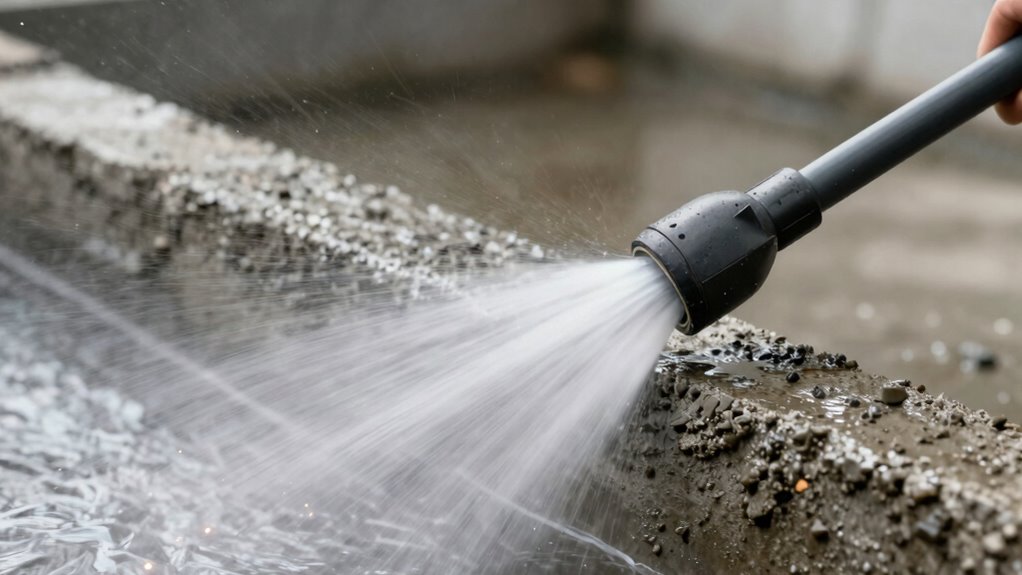
Balancing PSI and GPM is essential for effective and safe power washing. To achieve this, start by evaluating your surface and cleaning goals. For chemical cleaning or delicate surfaces, use a lower PSI to prevent damage and a moderate GPM to ensure even coverage. When preparing surfaces, adjusting PSI allows you to remove dirt without harming the material. Always test a small area first. Keep a steady, controlled distance from the surface to avoid etching or gouging. Use the appropriate nozzle to control flow and pressure. Remember, mixing chemical cleaning solutions with proper pressure helps loosen grime more effectively. Balancing PSI and GPM not only ensures thorough cleaning but also keeps you safe from potential injury or surface damage.
Common Mistakes to Avoid When Using a Pressure Washer on Concrete?
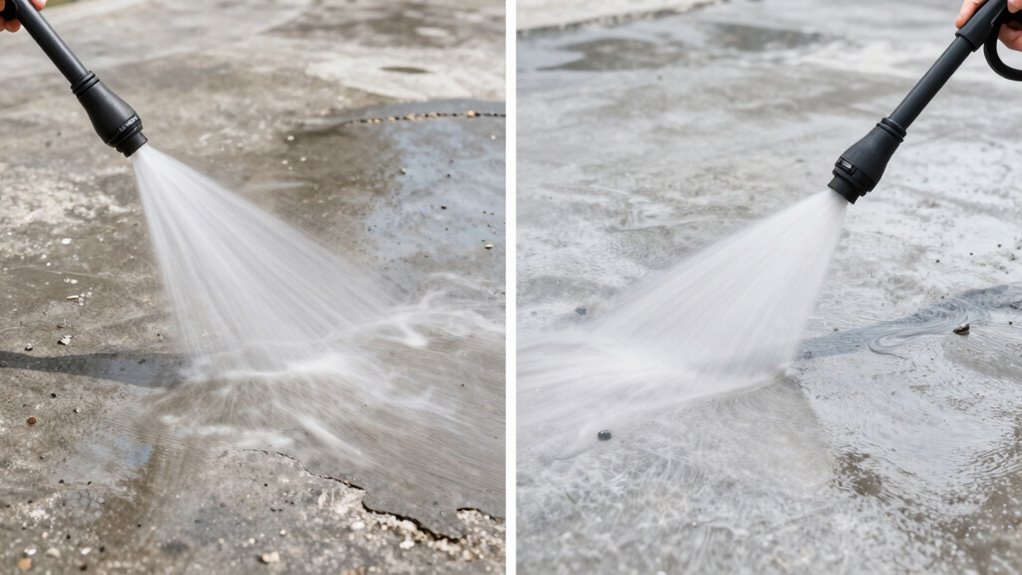
One common mistake is choosing the wrong nozzle, which can damage your concrete or reduce cleaning effectiveness. Using too much pressure can also gouge or crack the surface if you’re not careful. To get the best results, select the proper nozzle and control your pressure carefully.
Improper Nozzle Selection
Choosing the right nozzle is essential because using the wrong one can damage your concrete or reduce cleaning effectiveness. Proper nozzle selection influences the spray pattern, which affects how the pressure is applied. A narrow, high-pressure spray might seem effective, but it can etch or chip the surface if not chosen carefully. Conversely, a wider spray pattern delivers gentler cleaning but may lack power for stubborn stains. Always match your nozzle to the task—using a 25 or 40-degree nozzle for general cleaning and a pinpoint nozzle for tough spots. Avoid the mistake of using a single nozzle for all jobs, as it can lead to surface damage or inadequate cleaning. Understanding your options in spray pattern helps you get the best results without harming your concrete.
Excessive Pressure Use
Using too much pressure on your concrete surfaces is a common mistake that can cause serious damage. High pressure can etch or gouge the surface, leading to cracks and uneven wear. Always prioritize pressure safety by starting with lower PSI settings and gradually increasing if needed. Avoid the temptation to max out your pressure washer, as excessive force doesn’t mean better cleaning—it often worsens damage. Regular equipment maintenance, including checking hoses and nozzles, ensures your pressure washer operates safely and effectively. Properly maintaining your equipment helps prevent sudden pressure surges, reducing the risk of accidental damage. Remember, controlling pressure is key to cleaning concrete without harming it, so stay mindful of your settings and prioritize pressure safety at all times.
Tips for Adjusting PSI and GPM for Different Concrete Surfaces?
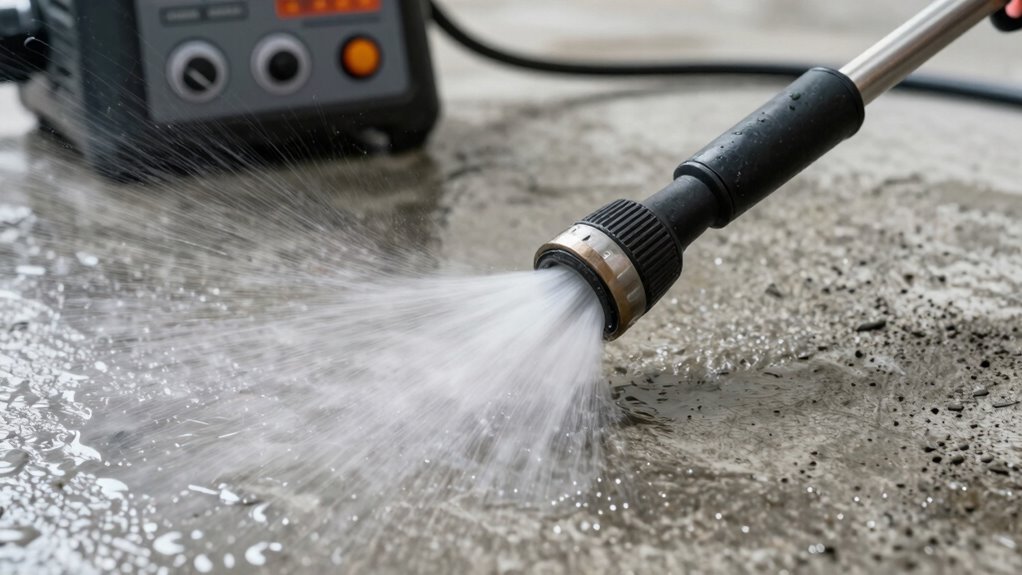
Adjusting PSI and GPM settings is essential to clean different concrete surfaces effectively without causing damage. To do this, start by evaluating the surface’s condition and material. Proper surface preparation, like removing loose debris, ensures ideal cleaning. Keep environmental considerations in mind to minimize runoff and chemical exposure. When adjusting, consider these tips:
- Use lower PSI for delicate or stained surfaces to prevent etching.
- Increase GPM for stubborn dirt, but avoid over-wetting.
- Match PSI to the surface’s hardness—higher for rougher concrete.
- Adjust based on environmental factors like wind or nearby plants to prevent overspray.
When Higher GPM Outperforms Higher PSI for Concrete Cleaning?

When cleaning concrete, higher GPM can be more effective than just increasing PSI because it improves water flow efficiency, covering more surface area quickly. If your surface material is more delicate or porous, a higher GPM helps clean thoroughly without risking damage. Understanding these points helps you choose the right pressure washer settings for ideal results.
Water Flow Efficiency
While PSI measures the force of water pressure, GPM (gallons per minute) determines how much water flows through the nozzle. Water flow efficiency depends on a balanced flow rate and water pressure to effectively clean concrete. Higher GPM often outperforms higher PSI when large surface areas or stubborn grime are involved. A higher flow rate ensures more water reaches the surface quickly, improving rinsing and debris removal. Key factors include:
- Ideal flow rate for thorough rinsing
- Water pressure guaranteeing sufficient force without damage
- The equilibrium between flow rate and pressure for efficiency
- The importance of consistent water delivery
Surface Material Compatibility
Higher GPM often outperforms higher PSI when cleaning softer or more delicate concrete surfaces because the increased water volume can better remove dirt and grime without risking surface damage. This is especially important during surface preparation, where gentle cleaning preserves the integrity of the material. Additionally, higher GPM allows for improved chemical compatibility, making it easier to apply cleaning agents evenly and effectively. With more water flow, you can dilute cleaning solutions properly and rinse away residues thoroughly. Using a pressure washer with higher GPM reduces the risk of surface etching or pitting, common with overly aggressive PSI levels. Overall, selecting a washer with the right GPM ensures effective cleaning while protecting the surface’s integrity, especially when delicate or chemically-treated concrete is involved.
How to Pick the Best Pressure Washer Specs for Your Concrete Projects?
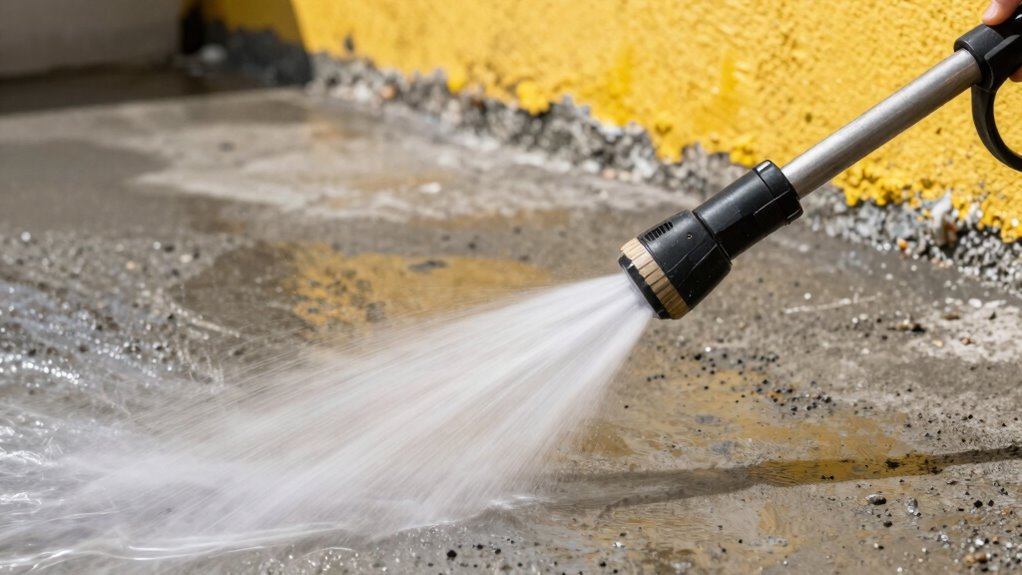
Choosing the right pressure washer for your concrete projects depends on understanding the balance between PSI and GPM. Higher PSI delivers the force needed to break up dirt, while GPM determines how quickly the water cleans. To pick the best specs, consider these factors:
Selecting the right pressure washer involves balancing PSI and GPM for effective concrete cleaning.
- Pressure washer mechanics: Select a model with durable components that can handle prolonged use.
- Cleaning solution selection: Use appropriate detergents to enhance cleaning efficiency without damaging concrete.
- Power and flow rate balance: Aim for 3000 PSI with 4 GPM for heavy-duty cleaning, or lower for delicate surfaces.
- Nozzle type: Choose the right nozzle to control pressure and spray pattern, preventing damage.
Balancing these elements ensures effective cleaning while maintaining equipment longevity.
Frequently Asked Questions
How Does Pressure Washer Size Affect Concrete Cleaning Efficiency?
Your pressure washer size directly impacts concrete cleaning efficiency by influencing surface preparation and nozzle selection. A higher PSI delivers more force, helping remove stubborn stains, while a higher GPM provides better water flow for rinsing away debris. Together, choose the right PSI and GPM for your job, and select nozzles that optimize pressure without damaging the surface. This combo guarantees effective cleaning and proper surface preparation.
Can Adjusting PSI and GPM Damage Concrete Surfaces?
Like a double-edged sword, adjusting PSI and GPM can be risky if you’re not careful. If you dial up pressure too high, you risk damaging the surface during surface prep or when using chemicals, especially on delicate concrete. Always match your settings to the surface’s needs, and consider using lower PSI with appropriate chemicals to clean effectively without causing harm. Proper technique and awareness protect your concrete from unnecessary damage.
What Safety Precautions Should I Take When Power Washing Concrete?
When power washing concrete, you should always wear personal protective equipment like goggles, gloves, and ear protection to prevent injuries. Keep electrical safety in mind by using grounded outlets and avoiding water contact with electrical components. Make sure to test the pressure on a small area first, and never point the nozzle at yourself or others. These precautions help guarantee a safe and effective cleaning process.
Are There Specific Nozzle Types Recommended for Concrete Cleaning?
For cleaning concrete, you should use a nozzle with a durable material like brass or stainless steel, as they withstand high pressure. A fan or wide spray pattern nozzle is ideal, providing even coverage without damaging the surface. Avoid narrow or pinpoint nozzles that can gouge or etch the concrete. Always start with a lower pressure setting and modify the spray pattern to ensure effective cleaning without causing harm.
How Does Water Temperature Influence Pressure Washing Results?
Water temperature markedly influences your cleaning effectiveness when pressure washing concrete. Using hot water can loosen grease, oil, and dirt more effectively than cold water, leading to faster and better results. Hot water also helps prevent streaks and residue. However, verify your pressure washer is rated for hot water if you choose to use it. For tough stains, increasing water temperature can make a noticeable difference in your cleaning efficiency.
Conclusion
Choosing the right PSI and GPM is like tuning a guitar—you need the perfect balance for a clear, clean sound. Don’t just chase high numbers; focus on what’s best for your concrete surface. When you find that sweet spot, your pressure washer becomes a powerful tool, transforming grime into dust. So, gear up with the right specs, and let your cleaning project hit all the right notes.