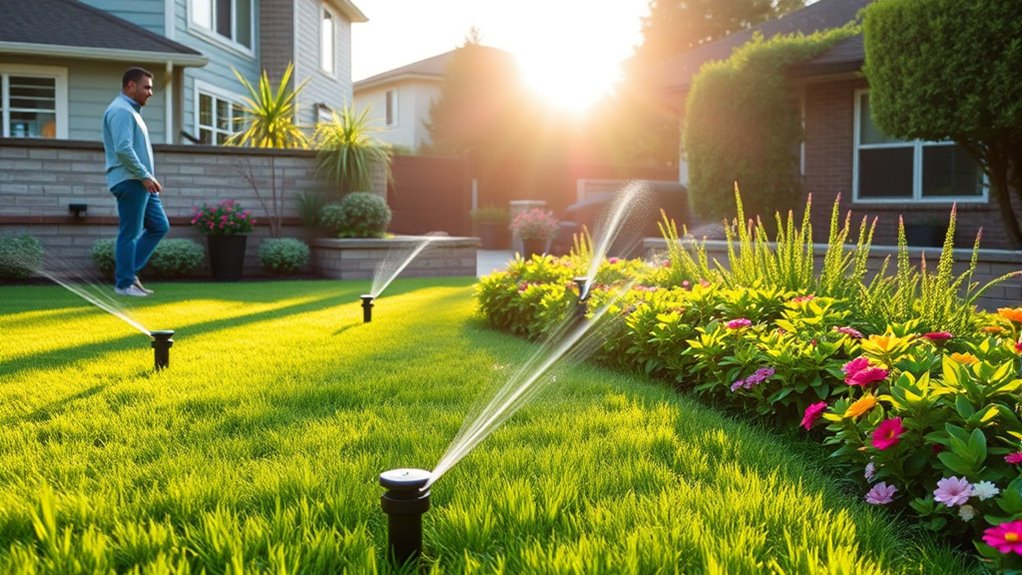

When selecting a smart irrigation system for your yard, emphasize options that support rain sensors and drip irrigation to adapt to weather changes and plant needs. Look for systems that automatically modify watering schedules based on real-time data, reducing manual effort. User-friendly apps and remote controls make management easy, while features like alerts and customization help guarantee healthy plants and water efficiency. Continued exploration reveals how these features can transform your yard care.
Key Takeaways
- Ensure the system supports rain sensors and drip irrigation for adaptability and consistent watering.
- Choose systems with automatic adjustments based on real-time weather data to prevent over- or underwatering.
- Prioritize user-friendly apps or interfaces for remote monitoring and easy schedule customization.
- Verify the system’s compatibility with existing yard features and its ability to integrate with sensors and controllers.
- Select reliable, durable options that offer smart features to promote healthy plants, save water, and reduce manual maintenance.

Choosing a smart irrigation system with compatibility for rain sensors and drip irrigation features means you’ll have a versatile setup capable of adapting to changing weather patterns and plant needs. Many systems allow you to connect rain sensors directly or through a central controller, which automatically adjusts watering schedules accordingly. Similarly, integrating drip irrigation with your smart system ensures your plants get consistent moisture without overdoing it. This combination simplifies yard maintenance because you don’t have to manually adjust watering times; your system will do it for you, based on real-time data and pre-set parameters.
Implementing thorough due diligence when selecting your system can help identify the most reliable and effective options available in the market. Furthermore, a smart irrigation system often comes with user-friendly apps or interfaces that let you monitor and customize your watering plans from anywhere. You can set specific zones, adjust schedules, and receive alerts if something isn’t working properly. When you incorporate rain sensors and drip irrigation into your setup, these features enhance overall efficiency. You’ll spend less time watering manually, and your garden benefits from tailored, responsive care. In the end, choosing a system with these smart features means healthier plants, less water waste, and savings on your utility bills—all while making yard maintenance more manageable and less time-consuming.
Frequently Asked Questions
Can Smart Irrigation Systems Be Used in Extreme Weather Conditions?
Yes, smart irrigation systems can handle extreme weather conditions, thanks to their weather resilience features. They adjust watering schedules based on rain, heat, or wind, preventing overwatering or drought stress. System durability ensures they withstand harsh elements like storms or freezing temperatures. You’ll find these systems reliable, saving water and maintaining your yard’s health, even during unpredictable weather. Just make certain you select a model with robust weather resistance features for peak performance.
How Do I Integrate Smart Irrigation With Existing Sprinkler Setups?
You can easily integrate a smart controller with your existing sprinkler setup by connecting it to your current wiring. First, turn off the water supply and power. Then, follow the smart controller’s instructions to connect it to your existing wiring harness. This allows your smart system to control your sprinklers efficiently. Make sure to double-check all connections and update the software for seamless operation and ideal watering schedules.
Are There Any Hidden Costs Associated With Smart Irrigation Systems?
Think of smart irrigation systems as treasure chests—initially promising, but sometimes hiding hidden expenses beneath the surface. You might face costs like installation fees, maintenance, or upgrades, which aren’t always obvious upfront. A thorough cost analysis helps you uncover these hidden expenses, ensuring you’re prepared for the true price. While these systems save water and money long-term, don’t overlook potential hidden costs that could impact your budget.
How Secure Are Smart Irrigation Systems From Hacking or Cyber Threats?
Smart irrigation systems have cybersecurity risks, but manufacturers often implement security measures to protect your data privacy. You should regularly update the system’s firmware, use strong passwords, and enable two-factor authentication if available. While no system is entirely immune to hacking, staying vigilant and following best cybersecurity practices substantially reduces your vulnerability. By taking these steps, you can enjoy the convenience of smart irrigation without compromising your security.
What Maintenance Is Required for Long-Term Optimal Performance?
Maintaining your smart irrigation system is like tending a garden—regular care keeps it thriving. You should regularly calibrate sensors to guarantee accurate watering and inspect valves for leaks or blockages. Clean filters and check wiring connections periodically. These simple steps prevent issues and extend your system’s lifespan, ensuring it operates efficiently year-round. Staying proactive with maintenance means you’ll enjoy lush, healthy yards with minimal fuss.
Conclusion
By choosing the right smart irrigation system, you’ll save water, money, and time while keeping your yard healthy. Imagine installing a system that automatically adjusts watering based on weather forecasts—like Sarah did, saving 30% on her water bill and maintaining lush grass even during a drought. With smart technology, you’re in control of your yard’s health, making gardening easier and more efficient. Start exploring your options today and enjoy a greener, more sustainable yard tomorrow.