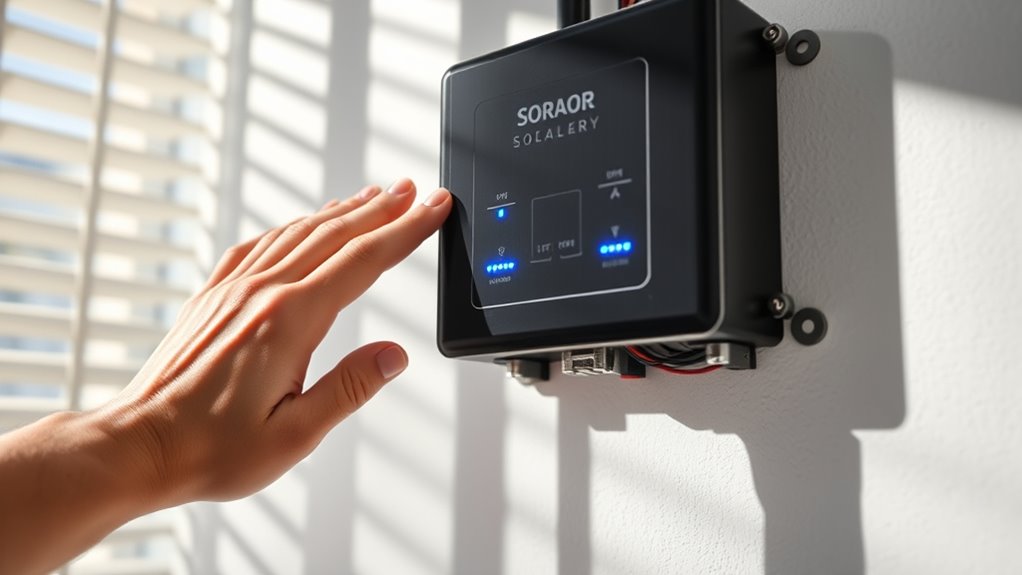

To maintain your home solar battery system, regularly monitor voltage and energy levels using manufacturer tools or apps. Keep the batteries in a cool, dry place and inspect for swelling, leaks, or corrosion. Clean terminals and connections to prevent malfunctions. Perform simple resets or software updates when needed. If issues persist, professional help guarantees proper diagnostics. Following these basic steps can extend your battery’s lifespan—continue exploring for more expert tips and tricks.
Key Takeaways
- Regularly monitor battery voltage, state of charge, and system performance using manufacturer tools or apps.
- Conduct physical inspections for signs of swelling, leaks, corrosion, or damage, and keep terminals clean.
- Keep batteries in cool, dry environments to reduce degradation and prevent exposure to excessive heat or moisture.
- Perform routine firmware updates and simple resets to address minor faults and enhance system reliability.
- Schedule professional diagnostics and maintenance checks to identify issues early and ensure safe, optimal operation.

Keeping your home solar battery system in top condition is essential to guarantee it performs efficiently and lasts longer. Proper maintenance helps maximize your investment, ensures reliable energy storage, and prevents unexpected failures. One key aspect of maintaining your system is understanding how to extend the battery lifespan. Batteries naturally degrade over time, but you can slow this process by following simple upkeep practices. Regularly monitoring your battery’s performance allows you to spot early signs of issues, which can be addressed before they escalate. This is where troubleshooting techniques come into play. By learning how to identify common problems—such as decreased capacity, unusual noises, or error messages—you can take proactive steps to fix minor issues yourself or know when to call a professional.
To begin, make sure your battery system is installed in a cool, dry location, avoiding excessive heat or moisture that can accelerate degradation. Keep the terminals clean and free of corrosion, as dirty or corroded connections hinder efficient energy transfer and can reduce battery lifespan. Periodically check the battery’s voltage and state of charge using the manufacturer’s recommended tools or apps. If you notice significant drops in performance, it might indicate a need for troubleshooting. For example, if the system isn’t charging properly, verify that all connections are secure and that your inverter and charge controller are functioning correctly. Sometimes, simple resets or updates to system software can resolve minor faults. Additionally, staying informed about anime movies and their storytelling can provide a welcome mental break during maintenance routines.
Regularly inspecting the physical condition of the battery also helps catch potential issues early. Look for swelling, leaks, or any unusual odors, which could signal internal damage or safety hazards. Keep an eye on your system’s energy output and storage levels; consistent dips could point to deeper problems requiring professional assessment. Implementing routine maintenance checks, such as cleaning terminals and updating firmware, can extend your battery’s lifespan and improve overall performance. Additionally, staying informed about troubleshooting techniques enables you to address common concerns promptly, like resolving error codes or recalibrating settings. If troubleshooting doesn’t resolve the issue, don’t hesitate to contact a qualified technician who can perform in-depth diagnostics.
Frequently Asked Questions
How Long Do Home Solar Batteries Typically Last?
Home solar batteries usually last between 5 to 15 years, depending on usage, maintenance, and battery type. Your battery lifespan can be prolonged with proper care, but you should plan for a replacement timeline around the 10-year mark. Keep an eye on performance indicators and consult a professional if you notice reduced efficiency. This way, you ensure your solar system remains reliable and effective over its entire lifespan.
Can I Upgrade My Existing Solar Battery System?
Absolutely, you can upgrade your solar battery system—think of it as supercharging your energy storage! First, check your current battery capacity and make certain your new batteries are compatible with your system. Upgrading often involves increasing capacity or modernizing technology, which can boost efficiency and lifespan. Always verify system compatibility, and consult a professional if needed, so you get the most out of your investment and maximize your solar energy potential.
What Are Signs My Battery Needs Professional Servicing?
If your solar battery shows reduced capacity or inconsistent performance, it’s a sign you need professional servicing. Keep an eye on battery lifespan and note if you’re needing to increase maintenance frequency. Unusual heating, strange noises, or frequent charging issues also indicate it’s time to call in a specialist. Proper maintenance extends your battery’s life, ensuring you get the most from your solar investment.
Are There Warranty Options for Solar Batteries?
Yes, there are warranty options for your solar batteries that offer peace of mind. Warranty coverage typically includes repairs or replacements if your battery malfunctions within the warranty period. You should check the specific warranty terms, which often include battery replacement options if your system experiences issues due to manufacturing defects or performance decline. Always read the fine print to understand what’s covered and guarantee you’re protected against unexpected costs.
How Does Temperature Affect Battery Performance?
Temperature critically impacts your solar battery’s performance. When temperatures soar or plummet, thermal management becomes vital to prevent overheating or freezing. Because of their temperature sensitivity, batteries might lose efficiency or degrade faster if not properly cooled or insulated. You could notice reduced storage capacity or shorter lifespan. Stay vigilant—by maintaining ideal temperature conditions, you guarantee your battery operates at peak performance, avoiding costly replacements and maximizing your solar investment.
Conclusion
Regularly checking and maintaining your home solar battery system keeps it running smoothly and saves you headaches down the road. Keep an eye on performance, keep connections clean, and follow the manufacturer’s guidelines. Remember, a stitch in time saves nine — staying proactive now prevents bigger issues later. By giving your system the attention it requires, you’ll ensure it’s always ready to power your home efficiently when you need it most.