
Smart thermostats typically save more energy than programmable models because they learn your habits, automatically adjust settings, and offer remote control for added convenience. While programmable thermostats rely on pre-set schedules, smart thermostats adapt to changes and optimize temperature settings over time. If you want to maximize savings and enjoy smarter home control, discover how these devices can make a difference for you. Keep exploring to see how smart thermostats can benefit your home.
Key Takeaways
- Smart thermostats typically save 8-10% on energy bills, comparable or slightly higher than programmable models’ 5-10% savings.
- Their automatic learning and adaptive features optimize energy use more effectively over time.
- Remote control and integration with other smart devices enhance flexibility and energy management.
- Programmable thermostats rely on pre-set schedules, which may be less effective if routines change unexpectedly.
- Overall, smart thermostats often provide higher long-term savings due to their advanced automation and customization.
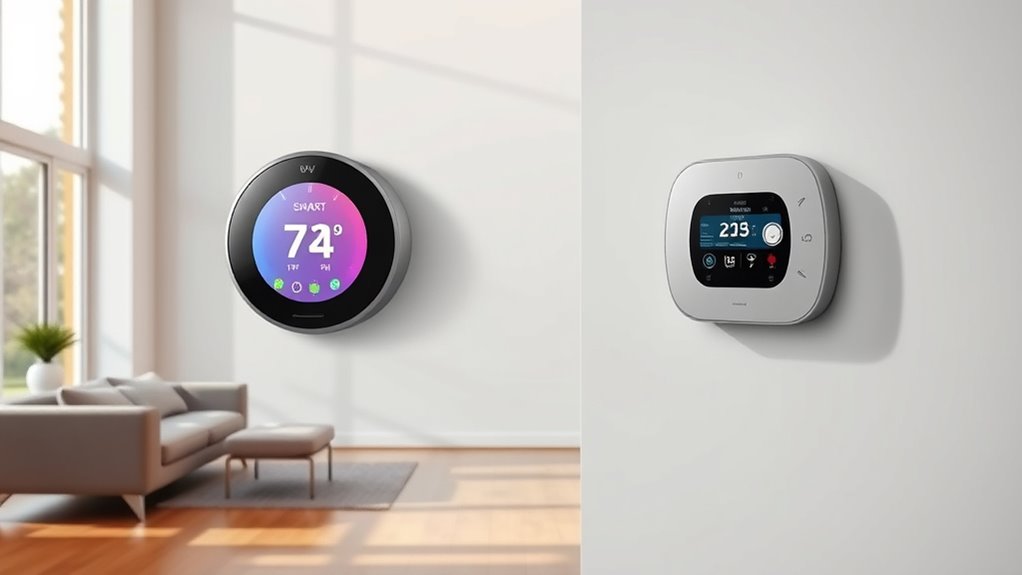
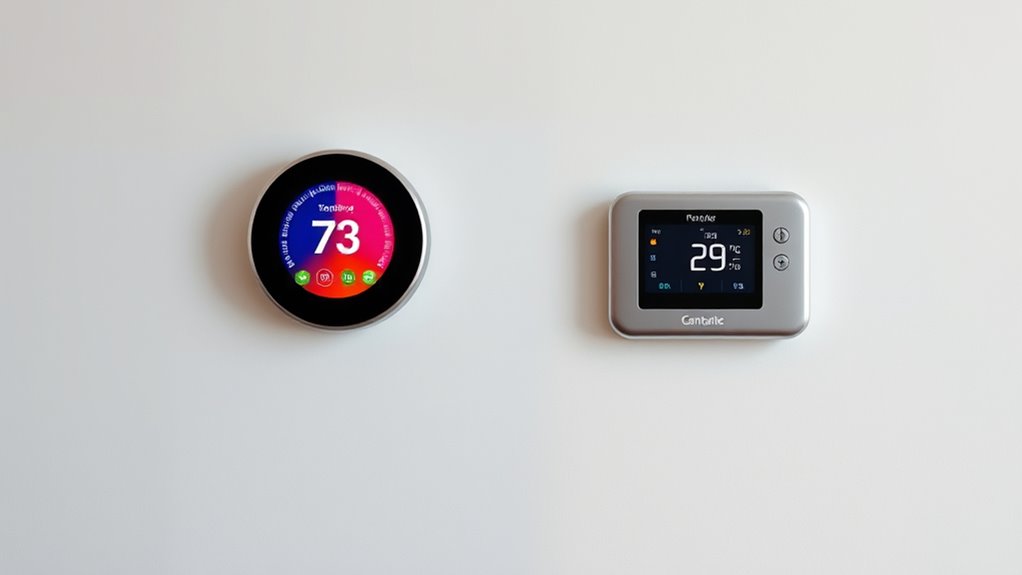
When choosing a thermostat for your home, understanding the differences between smart and programmable options can help you make an informed decision. Programmable thermostats let you set temperature schedules based on your daily routines, but they require manual programming and can be less intuitive to operate. Smart thermostats, on the other hand, automatically learn your preferences and adjust settings without much input, offering a more user-friendly experience. They can be controlled remotely through smartphone apps and integrate seamlessly with other smart home devices, giving you greater convenience and control.
Smart thermostats learn your habits, offering greater convenience and remote control for a more comfortable home.
In terms of energy savings, programmable thermostats can save up to 20% on energy bills when used correctly, but actual savings typically hover between 5-10%. Your savings depend heavily on how well you set and stick to schedules, as well as factors like climate and your habits. Smart thermostats usually deliver savings of around 8-10%, with manufacturer claims reaching 10-20%. Their automated features make it easier to maintain consistent energy-efficient settings, reducing the need for manual adjustments. Because smart thermostats adapt to your behavior and optimize temperatures automatically, they tend to be more effective at delivering consistent savings over time.
Control and accessibility are major advantages of smart thermostats. You can control them remotely via apps, enabling you to adjust settings even when you’re away from home. This flexibility is especially useful for irregular schedules or unexpected changes. Additionally, smart thermostats often integrate with other smart devices, allowing for a coordinated home management system. Features like geo-fencing enable the thermostat to detect your proximity and adjust the temperature accordingly, helping to conserve energy when you’re not home. Programmable thermostats require physical adjustments or pre-set schedules at home, limiting their flexibility and making remote control impossible.
Smart thermostats also excel in learning and adaptation. They observe your habits over time and make automatic adjustments based on your preferences. Some models use predictive algorithms to optimize energy use further, reducing waste and improving efficiency. This contrasts with programmable thermostats, which rely on static schedules that may not accommodate unexpected changes in your routine. The ability of smart thermostats to adapt based on user behavior makes them more efficient and convenient, especially for households with unpredictable schedules. Additionally, advanced learning capabilities enable these devices to refine their performance, resulting in better energy management.
While smart thermostats tend to have higher initial costs, they often provide greater long-term savings through enhanced energy efficiency. They also offer detailed energy reports, maintenance alerts, and better integration with other smart home systems. These features help you monitor and manage energy consumption more effectively, making the upfront investment worthwhile for many users. Additionally, their ability to learn and adapt enhances overall energy savings and user comfort. Overall, if your goal is maximum energy savings combined with convenience and adaptability, a smart thermostat generally outperforms a programmable one, especially in today’s connected home environment.
Frequently Asked Questions
Do Smart Thermostats Work With All Heating and Cooling Systems?
You might wonder if smart thermostats work with all heating and cooling systems. Generally, they’re compatible with modern forced-air systems installed after 1975, but not with baseboard heating or oil boilers without adapters. To be sure, check your HVAC wiring and whether you have a C-wire. Use online tools or consult a professional to confirm compatibility, ensuring your system works efficiently with a smart thermostat.
Can Programmable Thermostats Learn My Schedule Automatically?
You might think all thermostats can learn your schedule automatically, but most programmable ones require manual setup. They don’t adapt on their own unless you input your routines. If you want a thermostat that learns and adjusts without your constant input, a smart thermostat is your best choice. It automatically detects patterns and optimizes settings, saving you more effort and energy without needing manual programming.
Are There Significant Installation Costs for Smart Thermostats?
You’ll find that installing smart thermostats can be more costly than programmable ones. Typical installation costs range from $200 to $500, mainly due to advanced features and wiring updates. Labor adds $50 to $150 per hour, especially if your home requires electrical upgrades. While programmable thermostats usually cost less upfront, smart thermostats may require extra expenses for setup and compatibility, making the initial investment higher but potentially offering more long-term savings.
How Secure Are Smart Thermostats From Hacking?
You might wonder about the security of smart thermostats, and the truth is, they have notable vulnerabilities. Hackers can exploit weak encryption, outdated protocols, and unsecured APIs to access your device. If compromised, they could control your temperature, leak personal data, or even use the thermostat as a gateway to other devices. To protect yourself, keep firmware updated, disable unnecessary features, and use strong passwords.
Do Smart Thermostats Require Wi-Fi for Basic Functions?
You might wonder if smart thermostats need Wi-Fi for basic functions. The answer is no; they don’t require Wi-Fi to operate basic tasks. You can manually adjust the temperature, use pre-set schedules, and control your HVAC offline. However, without Wi-Fi, you lose features like remote access, energy reports, and smart integrations. So, while the core functions work offline, many smart benefits depend on an internet connection.
Conclusion
Ultimately, smart thermostats offer convenience and learning capabilities, like a breeze on a warm day, adapting seamlessly to your schedule. Programmable thermostats, on the other hand, are like a steady breeze—reliable but less intuitive, requiring manual adjustments. While both save energy, smart thermostats often save you more through automation and efficiency. Think of it as choosing between a guided tour and a self-led journey—either way, you reach your destination, but one makes the trip smoother.