To prevent damp laundry in your washer-dryer combo, always choose a cycle with moisture sensors or a dedicated dry setting. These use advanced technology to monitor moisture levels and adjust drying time automatically, ensuring clothes are perfectly dry without over- or under-drying. Proper load size, ventilation, and correct detergent use also help. Stay tuned to discover more simple steps to guarantee your laundry comes out completely dry every time.
Key Takeaways
- Use a cycle with moisture sensors or dedicated dry settings for optimal moisture detection and drying.
- Select extended or longer drying cycles to ensure thorough moisture evaporation.
- Ensure proper ventilation and airflow in the laundry area to assist the drying process.
- Avoid overloading the drum to allow effective circulation and moisture removal.
- Use recommended detergents and avoid excess residues that hinder proper drying.
Why Are My Clothes Still Damp After Washing and Drying?

If your clothes remain damp after washing and drying, it’s often due to a problem with the appliance or its settings. Sometimes, using too much laundry detergent or harsh detergents can leave residue that traps moisture, preventing proper drying. Fabric softeners, while great for softening clothes, can also build up and clog the fabric, making it harder for moisture to escape. Make certain you’re using the correct amount of laundry detergent suited for your load size and water hardness. Avoid overusing fabric softeners, as they can coat fibers and hinder drying. Check that your washer-dryer combo is set to the appropriate cycle, and that the drum isn’t overloaded. Proper detergent choices and correct settings help ensure your clothes come out dry and comfortable. Additionally, understanding the air quality considerations of your laundry space can influence drying effectiveness. Proper ventilation and air circulation can significantly improve drying performance by reducing humidity levels around your appliance, especially when combined with adequate space around the unit to promote airflow. Ensuring proper ventilation can also prevent moisture buildup in the laundry area, aiding in faster and more efficient drying.
How Do Washer-Dryer Drying Cycles Prevent Damp Clothes?
How Do Washer-Dryer Drying Cycles Prevent Damp Clothes?
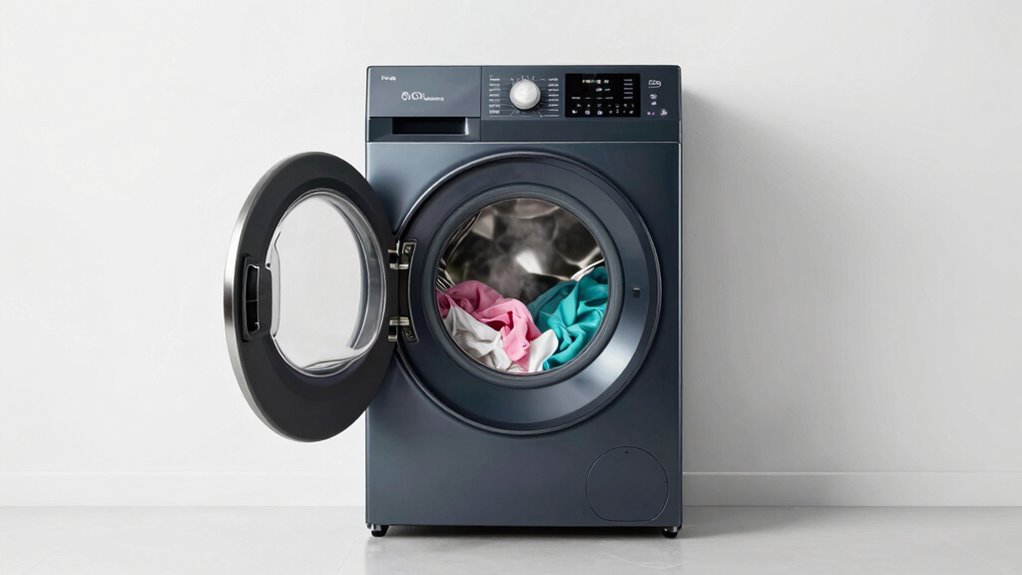
Washer-dryer cycles use precise temperature control to target the right level of heat for drying your clothes effectively. Extended drying cycles give your laundry enough time to reach proper dryness without stopping prematurely. Additionally, proper ventilation helps remove excess moisture from the appliance, reducing the risk of dampness. Proper ventilation and cabling solutions also play a crucial role in ensuring efficient operation and avoiding moisture buildup within the appliance. Implementing moisture management techniques can further enhance drying performance and prevent damp clothes. Using the correct laundry detergent can also impact how well your clothes dry, as some detergents leave less residue and facilitate better airflow. Incorporating ventilation systems designed for appliances can significantly improve moisture removal during drying cycles.
Precise Temperature Control
Precise temperature regulation is essential for guaranteeing clothes come out dry without remaining damp. Your washer-dryer uses heat regulation to prevent over-drying or under-drying your laundry. It constantly monitors moisture levels with sensors that detect residual dampness. When moisture sensors identify damp clothes, the machine adjusts the temperature accordingly, reducing heat to prevent overdrying. Conversely, if clothes are still damp, it increases heat slightly to speed up evaporation. This careful balancing act helps avoid heat damage and guarantees uniform drying. By maintaining ideal temperatures throughout the cycle, the system prevents dampness from lingering. This precise temperature control keeps your laundry consistently dry, saving energy and protecting your fabrics from unnecessary wear. Additionally, cookie management features in modern machines can optimize drying cycles based on user preferences and data analysis. To further enhance drying efficiency, some models incorporate smart sensor technology that dynamically adapts to fabric types and load sizes. These advanced systems utilize chemical sensors to more accurately detect moisture levels and adjust drying parameters in real-time. Moreover, implementing adaptive algorithms allows machines to learn from previous cycles, improving drying accuracy over time. Incorporating such advanced control systems ensures consistent, efficient drying while safeguarding your clothing.
Extended Drying Cycles
Extended drying cycles play a key role in guaranteeing your clothes come out completely dry, especially when shorter cycles might leave damp spots. These longer cycles give your washer-dryer more time to evaporate residual moisture, reducing the risk of dampness. During extended cycles, the machine can better distribute fabric softener, helping clothes feel softer and smell fresher. The cycle also allows for higher spin speeds initially, extracting more water before drying begins, which speeds up the process. Additionally, proper cycle selection ensures optimal drying results for different fabric types. Longer cycles also accommodate various fabric textures, ensuring delicate items are dried carefully without damage. Implementing the right filtration can also improve drying efficiency by preventing lint buildup and maintaining consistent airflow. Selecting the appropriate moisture sensors can further optimize drying times, preventing over-drying and saving energy. Moreover, choosing the correct ventilation system enhances airflow and drying performance, especially in compact washer-dryer units.
How to Set Your Washer-Dryer for Perfectly Dry Laundry

To guarantee your laundry comes out perfectly dry, it’s essential to set your washer-dryer correctly. Start by choosing the right cycle—opt for one with a dedicated dry setting or a moisture sensor if available. This ensures energy efficiency and prevents over-drying, which can damage clothes. Use the appropriate detergent selection; high-efficiency detergents work best with modern washer-dryer combos and help maintain ideal drying performance. Avoid overloading the machine, as this can trap moisture and leave clothes damp. Check the load size and select a cycle suited for the fabric type and moisture level. Additionally, smart thermostat setup principles can help optimize your laundry room environment, improving air circulation and reducing humidity that contributes to damp laundry. Proper ventilation can also prevent excess moisture buildup in your laundry space, further enhancing drying results. Ensuring proper drainage of excess water can help maintain an optimal environment and prevent humidity issues. Incorporating humidity control devices can further aid in maintaining optimal moisture levels in your laundry area. By fine-tuning these settings, you’ll maximize dryness, save energy, and extend the life of your clothes.
Common Mistakes That Leave Clothes Damp and How to Avoid Them
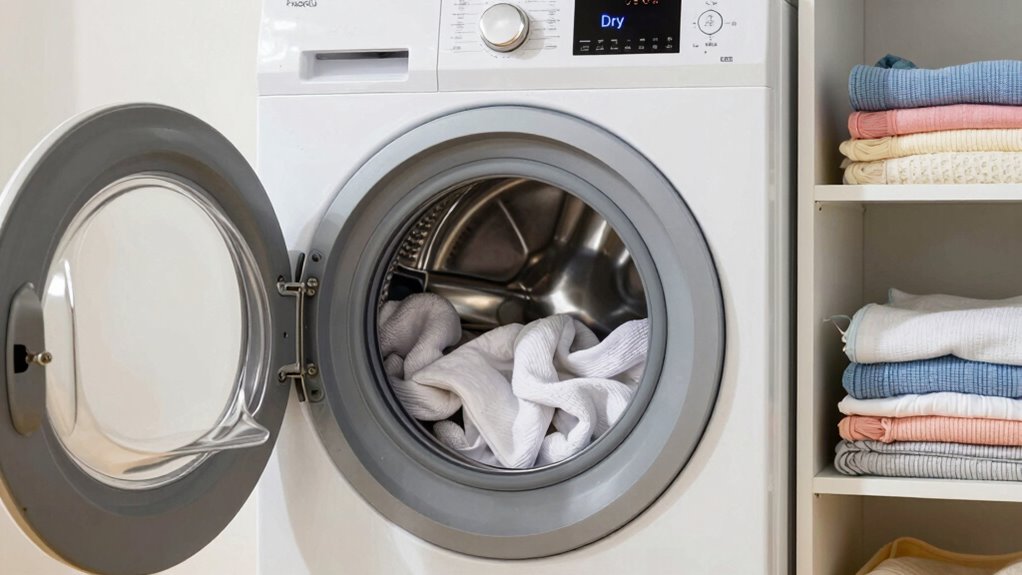
If your clothes come out damp, you might be making simple mistakes. Overloading the machine, ignoring drainage issues, or rushing through drying cycles can leave your laundry damp. Let’s look at how to prevent these and get perfectly dry clothes every time.
Overloading the Machine
Overloading your washer-dryer combo can lead to clothes remaining damp after the cycle ends. When you pack too much into the drum, the machine struggles to circulate water and air effectively, resulting in insufficient drying. To avoid this, stick to your machine’s loading capacity, which ensures proper tumbling and moisture evaporation. Also, consider your detergent choice; using too much or the wrong type can cause soap residue that traps moisture. Keep these tips in mind:
- Load clothes loosely, giving them space to move
- Avoid packing the drum tightly or cramming in extra items
- Use the recommended detergent amount
- Balance heavy and light clothing for even drying
Sticking to these practices helps prevent damp laundry and keeps your washer-dryer combo functioning efficiently.
Ignoring Proper Drainage
Ignoring proper drainage can cause clothes to stay damp even after the cycle ends. Drainage issues often result from clogged filters or hoses, preventing water from fully leaving the machine. Improper venting can also contribute, trapping moisture inside the unit and hindering effective drying. If your washer-dryer combo isn’t draining properly, you might notice water pooling or a persistent damp smell. Regularly check and clean filters, hoses, and vents to ensure smooth drainage. Make sure the drainage system isn’t kinked or blocked, and verify that the venting is correctly installed and unobstructed. Addressing drainage problems promptly helps prevent damp clothes and improves the overall efficiency of your washer-dryer combo, ensuring your laundry comes out fresh and thoroughly dry.
Rushing Drying Cycles
Rushing through drying cycles can often leave your clothes damp because the machine doesn’t have enough time to remove all moisture. When you cut cycles short, you compromise energy efficiency, forcing the dryer to run longer later or risking damp laundry. Additionally, quick cycles can increase noise levels, disturbing your space. To avoid this, consider these tips:
- Use longer, appropriate drying settings for thicker fabrics
- Allow the machine to complete full cycles for ideal moisture removal
- Avoid skipping regular maintenance, like cleaning filters
- Balance loads properly to improve drying efficiency
Tips to Ensure Your Clothes Are Fully Dry Every Time
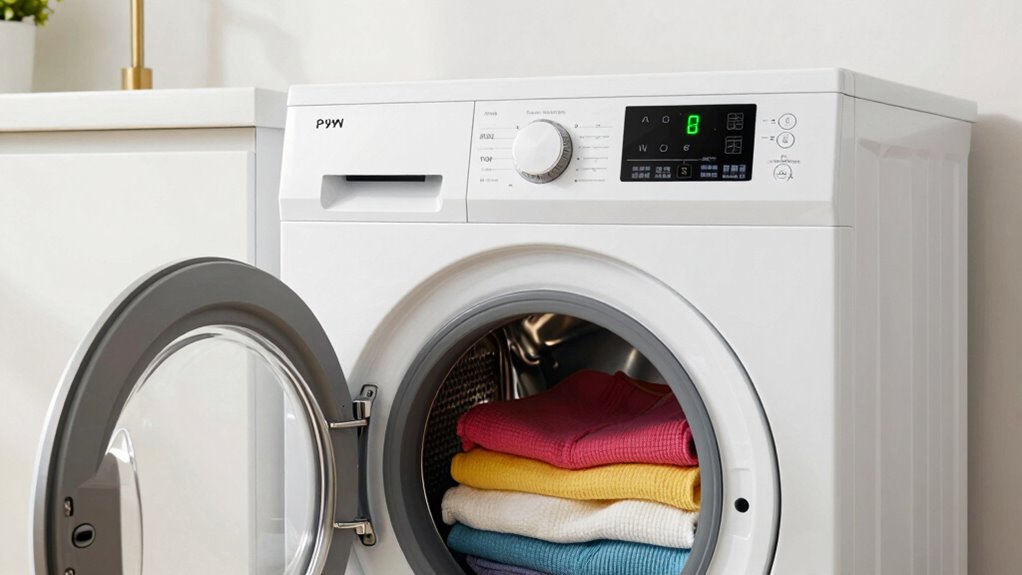
Ever wonder how to make sure your clothes come out completely dry every time? The key is to optimize your washing and drying routine. Start by using the right laundry detergents—they help remove residue that can trap moisture. Avoid overloading your washer, which can prevent clothes from rinsing thoroughly and drying evenly. Fabric softeners can improve airflow during drying, reducing dampness, but don’t overuse them, as they can leave residues that trap moisture. Always select the appropriate drying cycle for your load size and fabric type. If your machine has a moisture sensor, trust it to stop the cycle when clothes are dry. Ultimately, confirm proper ventilation around your appliance; good airflow helps moisture escape and keeps your laundry dry.
Troubleshooting Persistent Damp Laundry Problems

Persistent damp laundry can be frustrating, but identifying the underlying cause is key to solving the problem. Often, dampness results from issues like improper detergent selection or poor laundry sorting. First, check if you’re using too much or the wrong detergent, which can leave residues that trap moisture. Next, ensure you’re sorting laundry properly—heavy items like towels and bedding should be separated from lighter fabrics to promote even drying. Additionally, avoid overloading the washer-dryer combo, as it hinders airflow and drying efficiency. You can also run an extra rinse cycle to remove excess detergent, preventing residues that keep clothes damp. Finally, verify that your machine’s venting is clear and functioning correctly, allowing moisture to escape and preventing lingering dampness.
Frequently Asked Questions
Can I Dry Bulky Items Effectively With a Washer-Dryer Combo?
You can dry bulky items effectively with a washer-dryer combo if you choose the right settings. Use a bulky or heavy-duty cycle, which enhances drying efficiency by adjusting drying time and heat. Make sure not to overload the machine, as this can hinder airflow and prolong drying. For best results, sometimes air-drying bulky items beforehand can help reduce drying time and improve overall efficiency.
Does Using the Combo Setting Save Energy Compared to Separate Wash and Dry Cycles?
You’ll find that using the combo setting often saves energy compared to running separate wash and dry cycles, thanks to better energy efficiency and lower power consumption. Imagine finishing your laundry faster and with less effort—it’s like catching a cool breeze on a warm day. This setting optimizes power use, helping you cut costs and reduce environmental impact, making your laundry routine more efficient and eco-friendly.
How Often Should I Run a Maintenance Cycle to Prevent Damp Clothes?
You should run a maintenance cycle once a month to prevent damp clothes. Regular maintenance tips, like cleaning the drum and door seal, help keep your washer-dryer combo dry and odor-free. This damp prevention method guarantees moisture doesn’t build up, which can cause dampness in your laundry. Staying consistent with maintenance cycles not only prolongs your appliance’s life but also guarantees your clothes come out fresh and completely dry every time.
Are There Specific Fabric Types That Dry Better in a Combo Washer-Dryer?
Think of your laundry as a garden—some fabrics bloom faster than others. Cotton and linen are like hardy flowers, drying quickly and maintaining softness. Delicate fabrics like silk or wool are more like fragile blooms, needing gentle care. These tend to dry slower but stay softer if you choose the right setting. Knowing your fabric type helps you optimize drying speed and fabric softness, ensuring your clothes come out fresh and perfectly dried every time.
What’s the Ideal Load Size for Optimal Drying in a Washer-Dryer Combo?
You should keep your load size within the washer-dryer combo’s load capacity, typically around 80% of its maximum, for best drying results. Overloading hampers airflow, leaving clothes damp or unevenly dried. Consider fabric sensitivity—delicate fabrics need smaller loads to dry thoroughly without damage. By balancing load size and fabric type, you make certain of efficient drying, reduce energy use, and prevent damp laundry.
Conclusion
With the right settings and a little know-how, you can turn your washer-dryer into a reliable drying partner. Think of it as guiding your clothes through a warm, sunlit day—every cycle a gentle breeze that banishes dampness. Master these tips, avoid common pitfalls, and soon your laundry will emerge as fresh and dry as a desert breeze. Say goodbye to dampness and hello to perfectly dry clothes, every time.