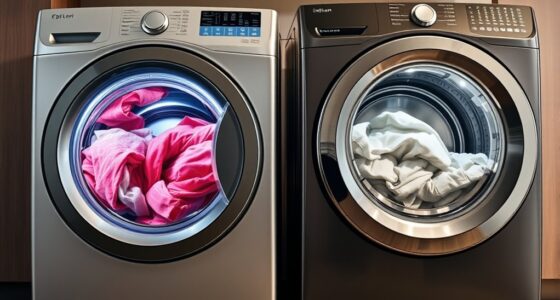

Yes, high-efficiency washers do use less detergent than traditional models. They are designed to operate with smaller amounts of specially formulated HE detergent, which creates fewer suds and prevents buildup. Using the right amount improves cleaning and protects your machine from issues caused by excess soap. If you want to learn more about how to optimize detergent use and get the best results, keep exploring the details below.
Key Takeaways
- High-efficiency washers are designed to use less water and detergent per cycle for better efficiency.
- They require specialized HE detergents formulated to produce fewer suds and prevent machine issues.
- Most manufacturers recommend using less detergent than traditional washers to avoid residue buildup.
- Using the correct amount of detergent enhances cleaning performance and prevents odors or soap scum.
- Proper detergent use is essential for maximizing energy savings and maintaining the longevity of the washer.
High-efficiency washers are revolutionizing laundry routines by using less water and energy while still delivering clean clothes. As you upgrade your washer, you might wonder if these machines also require less detergent, or if you’ll need to adjust your usual detergent amounts. The truth is, high-efficiency washers are designed to be more efficient overall, but their impact on detergent use depends on how you operate them. These washers typically use considerably less water per cycle, which means your laundry process is more environmentally friendly and cost-effective. Reduced water consumption not only conserves resources but also diminishes the energy needed to heat water, contributing to noticeable energy savings. Because less water is involved, the mechanical action during washing becomes more concentrated, which can influence the amount of detergent needed to get your clothes truly clean. Additionally, research into sound vibrations suggests that the way these machines operate can also affect cleaning efficiency and detergent requirements. Most manufacturers recommend using high-efficiency or HE detergent in these machines. HE detergents are formulated to produce fewer suds, which is essential because excess suds can interfere with the washing process and even damage the machine over time. If you continue using your regular detergent, you might notice excess foam, which can reduce cleaning efficiency and lead to longer rinse cycles. Using the correct amount of HE detergent is important; typically, you need less than what you’d use in a traditional washer. This means you’re not only saving money on detergent but also preventing detergent buildup on clothing and inside the machine. Overusing detergent in a high-efficiency washer can cause soap residues, odors, and even mechanical issues down the line. So, while it might seem counterintuitive, using less detergent is actually more effective because the machine’s design maximizes cleaning power with smaller amounts of cleaning agents.
Frequently Asked Questions
Do High-Efficiency Washers Clean Clothes Better Than Traditional Models?
You might wonder if high-efficiency washers clean clothes better than traditional models. These washers often have improved cleaning performance due to their advanced agitation and water use. They also offer better detergent efficiency, meaning you need less detergent for the same cleaning power. Overall, if you choose the right settings and detergent, high-efficiency washers can deliver cleaner clothes while being gentle on fabrics and saving water.
Are High-Efficiency Washers More Energy-Efficient Than Standard Washers?
Sure, high-efficiency washers seem like energy-saving heroes, but are they really? Yes, they use less water, boosting water conservation, and often run quieter, reducing noise levels. However, their energy efficiency depends on usage habits and models. So, while they promise to save you money and the environment, don’t forget to check if their energy consumption truly outperforms standard washers in your household.
Can High-Efficiency Washers Handle Large Loads Effectively?
You can handle large loads effectively with high-efficiency washers because they often have a higher load capacity and better spin efficiency. These features guarantee your clothes get thoroughly cleaned without overloading the machine. The larger drum size allows you to wash more at once, saving time and energy. Plus, improved spin efficiency helps remove excess water, reducing drying time and making the whole laundry process more efficient.
Do HE Washers Require Special Maintenance or Repairs?
You’ll find that HE washers require some special maintenance, especially regarding detergent compatibility. Use only HE-approved detergent to avoid buildup and odors. Regularly clean the detergent dispenser and door seals to prevent mold. Maintenance frequency depends on your usage, but cleaning these parts every few months helps keep your washer running smoothly. Following these steps guarantees your HE washer stays efficient and trouble-free for years to come.
Are High-Efficiency Washers Suitable for All Types of Fabrics?
Imagine your clothes as delicate dancers needing the perfect partner to shine. High-efficiency washers are gentle choreographers, but they aren’t suited for all fabrics. They excel with cotton or synthetic fibers, maintaining fabric softness and detergent compatibility. However, for delicate silks or wool, traditional washers might be better, as high-efficiency models could be too harsh. Always check fabric care labels to keep your wardrobe performing beautifully.
Conclusion
Think of high-efficiency washers as the savvy chefs of the laundry world—they use just the right amount of detergent to get your clothes spotless without waste. While they do save water and energy, you might use a bit more detergent than usual to keep things fresh. So, yes, they can be gentle on your budget and the environment, but like a good recipe, it’s all about the right balance to make your laundry day a breeze.