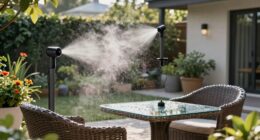
Regular maintenance is key to preventing clogs in your misting system. This involves inspecting nozzles and filters for debris, cleaning or replacing filters as needed, and flushing the system with water or vinegar to dissolve mineral buildup. Using high-quality filters and monitoring water quality also helps keep clogs at bay. Staying on top of these steps guarantees your system runs smoothly and lasts longer. Keep going to discover simple tips for clog-free operation all season.
Key Takeaways
- Regularly inspect and clean filters and nozzles to prevent debris buildup that causes clogs.
- Flush the system periodically with water or vinegar to dissolve mineral deposits and keep nozzles clear.
- Use high-quality filters matched to water flow and particle load to minimize clog risk.
- Monitor water quality and perform routine maintenance to catch issues early and prolong system lifespan.
- Schedule consistent filter replacements and system cleanings to ensure continuous clog-free operation.
How Clogs Reduce Your Misting System’s Effectiveness

Clogs in your misting system can substantially reduce its effectiveness by blocking the nozzles and restricting water flow. When nozzles clog, the spray pattern becomes uneven or narrow, leading to inconsistent coverage. This disruption impacts mist density, making the mist less fine and less even across your desired area. As a result, your plants or outdoor space won’t receive the proper humidity or cooling effect. A clogged nozzle forces water to find alternative paths, which can cause drips or uneven distribution. Over time, these blockages diminish the system’s efficiency, wasting water and reducing cooling or humidifying benefits. Regular maintenance, including nozzle cleaning, is essential to prevent buildup and keep the system running smoothly. Keeping nozzles clear ensures a consistent spray pattern and ideal mist density, maintaining the system’s performance and extending its lifespan. Incorporating preventive maintenance into your routine can help identify potential issues early and ensure optimal operation.
How to Inspect and Clean Your System Regularly

Regular inspection and cleaning are essential to keep your misting system operating at peak performance. Start by examining your system for any visible debris or buildup, paying close attention to the filter installation areas. Remove and clean filters regularly to prevent clogs and ensure proper water flow. During system inspection, check for leaks, blockages, or damaged components that could impair spray quality. Use a soft brush or cloth to wipe dirt and mineral deposits from nozzles and tubing. Make sure filters are properly seated after cleaning or replacement. Regularly inspecting and maintaining your system helps catch potential issues early, reducing downtime and extending the lifespan of your misting system. Color accuracy and proper calibration play a crucial role in maintaining optimal performance, especially when aiming for consistent spray quality. Consistent care keeps your misting system working efficiently and prevents costly repairs. Additionally, monitoring water quality can prevent mineral buildup and other issues that lead to clogs.
Choosing and Replacing the Right Filters for Clog Prevention

Choosing the right filters is essential to prevent clogs and keep your misting system running smoothly. You need to contemplate filter material types, proper sizing, and how often you should replace them. Knowing these points helps you maintain ideal performance and avoid costly repairs. Additionally, selecting filters made from high-quality luxury-grade materials can enhance durability and filtration efficiency, ensuring a consistently pristine mist without frequent replacements. Regularly inspecting your filters and replacing them at appropriate intervals can further prevent system clogs and extend the lifespan of your equipment. Understanding consumer choices and their impact on maintenance can also guide you toward more sustainable and cost-effective options. Incorporating durable survival gear knowledge can also help you choose filters that withstand harsh conditions and frequent handling. Considering filtration standards can further ensure your filters meet safety and performance benchmarks, reducing the risk of system failure.
Filter Material Types
Selecting the right filter material is crucial for preventing clogs and maintaining your misting system’s efficiency. The choice of filter media directly impacts how well your system filters out debris and contaminants. Different filtration materials offer varied benefits, so consider your water quality and system needs. For example, fine mesh screens trap smaller particles, while sponge filters allow for easier cleaning. Incorporating growth mindset principles into your maintenance routine can help you adapt and find solutions when challenges arise. Regularly assess and replace filters to ensure consistent performance. Choosing the correct filter material helps prevent clogs, extends system lifespan, and maintains ideal misting. Proper selection is key to a trouble-free, efficient misting setup. Understanding filter maintenance best practices can further enhance your system’s longevity and performance. Additionally, staying informed about filter material types enables you to make better choices tailored to your specific water conditions.
Proper Filter Sizing
To prevent clogs and guarantee your misting system runs smoothly, it’s essential to use filters that are properly sized for your setup. Proper filter selection depends on matching the filter’s micron rating and size to your system’s water flow and particle load. Sizing accuracy ensures the filter can effectively trap debris without restricting water flow or causing pressure issues. Measure your system’s water pressure and flow rate, then choose a filter that fits within those parameters. Oversized filters may allow particles to bypass, while undersized filters can clog quickly and reduce efficiency. Regularly verify that your filters maintain proper fit and performance, replacing them when necessary. Correct filter sizing is key to preventing clogs, maintaining ideal misting, and extending your system’s lifespan. Additionally, understanding your system’s water flow requirements helps in selecting filters that optimize performance and longevity. Ensuring your filters have the appropriate micron rating is also crucial for effective debris removal without impeding flow. Paying attention to filter maintenance routines can further help in reducing the risk of blockages and system downtime. Incorporating regular inspections into your maintenance routine can help identify potential issues early before they lead to clogs. Moreover, selecting filters with durable materials can enhance their lifespan and reduce the frequency of replacements.
Regular Replacement Schedule
Regularly replacing filters is essential to keep your misting system running effectively and prevent clogs. Proper filter maintenance ensures water flows smoothly and reduces downtime. The replacement frequency depends on your system’s usage and water quality, but sticking to a schedule helps avoid neglect. Consider these key points:
- Regular inspections identify when filters need changing before clogging occurs
- Using the right replacement filters maintains peak filtration and system longevity
- Consistent filter updates prevent buildup that could impair spray performance
- For systems that utilize electric components, such as electric dirt bikes or generators, maintaining clean filters ensures optimal performance and reduces the risk of mechanical issues.
- Being aware of water quality factors can help determine the appropriate replacement interval and prevent premature filter wear. Regularly monitoring water filtration effectiveness is also crucial for maintaining consistent spray quality and system health.
- Additionally, understanding the importance of filter selection can help optimize your maintenance routine and extend the lifespan of your misting system. Conducting proper water testing can further help you adjust your maintenance schedule accurately.
How to Flush Your System and Maintain It for Longevity

Keeping your misting system in top condition requires regular flushing to prevent clogs and buildup. Start by turning off the system and disconnecting the water supply. Flush the lines with clean, fresh water to remove debris and mineral deposits. This helps maintain water quality, which is vital for peak performance. Next, check your system calibration to guarantee spray patterns and pressure are correct; improper calibration can cause uneven misting or blockages. Use a gentle brush or compressed air to clean nozzles and filters carefully. Periodically, run a flushing solution or vinegar through the system to dissolve mineral buildup. Regular maintenance like this prolongs your system’s lifespan, keeps it functioning efficiently, and prevents costly repairs down the line.
Signs Your Misting System Is Clogged and How to Fix It

Over time, even with proper flushing and maintenance, your misting system can develop clogs that hinder performance. Recognizing the signs early helps prevent bigger problems. You might notice drainage issues, where water pools or flows unevenly, indicating blocked outlets. Reduced water pressure is another warning sign, as clogs restrict flow and diminish misting effectiveness. If you observe inconsistent spray patterns or weak mist, these are clear indicators of blockages. To fix this, first check for debris in the nozzles and clear them out. Regularly flush the system to prevent buildup. Also, inspect the filters and clean or replace them if necessary. Addressing these signs promptly ensures your misting system stays efficient and functional.
Easy Tips to Keep Your Misting System Clog-Free All Season

To keep your misting system running smoothly all season, make sure to flush it regularly to prevent buildup. Using high-quality filters also helps catch debris before it reaches nozzles, reducing clogs. These simple steps will save you time and effort while ensuring consistent misting.
Regular System Flushing
Regular system flushing is vital to prevent clogs and guarantee your misting system operates smoothly all season. By performing DIY maintenance regularly, you remove buildup and ensure ideal water flow. Keep in mind that water quality plays an important role; using clean, debris-free water minimizes clogging risk. To effectively flush your system:
- Run clean water through all nozzles and lines
- Use a garden hose or flushing kit for thorough cleaning
- Repeat the process at least once a month during heavy use
Regular flushing not only clears out dirt and mineral deposits but also helps you spot potential issues early. Staying proactive with this simple maintenance step keeps your misting system functioning efficiently and extends its lifespan.
Use Quality Filters
Using high-quality filters is essential for keeping your misting system free of clogs throughout the season. Good filters improve water quality by trapping debris, mineral deposits, and other particles that can cause blockages. Investing in durable filters also extends their lifespan, meaning you won’t need to replace them as often, saving you time and money. Regularly inspect and clean your filters to ensure they’re functioning properly. Poor water quality accelerates filter wear and can lead to clogs, so consider using water treatment solutions if your water source has high mineral content. By choosing reliable filters and maintaining them well, you’ll keep your system running smoothly, ensuring consistent misting and preventing costly repairs down the line.
Frequently Asked Questions
How Often Should I Schedule Professional Maintenance for My Misting System?
You should schedule professional maintenance for your misting system at least once a year. During this time, experts will perform spray nozzle maintenance and a thorough system inspection. Regular inspections help identify potential issues early, preventing clogs and ensuring peak performance. If you notice inconsistent spray or reduced coverage, consider more frequent checks. Maintaining a schedule guarantees your system runs smoothly and extends its lifespan.
Can Environmental Factors Increase the Risk of Clogs in My System?
Environmental hazards and water quality can definitely increase the risk of clogs in your misting system. Contaminants like dirt, algae, or minerals in the water can accumulate and block nozzles over time. Additionally, exposure to outdoor elements such as dust, debris, or pollution can introduce particles that clog the system. To prevent this, regularly check your water source and consider using filters or treated water to keep your system running smoothly.
Are There Specific Cleaning Products Recommended for Misting System Filters?
Think of your misting system’s filters as the heart of clean airflow—keeping them pristine is essential. Use gentle, non-corrosive cleaning agents like vinegar or mild soap for filter maintenance, avoiding harsh chemicals that can damage parts. Regularly cleaning your filters with these recommended products ensures smooth operation, preventing clogs and extending your system’s lifespan. Remember, consistent care keeps your misting system humming like a well-oiled machine.
What Are the Consequences of Ignoring Early Signs of Clogs?
Ignoring early signs of clogs can lead to serious clog-induced damage, which may cause your misting system to underperform or fail altogether. When you overlook these signs, debris buildup restricts water flow, increasing pressure and risking leaks or system failure. Addressing clogs promptly guarantees your system works efficiently, prolongs its lifespan, and prevents costly repairs caused by neglecting the warning signs.
How Can I Prevent Mineral Buildup in My Misting System Over Time?
Think of your misting system as a delicate garden needing care. To prevent mineral buildup, regularly flush the system, just like clearing debris from a fountain. Use a descaling solution to dissolve stubborn mineral deposits and guarantee water quality is high. Avoid hard water and install a water softener if needed. Consistent system flushing keeps your misting system running smoothly, preventing clogs caused by mineral deposits over time.
Conclusion
Think of your misting system as a delicate garden hose; when you neglect its maintenance, clogs can choke its flow and ruin your efforts. Regular inspections, timely cleaning, and choosing the right filters keep the water flowing smoothly, ensuring your system works like a well-oiled machine. Remember, a little upkeep now prevents a flood of problems later—so stay vigilant and treat your system like a trusted friend, and it’ll reward you with perfect mist every time.