
When choosing deck materials, you can opt for classic wood, which offers natural beauty, warmth, and customization through staining, or go with composite, which provides a modern look, low maintenance, and eco-friendly options made from recycled materials. Wood decks typically need more upkeep but can be tailored to your style, while composites are durable and resistant to weather and pests. To explore which design suits your needs best, consider the features of each option carefully.
Key Takeaways
- Wood offers natural, authentic aesthetics with customizable staining and shaping options, while composite mimics natural textures with diverse colors.
- Composite decks provide extensive design flexibility, including various colors, textures, and modern finishes for personalized styles.
- Traditional wood decks lend a timeless look valued for warmth and character, whereas composites often have a sleek, uniform appearance.
- Both materials can be tailored to fit different design preferences, with wood allowing more rustic or natural finishes and composites offering contemporary options.
- The choice depends on aesthetic priorities, with wood emphasizing natural charm and composites focusing on modern, low-maintenance design.
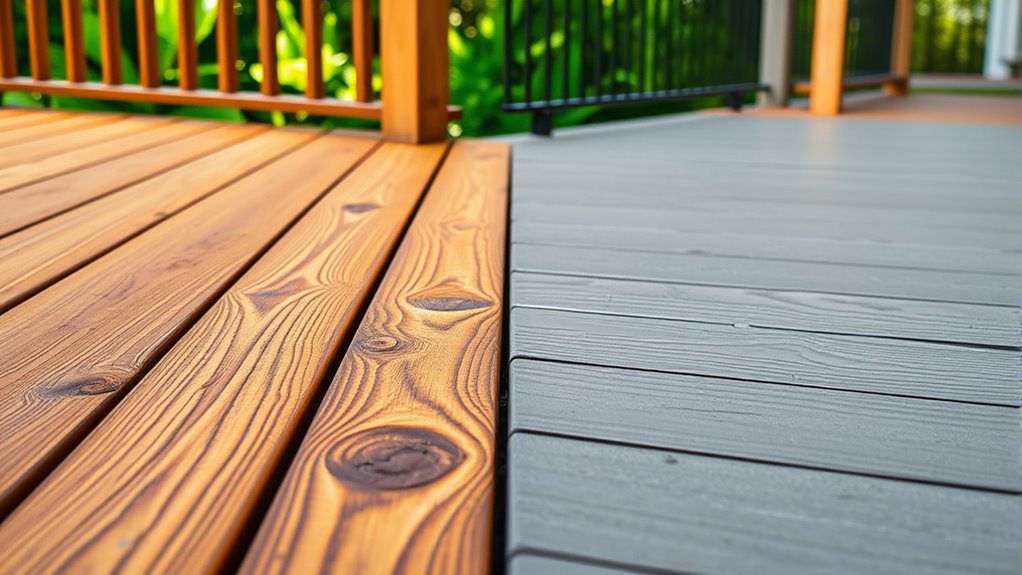
Are you unsure which deck design best suits your outdoor space? Choosing between wood and composite materials can feel overwhelming, but understanding their differences helps you make an informed decision. If you’re leaning toward sustainability, you’ll find that many composite options now incorporate sustainable materials, making them an eco-friendly choice. These environmentally conscious composites often contain recycled wood fibers and plastic, reducing the demand for new resources. This shift toward greener materials means you can enjoy a beautiful deck while minimizing your environmental impact. Plus, composite decks often come with extensive customization options, giving you the freedom to select colors, textures, and finishes that match your style and complement your home’s aesthetic. Whether you want a natural look or something more modern, composite materials provide versatile design choices that cater to your personal taste.
On the other hand, traditional wood decking offers a timeless appeal that many homeowners cherish. With wood, you have the opportunity to select from various species like cedar, redwood, or tropical hardwoods, each with its unique character and grain pattern. Wood decks are highly customizable in terms of stain and finish, allowing you to tailor the look to your preferences. If you prefer a more natural, rustic feel, wood can be easily shaped and stained to enhance its beauty and fit your outdoor ambiance. However, keep in mind that wood requires regular maintenance, such as sealing and staining, to keep it looking its best over time. Despite this, many people appreciate the authenticity and warmth that only real wood can provide.
When weighing your options, consider sustainability and customization. Composite materials are increasingly designed with eco-friendly practices, making them a responsible choice for environmentally conscious homeowners. They offer a variety of styles and colors, so your deck can be as unique as you want. Wood, while more traditional and naturally beautiful, demands more upkeep but provides unmatched authenticity and character. Your choice should reflect your lifestyle, budget, and aesthetic preferences. If you value low maintenance and eco-conscious options, composite decking might be the way to go. But if you’re after a classic look with natural charm, wood remains a popular, timeless choice. Ultimately, understanding your priorities will help you select the perfect deck design to enhance your outdoor living space.
Additionally, considering the longevity of each material can help you make a more sustainable choice, as some materials may require less frequent replacement or repairs over time.
Frequently Asked Questions
How Do Maintenance Requirements Compare Between Wood and Composite Decks?
You’ll find that composite decks require less maintenance than wood. With composite, you mainly need to do regular cleaning routines using soap and water, and sealing isn’t usually necessary, saving you time and effort. Wood decks, on the other hand, need frequent sealing to protect against weather and pests, along with regular cleaning routines to prevent mold and rot. Overall, composites are more low-maintenance, letting you enjoy your deck more.
Which Material Offers Better Resistance to Weather and Pests?
Oh, the timeless battle—wood versus composite. When it comes to weather and pests, composites take the crown. They boast superior moisture resistance, preventing rot and warping, and are engineered to resist pests, so termites and bugs stay away. If you want a deck that laughs in the face of nature’s worst, go composite. It’s practically invincible, while wood might just need a little extra prayer and paint.
What Is the Typical Lifespan of Wood Versus Composite Decks?
A typical wood deck lasts around 10-15 years with proper deck staining and wood treatment, but it may require regular maintenance to prevent rot and pests. On the other hand, composite decks usually last 25-30 years, with minimal upkeep. You’ll find that composite materials are more durable over time, making them a better investment if you want a long-lasting, low-maintenance outdoor space.
Are There Eco-Friendly Options for Both Wood and Composite Materials?
Yes, eco-friendly options exist for both wood and composite decks. You can choose sustainably sourced wood, which reduces environmental impact, or opt for composite materials made from recycled plastics, lowering waste. Look for options with biodegradable finishes that break down naturally without harming the environment. These choices help you enjoy your deck while staying eco-conscious, supporting sustainability, and minimizing your carbon footprint.
How Do Costs Differ Over the Long-Term for Each Deck Type?
You’ll find that the cost comparison favors wood initially, as it’s usually cheaper upfront. However, over the long-term, composite decks tend to be more cost-effective because they require less maintenance and last longer, saving you money on repairs and replacements. When considering your budget, think about these factors carefully, as composite decks might have a higher initial investment but can be more economical over time.
Conclusion
Choosing between wood and composite for your deck depends on your style and maintenance preferences. For example, Sarah opted for composite after a neighbor’s wood deck rotted quickly, saving her time and money. If you want a low-maintenance, durable option that looks great year after year, composite is ideal. But if you love the natural look and are willing to do regular upkeep, wood can be a beautiful choice. Think about your lifestyle and pick what fits best!