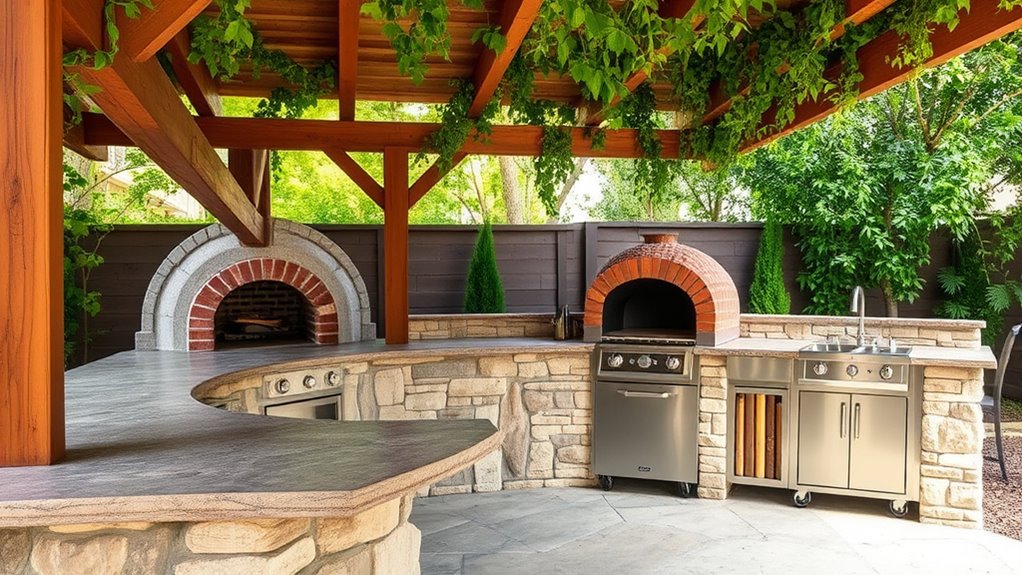

To design a sustainable outdoor cooking space, choose eco-friendly materials like reclaimed wood, bamboo, or natural stone for surfaces and structures. Incorporate solar-powered lighting and solar ovens to cut energy use, and opt for biodegradable utensils to reduce waste. Install a compost bin and use rainwater harvesting for cleaning and cooking. Selecting durable, recyclable cookware like cast iron adds longevity. Keep exploring for more practical tips to make your outdoor kitchen truly eco-conscious.
Key Takeaways
- Incorporate reclaimed or natural materials like bamboo, stone, or reclaimed wood for countertops and structures.
- Use solar-powered lighting and solar ovens to reduce energy consumption and promote eco-friendly cooking.
- Choose biodegradable utensils and cookware made from sustainable materials to minimize waste and environmental impact.
- Implement rainwater harvesting and composting systems to conserve water and responsibly manage food waste.
- Design with durability in mind, selecting long-lasting, recyclable materials that withstand outdoor conditions over time.

Creating a sustainable outdoor cooking space allows you to enjoy delicious meals while minimizing your environmental impact. One of the best ways to do this is by incorporating eco-friendly tools and methods that reduce waste and energy consumption. For example, using solar ovens can considerably cut down your reliance on traditional fuel sources. These ovens harness sunlight to cook your food, making them an efficient and eco-conscious choice. They’re especially useful during sunny days and can serve as a reliable alternative for roasting, baking, or even boiling water. Plus, solar ovens are portable and easy to set up, so you can enjoy sustainable cooking anywhere outdoors. Pairing this with compostable utensils further enhances your eco-friendly setup. These utensils are made from biodegradable materials like plant fibers, cornstarch, or other compostable bioplastics, so they break down naturally without polluting the environment. When you opt for compostable utensils, you eliminate the need for single-use plastics that often end up in landfills or oceans, harming wildlife and ecosystems. Keeping a supply of these utensils on hand encourages mindful consumption and waste reduction during your outdoor meals. Incorporating durable, natural materials for your countertops, tables, and cooking surfaces—such as reclaimed wood, stone, or bamboo—also supports sustainability because they’re renewable and have minimal environmental footprints. You should also consider installing a compost bin nearby to dispose of food scraps responsibly. Composting not only reduces waste but also enriches your soil if you have a garden. When selecting cookware, look for cast iron or stainless steel options, which last longer and are easier to recycle compared to non-stick or plastic alternatives. This choice ensures your setup remains functional over many seasons with minimal waste. Additionally, energy-efficient lighting like solar-powered lanterns or string lights can illuminate your cooking area without increasing your energy consumption. When planning your space, keep in mind the importance of water conservation. Installing a rainwater harvesting system can supply water for cleaning or even cooking, further reducing your environmental footprint.
Frequently Asked Questions
How Can I Incorporate Renewable Energy Sources Into My Outdoor Kitchen?
You can incorporate renewable energy sources into your outdoor kitchen by installing solar power panels to generate electricity for lighting and appliances. Consider adding small wind turbines if your area has consistent wind, which can supplement power needs. These options reduce reliance on the grid, lower your carbon footprint, and promote sustainability. With proper placement and maintenance, solar and wind energy become seamless, eco-friendly solutions that make your outdoor cooking space more sustainable and efficient.
What Are the Best Eco-Friendly Cleaning Products for Outdoor Cooking Surfaces?
You should choose biodegradable cleaners and natural disinfectants for your outdoor cooking surfaces. These eco-friendly products effectively clean without harming the environment or your family. Look for options made from plant-based ingredients, free from harsh chemicals, and labeled biodegradable. Regularly using natural disinfectants helps keep your surfaces sanitized while maintaining sustainability. This approach guarantees your outdoor kitchen stays clean, safe, and eco-conscious, supporting your commitment to sustainability.
How Do I Ensure My Outdoor Cooking Space Is Accessible for All Users?
You guarantee your outdoor cooking space is accessible for all users by incorporating universal design principles and adaptive features. Install ramps and level surfaces to accommodate wheelchairs, and choose countertops at various heights for comfort. Use clear signage and tactile markers for those with visual impairments. Make sure doorways are wide enough, and include adjustable or ergonomic tools. These steps create an inclusive environment where everyone can enjoy cooking comfortably.
What Are Cost-Effective Sustainable Material Options for Large Outdoor Countertops?
You should consider using recycled materials like reclaimed wood or recycled composite for your large outdoor countertops, as they’re cost-effective and eco-friendly. Additionally, sourcing materials locally reduces transportation emissions and supports your community. Look for nearby suppliers offering recycled stone, concrete, or other sustainable options. These choices not only save money but also lower your environmental impact, creating a durable, sustainable, and budget-friendly outdoor cooking space.
How Can I Minimize Water Usage in My Outdoor Cooking and Cleaning Routines?
Minimize water use by making smart switches to water-efficient fixtures and harvesting rainwater. Focus on fixing leaks swiftly and installing low-flow faucets to cut consumption. Collect rainwater for outdoor cleaning and cooking needs, reducing reliance on tap water. Using these simple, sustainable steps, you’ll save water, money, and energy, creating a more eco-friendly outdoor cooking space that’s both efficient and environmentally responsible.
Conclusion
By choosing eco-friendly materials and thoughtful design, you’re laying the groundwork for a cooking space that’s both functional and sustainable. Remember, a well-planned outdoor kitchen can be a game-changer, turning your backyard into a haven that’s good for the environment and your soul. Keep your eye on the prize, stay committed to eco-conscious choices, and you’ll reap the benefits for years to come. After all, a stitch in time saves nine.