When choosing patio furniture, consider whether you prefer the rustic charm of wicker or the sleek durability of aluminum. Wicker offers a cozy, traditional look but requires more maintenance and isn’t as weather-resistant, especially natural varieties. Aluminum is lightweight, resistant to rust, and easy to care for, making it ideal for outdoor use. To find out which material best fits your needs and style, explore the details further.
Key Takeaways
- Wicker offers a warm, rustic aesthetic, while aluminum provides sleek, modern designs for outdoor spaces.
- Synthetic wicker and aluminum are highly weather-resistant, suitable for year-round outdoor use.
- Aluminum furniture is lightweight and easy to move, whereas natural wicker can be heavier and less durable outdoors.
- Wicker requires regular maintenance to prevent cracking and fading; aluminum is low-maintenance and easy to clean.
- Both materials can be customized with cushions and finishes, but wicker generally enhances traditional or tropical decor.
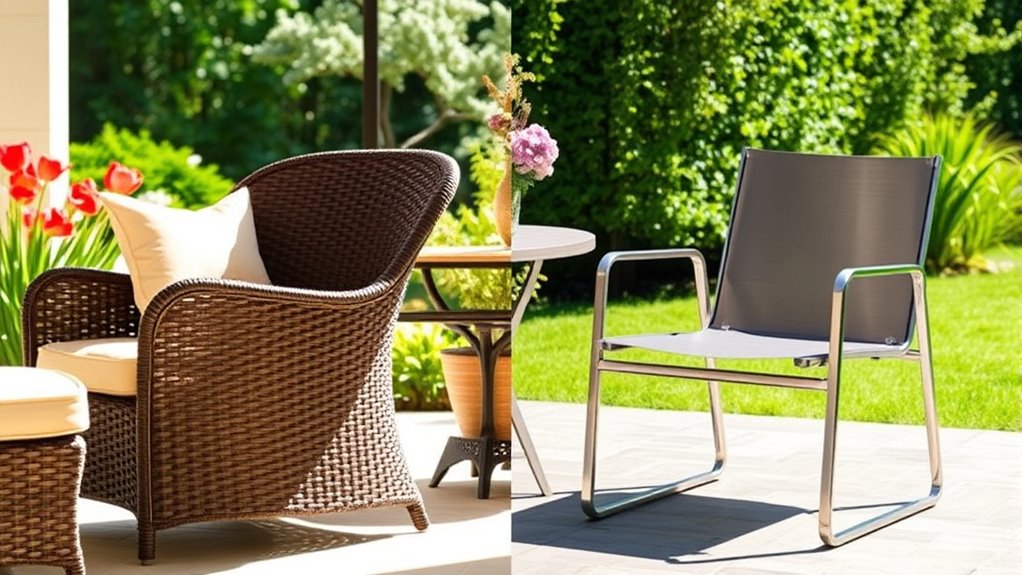
Are you wondering which patio furniture materials are best suited for your outdoor space? Choosing between wicker and aluminum depends on your priorities for durability, maintenance, comfort, style, and portability. Both materials have unique advantages that can help you create the perfect outdoor setting.
Deciding between wicker and aluminum patio furniture depends on durability, style, maintenance, and portability preferences.
Wicker furniture, whether natural or synthetic, offers a warm, inviting look that enhances cozy outdoor atmospheres. Natural wicker, made from rattan, bamboo, or willow, provides a traditional, rustic charm and a cushioned feel that many find appealing. However, it’s less weather-resistant and can decay or deteriorate faster when exposed to the elements, making it better suited for covered patios or areas with partial shelter. It requires more upkeep, including regular cleaning and re-sealing, to prevent cracking and fading. On the other hand, PE wicker, crafted from polyethylene strands woven over a sturdy frame, provides excellent durability and weather resistance. It handles water, UV rays, and temperature changes well, making it a smart choice for outdoor use. Synthetic wicker can mimic the traditional look while offering modern durability, and it can be left outside year-round, though extremely harsh conditions like heavy snow or strong winds might challenge it. All-weather wicker can stay outdoors year-round without significant degradation, making it even more suitable for long-term outdoor exposure. Additionally, weather-resistant materials are essential for ensuring longevity in outdoor furniture.
Aluminum furniture stands out for its exceptional durability and minimal maintenance. It’s highly resistant to rust and corrosion, so rain, sun, and wind won’t damage it easily. Aluminum furniture is lightweight, making it simple to move or store seasonally, and it often features sleek, contemporary designs with clean lines and smooth finishes. The firmness of aluminum can be enhanced with cushions, which add comfort and support. Maintenance is straightforward—just wipe it down with a damp cloth, and it resists corrosion without needing extra treatments. Occasionally, you might want to touch up the powder coating if minor surface damage occurs to keep it looking fresh.
In terms of style, wicker tends to blend seamlessly with rustic, tropical, or traditional outdoor décors, providing a classic, natural aesthetic. Aluminum, with its modern appeal, suits contemporary or minimalist settings, especially when powder-coated in various colors for customization. Comfort can vary: wicker’s natural flex offers support and cushioned comfort, while aluminum’s firm structure can be made comfortable with outdoor cushions.
Ultimately, your choice depends on your climate, maintenance willingness, preferred style, and how often you want to move your furniture. If you want low-maintenance, weather-resistant pieces with a modern look, aluminum is a great pick. If you prefer a classic, cozy vibe and don’t mind extra upkeep, wicker—especially synthetic—can beautifully complement your outdoor space.
Frequently Asked Questions
How Do Wicker and Aluminum Furniture Compare in Environmental Impact?
You’re wondering how wicker and aluminum furniture stack up environmentally. Wicker, especially natural, has a lower impact since it’s renewable, biodegradable, and requires less energy to produce. Aluminum, though durable and recyclable, involves energy-intensive mining and refining, leading to higher emissions. However, its recyclability means it can be reused endlessly, reducing long-term environmental harm. Overall, natural wicker is more eco-friendly, but synthetic options and aluminum can be sustainable choices with proper practices.
Which Material Requires Less Maintenance Over Time?
Back in the day, folks relied on sturdy, low-maintenance options, and today aluminum still leads in ease. You’ll find aluminum furniture requires less upkeep, needing only occasional cleaning with mild soap and water. Wicker, especially synthetic types, demands more regular attention—cleaning crevices and occasional recoating. So, if you want less hassle over time, aluminum’s your best pick, saving you both time and money in maintenance.
Are There Safety Concerns With Aluminum or Wicker Outdoor Furniture?
You should know that both materials have safety concerns. Aluminum furniture can corrode without protective coatings, risking collapse, but stays safe if properly maintained and coated. Wicker, especially natural types, can splinter, mold, or catch fire, posing injury or respiratory risks. Always check for proper support, avoid mold buildup, and keep fire safety in mind with wicker. With aluminum, verify coatings are intact and rust-free for safety.
How Do These Materials Perform in Extreme Weather Conditions?
When choosing furniture for extreme weather, you’ll find that both wicker and aluminum perform well. Wicker, made from synthetic fibers, resists fading, cracking, and moisture damage, making it durable in rain, sun, and cold. Aluminum frames are rustproof, lightweight, and withstand wind and snow without warping. While wicker needs some protective care during storms, aluminum generally requires minimal maintenance, ensuring your outdoor furniture stays resilient through harsh conditions.
Can Wicker or Aluminum Furniture Be Easily Recycled?
They say “what’s old is new again,” but when it comes to recycling, not all materials are created equal. Wicker, especially natural types, isn’t easily recycled—often ending up in landfills or composted. Aluminum, on the other hand, is highly recyclable and can be reused endlessly with minimal energy. You’ll find it easier to recycle aluminum furniture, provided you disassemble non-metal parts, making it a more sustainable choice.
Conclusion
When choosing between wicker and aluminum for your patio furniture, consider how each material fits your lifestyle and style. Did you know that aluminum furniture is 100% recyclable, making it an eco-friendly choice? Whether you prefer the timeless charm of wicker or the sleek durability of aluminum, your decision shapes your outdoor space’s vibe. So, picture yourself relaxing on a durable, eco-friendly chair—your perfect patio awaits!