Smart composters make turning kitchen waste into usable soil easier and faster by automating the process with sensors that monitor conditions like temperature and moisture. They simplify composting for busy people or beginners, ensuring ideal conditions without manual effort. These innovative devices reduce landfilling, lower environmental impact, and produce rich compost to boost your garden’s health. Discover how modern technology can transform your waste into a valuable resource with minimal hassle.
Key Takeaways
- Smart composters automate conditions like temperature and moisture, speeding up composting from kitchen waste.
- They convert kitchen scraps and yard waste into nutrient-rich soil, reducing landfill waste and environmental impact.
- Equipped with sensors and app connectivity for easy, remote monitoring and maintenance.
- Compact, odor-controlled designs make composting practical for small spaces and urban environments.
- They promote sustainable gardening by producing high-quality compost that enhances soil health and plant growth.
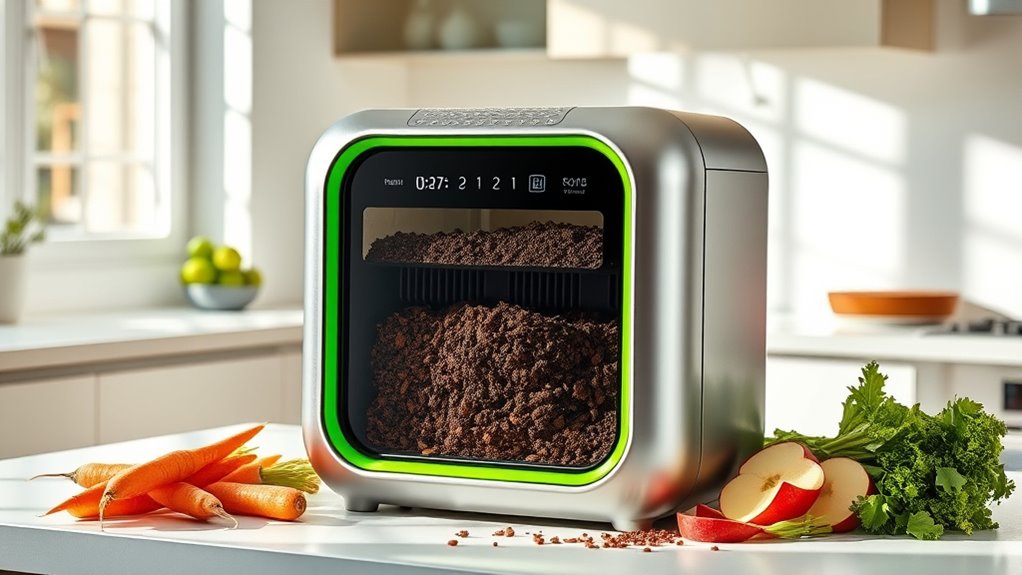
Smart composters are revolutionizing how you turn kitchen scraps and yard waste into nutrient-rich soil. These innovative devices simplify composting techniques, making it easier for you to recycle organic waste and improve your garden’s health. Instead of traditional compost bins that require frequent turning and monitoring, smart composters use technology to automate many processes, guaranteeing ideal conditions for composting without much effort on your part. They often come with sensors that track temperature, moisture, and aeration, adjusting the internal environment automatically. This means you don’t have to guess when to turn the pile or add water; the device handles it for you, speeding up the composting process and reducing the time it takes to produce usable soil.
Using a smart composter aligns perfectly with waste reduction methods. Every kitchen scrap—fruit peels, coffee grounds, eggshells—and yard waste like grass clippings and leaves can be efficiently transformed into valuable compost, reducing the amount of waste sent to landfills. This not only minimizes your environmental footprint but also cuts down on waste management costs and greenhouse gas emissions from organic waste decomposition in landfills. As you adopt a smart composter, you’re actively participating in sustainable waste reduction practices that benefit the planet and your garden simultaneously.
Transform kitchen scraps and yard waste into eco-friendly compost, reducing landfill waste and supporting sustainable gardening.
The convenience of smart composters encourages consistent composting habits. You don’t need to be an expert or dedicate hours tending to your compost pile. Instead, you can simply add your kitchen and yard waste, and the device takes care of the rest. Many models are compact and odor-controlled, making them suitable for small spaces like apartments or urban yards. They also often feature app connectivity, allowing you to monitor and manage your compost remotely. This technological edge guarantees that your composting process remains efficient, even if you’re busy or new to composting techniques. Moreover, some smart composters are designed with sustainability principles in mind, further enhancing their environmental benefits.
Furthermore, the nutrient-rich compost produced by these devices can considerably enhance your soil’s health, leading to healthier plants and higher yields. By turning waste into a valuable resource, you close the loop in your gardening or household waste cycle. Instead of discarding organic matter, you’re creating a sustainable cycle that benefits your garden and the environment. Smart composters exemplify how modern technology can make waste reduction methods more accessible and effective, empowering you to contribute to a more sustainable future with minimal effort. They’re a smart investment in your garden’s productivity and the planet’s health.
Frequently Asked Questions
How Long Does It Typically Take to Produce Compost?
Composting usually takes anywhere from a few weeks to several months, depending on factors like composting timelines and microbial activity. If you keep the compost moist, aerated, and balanced with greens and browns, it accelerates microbial activity, speeding up the process. Typically, you’ll see usable compost in about 4 to 8 weeks with active management, but it can take longer if conditions aren’t ideal.
Can Smart Composters Handle Large Quantities of Waste?
Think of smart composters as the Swiss Army knives of waste management—they can handle quite a bit if they’re built for it. Many models come with impressive waste capacity and scalability features, allowing you to process large quantities of kitchen waste efficiently. Just make certain you choose one that matches your waste volume, so it doesn’t get overwhelmed, turning your composting efforts into a smooth, eco-friendly operation.
Are There Specific Kitchen Waste Types Not Suitable for Composting?
Certain kitchen waste types aren’t suitable for composting, like dairy products and fruit peels, because they can attract pests or cause odors. Dairy items, in particular, break down slowly and may lead to mold issues. Fruit peels are generally compostable but should be added in moderation to avoid imbalance. Stick to vegetable scraps, coffee grounds, and eggshells for the best composting results with your smart composter.
How Energy-Efficient Are Smart Composters?
Smart composters are like the fuel-efficient cars of eco-friendly tech, consuming relatively low energy. Their energy consumption is optimized through smart sensors and automated controls, making them highly efficient. This means you’ll enjoy eco-friendly benefits without worrying about high electricity bills. Overall, they turn your kitchen waste into valuable soil while using minimal energy, helping you reduce your carbon footprint and promote sustainability effortlessly.
What Maintenance Is Required for Optimal Composting?
You need to follow simple maintenance routines for ideal composting. Regularly empty the compost bin to prevent odors, and guarantee you add a balanced mix of green and brown materials. Keep the compost moist, but not soaked, and occasionally stir or rotate the contents to aerate. Incorporate composting tips like avoiding meat or dairy, and monitor temperature and humidity levels. These steps help your smart composter work efficiently and produce quality soil.
Conclusion
Smart composters make turning kitchen waste into rich soil effortless, almost like having a personal gardener at your fingertips. They simplify the process, saving you time and effort while helping the environment. Think of them as a bridge between your kitchen and a healthier planet—turning scraps into life-giving soil, just like magic. By embracing this technology, you’re nurturing your garden and the Earth, one waste piece at a time.