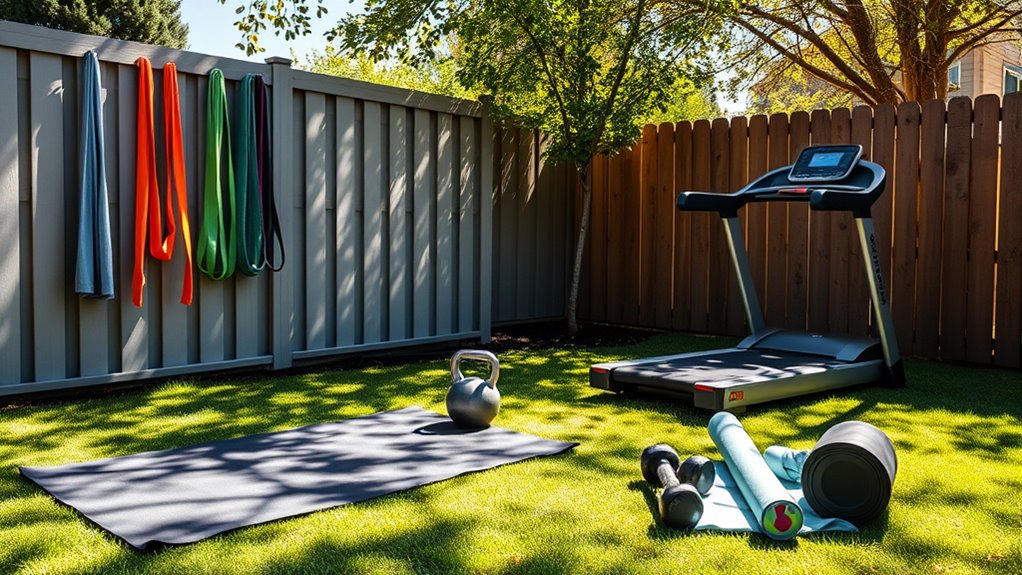

To set up a backyard mini-gym, focus on versatile equipment that fits your space and fitness goals. Include essentials like adjustable dumbbells, resistance bands, a pull-up bar, and a compact cardio machine such as a foldable treadmill or rowing machine. Add space-efficient tools like kettlebells, medicine balls, and a functional trainer for full-body workouts. Good organization keeps the area safe and inviting. Keep exploring to discover how to make your mini-gym both effective and budget-friendly.
Key Takeaways
- Prioritize versatile, space-efficient equipment like resistance bands, adjustable dumbbells, and a pull-up bar for full-body workouts.
- Include cardio options such as foldable treadmills or rowing machines that fit your space and budget.
- Designate specific zones for strength, cardio, and flexibility to optimize layout and safety.
- Use wall-mounted racks and weatherproof storage to keep your mini-gym organized and clutter-free.
- Incorporate DIY or affordable gear like resistance bands and homemade sandbags to enhance variety cost-effectively.
Choosing the Right Strength Training Equipment

Choosing the right strength training equipment for your backyard mini-gym depends on your fitness goals, available space, and budget. First, identify what you want to achieve—muscle building, functional fitness, or general strength—and select gear accordingly. For upper body and core, pull-up bars and dip stations are effective and space-efficient. Resistance bands offer versatile, portable options for multiple muscle groups, while weighted vests add resistance to bodyweight exercises. Dumbbells and kettlebells provide dynamic workouts, with adjustable options saving space. Consider durability and weather resistance for outdoor use. Multi-functional equipment, like power racks with safety features, supports heavy lifting safely. Balance your budget with essential tools that match your goals, ensuring your setup remains practical, versatile, and safe. According to industry standards, selecting equipment made from weather-resistant materials can extend the lifespan of your outdoor gym gear. Additionally, understanding Gold IRA regulations can help diversify your investment portfolio should you choose to include precious metals in your financial planning.
Essential Cardio Machines for Small Spaces

Looking to incorporate effective cardio into your small backyard gym? Compact treadmills are a great choice—manual models save power, and foldable ones maximize space. With slim designs around 15-20 inches wide, they fit narrow areas and support walking, jogging, and sprints, some with incline options for variety. Rowing machines offer full-body workouts that engage arms, legs, and core while being gentle on joints. Many fold for easy storage and provide high calorie burn, making them efficient for fat loss. Elliptical trainers deliver low-impact, smooth motion targeting both upper and lower body, with models that fit small spaces and offer resistance levels for intensity. Fan bikes and air bikes are space-efficient, engaging upper and lower body for intense calorie-burning sessions. Stair climbers focus on legs and glutes, fitting into tight spots with foldable options. Compact cardio equipment can also help improve cardiovascular endurance and overall fitness without requiring a large footprint. Incorporating a variety of machines ensures a well-rounded workout that targets different muscle groups and keeps your routine engaging.
Space-Saving Gear for Versatile Workouts

Maximizing space in your backyard gym means selecting versatile equipment that can serve multiple functions. Resistance bands offer full-body engagement and are highly space-efficient, perfect for all fitness levels. Adjustable dumbbells and kettlebells provide multiple weight options in a compact form, supporting various strength exercises. Weighted vests add resistance to bodyweight workouts without taking up extra space. Pull-up bars, whether DIY or wall-mounted, enable upper body and core training without bulky machines. Incorporating space-efficient design principles ensures your workout area remains uncluttered and functional.
Functional and Total-Body Training Essentials

To get the most out of your backyard gym, focus on multi-exercise equipment that targets multiple muscle groups at once. Incorporate bodyweight and resistance tools to build strength and mobility without taking up too much space. Look for gear that’s compact and versatile, so you can easily switch between functional and total-body workouts. Pimple Patches are a popular solution for targeted skin treatment, which emphasizes the value of specific equipment for particular fitness goals. Having a designated space helps you stay consistent and motivated in your training routine.
Multi-Exercise Equipment Options
Multi-exercise equipment is essential for creating a versatile and efficient backyard gym, enabling you to target multiple muscle groups in a single workout. Gym rigs and power racks form a sturdy foundation for barbell lifts, dips, pull-ups, and suspension training. Their adjustable components boost exercise variety and allow for total-body training, supporting heavy lifts with durable steel frames. Adjustable benches add versatility, supporting seated, lying, and inclined positions for exercises like presses and rows. Selectorized dumbbells facilitate quick weight changes, making resistance training more efficient in limited space. Weatherproof cardio machines like bikes and rowers help improve endurance outdoors. Combining these options with proper storage and durable flooring maximizes space, safety, and workout variety, ensuring your backyard mini-gym meets all your functional training needs. Including multi-use equipment like kettlebells and sandbags provides additional options for dynamic, full-body workouts, further enhancing the functionality of your outdoor fitness space.
Bodyweight and Resistance Tools
Building a functional backyard gym means incorporating bodyweight and resistance tools that support total-body training without taking up much space. A pull-up bar is a must-have for upper body strength, allowing you to perform pull-ups and chin-ups. A dips station helps target your triceps and chest, while parallel bars enable exercises like L-sits and leg raises. Knee raises are great for core work and can be done on a pull-up bar or dedicated station. Planks provide a simple yet effective core workout. Resistance bands are versatile, portable, and budget-friendly, perfect for adding resistance to various exercises. Kettlebells, dumbbells, and medicine balls allow for dynamic, full-body movements. These tools make a compact, effective workout setup that hits all major muscle groups.
Space-Efficient Functional Gear
Looking to maximize your backyard gym space? Space-efficient functional gear helps you get full-body workouts without clutter. These versatile tools fit neatly into small areas and support various exercises.
- Rowing machines offer low-impact cardio and engage multiple muscle groups, with foldable models for easy storage. They can also help improve overall cardiovascular health while toning muscles.
- Kettlebells enable swinging, lifting, and squatting, perfect for strength and endurance, and take up minimal space. They are highly adaptable for various workout routines and can be stored easily when not in use.
- Functional trainers with adjustable pulleys provide countless movement options for real-world strength, with compact designs like the SlimBeam. Functional trainers are versatile equipment that can perform multiple exercises, eliminating the need for separate machines.
- Power racks with attachments combine multiple exercises—squats, pull-ups, presses—in one structure, saving space while offering safety and versatility. They also allow you to incorporate resistance training into your routine efficiently.
This gear maximizes your workout options while keeping your backyard organized and functional.
Maintenance Tips to Keep Your Equipment in Top Shape

To keep your backyard gym equipment functioning smoothly, regular maintenance is essential. After each workout, wipe down surfaces with disinfectant wipes or a clean cloth to remove sweat and grime, preventing corrosion and odors. Perform deep cleanings periodically to avoid dirt buildup that can impair operation, using gentle cleaners on electronic parts and microfiber cloths for screens and sensors. Dust and vacuum beneath equipment monthly to prevent overheating. Check bolts, screws, cables, and joints regularly for looseness or damage, tightening or replacing parts as needed. Lubricate moving components like treadmill belts and elliptical joints every few months, following manufacturer guidelines. Consider using air purifiers to improve indoor air quality around your workout area, especially if you have allergies or respiratory sensitivities. Protect outdoor equipment with waterproof covers, anti-rust sprays, and weatherproofing treatments. Schedule routine inspections and cleanings to ensure your equipment stays in top shape and lasts longer.
Budget-Friendly Options for a Fully Equipped Mini-Gym

Creating a fully equipped mini-gym doesn’t have to break the bank. You can build an effective setup with budget-friendly options that deliver variety and results. Start with adjustable dumbbells or fixed sets—they’re versatile for strength training and cost-effective. Kettlebells offer full-body workouts and can replace dumbbells for ballistic movements. Resistance bands are lightweight, inexpensive, and perfect for all fitness levels. A doorway pull-up bar provides upper-body strength without taking up much space. Resistance training equipment such as resistance bands and dumbbells are essential for a comprehensive workout at home. Here are some budget-friendly essentials: – Resistance bands under $50 – A sturdy doorway pull-up bar – A yoga mat for floor exercises and stretching – Homemade sandbags for functional strength. Additionally, choosing high-quality workout gear can enhance your training experience and durability of the equipment. These options keep costs low while maximizing your workout possibilities.
Creating a Layout for Efficiency and Comfort

To create an effective backyard gym layout, you need to optimize space by organizing distinct workout zones that suit your routines. Make sure pathways are clear and equipment is positioned for safe, easy access to prevent accidents. With thoughtful planning, your gym will be both efficient and comfortable to use. Additionally, consider incorporating soundproofing materials to minimize noise disturbance and create a more enjoyable environment. Being aware of relationship warning signs, such as emotional distance or irritability, can help you maintain healthy interactions with workout partners or family members sharing your space.
Optimize Space Usage
Designing an efficient backyard mini-gym starts with precise measurement and mapping of your available space. Use scaled drawings or grid paper to accurately represent your yard or shed. Include fixed features like trees, fences, and sheds to assess real space. Create movable cutouts of your equipment footprints to test different layouts without physical rearrangement. Remember to leave enough clearance around each piece for safe movement and full exercise range. Proper planning ensures optimal use of your limited area. Incorporate multi-functional furniture to maximize versatility within your space. – Install wall-mounted racks or shelves for off-floor storage of small gear – Use furniture or benches with hidden compartments to minimize clutter – Select multi-purpose items that combine functions, like a storage bench – Opt for weather-resistant storage units to keep equipment protected outdoors
Design Workout Zones
Organizing your backyard mini-gym into dedicated zones enhances both efficiency and comfort during workouts. Start by creating separate areas for cardio, strength, flexibility, and functional training to minimize clutter and streamline your routine. Place cardio equipment like treadmills or bikes in a well-ventilated space with enough room for movement. Strength zones should have benches, racks, and weights arranged safely and accessibly. Flexibility and mobility areas require open floor space with mats for stretching or yoga. Functional zones should feature versatile gear like kettlebells and resistance bands, arranged for circuit training. Position zones thoughtfully to avoid weather damage, using shelters or weatherproof materials. Clear pathways between zones prevent congestion, while non-slip flooring enhances safety. Proper zone planning boosts workout flow and comfort. Additionally, understanding GMC tuning can inspire the customization and optimization of your equipment setup for a more personalized workout experience.
Ensure Safe Accessibility
Creating a layout that guarantees safe accessibility starts with planning clear, unobstructed pathways and adequate clearances around equipment. You want to assure smooth movement for everyone, including wheelchair users and those with assistive devices. Maintain pathways of at least 36 inches wide with non-slip surfaces and gentle slopes of no more than 1:12. Include passing spaces where paths narrow or users cross. Arrange equipment to prevent collisions and allow easy approach and access. Designs should reflect inclusive principles to accommodate diverse impairments. Keep entry and exit points wide, threshold-free, and well-lit. Design turning zones of at least 60 inches diameter near doorways. Use contrasting colors or tactile cues for clear navigation. Separate high-impact zones from low-impact areas for safety.
Frequently Asked Questions
How Much Space Do I Need for a Functional Mini-Gym Setup?
You’re wondering how much space you need for a functional gym setup. Generally, a compact area of about 8×7 feet can fit basic weightlifting gear like a power rack, bench, and some plates. If you want more room for cardio or multiple stations, consider a larger shed—12×16 or 12×24 feet works well. Always leave enough space for safe movement, especially around heavy or Olympic lifts.
What Safety Precautions Should I Follow With Home Gym Equipment?
When using home gym equipment, you should follow essential safety precautions. Make sure all equipment is on a sturdy, level surface, and use anti-slip mats to prevent slipping. Always follow manufacturer instructions for setup and operation. Secure weights with safety locks or pins, use emergency shut-offs for powered machines, and keep the area clear of obstacles. Supervise children, wear proper footwear, and regularly inspect equipment to stay safe during workouts.
How Do I Choose the Best Equipment for Beginners?
They say, “You get what you pay for,” but as a beginner, focus on versatility and safety first. Choose adjustable dumbbells, resistance bands, and a sturdy exercise bench for varied workouts. Prioritize equipment that’s easy to use, space-efficient, and affordable. This way, you’ll build confidence and gradually progress without feeling overwhelmed. Always consider your space and goals, ensuring your gear supports your fitness journey safely and effectively.
Can I Build Strength With Minimal Equipment?
Yes, you can definitely build strength with minimal equipment. Bodyweight exercises like push-ups, squats, lunges, and pull-ups effectively target major muscle groups without any gear. Focus on training frequently, working near failure, and gradually increasing difficulty through variations. Incorporate resistance bands or household items for added challenge. Keep consistent, vary your routines, and push yourself to progress—these are key for strength gains without lots of equipment.
What Are the Best Ways to Organize My Miniature Gym Space?
Did you know that well-organized gyms can boost workout efficiency by up to 30%? To organize your miniature gym, define zones for strength, cardio, and flexibility, placing equipment accordingly. Use vertical storage like shelves and hooks for small accessories, and consider multi-functional furniture with built-in storage. Keep pathways clear, regularly clean, and label bins for quick access. This setup maximizes space, safety, and motivation during every workout.
Conclusion
Setting up your backyard mini-gym is a smart way to stay active—did you know that even 15 minutes of home exercise can boost your mood and energy? By choosing the right equipment and organizing your space efficiently, you’ll make workouts enjoyable and sustainable. Remember, a well-planned mini-gym isn’t just convenient; it can boost your fitness routine and overall well-being. So, get started, stay consistent, and enjoy the benefits of exercising right outside your door!