
To install a safe home climbing wall, choose durable materials like plywood for framing and select a variety of holds that suit your skill level. Secure the wall firmly to wall studs or a sturdy frame, and use high-quality hardware to attach holds securely. Keep the area padded, regularly inspect for loose fittings, and space holds properly to prevent injuries. For more detailed safety and design tips, keep exploring how to create an effective climbing space.
Key Takeaways
- Use ¾-inch plywood securely attached to wall studs or framing for a strong, level base.
- Select durable climbing holds made of resin or polyurethane, and ensure proper hardware for secure mounting.
- Arrange holds with safe spacing, varying patterns, and difficulty levels to prevent falls and promote progression.
- Regularly inspect and tighten hardware, replacing damaged holds to maintain safety and integrity.
- Install padding or mats beneath the wall to cushion falls and enhance overall safety during use.

Have you ever thought about transforming a blank wall in your home into a personal climbing gym? It’s an exciting idea that can bring adventure and fitness right into your living space. To make this happen, you’ll need to focus on choosing the right climbing holds and wall materials. Climbing holds are the essential grips and footholds that give your wall variety and challenge. They come in different shapes, sizes, and textures, allowing you to customize your wall for beginners or seasoned climbers. When selecting climbing holds, consider the material — most are made from resin, polyurethane, or wood. Resin holds tend to be durable and affordable, while polyurethane offers more intricate shapes and a smoother finish. Wood holds provide a natural feel and are often preferred for bouldering walls because they’re lightweight and easy to grip.
Next, you’ll want to think about the wall materials. The foundation of your climbing wall needs to be sturdy and safe. Plywood sheets, especially ¾-inch thick, are the most popular choice because they’re strong, easy to cut, and provide a reliable surface for mounting holds. You can attach plywood directly to wall studs or frame a new structure if needed. Make sure the wall or framing is level and securely anchored to support the weight of the wall and climbers. You might also consider adding a slight overhang or angle to increase difficulty, but always keep safety in mind. When installing the wall, use high-quality screws designed for wood and ensure that the surface is smooth and free of splinters or debris. Additionally, incorporating proper safety measures such as padding or mats beneath the wall can greatly reduce injury risk during climbs.
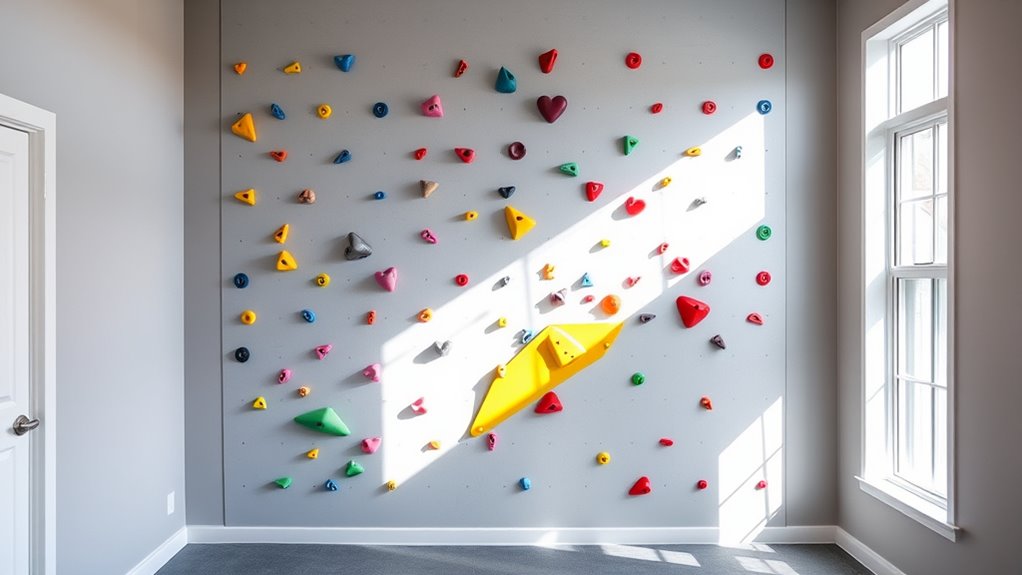
Once your wall is up and sturdy, you can start attaching climbing holds. Using a climbing hold kit makes this process easier, as it usually includes a variety of holds and the necessary hardware. Arrange the holds in a pattern that matches your skill level and training goals, ensuring there’s enough variety for different hand and foot placements. Keep in mind that the placement of holds impacts safety and difficulty, so space them appropriately to prevent accidental falls or injuries. Regularly inspect the holds and wall for any loose fittings or damage, tightening or replacing them as needed. With the right combination of climbing holds and durable wall materials, you’re well on your way to creating a safe, fun, and personalized climbing space right in your home.
Frequently Asked Questions
What Are the Best Materials for a DIY Climbing Wall?
You should choose plywood, preferably 3/4-inch thick, for your DIY climbing wall due to its durability and good climbing aesthetics. Use high-quality, textured grip tape or paint for added traction and visual appeal. When installing, follow DIY installation tips like securely anchoring the panels and maintaining proper spacing. This guarantees safety and a professional look, making your climbing wall both functional and attractive for your home setup.
How Can I Prevent Damage to My Home Walls From Climbing?
Don’t let your walls take a beating; you can keep damage at bay with proper wall reinforcement. Use durable materials like plywood backed by studs, and add padding or cushioning around high-impact areas. Regularly inspect and tighten fixtures to prevent looseness. By taking these steps, you’ll protect your home walls and extend the life of your climbing setup, turning your space into a safe, resilient playground instead of a fragile one.
What Is the Ideal Height for a Home Climbing Wall?
The ideal height for your home climbing wall is around 6 to 10 feet, balancing challenge and safety. You’ll want to contemplate climbing wall aesthetics, ensuring it fits seamlessly with your space. Use proper wall mounting techniques to securely attach panels at this height, avoiding damage and ensuring stability. Keep in mind that taller walls may require additional safety measures and padding, so tailor the height to your skill level and available space.
How Often Should Climbing Holds Be Replaced or Maintained?
You should check and replace climbing holds based on their durability and wear, typically every 6 to 12 months. Regular maintenance is essential to guarantee safety; inspect holds for cracks, chips, or looseness during your regular maintenance schedule. Tighten any loose holds immediately, and replace damaged ones promptly. Proper maintenance prolongs hold lifespan and keeps your climbing wall safe, enjoyable, and in top condition.
Are There Specific Insurance Considerations for Home Climbing Walls?
Think of your home climbing wall as a delicate dance between safety and risk. You’ll want to check your insurance coverage carefully, ensuring it covers potential liability concerns if accidents happen. Some policies might require additional riders or disclaimers. Talk to your insurer about your plans, so you can confidently enjoy your new adventure without surprises. Securing the right insurance keeps your climbing journey safe and worry-free.
Conclusion
So, after all that planning and safety checks, you’re finally ready to conquer your very own climbing wall. Just remember, all those safety measures? They’re not just for fun—they’re to keep you from turning your home into a real-life adventure accident. Irony? You built a wall to climb for fun, but neglecting safety could turn your home gym into a one-way ticket to the emergency room. Happy climbing—safely, of course!