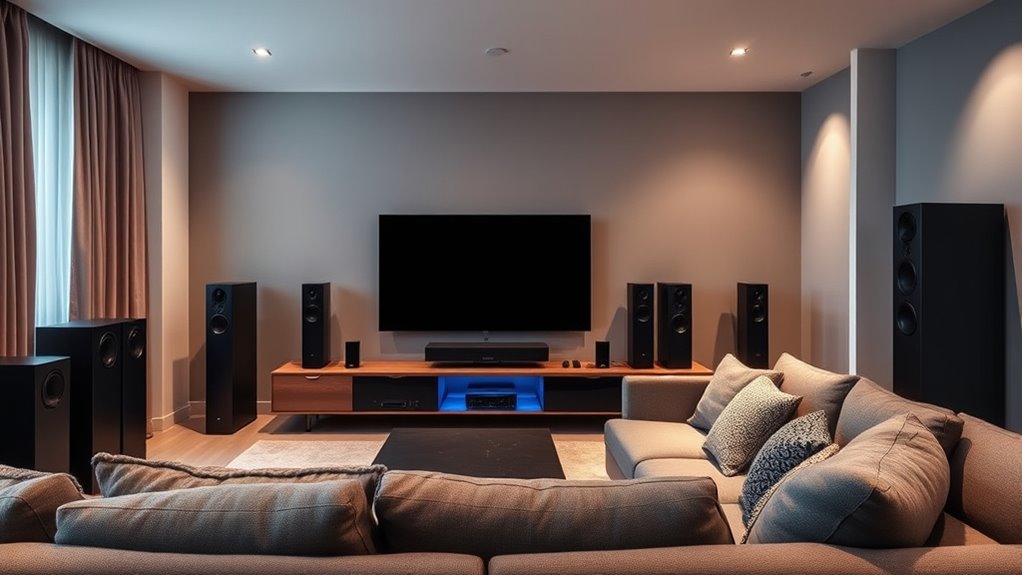

Choosing between a soundbar and a surround system mainly depends on your room size, budget, and how immersive you want your audio experience. Soundbars are simple, affordable, and quick to set up, making them perfect for smaller spaces and casual viewing. Surround systems offer richer, more precise sound but require more space and installation effort. If you’d like to discover which option fits your home best, you’ll find helpful insights ahead.
Key Takeaways
- Soundbars offer quick, easy setup with minimal wiring, ideal for small spaces and casual use.
- Surround systems deliver a more immersive, realistic soundstage with dedicated speakers for larger rooms.
- Modern soundbars utilize Dolby Atmos and DTS:X for virtual surround effects, enhancing dialogue and bass.
- Surround systems typically cost more but provide higher fidelity and precise directional sound cues.
- Choice depends on room size, budget, and desired immersion level; wireless options simplify installation.

Home Theater Sound
Creating an immersive home theater experience starts with choosing the right audio setup. If you’re looking for a sleek, space-efficient option, a soundbar might be your best bet. These devices are compact, combining multiple speakers into a single, streamlined unit that fits neatly below or above your TV. Their modern, minimalist design complements contemporary interiors and is perfect for small rooms or apartments with limited space. Plus, wireless subwoofers often accompany soundbars, boosting bass without cluttering your setup with extra wires. This means you can enjoy richer sound without sacrificing room aesthetics or requiring extensive installation.
Soundbars also leverage advanced audio technologies like Dolby Atmos and DTS:X, which create a sense of three-dimensional sound by simulating virtual surround effects. They excel at improving dialogue clarity and delivering punchy bass compared to standard TV speakers. However, because they rely on software-driven effects, they don’t produce the full spatial depth of a dedicated surround system. For most casual users, soundbars strike a good balance between clarity, volume, and spatial effects within a single, easy-to-install device. They’re especially suitable if you prefer quick, hassle-free setup and minimal wiring, often connecting via HDMI or optical input. Additionally, the availability of wireless connectivity can further simplify setup and reduce clutter.
Soundbars enhance dialogue clarity and bass with Dolby Atmos and DTS:X, offering easy setup and immersive sound.
In contrast, surround sound systems offer a higher level of audio fidelity, designed for true home theater enthusiasts. These setups include multiple dedicated speakers placed strategically around the room—front left, center, right, rear surrounds, and a subwoofer—providing a richer, more precise soundstage. With larger cabinets and more drivers, surround systems deliver more accurate frequency response and enable directional sound cues, making you feel fully immersed in the scene. The dedicated center channel enhances voice clarity, ensuring dialogue remains crisp and natural, which adds to the realism of your viewing experience.
Setting up a surround sound system is more complex; it involves installing multiple speakers, managing cables, and often requires an AV receiver. While wireless options are available, they tend to demand more maintenance and careful placement to optimize sound. These systems cost more upfront, reflecting their enhanced performance, but they provide a cinema-like experience that many audiophiles value. They’re best suited for dedicated home theater rooms or larger spaces where full immersion matters most.
Ultimately, your choice depends on your room size, budget, and what you prioritize—ease of use or maximum audio fidelity. Soundbars are an excellent choice for small spaces, quick setup, and decent immersive sound, while surround systems cater to those seeking the ultimate cinematic experience with superior sound quality. Both options have their strengths, but understanding these key differences helps you make the right decision for your home theater. The availability of wireless connectivity is also a factor to consider, as it can further simplify setup and reduce clutter.
Frequently Asked Questions
Which Setup Is Easier for Beginners: Soundbar or Surround System?
You’re probably wondering which setup is easier for beginners. A soundbar is the clear choice, because it’s simple to install, requiring just one device and minimal wiring. It’s plug-and-play, fits neatly under or above your TV, and doesn’t need calibration. In contrast, surround systems involve multiple speakers, wires, and setup steps that can be overwhelming. For an easy, hassle-free experience, a soundbar is the way to go.
Can a Soundbar Replace a Full Surround Sound System?
Did you know that 60% of people find soundbars more convenient than full surround sound systems? When you ask if a soundbar can replace a surround system, it’s mostly about your priorities. Soundbars deliver decent sound quality in a compact, easy-to-install package, but they can’t match the immersive experience or precise sound imaging of a full surround setup. If space and simplicity matter most, a soundbar might suffice.
How Much Does a High-End Soundbar Typically Cost?
A high-end soundbar usually costs between $800 and $3,000 or more, depending on features and brand. If you want Dolby Atmos, wireless surround capabilities, and smart connectivity, expect to pay on the higher end. Premium models like Sony’s flagship or Sonos Arc deliver immersive sound with fewer components, making them a great choice if you want top-tier audio without a full surround system.
Are Wireless Options Available for Surround Sound Systems?
Ever wondered if you can enjoy wireless surround sound? Yes, you can! Wireless surround sound systems use Wi-Fi to send audio to speakers, eliminating messy wires. They’re easy to set up, support immersive formats like Dolby Atmos, and come from brands like Sony and Nakamichi. While most still need power cords, some, like JBL Bar 1300X, have rechargeable rear speakers. They’re a convenient way to elevate your home theater experience.
Which Setup Offers Better Sound Quality for Music?
When comparing sound quality for music, surround sound systems offer a clear advantage. You’ll experience a more immersive, multi-dimensional sound that brings out details and depth in your music. With multiple speakers and a dedicated subwoofer, you get precise imaging, richer bass, and a broader dynamic range. This setup captures the full emotional and sonic range of music, making it more engaging and realistic compared to the more simplified soundbar options.
Conclusion
Whether you opt for a sleek soundbar or a full surround system, your choice shapes your home theater experience. Think of it like choosing between a vintage record player and today’s streaming—both have charm, but one offers a richer, more immersive sound. So, consider your space, budget, and preferences. Whichever you pick, remember: great sound transforms your living room into a private cinema, making every movie night as memorable as a scene from Casablanca.