To soundproof your home gym or music studio, focus on sealing gaps around doors and windows, and add acoustic panels or foam to walls and ceilings to absorb sound. Use dense materials like mass-loaded vinyl for barrier layers, and consider incorporating insulation and specialized drywall to block noise transmission. Installing resilient channels can also help decouple vibrations. For more detailed tips, discover effective methods to create a quiet, dedicated space without interruptions.
Key Takeaways
- Focus on sealing doors, windows, and gaps with weatherstripping and acoustic caulk to prevent sound leaks.
- Use high-density materials like mass-loaded vinyl and acoustic panels on walls and ceilings for effective soundproofing.
- Add bass traps and diffusers to improve sound quality and reduce low-frequency noise in the space.
- Incorporate insulation and double drywall with damping compounds to minimize vibration transmission through structural elements.
- Install suspended ceilings and thick curtains over windows to block external noise and contain internal sound within the studio or gym.
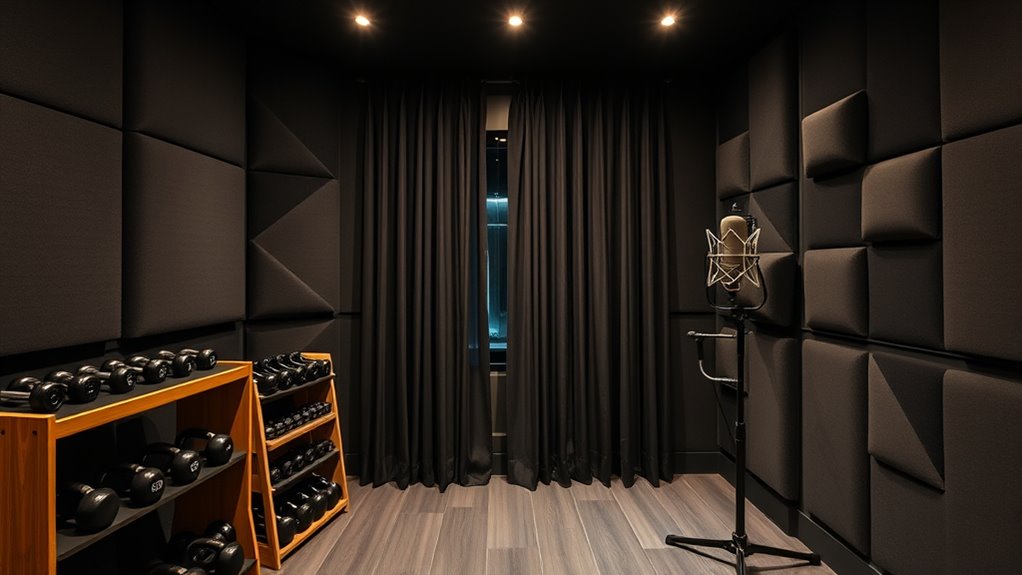
Creating a soundproof space in your home gym or music studio is vital to keep noise from disturbing your neighbors and other household members. To achieve this, you need to focus on effective soundproofing materials and acoustic treatment options that are suitable for your space. The goal is to minimize sound escape and prevent external noise from interfering with your activities. First, evaluate the areas where sound leaks most—doors, windows, walls, and ceilings. These are the primary spots where soundproofing efforts should be concentrated. Using high-density soundproofing materials like mass-loaded vinyl or acoustic panels can considerably reduce sound transmission. Mass-loaded vinyl, for instance, is flexible and easy to install on walls and ceilings, adding mass that blocks sound waves from passing through. Acoustic panels made from foam or mineral wool absorb sound within the room, preventing echoes and reducing overall noise levels. Combining these materials offers a layered approach that enhances soundproofing efficiency.
Next, consider the acoustic treatment options available to optimize sound quality and noise control within your space. Installing bass traps and diffusers helps manage low-frequency sounds and evenly distribute sound waves, making your space acoustically balanced. These treatments are especially useful if you’re recording music or practicing loud workouts. Additionally, sealing gaps around doors and windows with weatherstripping or acoustic caulking prevents sound leaks. Thick curtains or specialized acoustic drapes over windows also help block external noise and contain internal sound. When choosing materials, prioritize those with high sound absorption coefficients to maximize effectiveness. For walls, consider adding resilient channels or decoupling techniques behind drywall to further isolate sound vibrations. The combination of dense soundproofing materials and strategic acoustic treatments creates a space that’s both quiet and acoustically optimized. Incorporating proper insulation can further enhance soundproofing performance by reducing vibration transmission through structural elements.
Finally, remember that proper installation is vital. Even the best soundproofing materials won’t perform well if they’re not installed correctly. Pay attention to sealing all gaps and ensuring that materials are securely attached to surfaces. For walls, double layers of drywall with damping compounds can boost soundproofing. For ceilings, suspended ceilings with acoustic tiles can help contain noise from above. Throughout the process, keep in mind that a balanced approach—using soundproofing materials alongside acoustic treatment options—delivers the best results. With the right combination, you’ll create a space that allows you to practice or work out without disturbing others or being disturbed by external noise, making your home gym or music studio a true haven of sound control.
Frequently Asked Questions
How Much Does Professional Soundproofing Typically Cost?
A professional soundproofing typically costs between $1,000 and $10,000, depending on the size and complexity of your space. Your cost estimate can vary based on pricing factors like materials used, the level of soundproofing needed, and labor costs. To get the best value, consider obtaining multiple quotes and discussing specific requirements with specialists to make sure you’re investing wisely in effective soundproofing solutions.
Can I Soundproof My Home Gym Without Structural Modifications?
You can soundproof your home gym without structural modifications, and it’s easier than you think—like turning a whisper into a shout! Use effective soundproofing techniques such as heavy curtains, acoustic panels, and draft stoppers. Be mindful of material limitations; lightweight solutions won’t block all noise. Focus on sealing gaps and adding absorption, and you’ll markedly reduce noise without costly renovations. Your space can be quiet enough to hear a pin drop!
What Materials Are Best for Blocking Low-Frequency Sounds?
You should use mass loaded vinyl and thick acoustic foam panels to block low-frequency sounds effectively. Mass loaded vinyl adds substantial mass, reducing sound transmission, while acoustic foam panels absorb vibrations and minimize echoes. Combining these materials creates a barrier that dampens low-frequency noise, such as bass or heavy drums. Install the mass loaded vinyl on walls and ceilings, then add foam panels for ideal soundproofing and a quieter workout or music space.
How Effective Are DIY Soundproofing Solutions?
DIY soundproofing solutions can be quite effective if you understand their limitations. Many effectiveness myths suggest DIY methods are as good as professional ones, but they often fall short for low-frequency sounds. You’ll save money compared to professional options, but the cost comparison shows DIY might require multiple layers or materials. For best results, combine DIY techniques with proper materials, keeping realistic expectations about their overall effectiveness in reducing noise.
How Long Does It Take to Install Soundproofing in a Home Studio?
You can typically complete the soundproofing installation in your home studio within a few days to a week, depending on your project planning and the scope. While it might seem like a big task, breaking it into manageable steps helps speed things up. Don’t worry about perfection; even a well-planned, timely project makes a noticeable difference in sound quality. Stay organized, and you’ll have your studio soundproofed faster than you think.
Conclusion
By implementing these soundproofing tips, you can enjoy your workouts or music sessions without disturbing neighbors. Imagine turning your basement into a music studio, where you record late into the night without complaints. For example, Sarah transformed her garage into a soundproof space, allowing her to practice guitar loudly without worries. With a bit of effort, your home gym or studio can be both functional and quiet—so you can focus on your passion without the noise.