
Virtual reality fitness is transforming your workouts through immersive environments, wearable sensors, and augmented reality overlays. These technologies motivate you with engaging visuals and real-time feedback, helping you maintain proper form and stay safe. Equipment options range from VR headsets to smart wearables that personalize your routines and track progress. With many options for solo or social workouts, you can make fitness more exciting and effective. Keep exploring to discover how these innovations can boost your routine even further.
Key Takeaways
- Integration of AR, VR, and wearable sensors creates immersive, personalized fitness experiences enhancing motivation and safety.
- Wearable sensors provide real-time feedback on form, heart rate, and performance, optimizing workouts and preventing injury.
- Virtual environments like scenic trails and guided coaching boost engagement and consistency in training routines.
- Multiplayer and social features in VR fitness platforms increase accountability and motivation through community interaction.
- Evolving equipment options focus on immersive, data-driven workouts, supporting both solo and group fitness experiences.

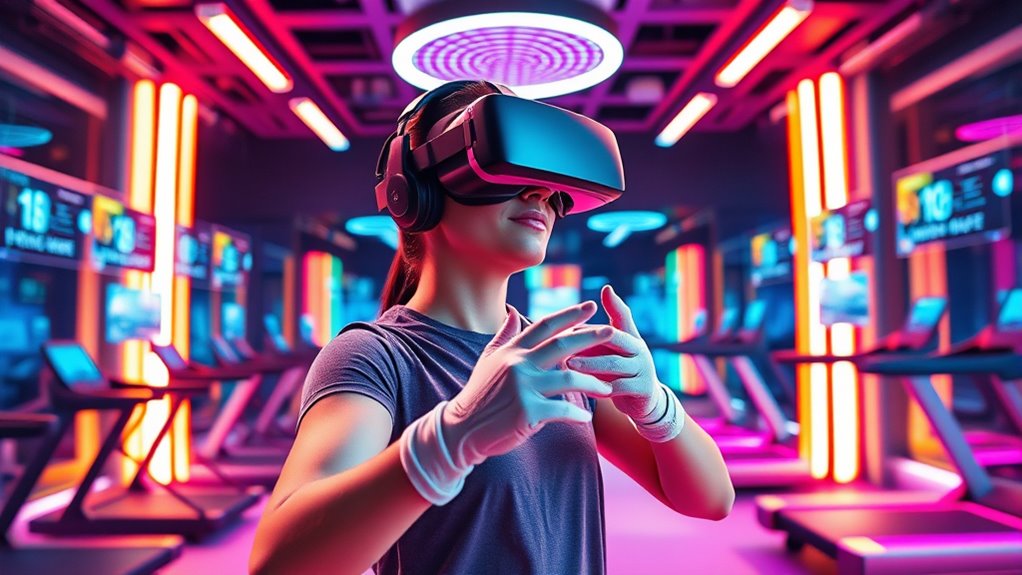
Have you ever wondered how virtual reality is transforming the way we work out? It’s an exciting shift, blending immersive experiences with cutting-edge technology to make fitness more engaging and effective. One of the key innovations fueling this change is augmented reality, which overlays digital elements onto your real-world environment. Unlike traditional screens, augmented reality lets you see your surroundings with added digital cues, helping you stay focused and motivated during workouts. Paired with wearable sensors, this technology becomes even smarter. Wearable sensors track your movements, heart rate, and other essential signs in real time, providing instant feedback that helps you optimize your exercise routines. When you combine augmented reality with wearable sensors, you get a personalized fitness experience that adapts to your progress, making workouts safer and more efficient.
In practical terms, this means you could be running on a treadmill while seeing virtual trails or scenic landscapes projected in your field of view. The sensors monitor your stride, pace, and posture, ensuring you’re maintaining proper form and reaching your goals. If your heart rate exceeds a safe zone, the system can alert you immediately, preventing overexertion. This integration creates an immersive environment where virtual elements motivate you, guide your movements, and keep you engaged for longer periods. It also allows for real-time coaching, so you’re not just exercising blindly—you’re actively receiving feedback that helps improve your technique and performance. Additionally, the use of wearable sensors enhances the personalization and safety of workouts, enabling tailored training programs based on individual data.
The use of augmented reality and wearable sensors isn’t limited to solo workouts. Many VR fitness systems now include multiplayer options, letting you compete or exercise alongside friends or virtual avatars. This social aspect boosts motivation and accountability, making workouts feel less like a chore and more like a shared adventure. Plus, the data collected by sensors can be synced to apps, giving you detailed insights into your progress over time. Tracking improvements becomes straightforward, and you can set specific goals based on your personalized data. It’s like having a personal trainer who’s always with you, monitoring your stats and guiding your next move.
Frequently Asked Questions
What Are the Cost Differences Among VR Fitness Equipment Brands?
You’ll find that the cost comparison among VR fitness equipment brands varies widely. Some brands offer more affordable options, making entry easier, while others provide premium features at higher prices. If brand affordability matters, you might prioritize budget-friendly options like Oculus or HTC Vive, which typically cost less. High-end brands like Valve Index or Varjo tend to be more expensive, but they deliver advanced features and better immersion.
How Safe Is VR Fitness for People With Pre-Existing Health Conditions?
Nearly 60% of VR fitness users report enjoying it safely, but if you have pre-existing health conditions, you should consult your doctor first. VR fitness can be safe if you follow health precautions and pay attention to equipment safety. Always start slowly, take breaks, and listen to your body. Proper setup and understanding your limits help minimize risks, making VR fitness a safer, enjoyable experience for everyone.
Can VR Fitness Replace Traditional Gym Workouts Effectively?
VR fitness can effectively supplement your gym workouts, but it might not fully replace traditional gym routines yet. Virtual reality offers engaging, immersive exercises that boost motivation and variety, making workouts more enjoyable. However, for strength training or heavy lifting, a gym provides equipment and safety measures VR can’t replicate. Combining VR fitness with your gym sessions can optimize your overall fitness, balancing fun and strength-building.
What Are the Best VR Fitness Apps for Beginners?
If you’re a beginner, try VR fitness apps like FitXR or Supernatural, which focus on user engagement and intuitive VR game design. These apps make it easy to get started with fun, guided workouts that adapt to your skill level. They keep you motivated through immersive environments and interactive challenges, helping you build confidence while enjoying effective exercise. These options are perfect for easing into VR fitness.
How Long Should VR Fitness Sessions Last for Optimal Results?
For ideal results, keep your VR fitness sessions around 20 to 30 minutes, balancing intensity with recovery. Focus on maintaining a consistent workout frequency, like 3 to 5 times a week, to build endurance and strength. Listen to your body during each session, and don’t push too hard initially. Gradually increase session duration and intensity as you become more comfortable, ensuring you stay motivated and avoid burnout.
Conclusion
So, you’ve finally found the perfect way to work out without leaving your couch—thanks to virtual reality. Who knew that battling zombies or exploring virtual worlds could replace traditional sweat sessions? Ironically, you might just get fitter by escaping into a digital universe than trudging through a gym. Just remember, as immersive as VR gets, don’t forget to actually move your body—your virtual avatar might be doing all the heavy lifting, but your real muscles still need the work.