Remote patient monitoring at home uses wearable devices that track essential signs like heart rate, blood pressure, and oxygen levels in real time. These devices easily sync with your smartphone or other platforms, allowing your healthcare team to monitor your health without frequent visits. They can help detect issues early and support proactive care. If you keep exploring, you’ll discover how these technologies are transforming healthcare and making management more convenient for you.
Key Takeaways
- RPM uses wearable devices to continuously monitor vital signs like heart rate and blood pressure at home.
- Devices sync with smartphones or platforms for real-time data sharing with healthcare providers.
- Wearables enable early detection of health issues, prompting timely interventions and reducing hospital visits.
- Data security, privacy, and compliance with regulations like HIPAA are essential for trusted RPM services.
- Future advancements will enhance device sophistication, integration, and personalized care for improved health management.
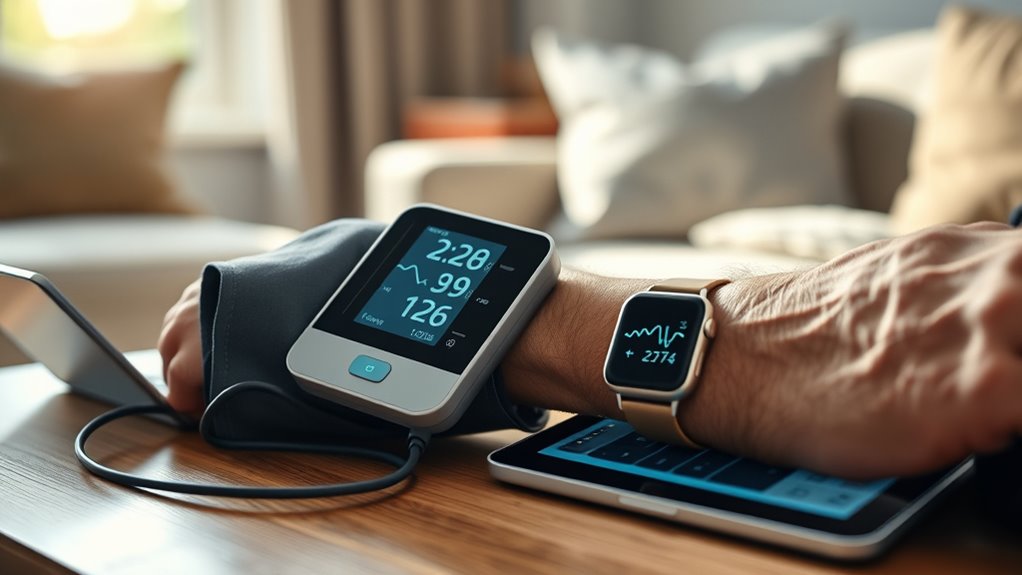
Have you ever wondered how technology is transforming healthcare? Today, remote patient monitoring (RPM) is making it easier for you to manage your health from the comfort of your home. With the help of wearable technology, you can track vital signs like heart rate, blood pressure, oxygen levels, and even sleep patterns in real time. These devices are designed to be user-friendly, allowing you to continuously monitor your health without frequent visits to a clinic. They sync seamlessly with your smartphone or other devices, providing your healthcare team with instant access to your data. This means your doctor can catch potential issues early, adjust treatments promptly, and help you maintain better overall health. Proper tuning of these devices can also enhance their accuracy and reliability, ensuring you receive the most precise data possible.
However, with the increased use of wearable technology comes the critical concern of data security. Your health data is sensitive, so it’s essential that the devices and platforms you use are equipped with robust security measures. Reputable manufacturers prioritize encryption and secure data transmission, ensuring that your personal information isn’t vulnerable to hacking or unauthorized access. You should always verify that your wearable device complies with privacy regulations like HIPAA, which safeguard your health information. Being proactive about data security means choosing devices from trusted brands and keeping your software updated to patch vulnerabilities. Protecting your data isn’t just about privacy—it’s about maintaining your trust in the technology that’s meant to help you.
Remote patient monitoring also offers convenience and peace of mind. Instead of frequent trips to the doctor’s office, you can stay connected through these devices, which continuously report your health status to your care team. If something abnormal is detected, they can intervene early, sometimes even before you notice symptoms. This proactive approach helps prevent complications and reduces hospital visits, saving you time and money. Furthermore, RPM encourages you to play an active role in your health management, making you more aware of your body’s signals and behaviors that influence your well-being.
Despite these benefits, it’s important to understand that wearable technology is not a substitute for professional medical advice. While it provides valuable data, you should always discuss your health insights with your healthcare provider. Also, be mindful of the accuracy of your devices; no technology is perfect, and occasional calibration or verification might be necessary. As RPM continues to evolve, it’s likely that wearable devices will become even more sophisticated, offering deeper insights and more seamless integration with healthcare systems. Staying informed about these advancements will help you make the most of remote monitoring and ensure your health data remains secure. The fusion of wearable technology and secure data handling is shaping a future where healthcare is more personalized, accessible, and proactive.
Frequently Asked Questions
How Is Patient Privacy Protected With Remote Monitoring Devices?
You can trust that your privacy is protected with remote monitoring devices through data encryption and strict access controls. Data encryption safeguards your health information during transmission and storage, preventing unauthorized access. Access controls ensure only authorized healthcare providers can view your data, maintaining confidentiality. These measures work together to keep your personal health details safe and private, giving you peace of mind while benefiting from remote monitoring technology.
What Are the Costs Associated With Home Remote Monitoring Systems?
You’ll find that costs for home remote monitoring systems vary based on device type and setup. A thorough cost analysis helps you understand expenses, which can include equipment, installation, and ongoing service fees. Insurance coverage may offset some costs, so check with your provider. While initial costs can be high, remote monitoring often reduces long-term healthcare expenses by preventing hospital visits and enabling early intervention.
How Do Remote Devices Alert Healthcare Providers of Emergencies?
When an emergency occurs, your remote device sends instant notifications or emergency alerts to healthcare providers. These device notifications immediately flag critical issues like abnormal heart rates or falls, prompting swift response. You might also receive alerts directly on your device or phone, ensuring you’re aware of urgent situations. This rapid communication system helps healthcare providers act quickly, potentially saving lives and improving your overall care management.
Can Remote Monitoring Replace Regular In-Person Checkups?
Sure, remote monitoring can seem like a magic fix, but it can’t fully substitute in-person checkups. While virtual doctor visits and remote health assessments offer convenience, they lack the personal touch and detailed exams only face-to-face visits provide. So, don’t rely solely on technology—think of remote monitoring as a helpful supplement, not a complete substitute, for regular in-person care to ensure your health stays truly on track.
What Training Is Needed for Patients to Use These Devices Effectively?
You need proper patient education to use remote monitoring devices effectively. Focus on training that enhances device usability, like step-by-step instructions and hands-on practice. Make sure you understand how to operate each device, interpret alerts, and troubleshoot common issues. Regular follow-ups can also reinforce your skills, ensuring you’re confident in managing your health at home. This preparation helps maximize the benefits of remote patient monitoring and improves your overall care experience.
Conclusion
So, here you are, thinking you need to visit the doctor for every little issue. Thanks to remote patient monitoring, you can now enjoy the luxury of “at-home” care—without leaving your couch. It’s funny how technology promises convenience, yet sometimes makes us feel more connected and cared for than a trip to the clinic ever could. Who knew that staying healthy might just mean staying put? Ironically, your future health might just be a click away from your sofa.