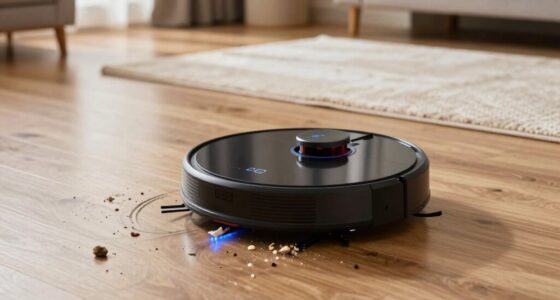
The best robot vacuum brush style for pet hair removal is rubber or silicone brushes because they attract hair, prevent tangling, and are easy to clean. Bristle brushes can dislodge stubborn fur but often require more maintenance. Choosing a brush designed for pet hair, along with regular cleaning and replacement, helps keep your home pet-hair free. To find out which options are most effective, keep exploring how brush styles impact cleaning performance.
Key Takeaways
- Rubber brushes attract pet hair and prevent tangling, making cleaning more efficient.
- Bristle brushes, especially stiff ones, are effective at dislodging hair from carpets.
- Self-cleaning or easy-to-remove brushes simplify maintenance and reduce hair buildup.
- Proper brush maintenance and regular cleaning extend the lifespan and performance of robot vacuums.
- Rubber bristle or silicone blade brushes are ideal for trapping pet hair and minimizing allergens.
What Are the Best Robot Vacuum Brushes for Pet Hair?

When it comes to cleaning pet hair effectively, choosing the right robot vacuum brush makes a big difference. For pet grooming and managing hair shedding, look for brushes designed to lift and trap hair efficiently. Rubber brushes are a popular choice because they attract hair and prevent tangling, making cleaning easier. They also work well on different floor types, ensuring your space stays hair-free. Bristle brushes, especially stiff ones, can dislodge stubborn hair from carpets, but may require more maintenance to prevent hair buildup. Consider a brush with a self-cleaning feature or easy-to-remove components for convenience. The right brush helps you tackle pet grooming messes daily, keeping your home cleaner and reducing the effort needed to manage hair shedding. Additionally, electric power generation with bike generators can be a sustainable energy solution for powering cleaning devices during outdoor activities. Proper brush maintenance requirements can vary significantly between styles, impacting your cleaning routine and effort, and understanding these maintenance needs can help prolong the life of your brushes and ensure optimal performance. Regularly cleaning and inspecting your brushes can also prevent hair buildup from impairing their effectiveness.
The Different Types of Robot Vacuum Brushes Explained

Understanding the different types of robot vacuum brushes is essential for choosing the right model for your cleaning needs. There are mainly two types: bristle brushes and rubber brushes. Bristle brushes tend to be more effective at deep cleaning but may require more frequent vacuum maintenance techniques to prevent hair tangles, especially with pet hair. Rubber brushes are durable and resistant to hair tangling, offering better robot brush durability over time. Some models feature combo brushes, blending both types for versatile cleaning. Knowing the differences helps you select a brush that suits your pet hair situation and keeps your robot working efficiently. Regularly inspecting and cleaning your brushes ensures they maintain excellent performance and extend their lifespan, saving you time and money. Additionally, choosing a brush type suitable for pet hair can significantly improve your robot vacuum’s efficiency in managing pet-related debris. Properly selecting and maintaining your vacuum brush can also reduce the frequency of repairs and replacements, ensuring optimal performance. Incorporating proper maintenance techniques can further enhance the longevity and effectiveness of your vacuum brushes, reducing the need for costly repairs.
Why Brush Style Matters for Pet Hair Removal

Choosing the right brush style is vital for effectively removing pet hair from your floors. The brush design directly influences how well your vacuum picks up pet fur and dander. Some brushes are better at agitating stubborn pet hair, pulling it from carpets and upholstery, while others excel at cleaning hardwood or tile surfaces. When it comes to pet dander, a brush that loosens and lifts these tiny particles is essential for allergen reduction. The brush design determines how efficiently allergens and pet hair are captured and contained, ultimately impacting air quality. For optimal pet hair removal, selecting a brush with specialized bristles can significantly improve cleaning performance. A well-suited brush minimizes the amount of allergens released into the air, helping those with allergies breathe easier. Using a combination brush that adapts to different surfaces can further enhance cleaning efficiency. Additionally, some brushes feature silicone bristles that are gentler on delicate surfaces while still effectively removing hair. The right brush style ensures your robot vacuum can handle pet hair efficiently, making your cleaning routine more effective and less allergen-laden.
Benefits of Rubber Bristle Brushes for Pet Fur

Rubber bristle brushes are especially effective at picking up pet fur because their flexible, textured bristles grip hair tightly as the vacuum moves across surfaces. This design makes them excellent for tackling stubborn pet hair in tight spots and on upholstery. Plus, the textured surface helps loosen fur from carpets and furniture, reducing the need for manual removal. These brushes are also ideal for diy pet grooming, allowing you to clean your pet’s coat without harsh tools. Additionally, they help manage allergens by efficiently trapping pet hair and dander, preventing them from becoming airborne. Understanding how different brush styles impact cleaning performance can help you choose the best vacuum for your needs. To further enhance your cleaning routine, selecting a brush style optimized for pet hair can significantly boost efficiency. Choosing the right brush design is essential for maximizing pet hair removal and allergen control. Incorporating brushes with specialized bristle materials can further improve pet fur pickup and allergen trapping. Moreover, selecting a brush with durable and flexible bristles ensures long-lasting performance and better agility during cleaning.
Why Comb and Turbo Brushes Are Great for Pet Hair
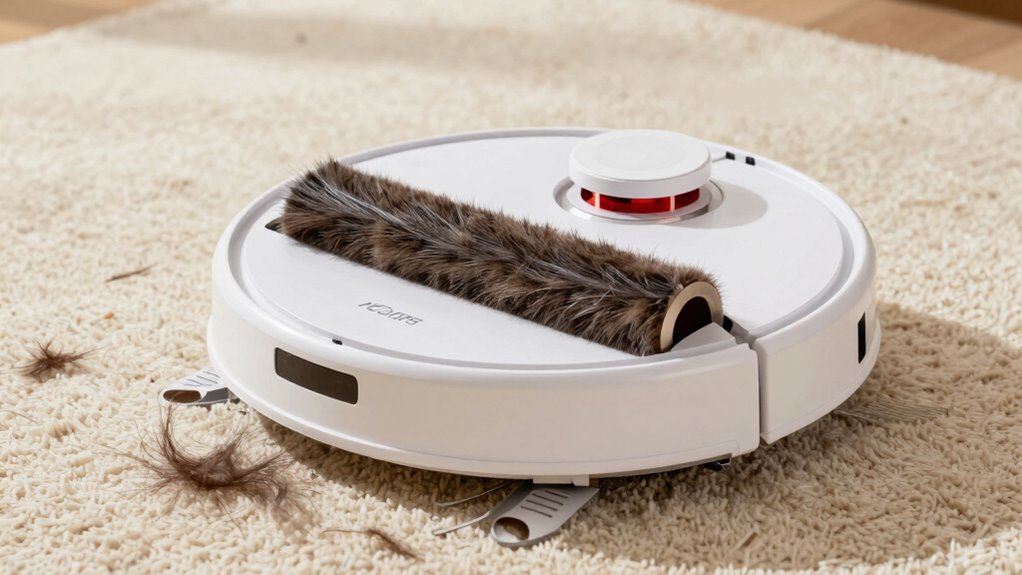
Have you noticed how comb and turbo brushes excel at removing pet hair from your home? These brushes are designed to grip and lift pet hair effectively, making pet hair removal more efficient. Their unique bristle arrangement minimizes hair tangling and ensures consistent cleaning. Regular brush maintenance keeps them performing at their best, preventing hair buildup that can reduce effectiveness. Additionally, understanding the design benefits of these brushes can help you choose the most effective option for your cleaning needs. The specialized bristle design enhances their ability to lift and hold onto pet hair, further improving cleaning performance. Recognizing the importance of cleaning technique can also maximize their efficiency and longevity, especially when combined with proper maintenance practices. Being aware of brush compatibility can ensure you select the right brush for your specific vacuum model and pet-related cleaning challenges.
How Brush Design Affects Cleaning on Carpets and Upholstery

The design of your vacuum’s brush plays a crucial role in how effectively it cleans carpets and upholstery. A well-designed brush can improve pet hair removal by reaching deep into fibers and loosening stubborn hair. Brushes with stiff, angled bristles are especially effective on carpets because they agitate fibers and pull out embedded pet hair. For upholstery, softer brushes prevent damage while still capturing pet hair efficiently. The shape and layout of the brush influence how well it lifts dirt and pet hair from different surfaces. A good brush design ensures maximum contact with surfaces, increasing cleaning power and efficiency. When choosing a robot vacuum, pay attention to the brush style, as the right design can make a significant difference in tackling pet hair on carpets and upholstery.
Tips to Maintain and Replace Your Robot Vacuum Brushes

Keeping your robot vacuum brushes clean and replacing them when needed guarantees peak performance. Regularly inspecting and removing hair, pet fur, and debris prevents clogs and damage. Don’t wait too long to swap out worn brushes for new ones to maintain effective cleaning.
Regular Brush Cleaning
Regularly cleaning and replacing your robot vacuum’s brushes is crucial for peak performance, especially if you or your household members have pet allergies. Pet hair and dander can quickly clog brushes, reducing suction and cleaning efficiency. To maintain ideal brush performance, check and remove hair buildup weekly, using scissors or a brush comb for stubborn tangles. Consistent brush maintenance prevents pet hair from scattering into the air, helping reduce allergy symptoms. Additionally, keeping brushes clean prolongs their lifespan and ensures even wear, avoiding unnecessary replacements. Remember to inspect the brushes for damage or wear, and replace them when needed to keep your vacuum operating at its best. Proper brush care is a simple yet necessary step in maintaining a clean home and a healthy environment.
Timely Replacement Tips
To guarantee your robot vacuum maintains peak cleaning performance, it’s important to replace the brushes before they become excessively worn or damaged. Worn brushes struggle to pick up pet hair and fur, which can worsen pet allergies and leave fur accumulation behind. Regular replacement ensures your vacuum continues to trap allergens and debris efficiently. Check your brushes every few months and replace them when they show signs of wear, such as fraying or loss of bristles.
- Look for visible damage or bald spots on the brushes
- Replace brushes if fur buildup becomes difficult to remove
- Follow your vacuum’s recommended replacement schedule, usually every 6-12 months
Top Robot Vacuums With Pet-Friendly Brush Systems

If you’re tired of pet hair clogging your vacuum and causing frustration, choosing a robot vacuum with a pet-friendly brush system can make a real difference. Look for models that use eco-friendly materials, which are gentle on the environment and often more durable. These vacuums typically feature specialized brushes designed to lift pet hair without tangling or scattering it around. Noise reduction is also essential, especially if your pets are sensitive to loud sounds. Many top models incorporate quiet motors and sound-dampening features, ensuring cleaning doesn’t disturb your furry friends. These vacuums are engineered to handle pet hair efficiently, maintaining suction power while minimizing noise and environmental impact. Investing in one with a pet-friendly brush system helps keep your home cleaner and calmer.
How to Choose the Right Brush for a Fur-Free Home

Choosing the right brush for your robot vacuum can considerably reduce pet hair buildup and keep your home cleaner. To effectively mitigate pet allergies, select brushes designed to trap pet hair and dander efficiently. Consider brushes with rubber bristles or silicone blades, which excel at pet hair disposal and prevent hair from scattering. Look for models with adjustable brush height to handle different floor types and pet shedding levels. Additionally, choose vacuums with easy-to-clean brushes to maintain ideal pet allergy mitigation. Regularly cleaning and replacing brushes ensures maximum pet hair removal and minimizes allergen spread. By prioritizing these features, you’ll reduce pet hair accumulation and create a healthier, fur-free environment for you and your pets.
Frequently Asked Questions
How Do Pet Hair Types Influence the Choice of Robot Vacuum Brush?
You should choose a robot vacuum with a brush designed for pet shedding, especially if your pets shed heavily or have different fur textures. For coarse or thick fur, a rubber brush works best because it grabs hair efficiently without tangling. If your pet has fine or curly fur, opt for a brush that’s gentle yet effective at loosening and picking up all types of pet shedding, ensuring a thorough clean.
Can Brush Style Impact Noise Levels During Cleaning?
Yes, brush style can impact noise levels during cleaning. Opting for a brush with noise reduction features, such as softer brush material or quieter motor design, helps minimize sound. You should look for brushes that are specifically engineered for quiet operation, especially if you want a peaceful environment. A well-designed brush reduces vibrations and noise, making your vacuuming experience less disruptive while still effectively handling pet hair.
Are Certain Brushes Better for Homes With Multiple Pet Species?
Yes, certain brushes work better for homes with multiple pet species. Look for brushes designed to handle various pet hairs, reducing allergens and making grooming routines easier. These brushes help minimize pet allergy triggers by effectively removing loose hair and dander. Regular use keeps your space cleaner and less allergenic. Choose a brush with flexible bristles and a wide head for efficient cleaning across different pet types.
How Does Brush Maintenance Differ for Pet Hair Versus Dust?
Did you know that pet hair clogs vacuum brushes twice as fast as dust? When maintaining your robot vacuum, you should regularly clear pet hair from brushes and check vacuum filter maintenance to prevent buildup. Dust requires less frequent cleaning, but pet hair can hinder battery life considerations by overworking the motor. Stay proactive with brush upkeep to keep your vacuum running efficiently and extend its lifespan.
What Are the Environmental Considerations of Different Robot Vacuum Brushes?
You should consider the environmental impact of robot vacuum brushes by choosing those made from sustainable materials or with biodegradable designs. These options reduce plastic waste and lessen your carbon footprint. Look for brushes that are durable yet eco-friendly, ensuring they last longer and can be disposed of responsibly. By selecting eco-conscious brushes, you support sustainability efforts while maintaining effective cleaning, especially with pet hair and dust.
Conclusion
Choosing the right brush is like planting the seed for a fur-free home. With the right tool, your robot vacuum becomes a diligent gardener, tirelessly tending to every corner. When you select brushes designed for pet hair, you’re nurturing a cleaner, healthier space—turning your home into a sanctuary where pet fur is a thing of the past. Trust in the right brush to cultivate a spotless environment, free of pet hair’s persistent cling.