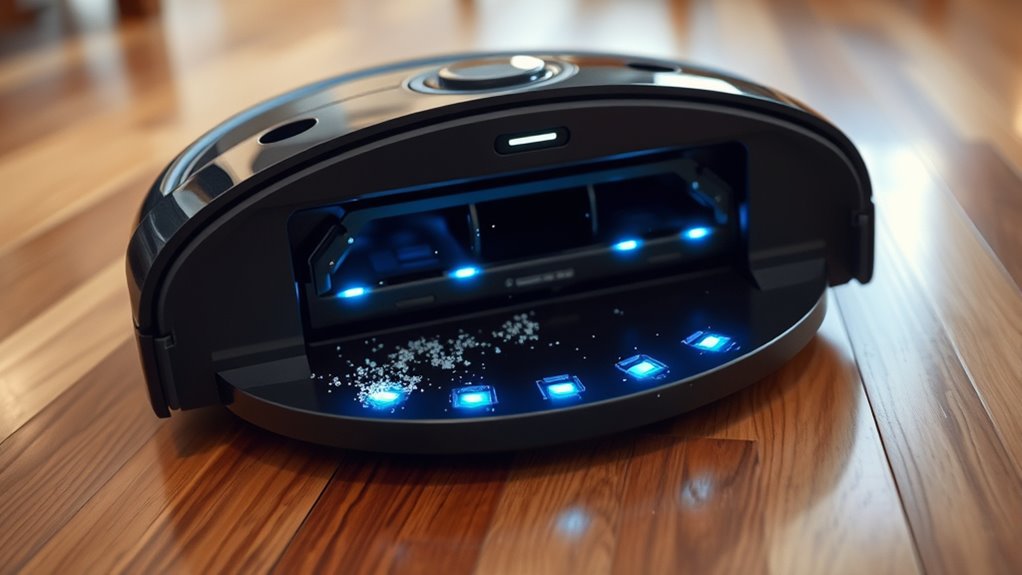

Dirt detection sensors in robot vacuums help you spot heavily soiled areas that need extra cleaning. They analyze surface conditions and adjust the vacuum’s cleaning approach in real time. Proper calibration guarantees these sensors work accurately, while smart algorithms interpret the data to focus on dirtier spots. When maintained well, your vacuum becomes more efficient and gentle on surfaces. Keep exploring to understand how these sensors work together for smarter cleaning results.
Key Takeaways
- Dirt detection sensors identify heavily soiled areas for targeted cleaning and surface condition analysis.
- Proper calibration ensures sensor accuracy, preventing false alarms and missed dirt spots.
- Algorithms interpret sensor data, distinguishing between light dust and thick debris to optimize cleaning.
- Sensor calibration and algorithms work together to adapt to different surfaces and improve overall efficiency.
- Regular maintenance and recalibration enhance sensor performance, reducing energy waste and extending vacuum lifespan.

Dirt detection sensors play a essential role in helping robot vacuums clean more efficiently by identifying heavily soiled areas that need extra attention. These sensors work by analyzing surface conditions in real time, allowing your vacuum to adjust its cleaning approach dynamically. To do this effectively, the sensors must be properly calibrated through a process called sensor calibration, ensuring they accurately detect dirt levels without false alarms or misses. Proper calibration involves fine-tuning the sensors so they respond precisely to different types and amounts of dirt, dust, or debris on various floor surfaces. When calibration is off, the vacuum might either ignore dirty spots or waste energy cleaning areas that are already clean. This calibration process is fundamental for maintaining the sensor’s accuracy and, consequently, the vacuum’s overall cleaning performance.
Most robot vacuums rely on dirt detection algorithms, which are sophisticated software systems that interpret the data collected by the sensors. These algorithms analyze signals like changes in motor load or vibrations caused by dirt or debris being picked up, allowing the vacuum to distinguish between clean and heavily soiled areas. You can think of dirt detection algorithms as the brain behind the sensor’s measurements, making sense of raw data to guide the vacuum’s next move. When these algorithms are well-designed, they enable your robot to intensify cleaning efforts on particularly dirty spots, such as high-traffic areas or spots where pet hair accumulates. Conversely, if the algorithms are poorly programmed, the vacuum might waste time on areas that don’t need extra attention or miss spots that do.
The combination of precise sensor calibration and advanced dirt detection algorithms results in a more intelligent cleaning session. It allows your robot to adapt to different environments, surfaces, and types of dirt. For instance, a well-calibrated sensor paired with robust algorithms can tell the difference between a light layer of dust and a thick layer of mud, adjusting its suction power accordingly. This adaptability not only improves cleaning efficiency but also extends the lifespan of the vacuum by preventing unnecessary strain on its motor. As you use your robot, it’s helpful to periodically check if the dirt detection sensors are functioning correctly, which may include recalibrating them if you notice inconsistent cleaning results. When both sensor calibration and dirt detection algorithms work harmoniously, your robot vacuum becomes a more effective, efficient, and intelligent cleaning partner.
Frequently Asked Questions
How Do Dirt Detection Sensors Differ Between Robot Vacuum Brands?
You’ll notice dirt detection sensors differ between brands mainly in sensor placement and detection accuracy. Some brands place sensors on the bottom or sides to better identify dirt, while others focus on front-facing sensors for quick detection. Higher-end models often feature more advanced sensors, providing greater detection accuracy. This means your vacuum can target dirt more effectively, making cleaning more thorough and saving you time.
Can Dirt Detection Sensors Be Upgraded or Replaced?
You can often upgrade or replace dirt detection sensors by checking with your vacuum’s manufacturer. Make certain to contemplate sensor calibration after installation to ensure accuracy. Pay attention to sensor placement, as improper positioning can affect performance. If you’re comfortable with DIY repairs, follow the manufacturer’s instructions carefully, but for ideal results, think about professional assistance to maintain your vacuum’s dirt detection efficiency.
Do Dirt Detection Sensors Work Effectively on All Floor Types?
You might think dirt detection sensors work on all floors, but they don’t always hit the mark. Dust accumulation and sensor calibration can affect their effectiveness, especially on uneven or textured surfaces. While they excel on carpets and hard floors, some sensors struggle with rugs or tile. To keep them working well, regularly clean and calibrate your sensors. Don’t expect them to be a one-size-fits-all solution, as different floors pose different challenges.
How Do Sensors Handle False Positives or Negatives?
Sensors handle false positives and negatives through sensor calibration and false alarm mitigation strategies. When calibration is fine-tuned, sensors better distinguish between actual dirt and other debris, reducing false alarms. Advanced robot vacuums use algorithms to cross-reference data, minimizing errors. If a false positive occurs, the system adjusts its sensitivity. This ongoing calibration and false alarm mitigation guarantee you get accurate dirt detection, keeping your floors cleaner and more efficiently cleaned.
What Maintenance Is Required to Keep Sensors Functioning Properly?
You might think maintenance is a hassle, but keeping your sensors in top shape is simple. Regularly clean dust buildup from the sensors with a soft cloth, and perform sensor calibration as recommended by the manufacturer. This helps prevent false positives or negatives, ensuring your vacuum works efficiently. Just a quick check every few weeks keeps your robot operating smoothly, saving you time and maintaining cleaning performance.
Conclusion
Now that you understand how dirt detection sensors work, you’re like a detective with a keen nose, sniffing out every speck of dirt. Imagine your robot vacuum as a loyal bloodhound, tirelessly sniffing and tracking every crumb, ensuring your floors stay spotless. With these sensors, your vacuum becomes a vigilant guardian, turning chaos into cleanliness effortlessly. Embrace this tech, and you’ll see your home transform into a true sanctuary of order and freshness.