Eco-friendly materials in robot vacuum construction focus on reducing environmental impact through biodegradable plastics, recycled components, and responsible sourcing. These vacuums often use renewable resources like cornstarch and sugarcane plastics that decompose naturally, minimizing landfill waste. Manufacturers also incorporate recycled plastics and sustainable practices to lower their ecological footprint. If you want to discover how these innovations improve durability and eco-safety, there’s more to explore beyond this overview.
Key Takeaways
- Robot vacuums utilize biodegradable plastics made from renewable resources like cornstarch and sugarcane.
- Manufacturers incorporate recycled plastics to reduce resource extraction and promote circular economy practices.
- Energy-efficient manufacturing processes minimize carbon emissions during robot vacuum production.
- Eco-friendly materials are designed to decompose safely in industrial composting facilities at end-of-life.
- Sustainable sourcing and waste reduction efforts enhance the environmental responsibility of robot vacuum construction.
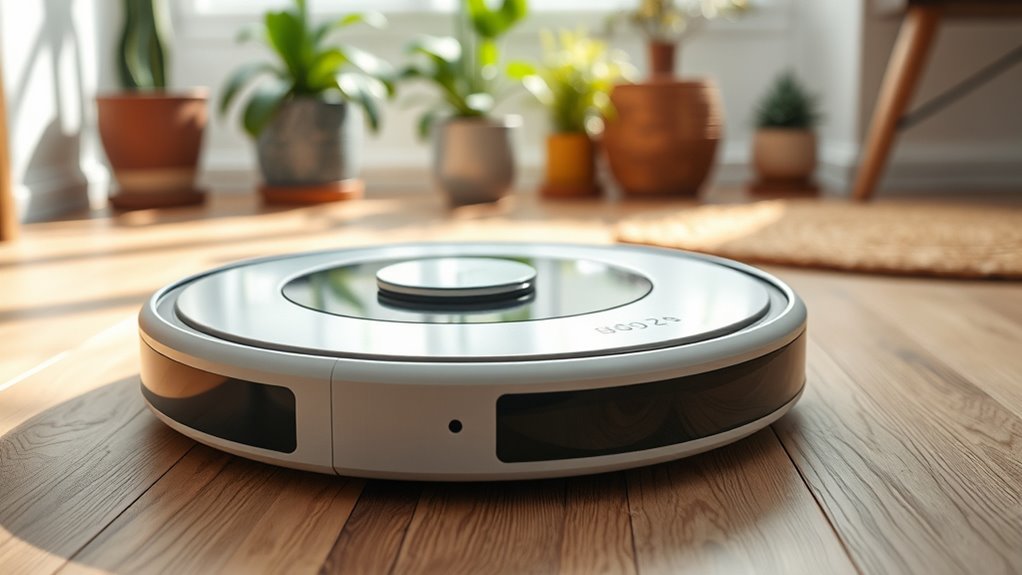
Have you ever wondered how eco-friendly materials are transforming the way robot vacuums are built? Today, manufacturers are increasingly focusing on sustainable manufacturing practices to reduce environmental impact. This shift means choosing materials that are not only durable and functional but also environmentally responsible. One major trend is the use of biodegradable plastics, which break down naturally over time, minimizing landfill waste and pollution. These plastics are derived from renewable resources like cornstarch or sugarcane, making them a more sustainable alternative to traditional plastics that can persist in the environment for hundreds of years.
As you look at modern robot vacuums, you’ll notice that their outer shells and internal components are increasingly crafted from these eco-friendly plastics. Unlike conventional plastics, biodegradable plastics are designed to decompose under specific conditions, such as in industrial composting facilities. This means that when the vacuum reaches the end of its life cycle, its materials won’t linger in landfills for decades. Instead, they break down into natural elements, returning to the earth without contaminating soil or water. Manufacturers are now investing in research to improve the strength and longevity of biodegradable plastics, ensuring that your device remains durable while still being environmentally conscious.
In addition to biodegradable plastics, sustainable manufacturing involves sourcing materials responsibly and reducing waste during production. For example, some companies utilize recycled plastics and other reclaimed materials to assemble their robot vacuums. This not only cuts down on new resource extraction but also fosters a circular economy where materials are reused rather than discarded. Furthermore, sustainable manufacturing practices often incorporate energy-efficient processes, reducing carbon emissions during assembly. These efforts collectively help lower the ecological footprint of manufacturing your favorite household gadgets. Additionally, integrating eco-friendly materials can help meet the growing consumer demand for sustainable products and environmentally responsible technologies.
Frequently Asked Questions
Are Eco-Friendly Materials More Durable Than Traditional Plastics?
Eco-friendly materials like biodegradable plastics and sustainable composites can be just as durable as traditional plastics, but it depends on the specific product and usage. You might find that some biodegradable plastics withstand wear and tear well, while others break down faster. Sustainable composites often offer high strength and longevity, making them suitable for long-term use. Ultimately, choosing eco-friendly materials can provide durability without compromising environmental benefits.
How Do Eco-Friendly Components Affect Robot Vacuum Performance?
Eco-friendly components can enhance your robot vacuum’s performance by improving battery efficiency and noise reduction. These materials often weigh less, which helps your device run longer on a single charge. Plus, they can dampen sound, making your cleaning less noisy. You might notice smoother operation and extended battery life, giving you a more eco-conscious, quieter, and efficient cleaning experience with your robot vacuum.
Can Eco-Friendly Materials Be Recycled or Reused at End-Of-Life?
Yes, eco-friendly materials in robot vacuums can often be recycled or reused at end-of-life. You can participate in recycling processes designed for electronics, ensuring harmful components are disposed of safely. Additionally, many materials have reuse potential, such as repurposing parts for other devices or recycling raw materials to create new products. By choosing eco-friendly options, you help reduce waste and support sustainable practices.
What Certifications Verify a Robot Vacuum’s Eco-Friendly Materials?
You can verify a robot vacuum’s eco-friendly materials through certification standards and eco label programs. These certifications, like ENERGY STAR or ECOLABEL, ensure the product meets strict environmental criteria. Check the product label or manufacturer’s info to confirm it has relevant eco certifications. Doing so guarantees the vacuum employs sustainable materials and adheres to environmentally responsible manufacturing practices, helping you make greener choices.
Are Eco-Friendly Robot Vacuums More Cost-Effective Long-Term?
Yes, eco-friendly robot vacuums can be more cost-effective long-term. They often have lower energy consumption, which saves you money on electricity bills. Although their manufacturing costs might be higher initially due to sustainable materials, these costs are offset over time through energy savings and durability. Plus, their eco-friendly design reduces environmental impact, making them a smart investment for your wallet and the planet.
Conclusion
By choosing eco-friendly materials for your robot vacuum, you become a champion for both your home and the planet. Think of it as planting a seed that grows into a greener future, where technology and sustainability walk hand in hand. Every small step you take helps reduce environmental impact, proving that even tiny actions can create ripples of change. Together, you can make a difference—because a cleaner planet starts with conscious choices.