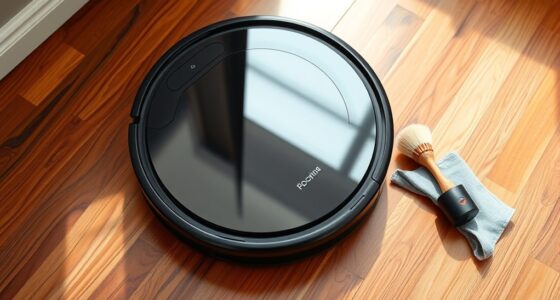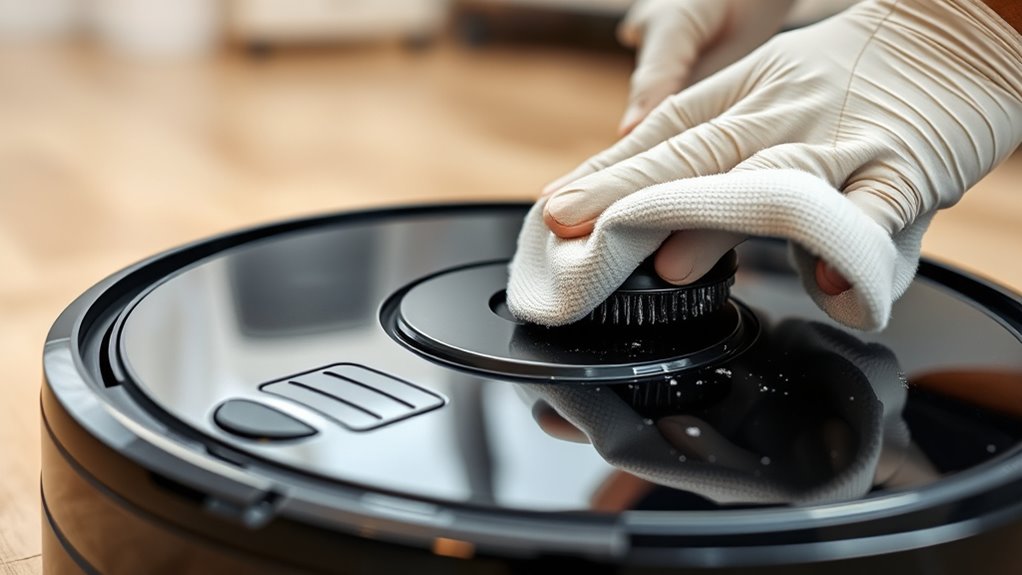

To keep your device running smoothly, regularly clean sensors using a soft cloth or compressed air to remove dirt and debris, avoiding harsh chemicals. Check your brushes often for wear or buildup, and replace them when needed to prevent strain on motors. Proper maintenance not only extends the lifespan of your equipment but also guarantees peak performance. Keep up with these simple steps to avoid costly repairs and enjoy better device operation—more helpful tips ahead.
Key Takeaways
- Use a soft cloth or compressed air to gently remove dust and debris from sensors and brushes.
- Avoid harsh chemicals or abrasives to prevent damage during cleaning.
- Turn off and disconnect devices before cleaning sensors or replacing brushes for safety.
- Inspect brushes regularly for wear, fraying, or buildup, and replace if necessary.
- Clean sensor surfaces gently to maintain accuracy and prevent malfunction.

Proper maintenance is essential to keep your belongings in top shape and prevent costly repairs. When it comes to cleaning sensors and brushes, staying on top of these tasks can significantly extend the lifespan of your equipment and ensure optimal performance. One critical aspect of maintaining sensors is sensor calibration. Over time, sensors can drift out of alignment or become less accurate, which may lead to poor operation or errors. Regularly calibrating your sensors ensures they continue to provide precise readings, maintaining the effectiveness of your device. To do this, follow the manufacturer’s instructions carefully, using the recommended calibration tools and standards. This process often involves exposing the sensor to known reference signals or environments, then adjusting it until it matches the expected output. Proper calibration prevents misreads and keeps your device functioning smoothly. Additionally, utilizing automotive scan tools can help diagnose sensor issues early and confirm proper calibration.
Regular sensor calibration ensures accurate readings and optimal device performance.
In addition, cleaning your sensors is vital. Dust, dirt, and debris can accumulate on sensor surfaces, impairing their ability to detect signals accurately. Gently wiping sensors with a soft, lint-free cloth or using compressed air can remove stubborn grime without damaging delicate parts. Avoid harsh chemicals or abrasive materials that could scratch or degrade the sensor surface. Regular cleaning not only improves accuracy but also reduces the risk of sensor failure caused by buildup.
When it comes to brushes, replacing them at the right intervals is crucial. Over time, brushes can become worn, frayed, or clogged with debris, which diminishes their ability to perform effectively. This is especially true for brushes used in cleaning appliances, robotic vacuums, or industrial machinery. Regularly inspecting your brushes is a good habit; look for signs of wear, uneven bristles, or buildup of dirt. When you notice these issues, it’s time for brush replacement. Doing so ensures your equipment continues to work efficiently and prevents strain on motors or other parts caused by inefficient brushing action.
Replacing brushes is generally straightforward. Most brushes are designed to snap in or screw out easily. Before replacing, turn off the device and disconnect it from power to avoid injury. Remove the old brushes carefully, then insert the new ones, making sure they sit securely in their slots. After replacing, run your device briefly to confirm everything operates correctly. Keeping both sensors calibrated and brushes replaced on schedule doesn’t just improve performance—it also helps you avoid more costly repairs down the line. By dedicating a few minutes regularly to these maintenance tasks, you’re investing in the longevity and reliability of your equipment, saving you time and money in the long run.
Frequently Asked Questions
How Often Should Sensors Be Cleaned for Optimal Performance?
You should clean your sensors weekly to guarantee peak performance. Regular cleaning helps with sensor calibration and prevents debris buildup, which can interfere with accuracy. Use a soft cloth or brush to remove dust and dirt gently. If you notice sensor errors or reduced efficiency, clean them immediately. Consistent debris removal keeps your device functioning smoothly and extends its lifespan, so make sensor cleaning a routine part of your maintenance.
Can Cleaning Brushes Damage Sensitive Components?
Think of cleaning brushes as delicate dancers in your device’s performance. If you use the wrong brush material, you risk damaging sensitive components, disrupting sensor calibration like a misstep in a routine. To avoid this, choose compatible brushes and handle them gently. Proper care guarantees your sensors stay precise, and your device dances smoothly without missing a beat. Keep it gentle, keep it calibrated, and let your device shine.
What Cleaning Products Are Safe for Sensor Maintenance?
For sensor cleaning, you should use products that are specifically designed for electronic components, ensuring product safety. Avoid harsh chemicals like alcohol or solvents that can damage sensors. Instead, opt for a soft, lint-free cloth slightly dampened with distilled water or a manufacturer-approved cleaning solution. This approach maintains sensor integrity and prevents damage, making sure your equipment stays in excellent condition without risking costly repairs.
Are There Specific Tools Recommended for Cleaning Sensors?
Think of cleaning your sensors as tuning a finely crafted instrument. You should use soft, anti-static brushes made from gentle materials like microfiber or camel hair to avoid damaging delicate parts. These tools help maintain sensor calibration by gently removing dust and debris. Always opt for tools designed specifically for sensor maintenance, ensuring your equipment stays precise and reliable, like a symphony that’s perfectly in tune.
How Do I Know if My Brushes Need Replacement?
You’ll know your brushes need replacing when their lifespan nears or exceeds the recommended time, usually every 6 to 12 months, depending on usage. Look for replacement indicators like frayed bristles, uneven wear, or decreased cleaning performance. If your vacuum isn’t picking up debris as effectively or you notice damage, it’s time to swap out the brushes to maintain peak cleaning efficiency.
Conclusion
Think of your cleaning tools as the eyes and hands of your device; when they’re clear and well-maintained, everything works smoothly. I once neglected my vacuum’s sensors, and it struggled to pick up dirt—like a blindfolded chef missing essential spices. Regularly cleaning your sensors and brushes keeps your device running efficiently, just like a well-tuned instrument. With consistent care, you’ll enjoy peak performance and fewer surprises—making maintenance a simple, rewarding routine.