
In 2025, choosing between the Yoto Player and Toniebox depends on what you value most. I’ve found Yoto offers a broader library with custom content options and visual engagement, while Toniebox provides a simpler, screen-free experience with cute figurines and easy controls. Both are durable and safe for kids, but your choice may hinge on content variety versus ease of use. Keep exploring to find out which device suits your child best.
Key Takeaways
- Yoto offers a larger, more diverse digital and physical content library, including customizable audio options, while Toniebox focuses on physical figurine-based content.
- Toniebox features a tactile, intuitive design ideal for young children, whereas Yoto provides more advanced controls and visual displays for older kids.
- Both devices are highly portable with up to 14 hours of battery life, but Yoto Mini is more compact for travel convenience.
- Parental controls are robust on both platforms, with Yoto offering detailed app management and Toniebox emphasizing a screen-free, curated experience.
- Content expansion is seamless through Yoto’s third-party and custom options, while Toniebox’s growth relies on new figurine releases.
Yoto Mini (2024 Edition) + Starter Pack for Little Kids Bundle – Screen-Free Bluetooth Audio Player

If you’re looking for a screen-free, easy-to-use audio device for young children, the Yoto Mini (2024 Edition) with its Starter Pack is an excellent choice. It features a simple design—just insert an audio card to play content or remove it to stop. The device includes preschool songs, sleepy stories, dance activities, drawing prompts, and calming music, all delivered through a pixel display that enhances the experience. Controlled via a free app, it’s portable and perfect for travel. With parental controls, no cameras or ads, and over 1,000 content options, the Yoto Mini offers safe, engaging entertainment that grows with your child.
Best For: parents and caregivers seeking a safe, screen-free, portable audio device to entertain and educate young children with easy operation and a rich library of content.
Pros:
- Simple to operate with just a card insert or the free app, making it child-friendly and easy for parents to use
- Safe for children with parental controls, no cameras, no microphones, and no ads, ensuring age-appropriate content
- Versatile with over 1,000 content options including stories, music, activities, and more, supporting various developmental needs
Cons:
- Limited to audio content, so children seeking visual entertainment might need additional devices
- Requires purchasing or acquiring audio cards, which could involve extra cost or management of physical cards
- The pixel display, while functional, may not be as engaging visually as a touchscreen or more advanced display
Yoto Disney Pixar Storybook Collection Audio Card for Kids
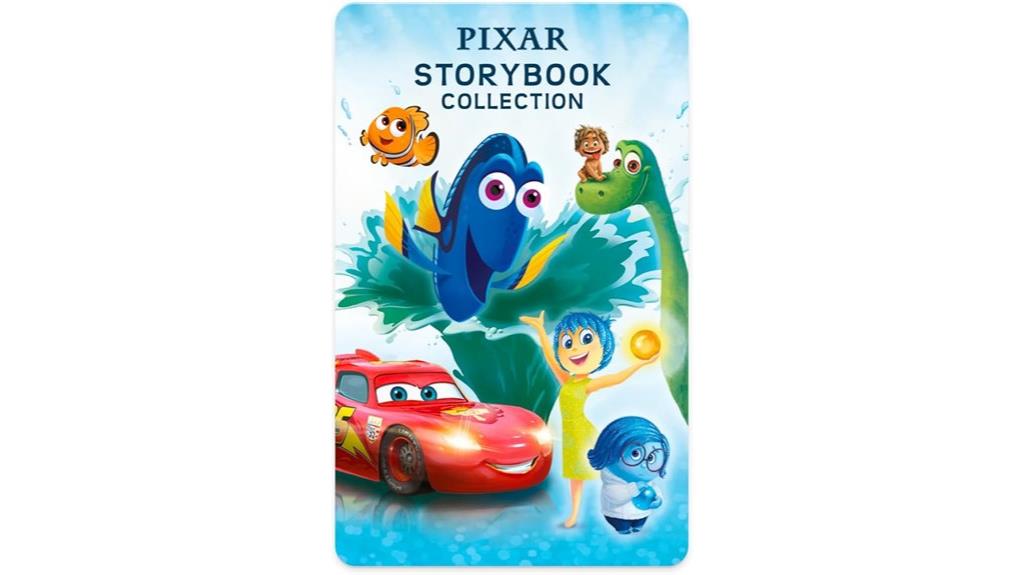
Looking for a screen-free way to introduce your child to beloved Disney Pixar stories? The Yoto Disney Pixar Storybook Collection Audio Card offers 17 timeless tales read by Disney in a clear US accent. It’s compatible with Yoto Player and Mini, making it perfect for playtime, bedtime, or travel. With a total runtime of over two hours, it provides safe, child-friendly content with parental controls—no cameras, mics, or ads. Simply insert the card to start listening, and control volume and tracks with the device dials or app. It’s an engaging way to foster imagination and independent listening skills in kids aged 3 and up.
Best For: parents seeking a screen-free, engaging, and educational storytelling experience for children aged 3 and up, especially during travel, bedtime, or quiet time.
Pros:
- Offers 17 timeless Disney Pixar stories read in a clear US voice to promote imagination.
- Compatible with Yoto Player and Mini, providing easy-to-use physical and app controls.
- Safe, child-friendly content with parental controls, no ads, cameras, or microphones.
Cons:
- Requires a Yoto Player or Mini device (sold separately) to use the card.
- Limited to pre-loaded stories; additional content requires purchasing more cards.
- Some children might prefer visual stories with illustrations, which this audio-only format does not provide.
Toniebox 2 Audio Player Starter Set for Kids 1+ with Playtime Puppy
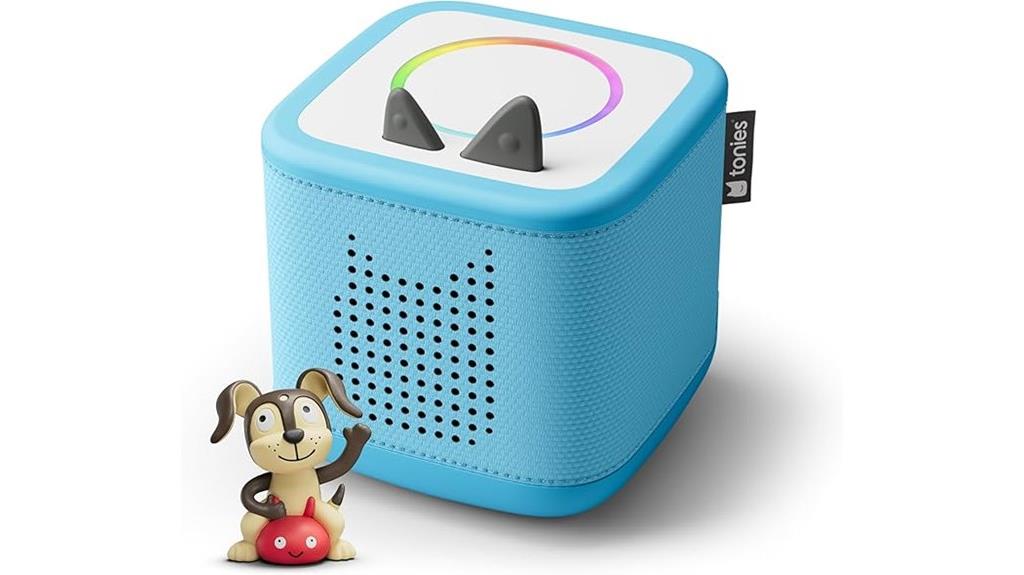
The Toniebox 2 Audio Player Starter Set for Kids 1+ with Playtime Puppy stands out as an excellent choice for parents seeking a durable, screen-free entertainment device that encourages independence. Its kid-friendly design features intuitive controls, like pressing the ears for volume and tapping sides to change tracks, making it easy for children to explore on their own. The set includes the adorable Playtime Puppy Tonie and offers access to hundreds of songs, stories, and games, with new content added monthly. With built-in sleep timers and parental monitoring via the app, it’s a safe, engaging, and flexible way for kids to enjoy independent play and develop confidence.
Best For: parents seeking a durable, screen-free, and interactive audio device that promotes independent play and confidence in children aged 1–9+.
Pros:
- Kid-friendly, intuitive controls designed for easy use by young children
- Offers access to hundreds of songs, stories, and games with new content added monthly
- Built-in sleep timer and sunrise alarm to support healthy sleep routines
Cons:
- Additional Tonies and accessories, such as the Tonieplay controller, are sold separately
- Requires Wi-Fi for initial setup, which may be a limitation in some locations
- The device’s durability and safety depend on proper use and supervision
Yoto Mini (2024 Edition) Bluetooth Audio Player for Kids

The Yoto Mini (2024 Edition) is an ideal choice for parents seeking a screen-free, versatile audio device for children aged 3 to 12+. Its compact design features a pixel display that makes listening engaging, whether at home or on the go. Kids can access over 1,000+ cards with audiobooks, music, and educational content, plus create their own audio experiences. The device is simple to operate—just insert a card to start, remove it to stop—and can be controlled remotely via a free app. With up to 14 hours of battery life and no cameras or ads, it offers a safe, flexible way for children to explore and learn.
Best For: parents and caregivers seeking a safe, screen-free, and versatile audio entertainment device for children aged 3-12+.
Pros:
- Engages children with a wide variety of over 1,000+ cards including audiobooks, music, and educational content.
- Simple to operate with physical cards and remote app control, making it kid-friendly and convenient for parents.
- Safe design with no cameras, microphones, or ads, and up to 14 hours of battery life for all-day use.
Cons:
- Limited to audio content, which may not appeal to children who prefer visual or interactive media.
- Requires purchasing or obtaining physical cards for content, which could be an additional cost.
- Might be less suitable for children who prefer or need more interactive or touchscreen devices.
Yoto Wicked Kids Audio Card for Player & Mini Audio Player
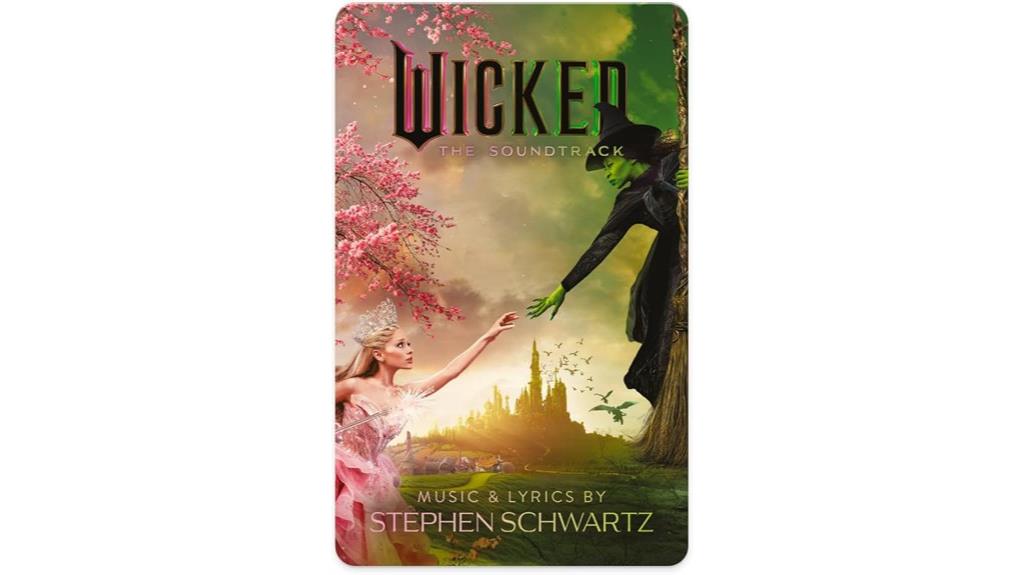
If you’re searching for a screen-free, easy-to-use audio solution for young children, the Yoto Wicked Kids Audio Card is a fantastic choice. It offers a 56-minute soundtrack that brings the magic of Wicked and Oz to life, perfect for playtime, travel, or holiday parties. Compatible with both the Yoto Player and Mini Audio Player, it’s simple to set up—just insert the card, and you’re ready to go. The content is safe for children, with no cameras, ads, or inappropriate material. Plus, with access to over 1,000 cards, parents can expand their child’s library with stories, music, and creative content as they grow.
Best For: parents and caregivers seeking a safe, screen-free audio solution to entertain and educate young children during playtime, travel, and holiday celebrations.
Pros:
- Easy to use with simple insert and remove operation for immediate listening.
- Safe and child-friendly content with no cameras, ads, or inappropriate material.
- Expands easily with access to over 1,000 diverse stories, music, and activities.
Cons:
- Limited to the 56-minute soundtrack on the Wicked card unless more cards are purchased.
- Requires a Yoto Player or Mini Audio Player for playback, which is an additional investment.
- Some users may find the content library’s organization or navigation challenging without the app.
Factors to Consider When Choosing Yoto Player Vs Toniebox Review

When choosing between the Yoto Player and Toniebox, I consider factors like content selection, ease of use, and safety features. It’s also important to look at their design, durability, and how long the batteries last, so the device fits our lifestyle. By reviewing these points, I can find the best fit for my child’s needs and our family’s routines.
Content Selection & Library
Choosing between the Yoto Player and Toniebox often comes down to their content libraries, which cater to different interests and preferences. The Yoto platform offers over 1,000 cards, including audiobooks, music, podcasts, soundscapes, and creative content, covering a wide range of genres for various ages. It allows kids to explore educational and imaginative topics through physical cards and an app. In contrast, Toniebox features hundreds of Tonies characters, each packed with specific stories, songs, or activities, with new ones regularly added to expand the collection. Both platforms support content growth—Yoto with “Make Your Own” cards and third-party options, and Toniebox through new Tonies—making their libraries adaptable to evolving interests.
Ease of Use & Setup
Both Yoto Player and Toniebox are designed to be user-friendly and simple for kids to operate, but they achieve this in different ways. Yoto uses physical cards that are inserted into the device, while Toniebox relies on figurines called Tonies that sit on top to start playback. Setup for both involves charging the device and connecting to Wi-Fi, but Yoto offers more control through a dedicated app, giving parents extra management options. Yoto’s controls include dials for volume and track selection, making it easy for children to navigate independently. Toniebox, on the other hand, features tap and press controls on its ears and sides. Overall, both devices are intuitive, with minimal steps needed for kids to start listening, ensuring a smooth, fuss-free experience.
Parental Controls & Security
Parental controls and security are crucial factors to contemplate because they help guarantee children access appropriate content and stay safe while using these devices. Both Yoto and Toniebox prioritize safety, but they approach controls differently. Yoto offers app-based parental controls that let parents restrict content types and monitor usage remotely, giving more flexibility. Toniebox emphasizes simplicity with physical controls and a curated selection of content, reducing the need for digital management. Importantly, both devices ensure privacy by excluding cameras and microphones, and they operate in ad-free environments. This focus on security minimizes risks and provides peace of mind. Ultimately, choosing between the two depends on how much control you want over content and the level of digital management you’re comfortable handling.
Design & Durability
When evaluating the design and durability of the Yoto Player and Toniebox, it’s clear that both prioritize sturdiness to handle active children. The Yoto Player’s compact design, paired with durable, child-friendly materials, makes it resistant to frequent handling and travel. Its pixel display adds to its compactness without sacrificing resilience. Meanwhile, the Toniebox features a larger, soft-sided cube shape with a rubberized exterior, providing excellent protection against drops and rough play. Its flexible shell absorbs impacts better, making it especially durable for energetic use. The Yoto Mini’s portability boosts its durability for on-the-go adventures, while the Toniebox’s sturdy build is ideal for stationary play and travel. Overall, both devices are well-designed to withstand the rigors of everyday child use.
Power & Battery Life
Have you ever wondered how long your child’s device can keep them entertained without needing a recharge? Battery life varies between devices, with some lasting up to 14 hours on a full charge, making them perfect for all-day adventures or travel. Charging typically takes 2 to 4 hours, so you won’t have to wait long for them to be ready again. Portable devices are designed to maintain consistent power during extended play sessions, reducing the need for frequent recharges. However, over time, battery performance can decline, especially with heavy use or improper charging habits. Some models include sleep timers or power-saving modes to help extend battery life, ensuring your child’s device stays reliable throughout their busy day.
Frequently Asked Questions
How Do Durability and Build Quality Compare Between Yoto Player and Toniebox?
I’ve found that the Yoto Player and Toniebox both have solid build quality, but the Toniebox feels a bit more rugged with its soft, chew-proof shell, making it ideal for active kids. The Yoto Player is sturdy too, but its plastic case is more susceptible to scratches. Overall, I’d say the Toniebox edges out slightly in durability, especially for younger children who might be rougher with their devices.
Which Device Offers Better Parental Controls and Safety Features?
I find the Yoto Player offers better parental controls and safety features. It allows me to set usage time limits, filter content, and monitor play activity through its app, giving me peace of mind. The Toniebox also has safety features like rounded edges and volume limits, but I appreciate Yoto’s more thorough control options, making it easier to manage my child’s screen time and ensure safe, age-appropriate content.
Are There Exclusive Content Options Available for Either Device?
Yes, there are exclusive content options for both devices. I’ve noticed that Yoto offers unique playlists and curated stories you can’t find elsewhere, which is great for variety. Meanwhile, Toniebox has special figures that access exclusive stories and songs, making it more engaging for some kids. Depending on what your child prefers, you might choose one for its exclusive content. I find both platforms bring something special to the table.
How Do Subscription Costs Differ Between Yoto and Toniebox?
Think of subscription costs like a balancing act. Yoto’s subscription is around $7 per month, giving access to a wide range of content, while Toniebox charges about $8 monthly for its Toniecloud, offering a more curated selection. Yoto’s subscription feels like a buffet, offering variety, whereas Tonie’s is a plated meal—focused and specific. Both are worth considering depending on your child’s preferences and your budget.
Which Device Is More Suitable for Children With Special Needs?
I believe the Toniebox is more suitable for children with special needs because of its simple, intuitive design and soft, plush exterior that’s gentle to touch. The physical figurines are easy to handle, and the device offers a sensory-friendly experience without complicated screens or controls. I’ve found it helps children focus and feel more comfortable, making it a great choice for kids with diverse needs.
Conclusion
So, which one truly stands out in 2025? Both the Yoto Player and Toniebox have their unique charms, but it all depends on what your little one loves most—screen-free fun or imaginative stories. Are you ready to choose the device that sparks endless adventures? Whatever you pick, I promise your kid’s listening experience will be unforgettable. After all, isn’t the goal to make learning and playtime magical?