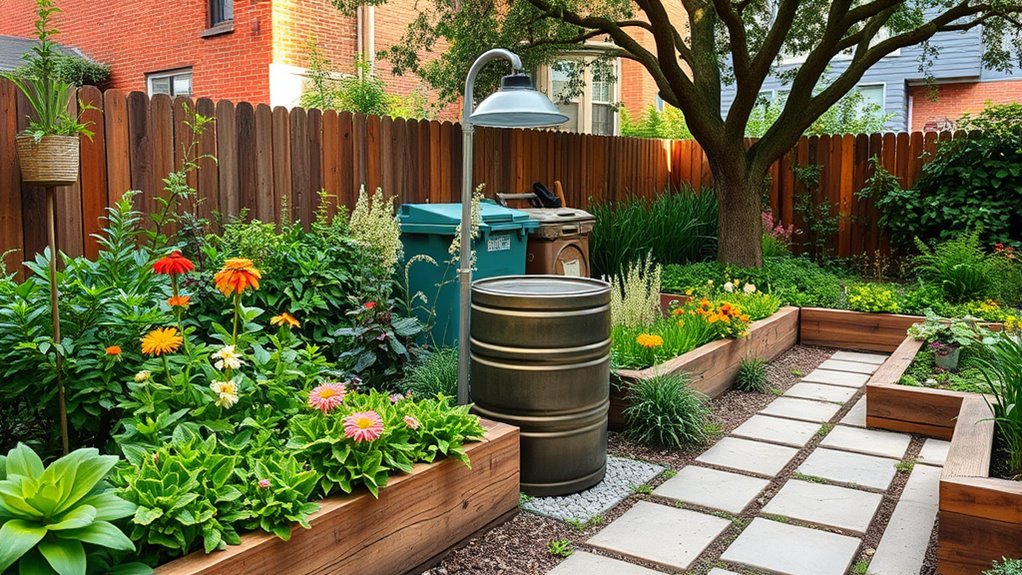

By choosing native plants and incorporating rain gardens, you can create an eco-friendly landscape that conserves water, attracts pollinators, and supports local ecosystems. These sustainable choices reduce your need for fertilizers and pesticides, lower water bills, and require less maintenance. Proper site selection and smart design guarantee your yard manages stormwater effectively while boosting visual appeal. Continue exploring ways to make your urban space both beautiful and environmentally responsible, and you’ll discover even more eco-friendly options.
Listen free for 30 days with Audible
Thousands of audiobooks and originals — cancel anytime.
As an affiliate, we earn on qualifying purchases.
Key Takeaways
- Incorporate native plants to reduce water, fertilizer, and pesticide use while supporting local biodiversity.
- Design rain gardens to manage stormwater runoff naturally, preventing pollution and sewer overloads.
- Select plants suited to urban conditions, including grasses, wildflowers, and shrubs, for low-maintenance and resilience.
- Use sustainable materials and practices to lower environmental impact and decrease utility costs.
- Enhance aesthetic appeal and biodiversity by creating colorful, functional landscapes that attract pollinators.
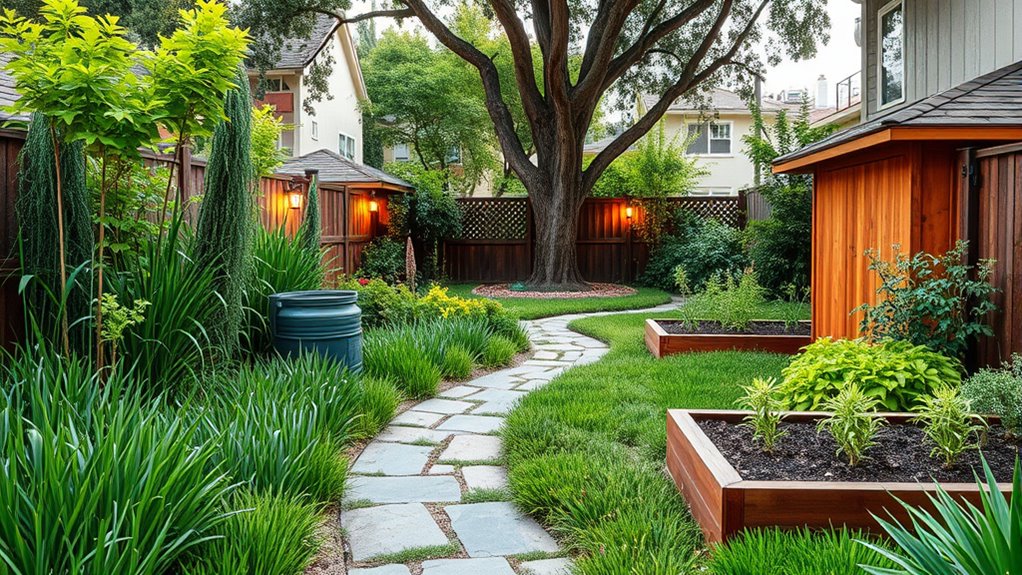
Are you looking for ways to make your urban home more sustainable and attractive? One of the most effective strategies is to incorporate native plants and rain gardens into your landscaping. Native plants are adapted to your local climate, which means they require less water, fertilizers, and pesticides. By choosing native species, you not only create a lush, natural look that blends seamlessly with your environment but also support local ecosystems by providing food and habitat for native birds, bees, and butterflies. These plants typically thrive without much intervention, saving you money and effort while reducing your ecological footprint.
Incorporate native plants and rain gardens to boost sustainability and beauty in your urban landscape.
Rain gardens are another powerful tool in eco-friendly landscaping. They’re designed to capture and filter stormwater runoff from your roof, driveway, or patio, preventing it from overwhelming sewer systems and causing pollution in nearby waterways. When you install a rain garden, you create a shallow depression filled with native plants that can tolerate both wet and dry conditions. As rainwater flows into the garden, it’s naturally filtered through layers of soil and mulch, removing pollutants and reducing runoff volume. This not only helps protect the environment but also enriches your yard’s beauty with colorful, resilient plants that flourish in variable conditions.
To get started, identify areas of your yard that tend to get soggy or experience water pooling after heavy rain. These spots are ideal for rain gardens, which can be designed to fit your space and style. Use native plants suited to your local climate—think grasses, wildflowers, and shrubs that thrive naturally in your region. These plants will establish quickly and require minimal maintenance once rooted, creating a self-sustaining landscape. Incorporating high contrast ratios into your plant selections can enhance visual interest and support the overall health of your garden. Incorporate a mix of flowering plants and greenery to add visual interest throughout the seasons, attracting pollinators and enhancing your outdoor experience.
Incorporating native plants and rain gardens isn’t just good for the environment; it can also boost your property’s curb appeal. A thoughtfully designed rain garden becomes a focal point, adding texture and color while serving a practical purpose. Over time, you’ll notice a decrease in water bills and fewer yard maintenance tasks, as native plants are less demanding. Plus, knowing you’re contributing to a healthier ecosystem makes your urban space more meaningful.
Frequently Asked Questions
How Can I Attract Native Pollinators to My Urban Garden?
You can attract native pollinators by selecting native plants that thrive in your area, making your garden more pollinator friendly. Plant a diverse mix of flowers that bloom at different times to provide continuous food sources. Avoid pesticides, and include native shrubs and flowering plants. Creating habitat features like bee hotels also encourages pollinator visits. Your efforts will support local ecosystems and increase pollination in your urban garden.
What Are the Best Drought-Tolerant Plants for Small City Yards?
Imagine transforming your tiny city yard into a lush oasis that defies drought! You should focus on native plant selection and choose drought-resistant species like lavender, sedum, and Russian sage. These plants thrive with minimal water, create vibrant color, and attract pollinators. They’re perfect for small spaces and help conserve water, making your urban garden both beautiful and eco-friendly. plunge into drought-tolerant gardening today!
How Do I Compost Effectively in Limited Urban Space?
To compost effectively in limited urban space, start with container composting using a compact bin that fits your balcony or yard. Keep a mix of green and brown materials, like vegetable scraps and dry leaves, and turn it regularly to aerate. Engage in urban composting by recycling food waste and yard clippings responsibly. This approach minimizes odor and space issues, helping you create rich compost efficiently in small areas.
Are There Eco-Friendly Pest Control Options for Urban Landscaping?
You can combat pests responsibly by encouraging beneficial insects, which naturally keep harmful bugs in check. You might also opt for organic sprays, avoiding harsh chemicals that harm your environment. By blending biological benefits with botanical barriers, you create a sustainable, safe space. This eco-friendly approach promotes pest management that’s both practical and planet-friendly, helping your urban garden flourish freely and fearlessly.
How Can I Incorporate Rainwater Harvesting Into My Landscape Design?
You can incorporate rainwater harvesting into your landscape design by installing a rainwater storage system, like barrels or tanks, at strategic points. Connect these to your gutters and downspouts for efficient collection. Integrate the storage into your landscape by placing it near garden beds or trees, making it both functional and visually appealing. This approach conserves water and promotes sustainable landscape practices for your urban home.
Conclusion
By choosing eco-friendly landscaping, you turn your urban yard into a vibrant oasis, a lush green heartbeat amid concrete jungles. Imagine your garden as a sanctuary where native plants dance with bees and butterflies, and rainwater soaks into the earth like a gentle lullaby. Every small step you take helps breathe life into your surroundings, transforming your home into a thriving, sustainable haven. Together, you and nature create a beautiful symphony of growth and harmony.
Flea & tick season Picks
flea and tick prevention
As an affiliate, we earn on qualifying purchases.