
Replacing an outdated electrical panel is crucial for your home’s safety and reliable power. Start by turning off the main circuit breaker and removing the old panel safely. Choose a new panel that meets current codes and matches your electrical demands, including the right breaker types like GFCI or AFCI. Hiring a licensed electrician ensures proper installation, grounding, and compliance. Keep going to learn more about how to guarantee a safe, effective upgrade for your home.
Key Takeaways
- Identify signs of an outdated panel, such as wear, frequent outages, or age over 20 years.
- Hire a licensed electrician to ensure proper, code-compliant removal and installation of the new panel.
- Choose a modern panel that meets current electrical codes and supports your home’s current and future power needs.
- Ensure the new panel includes appropriate breaker types (GFCI, AFCI) for safety and compliance.
- Verify proper grounding, secure mounting, and wiring connections during installation for safety and reliability.
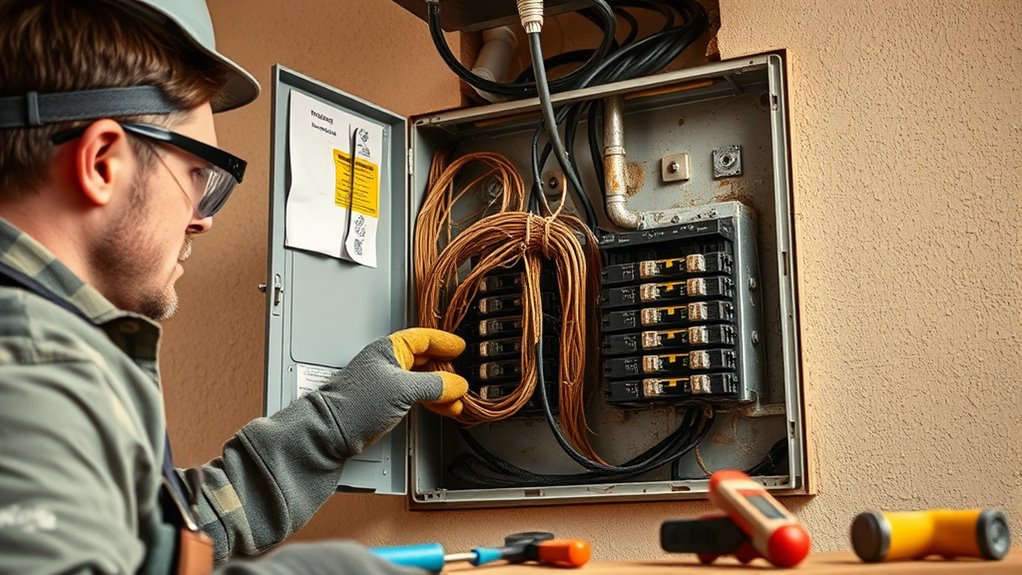
If your electrical panel is outdated, overloaded, or showing signs of wear, replacing it is essential for safety and reliable power. An outdated panel can pose serious risks, including electrical fires, shocks, and frequent outages. Before starting the replacement process, it’s crucial to understand the different circuit breaker types available. Modern panels often feature circuit breakers that are either standard, GFCI (Ground Fault Circuit Interrupter), or AFCI (Arc Fault Circuit Interrupter). Each type serves a specific purpose: standard breakers protect against overloads, GFCIs guard against ground faults, and AFCIs help prevent fires caused by arcing. Knowing which circuit breaker type suits your needs ensures your new panel provides optimal safety and functionality.
Another vital consideration is keeping your electrical system up-to-date with current electrical code updates. Electrical codes evolve to enhance safety standards and accommodate new technologies. If your panel is more than 20 years old, chances are it doesn’t meet current codes, which could lead to issues during inspections or insurance claims. Upgrading your panel allows you to incorporate the latest code requirements, such as increased grounding standards or dedicated circuits for appliances like electric ranges or HVAC systems. This not only boosts safety but also prepares your home for future electrical demands. When selecting a new panel, verify that it complies with the latest electrical code updates, which may specify panel size, breaker types, and wiring configurations.
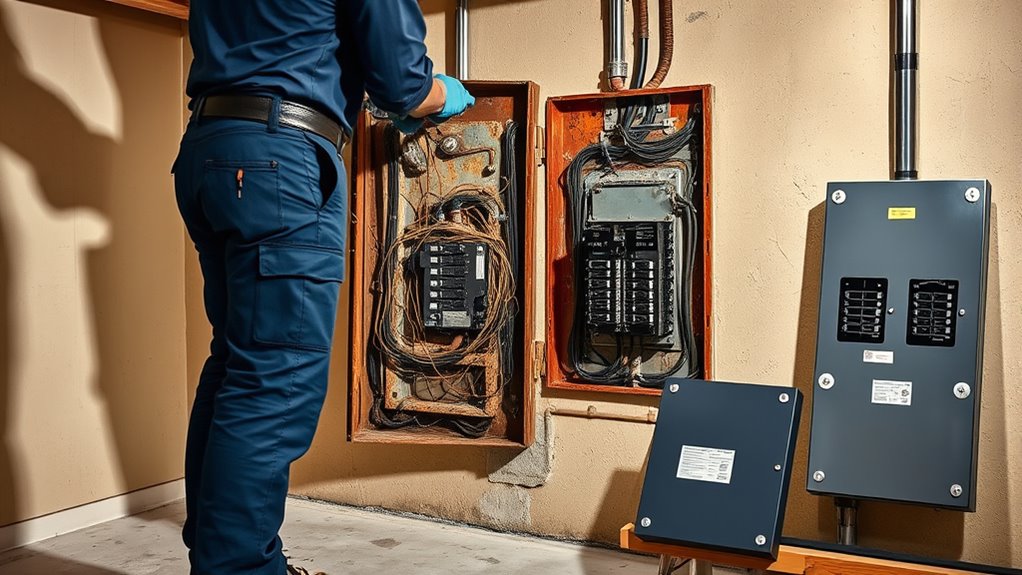
Replacing your electrical panel isn’t a task to take lightly. It involves shutting off main power, removing the old panel, and installing the new one securely in a suitable location. You’ll need to ensure that the new panel matches your home’s electrical load and is compatible with circuit breaker types suited for your wiring and appliances. It’s also wise to consult or hire a licensed electrician, particularly if you’re unfamiliar with electrical work or local code requirements. They can help you select the right panel, ensure proper grounding, and connect everything safely.
Frequently Asked Questions
How Long Does a Typical Electrical Panel Replacement Take?
A typical electrical panel replacement usually takes about 4 to 8 hours, depending on the complexity of the job. You’ll need to have your circuit breaker and wiring upgraded for safety and compliance. During this time, a licensed electrician will disconnect the old panel, upgrade the wiring if necessary, and install the new panel. The process is relatively quick, but proper safety checks guarantee everything functions correctly afterward.
Can I Upgrade My Panel Myself or Should I Hire a Professional?
You should hire a professional for upgrading your electrical panel because DIY safety risks and adherence to electrical codes are critical. Handling electrical systems without proper training can lead to serious injuries or code violations. Licensed electricians have the skills and knowledge to safely perform the upgrade, ensuring it meets all safety standards and electrical codes. Trusting a pro minimizes hazards and guarantees your electrical system is safe and compliant.
What Are the Signs That Indicate an Electrical Panel Needs Replacement?
Your electrical panel is like the heart of your home’s power system—when it struggles, trouble follows. Signs you need a replacement include frequent breaker issues, flickering lights, burning smells, or unexpected power outages. If your panel’s age is over 20-30 years or it shows signs of rust or corrosion, it’s time to act. Don’t ignore these warning signals; addressing them keeps your home safe and your power steady.
How Much Does Replacing an Electrical Panel Usually Cost?
Replacing an electrical panel typically costs between $1,200 and $3,000, depending on several pricing factors. Your cost estimate will vary based on the panel size, the complexity of installation, local labor rates, and any additional upgrades needed. You should get a detailed quote from a licensed electrician to understand the specific costs for your home. Keep in mind that investing in a new panel can enhance safety and ensure your electrical system meets current demands.
Are There Any Permits Required for Electrical Panel Replacement?
You will likely need permits for electrical panel replacement, as permit requirements vary by local regulations. It’s crucial to check with your city or county building department before starting the project. Securing the proper permits ensures the work meets safety standards and avoids potential fines or issues during future inspections. Always follow local rules and hire a licensed electrician to handle the permit process and installation properly.
Conclusion
So, after all this, you now know what it takes to replace that outdated electrical panel. Ironically, the very device keeping your home safe might be the one risking it all if overlooked. While DIY might seem tempting, remember, a small mistake can lead to big trouble. So, why not leave it to the pros? After all, it’s the safest way to ensure your home stays powered—and your worries stay unplugged.