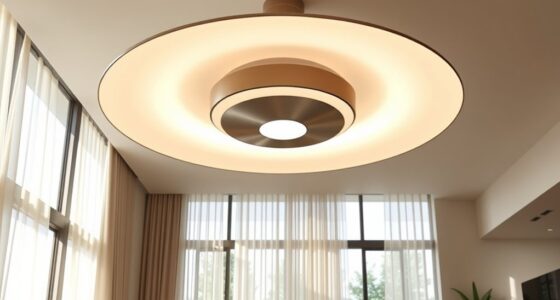
Integrated ceiling fans with air purifiers combine air circulation and filtration, offering a convenient way to improve indoor air quality while saving space and energy. They actively remove dust, pollen, pet dander, and pollutants, helping those with allergies or respiratory issues breathe easier. With smart controls and efficient motors, they promote continuous, quiet cleaning. Keep in mind, proper maintenance is key, and more details will help you make an informed choice.
Key Takeaways
- Combines air circulation and purification, reducing clutter and noise in indoor spaces.
- Improves air quality by filtering dust, pollen, pet dander, and airborne pollutants.
- Supports energy efficiency with low power consumption and smart control features.
- Requires regular filter maintenance and replacement for optimal performance.
- Best used as part of a comprehensive indoor air quality management plan.
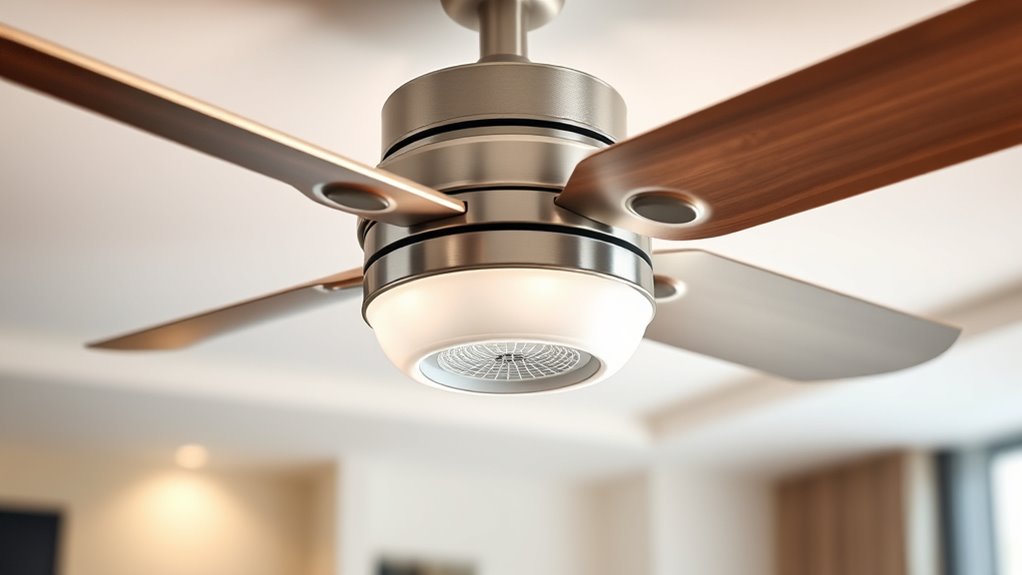
Integrated air purifiers in ceiling fans are transforming how you clean and circulate indoor air. These innovative systems combine the airflow benefits of ceiling fans with the filtration power of air purifiers, providing a seamless way to enhance your home’s air quality. Instead of relying on separate units or frequent manual cleaning, you get a dual-purpose device that continuously improves your environment. This integration allows you to enjoy fresher air without the additional clutter or noise of standalone purifiers, making it an attractive option for modern living spaces.
Integrated ceiling fans with air purifiers seamlessly improve air quality and reduce clutter in modern homes.
One of the key advantages of these integrated systems is their impact on air quality. By actively removing dust, pollen, pet dander, and airborne pollutants as the fan circulates air, they help create a healthier indoor environment. This is especially beneficial if anyone in your household suffers from allergies or respiratory issues. As the fan runs, the purifier’s filters trap contaminants, preventing them from recirculating through your space. This constant filtration process guarantees that the air you breathe is cleaner, fresher, and free from many common indoor irritants. Over time, this continuous clean air can markedly improve overall health and comfort, making your home a safer haven. Additionally, understanding the importance of air quality standards can help you select the most effective models for your needs.
Energy efficiency is another strong selling point for integrated ceiling fans with purifiers. Because these units combine two functions — air circulation and purification — they often consume less energy than running a standalone fan and separate air purifier simultaneously. Modern models are designed with energy-efficient motors and advanced filtration systems that require minimal power while maximizing output. This means you can enjoy continuous air cleaning without worrying about skyrocketing energy bills. Additionally, since the fan and purifier operate together, they can often be controlled via smart systems or timers, allowing you to customize their operation for maximum efficiency during peak times or when rooms are unoccupied.
However, it’s important to consider some factors before investing in an integrated system. Not all models offer the same level of air filtration or energy efficiency, so you should look for units with high-quality filters and proven energy-saving features. Maintenance is also vital; filters will need regular replacement to maintain performance, which can add to ongoing costs. Furthermore, while these integrated fans are excellent for circulating and filtering air, they’re not a substitute for thorough cleaning or ventilation in cases of heavy pollution or specific indoor air quality issues. They are best used as part of a holistic approach to maintaining a healthy indoor environment.
Frequently Asked Questions
How Long Does It Take to Purify Indoor Air Effectively?
It usually takes about 30 minutes to a few hours for your air purifier to substantially improve indoor air quality. The air exchange rate and air purification speed determine how quickly pollutants are removed. If your ceiling fan with an integrated purifier runs continuously, you’ll notice cleaner air faster, often within an hour. Regular maintenance and proper filter replacement also help optimize the air purification process.
Are Integrated Air Purifiers Energy-Efficient Compared to Standalone Units?
Integrated air purifiers in ceiling fans are generally more energy-efficient than standalone units because they use the fan’s existing motor, reducing extra energy consumption. This setup offers better cost efficiency since you avoid the additional power and maintenance costs of a separate purifier. You might find that integrated systems save you money over time while still effectively improving indoor air quality, making them a smart, energy-conscious choice.
Can Ceiling Fan Filters Handle Outdoor Air Pollution Levels?
Imagine you live in a city with heavy outdoor pollution; your ceiling fan filter might struggle. In such cases, the filter capacity becomes essential. While some integrated filters can handle moderate outdoor pollution, they often aren’t designed for high levels. For severe outdoor pollution, you may need a dedicated air purifier, as ceiling fan filters typically aren’t equipped to effectively clean the air during high pollution episodes.
What Is the Maintenance Frequency for Ceiling Fan Air Purifiers?
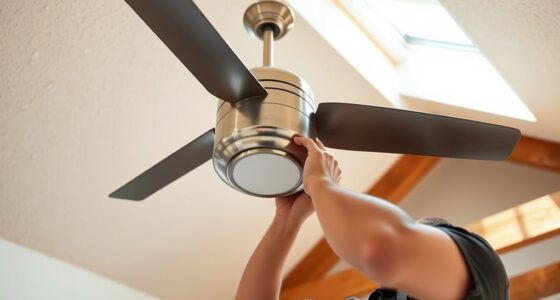
You should replace the filters every 3 to 6 months, depending on usage and air quality, to keep your ceiling fan air purifier running effectively. Regular system cleaning is also essential—wipe down the blades and housing monthly to prevent dust buildup. Check your manufacturer’s guidelines for specific maintenance schedules, and replace filters promptly when you notice reduced airflow or increased noise to guarantee ideal air purification.
Do Integrated Purifiers Produce Any Noise or Airflow Disturbances?
Integrated air purifiers in ceiling fans can produce some fan noise, but it’s usually minimal and not disruptive. You might notice slight airflow disturbance when the purifier is actively filtering the air, especially if set on higher speeds. However, manufacturers design these systems to operate quietly, so you shouldn’t experience significant noise or airflow issues during normal use, making them a convenient addition to your space.
Conclusion
While integrated air purifiers in ceiling fans offer clean air and convenience, they also remind you that technology’s reach isn’t limitless. You get the comfort of fresher air without extra devices, yet must consider maintenance and effectiveness. It’s a balance—embracing modern innovation while staying aware of its boundaries. Ultimately, these fans blend convenience with caution, showing that even in comfort, a bit of awareness keeps your space truly healthy.