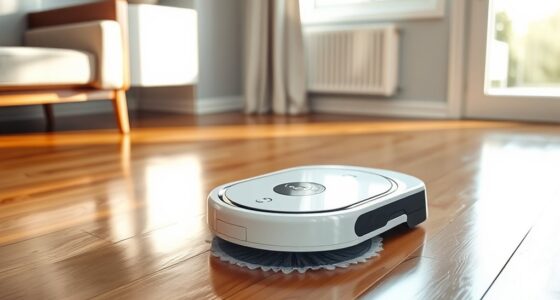

AI plays a key role in next-generation robotic cleaners by enabling smarter navigation, obstacle detection, and environmental adaptation. It helps the device map your space accurately, avoid collisions, and learn your home’s layout over time. This results in more efficient, thorough cleaning without your intervention. As AI continues to improve with advancements like machine learning, these robots will become even more autonomous and reliable—discover how they’re evolving by exploring further details.
Key Takeaways
- AI enables advanced navigation, allowing robotic cleaners to efficiently map spaces and adapt to layout changes.
- Obstacle detection systems powered by AI prevent collisions and protect household belongings.
- Machine learning helps robots recognize high-traffic areas for targeted cleaning and route optimization.
- AI-driven environmental awareness allows for comprehensive coverage, including hard-to-reach spots and multi-floor mapping.
- Ongoing AI research, including sound therapy integration, promises to enhance safety, performance, and autonomous operation.
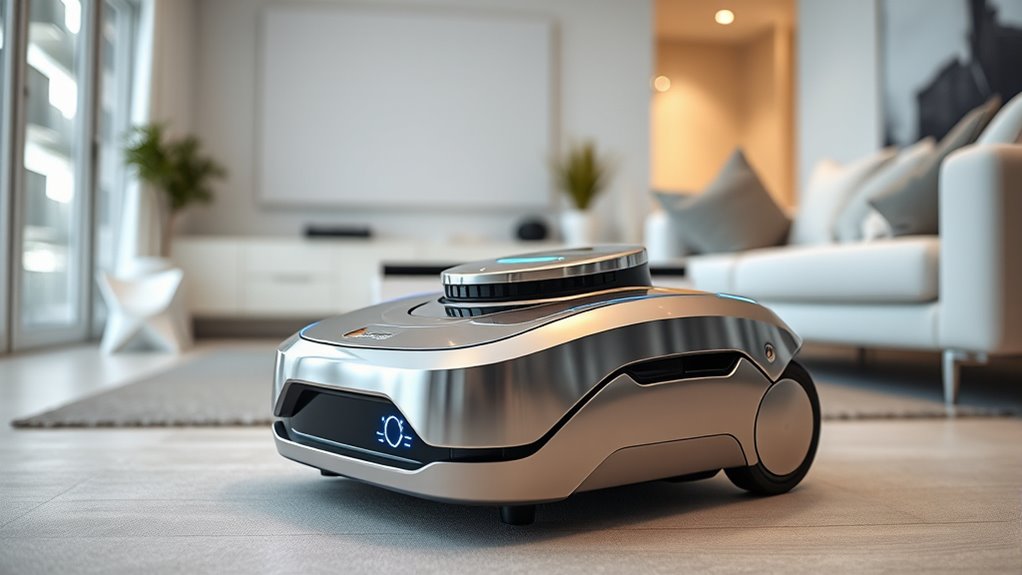
Robotic cleaners have transformed the way we maintain our homes and workplaces, thanks to advances in artificial intelligence. One of the key features driving this change is smart navigation, which allows these devices to move efficiently around your space. Instead of blindly wandering or following a fixed path, these robots use sophisticated algorithms to map out rooms and plan ideal routes. This means you spend less time worrying about where the cleaner is going or whether it’s missing spots. With smart navigation, your robot can adapt to changes in furniture placement or new obstacles, maintaining thorough coverage without human intervention.
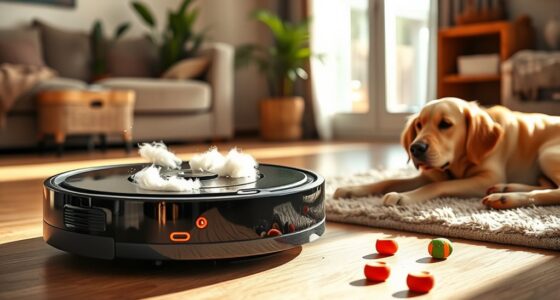
Obstacle detection is another critical aspect that makes these cleaners so effective. Equipped with sensors and cameras, the robot constantly scans its environment to identify objects in its path. When it detects an obstacle—whether it’s a chair leg, a stray sock, or a pet toy—it quickly adjusts its course to avoid collision. This real-time detection not only prevents damage to your belongings but also reduces the chances of the robot getting stuck or needing manual rescue. As a result, your robotic cleaner becomes more autonomous and reliable, capable of handling unpredictable household environments with ease.
Sensors and cameras enable real-time obstacle detection, making robotic cleaners more reliable and autonomous.
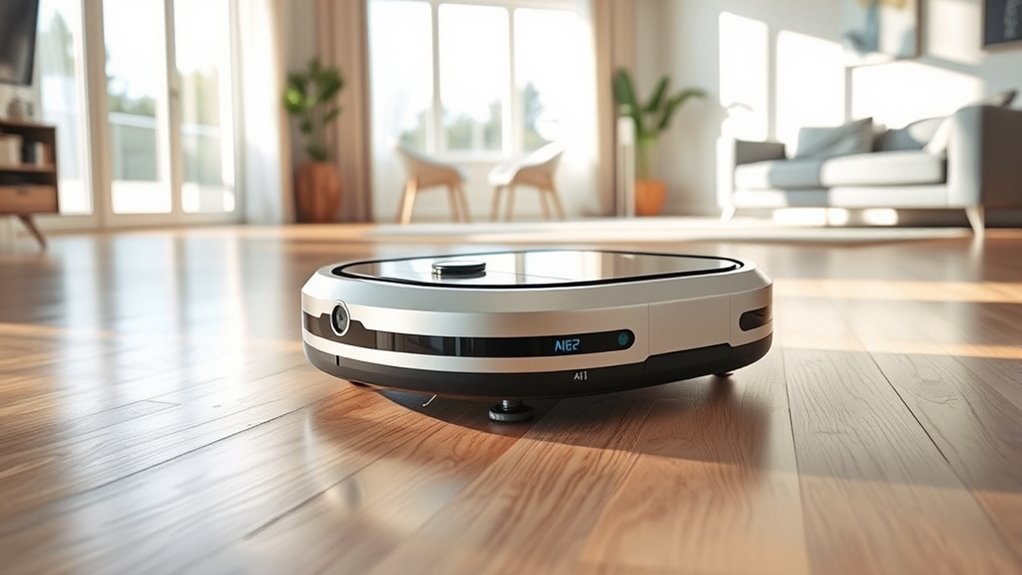
The integration of smart navigation and obstacle detection also means your robotic cleaner can handle complex layouts more intelligently. It learns the shape and size of the room, remembers frequently encountered obstacles, and adjusts its cleaning pattern accordingly. This level of awareness ensures no corner or hard-to-reach area is left untouched. Plus, many models now incorporate multi-floor mapping, so you don’t have to reset or reprogram the device each time you move it to a different level of your home.
You’ll notice that with these AI features, your robotic cleaner becomes more than just a vacuum on wheels; it’s a smart assistant that actively improves its performance over time. The more it cleans, the better it understands your space, making navigation even more precise. Some models leverage machine learning to identify high-traffic areas, focusing more effort where dirt tends to accumulate. They also recognize static obstacles and adapt their routes to optimize efficiency, all while avoiding hazards that could disrupt their operation.
In essence, smart navigation and obstacle detection are the backbone of next-generation robotic cleaners. They provide the intelligence needed for these devices to operate safely, efficiently, and autonomously. With continuous improvements in AI technology, your robotic cleaner will only get smarter, giving you more time to enjoy a cleaner, more comfortable environment without lifting a finger. Additionally, ongoing research into sound healing science suggests future AI-driven cleaning devices could utilize sound frequencies to further enhance their operation and user experience.
AI robotic vacuum cleaner
As an affiliate, we earn on qualifying purchases.
As an affiliate, we earn on qualifying purchases.
Frequently Asked Questions
How Does AI Improve the Efficiency of Robotic Cleaners?
AI enhances the effectiveness of robotic cleaners by enabling smart mapping and clutter detection. You benefit from precise navigation, as the AI creates detailed maps of your space, avoiding obstacles and covering every corner. Clutter detection helps the robot identify and bypass objects, reducing missed spots and cleaning time. This smart technology ensures your cleaner operates at its best, saving you time and giving you a more thorough, hassle-free cleaning experience.
What Are the Limitations of AI in Robotic Cleaning Technology?
While AI in robotic cleaners has great potential, it’s not without its gentle hurdles. Sensor limitations can sometimes cause your cleaner to miss spots or misjudge obstacles, and energy constraints mean it might not clean as long as you’d like. These factors can slow down its perfect performance, but ongoing advancements are steadily overcoming these challenges, making future models even more capable and reliable for your cleaning needs.
How Secure Is Data Collected by Ai-Powered Cleaners?
You should know that data collected by AI-powered cleaners is generally secure, but there are hacking vulnerabilities to contemplate. Many companies implement strong encryption and data privacy measures to protect your information. However, it’s wise to stay cautious, as cyberattacks could target these devices. Regular updates and secure Wi-Fi connections help reduce risks, giving you more confidence that your data stays private and protected.
Can Ai-Enabled Robotic Cleaners Adapt to Different Home Environments?
Yes, AI-enabled robotic cleaners adapt to different home environments by learning your home’s layout through home customization features. They analyze obstacles and navigate around furniture, walls, and other objects with advanced obstacle navigation. This means your cleaner becomes more efficient over time, tailoring its cleaning paths to your specific space. You can trust it to handle various home setups, making cleaning smarter and more personalized.
What Future Advancements Are Expected in AI for Robotic Cleaning?
You can expect AI in robotic cleaners to advance with smarter navigation, allowing them to map your home more accurately and avoid obstacles seamlessly. Predictive maintenance will become more sophisticated, predicting issues before they happen and reducing downtime. These improvements will make your robotic cleaner more efficient, reliable, and personalized, ensuring it adapts better to your lifestyle and keeps your space spotless with less effort on your part.
smart navigation robotic cleaner
As an affiliate, we earn on qualifying purchases.
As an affiliate, we earn on qualifying purchases.
Conclusion
You’ve seen how AI transforms robotic cleaners, making them smarter and more efficient. Did you know that AI-powered robots can reduce cleaning time by up to 30%? This means you get a cleaner home faster and with less effort on your part. As AI continues to evolve, expect even more innovative features that save you time and energy. Embrace these advancements—they’re shaping the future of effortless, smarter cleaning for everyone.
multi-floor robotic vacuum
As an affiliate, we earn on qualifying purchases.
As an affiliate, we earn on qualifying purchases.
obstacle detection robot vacuum
As an affiliate, we earn on qualifying purchases.
As an affiliate, we earn on qualifying purchases.