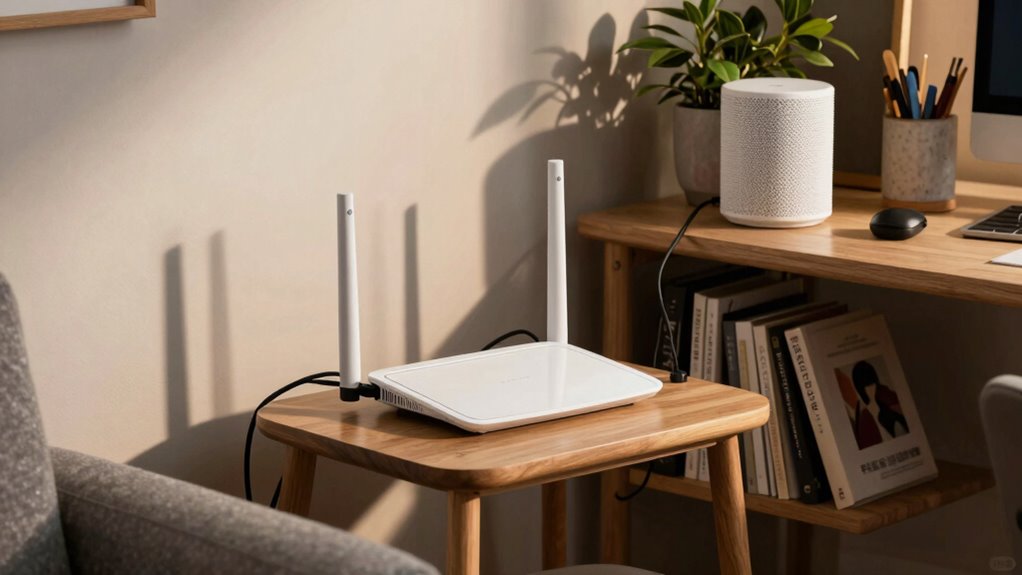

The way you position your mesh network’s router and nodes can make or break your internet speed. Placing them near thick walls, large metal objects, or electronics that cause interference weakens the signal and creates dead zones. Avoid hiding devices behind furniture or too far apart—this leads to slow speeds and disconnects. Proper placement involves central, elevated, and unobstructed spots for ideal coverage. Keep exploring to discover how to make your mesh Wi-Fi perform at its best.
Key Takeaways
- Placing the main router too far from the center causes weak signals and slow speeds.
- Positioning nodes near thick walls or large metal objects creates dead zones and reduces performance.
- Avoid placing nodes too close together, which causes interference and signal overlap.
- Placing nodes far from interference sources like microwaves or cordless phones weakens the connection.
- Mounting routers or nodes at low levels or behind obstructions hampers signal propagation and speed.
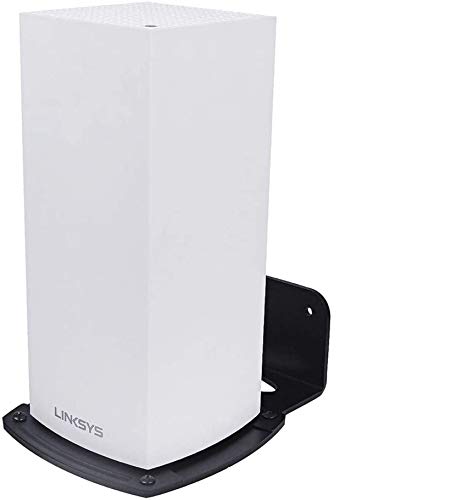
VOMENC Linksys Velop WiFi 6 Mesh Router Wall Mount Bracket Wall Mount Stand Holder,WiFi Accessories for Linksys Velop Home Mesh with Easy Installation and Space Saving (1-Pack)
Compatibility: This Linksys Velop Wifi 6 mesh router is suitable for the Wifi 6 Mesh WIFI system of…
As an affiliate, we earn on qualifying purchases.
As an affiliate, we earn on qualifying purchases.
Why Proper Router Placement Is Key to Mesh Wi-Fi Performance
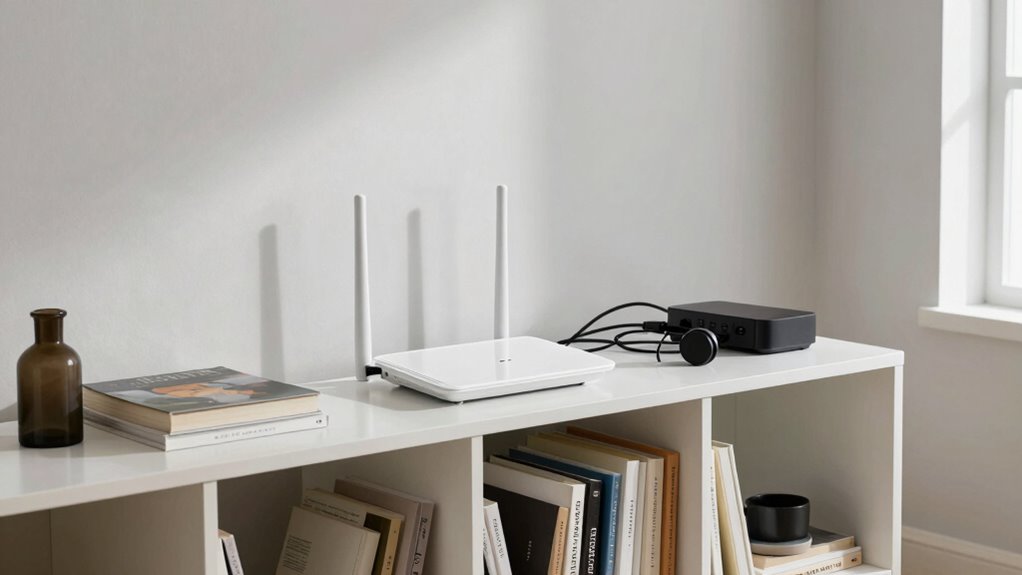
Proper router placement is essential for maximizing your Mesh Wi-Fi system’s performance. When your router is positioned correctly, it ensures ideal signal distribution and reduces dead zones. Keep your router in a central location, elevated, and free from obstructions. Additionally, regularly updating your router firmware helps maintain compatibility with mesh nodes and improves overall stability. Compatibility between your primary router and mesh nodes is vital; if they aren’t fully compatible, you might experience dropped connections or reduced speeds. Proper placement minimizes interference from electronics or thick walls, giving your network the best chance to perform at its peak. Furthermore, considering environmental factors such as dust or microplastics can impact device longevity and performance. Ensuring your network environment is clean and free from clutter can also contribute to better signal quality. A well-placed router can also prevent overheating and hardware issues, which in turn maintains consistent performance. Regularly assessing signal interference sources in your environment can help optimize your setup for maximum speed and reliability. Being aware of electromagnetic interference from nearby devices can help you troubleshoot and improve your network stability. Remember, a well-placed router combined with compatible mesh nodes and up-to-date firmware creates a seamless, fast Wi-Fi experience across your entire space.

TP-Link AC1200 WiFi Extender, 2023 Engadget Best Budget Pick, 1.2Gbps Signal Booster for Home, Dual Band 5GHz/2.4GHz, Covers Up to 1500 Sq.ft and 30 Devices,Support Onemesh, One Ethernet Port (RE315)
𝐒𝐭𝐫𝐨𝐧𝐠𝐞𝐫 𝐖𝐢-𝐅𝐢 𝐢𝐧 𝐄𝐯𝐞𝐫𝐲 𝐂𝐨𝐫𝐧𝐞𝐫 – Enjoy extended coverage with strong performance powered by Adaptive Path Selection and…
As an affiliate, we earn on qualifying purchases.
As an affiliate, we earn on qualifying purchases.
Common Mesh Wi-Fi Placement Mistakes That Hurt Your Speed
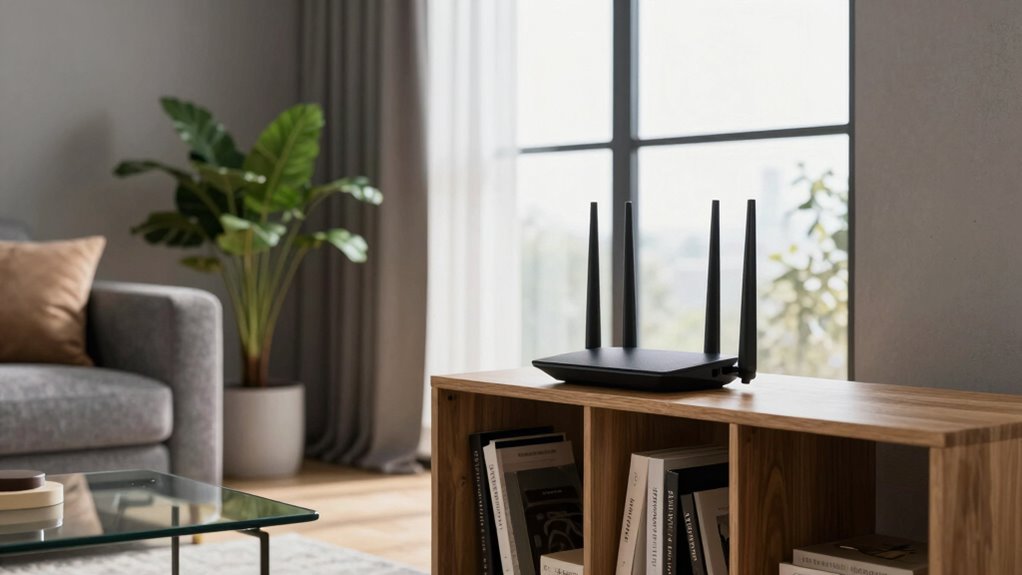
One common mistake that can considerably slow down your Mesh Wi-Fi is placing nodes too close together, which creates overlapping signals and causes interference. This not only hampers speed but can also compromise mesh security by creating weak points in your network. Additionally, neglecting regular firmware updates can leave your system vulnerable and reduce overall performance. When nodes are improperly spaced, your devices struggle to maintain a stable connection, leading to slower speeds. Ensuring proper placement helps minimize interference and optimizes signal strength. Regularly updating your firmware keeps your mesh network secure and running smoothly, preventing slowdowns caused by outdated software. Proper node placement is essential for achieving both maximum speed and security. To further enhance your network’s performance, consider signal optimization techniques that ensure optimal coverage and reliability. Also, understanding how interference sources can affect your network allows you to take proactive steps to mitigate potential disruptions. Using tools like coverage maps can help identify weak spots and improve your placement strategy. Avoid these placement errors to maximize both speed and security, giving you a faster, more reliable mesh Wi-Fi experience. Proper network configuration can further prevent common issues and improve overall performance.

TP-Link Deco X55 AX3000 WiFi 6 Mesh System – Covers up to 6500 Sq.Ft, Replaces Wireless Router and Extender, 3 Gigabit Ports per Unit, Supports Ethernet Backhaul, Deco X55(3-Pack)
Wi-Fi 6 Mesh Wi-Fi – Next-gen Wi-Fi 6 AX3000 whole home mesh system to eliminate weak Wi-Fi for…
As an affiliate, we earn on qualifying purchases.
As an affiliate, we earn on qualifying purchases.
How to Find the Best Spot for Your Router Nodes

Finding the best spot for your router nodes is essential for maximizing your mesh Wi-Fi’s performance. To optimize, consider the router frequency and device density in your home. Place nodes centrally and avoid walls or large metal objects that block signals. Higher-frequency bands (like 5GHz) offer faster speeds but have limited range, so position nodes closer together for these. Lower frequencies (like 2.4GHz) cover more area but may slow down with high device density. Use the table below to balance coverage and speed:
| Factor | Placement Tip |
|---|---|
| Router frequency | Use 5GHz for high-speed needs, 2.4GHz for coverage |
| Device density | Place nodes where many devices connect |
| Walls/Obstacles | Keep nodes away from thick barriers |
| Central location | Maximize coverage and minimize dead zones |
Additionally, understanding wireless signal propagation can help you identify the best spots that reduce interference and enhance overall network performance. Properly positioning your nodes by considering environmental interference can significantly improve your Wi-Fi experience. Being aware of interference sources like appliances or neighboring networks can help you avoid placement issues. It’s also beneficial to test different locations to find the optimal signal strength for your setup.

Otoolling Large WiFi Router Cover, Smart Meter Cover Block 90% of WiFi Router EMF and 5G Electric Meter Faraday Cage Protection
Advanced Electromagnetic Shielding: the large WiFi router cover feature an innovative Faraday cage structure made from metal and…
As an affiliate, we earn on qualifying purchases.
As an affiliate, we earn on qualifying purchases.
Tips to Position Your Mesh Nodes for Maximum Coverage and Speed
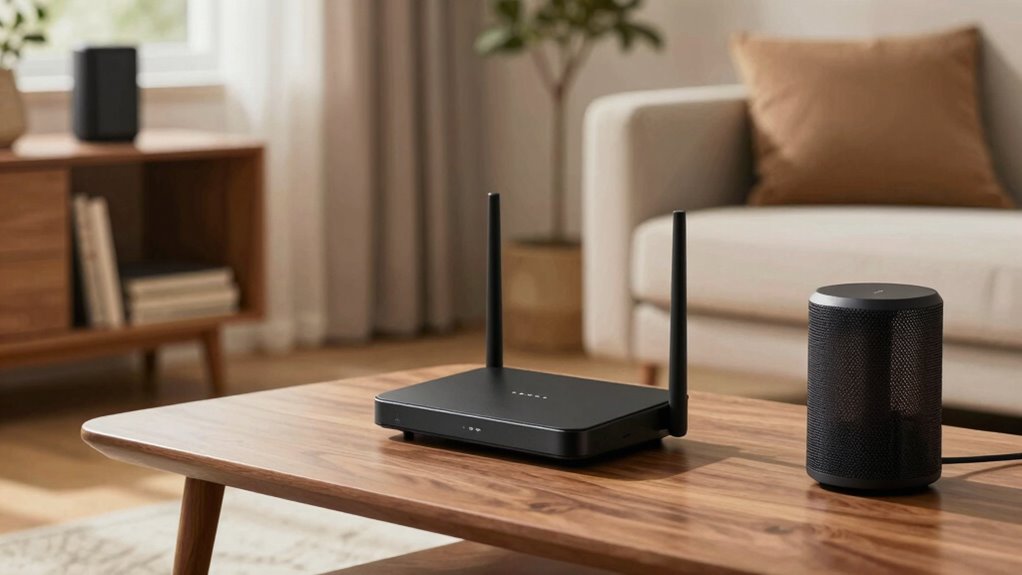
To get the best coverage and speed, you need to place your mesh nodes carefully. Make sure they’re in spots with minimal obstructions like walls or furniture. Also, keep them away from devices that could cause interference, like microwaves or cordless phones. Incorporating proper placement techniques can further optimize your network performance. Additionally, understanding signal propagation can help you identify the optimal locations by analyzing how wireless signals travel through your space. Recognizing environmental factors, such as building materials and layout, can also significantly impact your mesh network’s effectiveness. Being aware of interference sources in your environment allows for better placement decisions to maintain optimal network speeds. Considering router elevation can also enhance signal strength and coverage throughout your home.
Optimal Node Placement
Positioning your mesh nodes thoughtfully is essential to maximizing both coverage and speed throughout your home or office. Place nodes in central locations, away from thick walls or metal objects that can block signals. Make sure each node maintains a clear line of sight to the others when possible, which helps sustain strong, consistent connections. Keep nodes within range of your primary router and each other to avoid dead zones. Consider mesh security features; placing nodes where they’re protected from unauthorized access enhances overall network safety. Also, verify device compatibility before installation to prevent connectivity issues. Regularly update firmware to guarantee optimal performance. Strategic placement reduces interference and strengthens your network, giving you the best balance of coverage and speed across all your devices.
Avoid Obstructions and Interference
Obstructions like thick walls, furniture, and metal objects can substantially weaken your mesh Wi-Fi signals, so it’s essential to place your nodes where these barriers are minimized. Make sure your nodes are positioned in open areas, avoiding large metal appliances or thick walls that can cause interference. Proper antenna orientation is also critical; keep antennas upright or directed toward areas needing coverage. Check device compatibility to guarantee your devices connect seamlessly without signal drops. Avoid placing nodes near cordless phones, microwave ovens, or Bluetooth devices, as they emit interference that hampers performance. Regularly test signal strength and adjust node placement accordingly. Additionally, understanding wireless interference can help you optimize your network setup for maximum efficiency. To further enhance your network, consider the frequency band your devices operate on, as choosing the right one can reduce congestion and improve speeds. Being aware of regulatory changes can also help you stay compliant and avoid potential disruptions. Monitoring and minimizing signal obstructions is vital for maintaining a strong connection across your home. By reducing obstructions and interference, you’ll maximize your mesh network’s coverage and speed, providing a strong, reliable connection throughout your space.
Signs Your Mesh Wi-Fi Placement Isn’t Working Properly
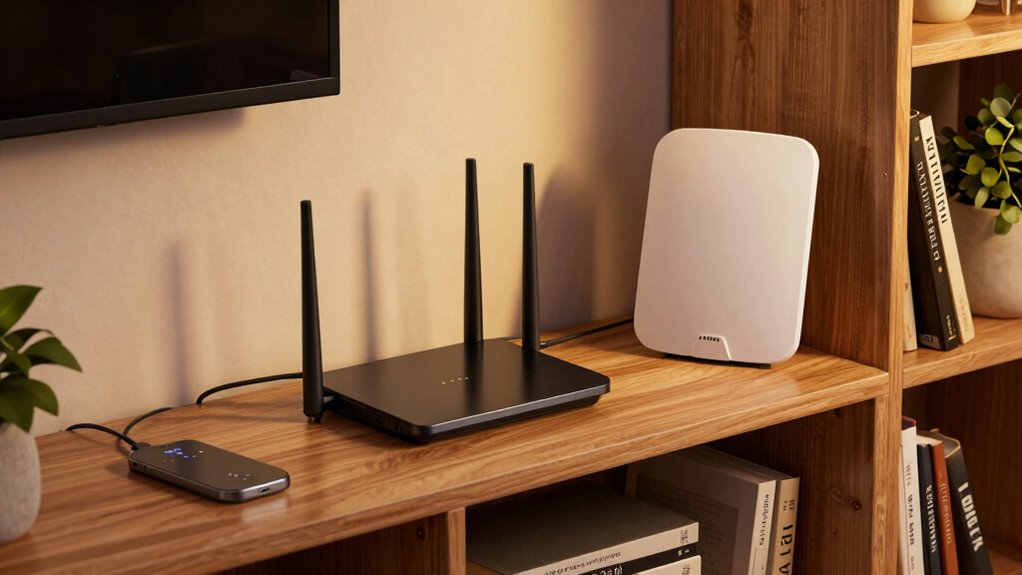
If your mesh Wi-Fi isn’t performing as expected, you might notice some clear signs that its placement isn’t ideal. Slow speeds, frequent disconnects, or dead zones indicate poor coverage. You may also experience buffering during streaming or struggle to reach certain rooms, especially if you rely on fiber optic connections. Additionally, if your mesh extenders seem to be working inefficiently or need constant repositioning, it’s a sign your setup isn’t optimized. Proper placement guarantees each node communicates effectively. Here’s a quick guide:
| Symptom | Possible Cause |
|---|---|
| Slow speeds in parts of the house | Mesh nodes are too far apart |
| Frequent disconnects | Placement near interference sources |
| Dead zones | Nodes are obstructed or misplaced |
| Buffering during streaming | Signal weakens over distance |
| Mesh extenders not syncing | Incorrect placement or signal interference |
How to Test and Optimize Your Mesh Wi-Fi Node Placement
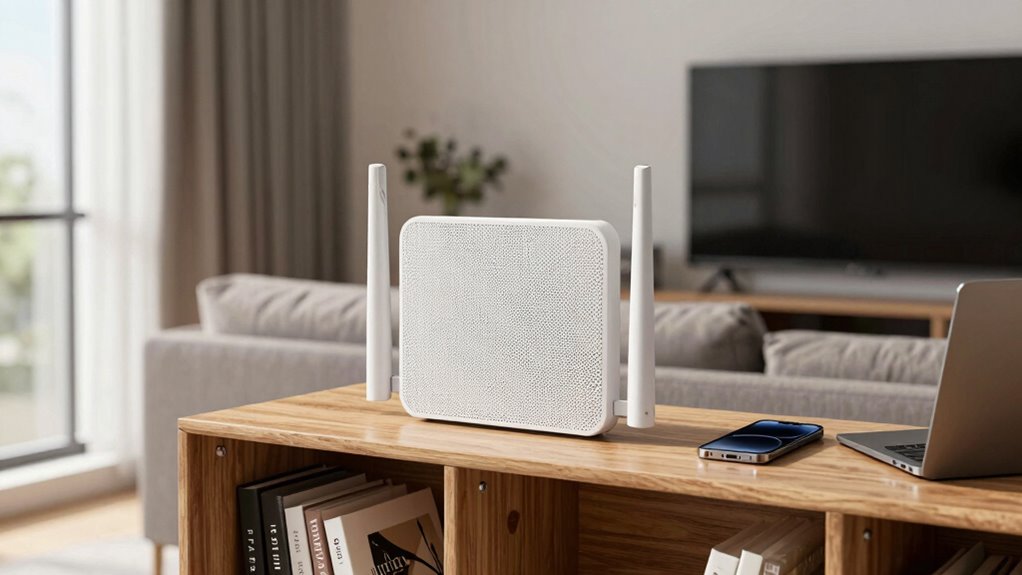
To guarantee your mesh Wi-Fi nodes are placed effectively, start by testing your current setup’s performance. Use speed tests across different locations to identify weak spots. Ensure your devices are compatible with your mesh system to avoid connectivity issues. Check for firmware updates regularly; updated firmware can improve performance and stability, making testing more accurate. Use a consistent testing method, like measuring download and upload speeds, to compare results before and after adjustments. If a node’s performance is poor, try repositioning it closer to the main router or moving it away from interference sources like thick walls and electronics. Keep your devices updated and compatible, as outdated firmware or incompatible hardware can skew test results and hinder your optimization efforts.
Troubleshooting and Adjusting Your Mesh Network for Better Speed
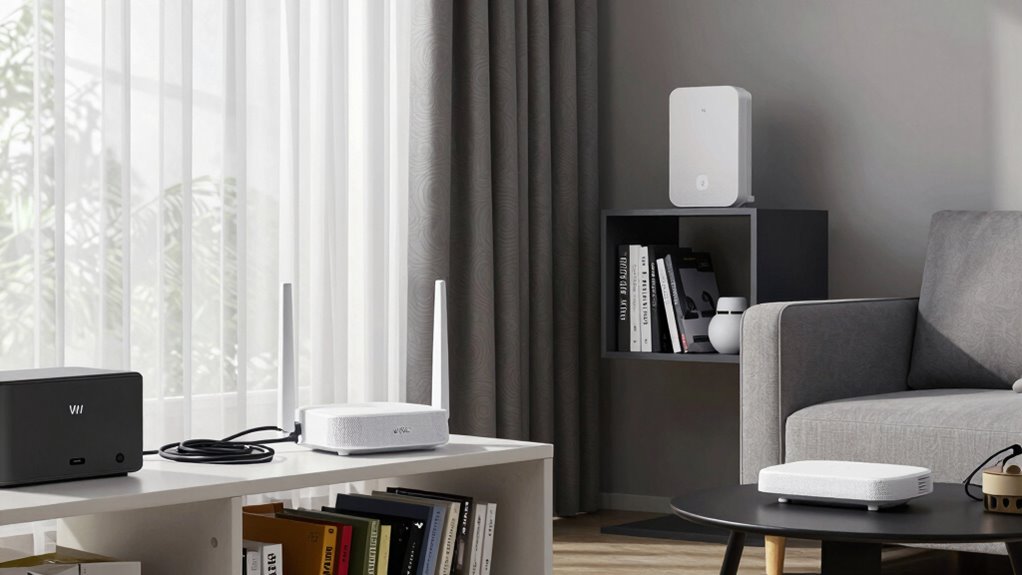
If your mesh network isn’t delivering the speed you need, start by reviewing your placement to guarantee ideal coverage. Consider moving nodes to reduce signal interference from walls or electronics, which can slow connections. Adjusting these factors can make a noticeable difference in your network’s performance.
Optimal Placement Strategies
Optimizing your mesh Wi-Fi network starts with strategic placement of the nodes to guarantee maximum coverage and speed. To do this effectively, consider both aesthetics and performance. Place nodes where they’re unobstructed and elevated, avoiding thick walls or large metal objects. Keep in mind that sleek router aesthetics can influence placement choices, so select spots that blend seamlessly with your space. Additionally, maintaining consistent mesh network branding enhances user experience and simplifies troubleshooting. When adjusting your setup, remember these key points:
- Position nodes centrally for even coverage
- Avoid placing them near electronic devices that cause interference
- Use elevation to improve signal reach
Proper placement minimizes dead zones and keeps your network running efficiently without sacrificing style or branding consistency.
Signal Interference Solutions
Signal interference can considerably slow down your mesh Wi-Fi network, but identifying and addressing the sources is often straightforward. First, check your router positioning—place it away from cordless phones, microwaves, and thick walls that cause signal interference. Keep your main router elevated and central in your home to minimize interference from other electronics and structures. Avoid placing mesh nodes near large metal objects or electronic devices that emit radio waves, as these can disrupt signal quality. If interference persists, consider changing your Wi-Fi channel through your router’s settings, reducing congestion from neighboring networks. Using dual-band routers and ensuring your mesh network supports multiple channels can also help. Regularly re-evaluate your router positioning and minimize interference sources to maintain best speed and performance.
Frequently Asked Questions
How Often Should I Re-Evaluate My Mesh Wi-Fi Node Placement?
You should re-evaluate your mesh Wi-Fi node placement every few months or whenever you notice slow speeds or dead zones. Regular node repositioning helps improve coverage and reduces interference, ensuring peak performance. Keep an eye on signal strength and connection issues, and adjust nodes accordingly. This proactive approach mitigates interference and maintains a strong, reliable network, so your Wi-Fi stays fast and consistent.
What Are the Best Tools to Measure Wi-Fi Signal Strength?
Think of measuring your Wi-Fi like a lighthouse keeper adjusting a beacon. Use tools like NetSpot, Wi-Fi Analyzer, or Ekahau to gauge signal strength, revealing where interference dims your connection. These tools help you optimize your router placement by pinpointing weak spots and signal interference, ensuring your mesh network shines brightly throughout your space. Regularly checking with these tools keeps your Wi-Fi lighthouse steady and strong.
Can Physical Obstacles Impact Mesh Wi-Fi Performance Over Time?
Yes, physical obstacles can impact your mesh Wi-Fi performance over time. They cause signal degradation and may increase interference sources, weakening your connection. Walls, furniture, and appliances can block or reflect signals, leading to slower speeds or dead zones. To maintain peak performance, regularly check for new obstacles and reposition your mesh nodes to avoid interference sources. This proactive approach ensures a strong, reliable network throughout your space.
How Do Different Wall Materials Affect Wi-Fi Signal Propagation?
Wall interference can seriously impact your Wi-Fi signal, and understanding material comparison is key. Concrete and brick walls are like thick curtains, blocking signals more than drywall or plaster, which allow better propagation. Metal or foil-backed insulation can cause even greater interference, like throwing a wrench in the works. To optimize performance, position your mesh routers where wall interference is minimal, and consider material differences to keep your connection swift and steady.
Is It Better to Place Nodes Higher or Closer to the Floor?
It’s better to place nodes higher than closer to the floor for ideal coverage. Higher router height improves signal propagation and reduces interference from furniture and obstacles. When considering node positioning, keep them elevated on shelves or wall mounts to maximize range and speed. Avoid placing nodes near metal objects or thick walls, which can weaken signals. Proper router height and strategic node placement ensure your mesh Wi-Fi performs at its best.
Conclusion
Great placement can make or break your mesh Wi-Fi. While the latest technology promises seamless coverage, poor node positioning turns that promise into frustration. Think of your network like a well-orchestrated symphony—you control the placement, and with attention, you get harmony. Don’t let bad spots sabotage your speed. With smart positioning and testing, you’ll enjoy fast, reliable Wi-Fi. Remember, where you place your router nodes is the silent conductor of your connection’s performance.