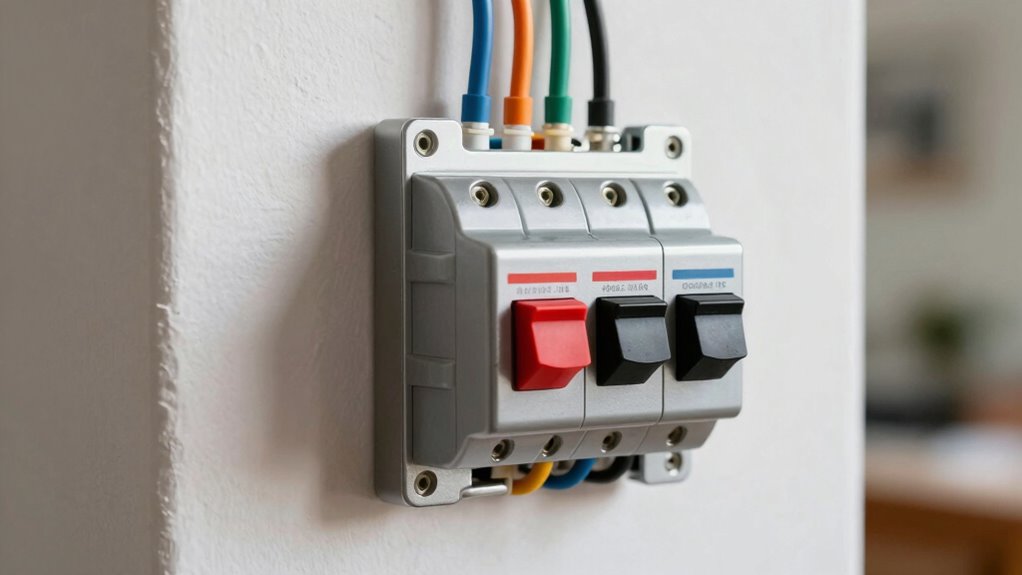

A generator transfer switch is a crucial safety device that safely connects your home to a generator during outages. It prevents backfeeding and electrical hazards by switching power sources seamlessly. You can choose manual or automatic models based on your needs, with safety features like overload protection and fault detection. Proper installation ensures everything runs smoothly. If you want to learn how to select, install, and maintain one for safe home use, keep exploring the details involved.
Key Takeaways
- Transfer switches safely connect your generator to your home’s electrical system during outages, preventing dangerous backfeeding.
- They automatically or manually switch power sources, ensuring seamless and safe transition between utility and generator power.
- Proper sizing and safety features like overload protection and fault detection are essential for reliable operation.
- Automatic transfer switches offer convenience and enhanced safety with remote operation and built-in safety mechanisms.
- Professional installation and adherence to safety standards like UL 1008 ensure optimal protection for your home and loved ones.
automatic generator transfer switch
As an affiliate, we earn on qualifying purchases.
As an affiliate, we earn on qualifying purchases.
What Is a Transfer Switch and Why Is It Essential for Home Safety

A transfer switch is a device that automatically or manually switches your home’s power source from the utility grid to a backup generator during an outage. It guarantees that your home’s electrical system safely connects to the generator without risking damage or danger. The transfer switch works closely with your circuit breaker panel, controlling which circuits receive power. When the main power fails, the switch isolates your home from the utility grid and connects it to the generator, preventing back-feeding. This process protects utility workers and your appliances. Without a transfer switch, you’d need to manually reconnect your power sources, which can be risky. It’s an essential safety feature that provides peace of mind and guards your home’s electrical systems during outages. Additionally, using a generator with sufficient horsepower ensures your home can handle various electrical loads safely and efficiently. Proper installation and regular testing of the transfer switch are also vital for reliable operation and safety. Regular maintenance enhances the reliability of your backup power system and ensures it functions correctly when needed. Performing routine inspections can help identify potential issues early and maintain optimal system performance. Incorporating advanced safety features can further enhance protection and peace of mind during power outages.
manual transfer switch for home generator
As an affiliate, we earn on qualifying purchases.
As an affiliate, we earn on qualifying purchases.
How Do Transfer Switches Work During Power Outages
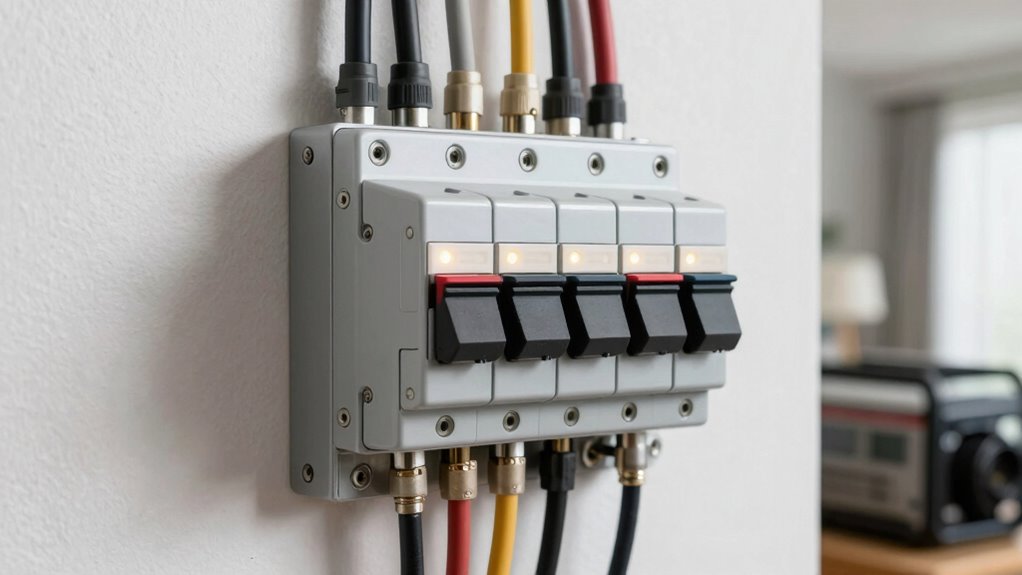
When a power outage occurs, transfer switches spring into action to protect your home’s electrical system. They ensure a safe power transfer from the generator to your home without risking backfeed or electrical hazards. Here’s how they work: 1. The switch detects the loss of utility power and automatically or manually disconnects your home from the grid. 2. It then connects your electrical system to the generator, enabling power transfer safely. 3. Once utility power is restored, the switch disconnects the generator and reconnects your home to the grid, maintaining generator safety. This process prevents dangerous backfeeding, protects utility workers, and ensures seamless power supply. Proper functioning of transfer switches is essential for safe generator operation during outages and for maintaining a reliable power transfer. Additionally, understanding the capacity of your generator and transfer switch can help ensure compatibility during emergencies, especially considering the power transfer process relies heavily on proper switch operation. Recognizing the automatic operation capabilities of modern transfer switches can further enhance your home’s safety and preparedness during unexpected outages.
generator transfer switch with overload protection
As an affiliate, we earn on qualifying purchases.
As an affiliate, we earn on qualifying purchases.
Manual vs. Automatic Transfer Switches: Which One Is Right for You?
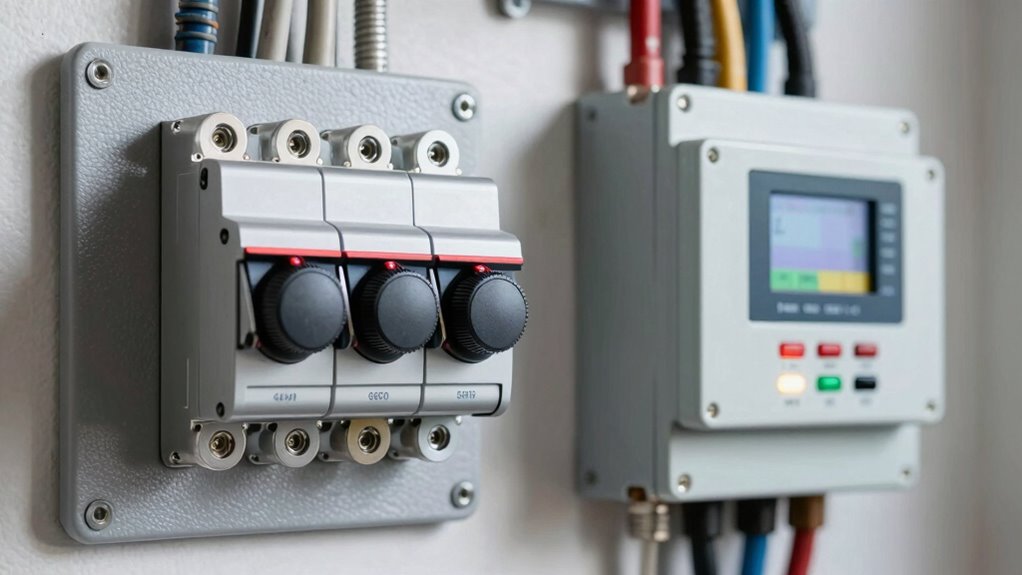
Choosing between manual and automatic transfer switches depends on factors like ease of operation, upfront cost, and safety features. Automatic switches offer convenience but may cost more and require proper safety considerations, while manual switches are simpler and less expensive. Consider your budget and safety needs to decide which type best fits your situation. Additionally, understanding the support networks for new fathers can help you navigate any unforeseen challenges during installation or maintenance. Proper indoor plant care practices can also ensure your home remains safe and comfortable during power transitions, especially since reliable performance cookies can help optimize your home’s electrical safety systems. It’s also important to evaluate the installation process to ensure safety and compliance with local codes. Being aware of recent tax law changes can help you plan for any potential financial implications related to home improvements or safety upgrades.
Ease of Operation
Manual and automatic transfer switches differ substantially in how easy they are to operate, and understanding these differences can help you decide which option best suits your needs.
Automatic switches offer the convenience of remote operation and a user interface that simplifies the process, often initiating power transfer automatically during an outage. You won’t need to be physically present or manually flip switches. Manual switches, on the other hand, require you to physically operate them, which can be simpler but less convenient during emergencies.
Consider these key points:
- Automatic switches provide effortless remote operation and a user interface for easy control.
- Manual switches demand physical action, which may suit those who prefer hands-on control.
- Your choice depends on whether you prioritize convenience or simplicity in operation.
Cost and Budget
The initial cost of transfer switches varies considerably between manual and automatic models, impacting your overall budget. Manual transfer switches are typically more affordable upfront, making them a popular choice for budget-conscious homeowners. Automatic transfer switches, on the other hand, tend to be more expensive due to their complexity and added features. When considering cost considerations, think about long-term savings and maintenance needs. Automatic switches often reduce the risk of human error and can save you money on potential damage or downtime. Proper budget planning involves balancing upfront costs with ongoing expenses and the convenience each type offers. While automatic switches may require a higher initial investment, their convenience and reliability might justify the extra expense depending on your needs. Additionally, understanding the AI Ethicist Jobs landscape can help you make informed decisions about integrating automated systems safely and ethically. Considering the cultural significance of Indonesian decor masks can also inspire aesthetic choices that add value and personality to your home. Recognizing the importance of networking solutions can further enhance your home’s connectivity and overall efficiency. It is also essential to consider the safety and maintenance requirements of each type to ensure long-term performance and security. Being aware of nail health and proper hygiene practices can also prevent potential issues related to electrical system maintenance and safety.
Safety Features
Safety features are a critical consideration when deciding between manual and automatic transfer switches, as they directly affect the security of your electrical system during outages. Automatic switches often include built-in safety mechanisms like battery backup, ensuring operation during power failures. They also comply with electrical codes, reducing the risk of hazards. Manual switches rely on your intervention, so safety depends on proper handling. Key features to consider include:
- Automatic shutoff during faults to prevent damage and fire risks.
- Battery backup systems in automatic switches for continuous operation.
- Compliance with electrical codes that ensure safe installation and operation.
- Understanding transfer switch safety is essential to properly protect your home during power outages.
Choosing a switch with robust safety features helps protect both your home and your loved ones during power disruptions.
As an affiliate, we earn on qualifying purchases.
Key Features to Look for When Choosing a Transfer Switch
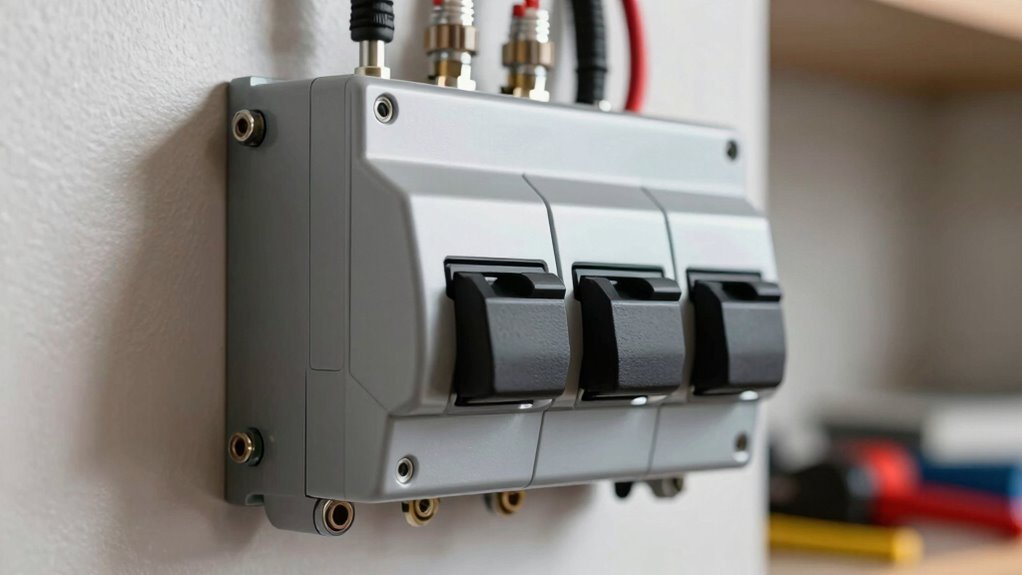
When choosing a transfer switch, you want to guarantee it’s compatible with your generator to avoid connection issues. Safety features like overload protection and clear labeling are essential for safe operation. Additionally, consider how easy it is to install the switch to save time and avoid complications. For optimal performance, selecting a switch that matches your generator’s specifications can also enhance overall reliability. proper sizing ensures the switch can handle your power needs without risking overloads or damage. Ensuring your setup includes generator compatibility can prevent potential issues and improve safety.
Compatibility With Generator
Are you ensuring your transfer switch is compatible with your generator? Compatibility is key to safe, reliable power transfer. To do this, consider these factors:
- Match your generator’s power output with the transfer switch’s rated capacity.
- Check that the transfer switch meets industry standards, like UL 1008, for safety and performance.
- Confirm generator compatibility by verifying the transfer switch supports your generator’s type and wattage.
Choosing a transfer switch that aligns with your generator’s specifications and adheres to transfer switch standards ensures seamless operation and safety. Mismatched components can cause electrical issues or damage. Always consult manufacturer guidelines and verify compatibility before installation to keep your home and appliances protected.
Safety Features Included
Choosing a transfer switch with essential safety features is critical to protect your home and avoid electrical hazards. Look for grounding safety to prevent shocks and fire risks, ensuring the system is properly grounded. Overload protection is indispensable; it automatically disconnects power if the switch detects excessive current, safeguarding your appliances and wiring. These features give you peace of mind during outages. Here’s what to think about:
| Safety Feature | Why It Matters |
|---|---|
| Grounding Safety | Prevents electrical shocks and fires |
| Overload Protection | Stops damage by disconnecting when overloaded |
| Fault Detection | Identifies wiring issues early |
| Lockout Mechanism | Prevents accidental switching during operation |
| Surge Suppression | Shields your appliances from power surges |
Ease of Installation
Installing a transfer switch can seem intimidating, but selecting models designed for easy setup simplifies the process considerably. When considering ease of installation, focus on these key features:
- Clear instructions and labeling—helps you understand the wiring process quickly.
- Minimal wiring complexity—look for switches with fewer connection points to reduce errors.
- Flexible installation location—choose a spot near your main breaker panel for convenience and easier wiring.
These features make setup smoother, saving time and reducing frustration. An ideal transfer switch should allow you to position it where it’s most accessible and simplify wiring, even if you’re not a professional. Prioritize user-friendly designs to ensure a safe, straightforward installation process.
How to Select the Best Transfer Switch for Your Home
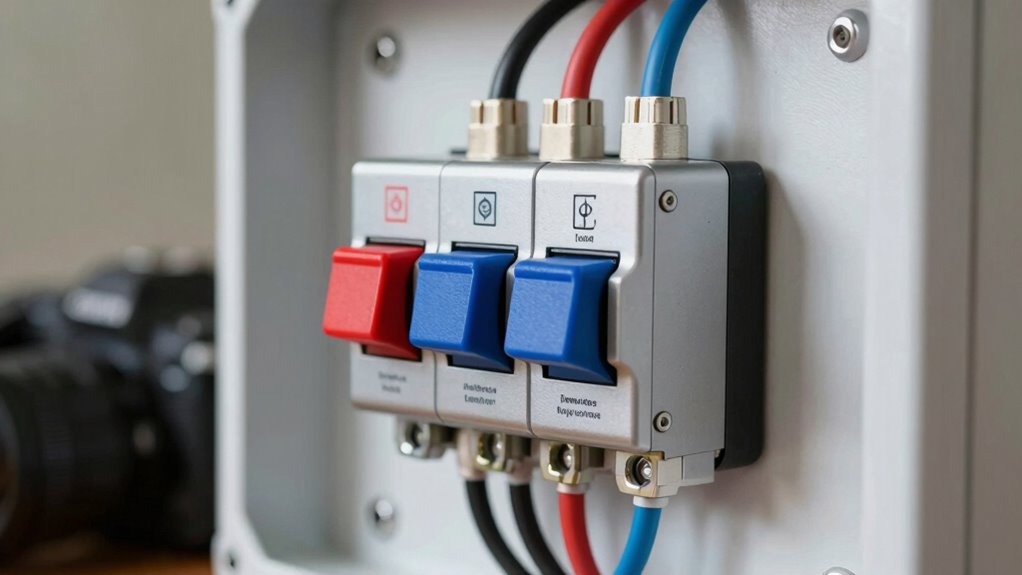
Selecting the right transfer switch for your home guarantees a reliable and safe power backup during outages. First, determine if you want a switch compatible with solar systems, especially if you plan to integrate solar power in the future. Confirm the transfer switch meets your local electrical code requirements to guarantee safety and legality. Consider the size and capacity needed for your home’s essential appliances, avoiding undersized units that can’t handle your power needs. Choose between manual and automatic switches based on convenience and budget. Also, verify compatibility with your generator type and ensure it has proper certifications. By carefully evaluating these factors, you’ll select a transfer switch that provides safe, efficient, and compliant backup power for your home.
Step-by-Step Guide to Installing a Transfer Switch Safely
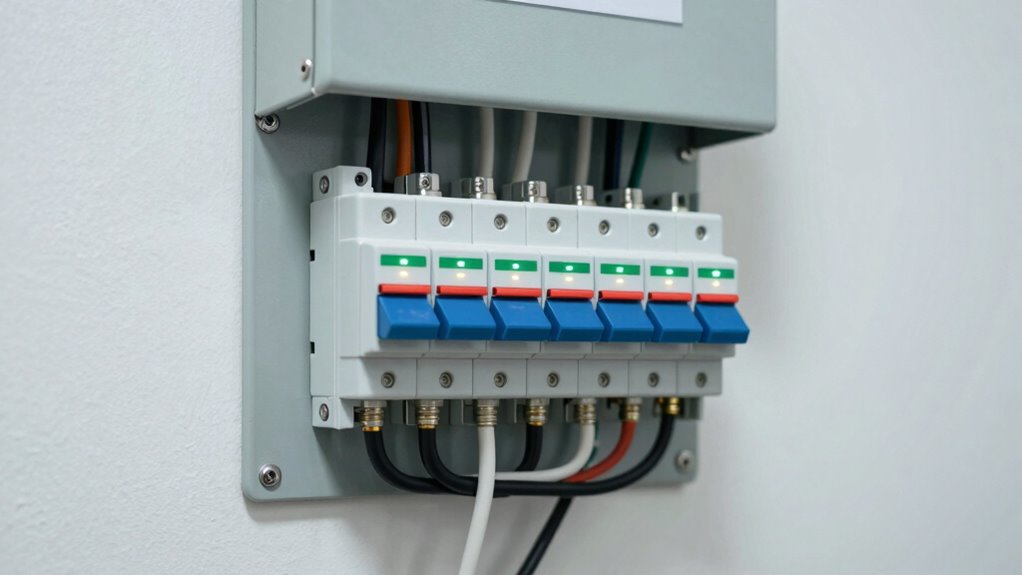
To guarantee a safe and effective transfer switch installation, you must follow a clear, step-by-step process. First, turn off the main power and generator to ensure generator safety during installation. Next, carefully connect the transfer switch to your electrical wiring, following the manufacturer’s instructions, making sure all connections are secure and correctly insulated. Finally, double-check all wiring and grounding before turning the power back on. Here are the key steps:
Follow these essential steps for a safe and proper transfer switch installation.
- Turn off main power and generator
- Connect transfer switch to electrical wiring
- Verify wiring, grounding, and secure connections
Following these steps ensures proper electrical wiring and safe installation, reducing risks associated with generator safety and electrical hazards. Always consult a professional if you’re unsure about any step.
Common Mistakes to Avoid When Using Your Transfer Switch
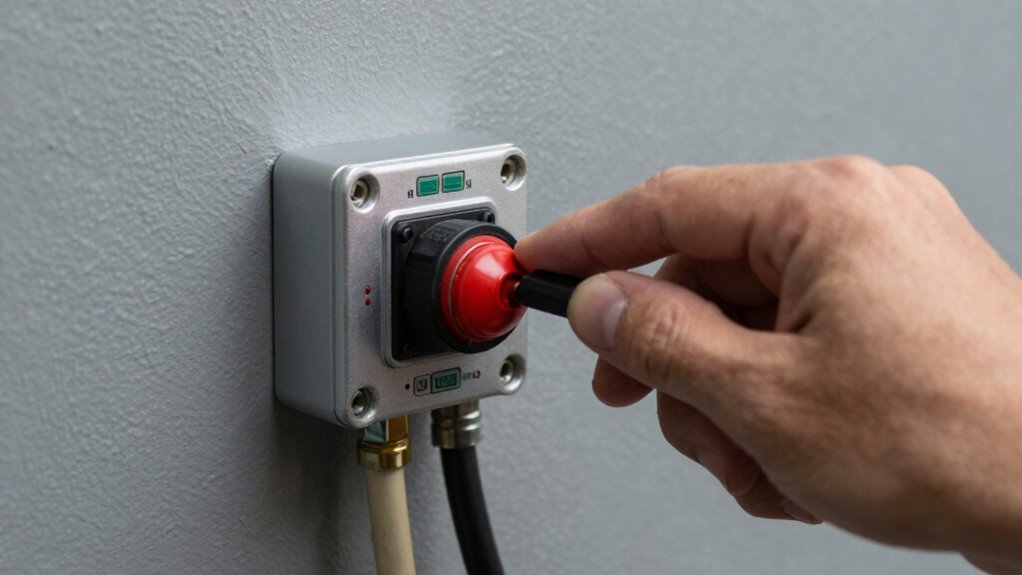
Using your transfer switch correctly is essential for safe and reliable power transfer during outages. One common mistake is overlooking installation pitfalls that can compromise safety, such as improper grounding. Failing to properly ground your transfer switch can lead to electrical shocks or damage to your home’s wiring. Always double-check that grounding connections meet local electrical codes. Another mistake is attempting to operate the switch without fully understanding its functions, which can cause backfeeding into the utility lines and endanger linemen. Never bypass or modify safety features, and verify you follow the manufacturer’s instructions carefully. Avoid rushing the installation or use of the switch, as improper setup increases risks. Properly installed and grounded transfer switches provide safe, seamless power transfer and protect your home and family.
Maintenance Tips to Keep Your Transfer Switch Running Properly

Regular maintenance is essential to guarantee your transfer switch operates safely and reliably when you need it most. To keep it in top shape, focus on routine testing and corrosion prevention.
Here are three key tips:
- Perform routine testing monthly to ensure proper operation and catch issues early.
- Inspect all connections for signs of corrosion, and clean or replace parts as needed.
- Apply corrosion-resistant spray or coating on metal components to prevent rust and deterioration.
Frequently Asked Questions
Can I Install a Transfer Switch Myself or Need a Professional?
You can install a transfer switch yourself if you have DIY safety skills and experience working with electrical systems. However, for most homeowners, professional installation is highly recommended to guarantee safety, code compliance, and proper wiring. Incorrect installation can lead to dangerous electrical issues or damage. So, weigh your skills carefully—if you’re unsure, it’s best to hire a licensed electrician for a safe, reliable setup.
How Much Does a Typical Transfer Switch Cost?
A typical transfer switch costs between $200 and $1,000, depending on size and features. When planning your budget, consider the cost comparison for different types, like manual or automatic switches. You’ll want to balance your needs with your budget, so shop around and factor in installation costs. Properly selecting a transfer switch guarantees safe, reliable power transfer during outages without overspending.
Are Transfer Switches Compatible With All Generator Types?
Transfer switches are generally compatible with most generator types, but you need to check generator compatibility before switch installation. Some switches work better with portable generators, while others suit standby models. Always verify the switch’s specifications and make sure it matches your generator’s power output. This ensures safe, reliable operation and easy switch installation, preventing potential electrical issues. Consult a professional to confirm compatibility and proper installation for your specific generator.
How Long Does It Take to Install a Transfer Switch?
Installing a transfer switch typically takes between 4 to 8 hours, depending on your home’s electrical wiring and the complexity of the setup. You’ll need to follow safety regulations carefully, ensuring all connections are secure and proper. A professional will efficiently handle the wiring, testing, and grounding, making sure everything is safe and compliant. Rushing installation can cause issues, so allocate enough time for a thorough, safe setup.
What Safety Precautions Should I Follow During Installation?
You should always turn off the main power before starting installation to prevent shocks, and wear insulated gloves for safety. Follow electrical codes carefully, ensuring grounding requirements are met to avoid electrical hazards. Keep your workspace dry and clear of clutter, and double-check connections before powering up. Using proper tools and consulting a professional if unsure can make the process safer, protecting you and your home.
Conclusion
A transfer switch isn’t just a safety device—it’s your home’s silent guardian during storms and outages. By choosing and maintaining the right one, you’re not just powering your home; you’re protecting what matters most. Remember, in the face of uncertainty, a reliable transfer switch transforms fear into confidence. Don’t leave your safety to chance—take control and guarantee peace of mind when it matters most.