
To guarantee a safe fire pit spot in your backyard, choose a flat, non-flammable surface like gravel or stone away from trees, overhangs, and your home—at least 10-20 feet distant. Keep the area clear of dry leaves, debris, and overhanging branches, while ensuring good airflow and wind direction work in your favor. Proper placement reduces fire hazards and creates a cozy space; further tips help you perfect your setup.
Key Takeaways
- Place the fire pit on a flat, non-flammable surface like concrete, stone, or gravel for stability and safety.
- Position the fire pit 10-20 feet away from structures, trees, and overhangs to prevent fire risks.
- Ensure surrounding area is clear of dry leaves, debris, and overgrown vegetation to reduce fire hazards.
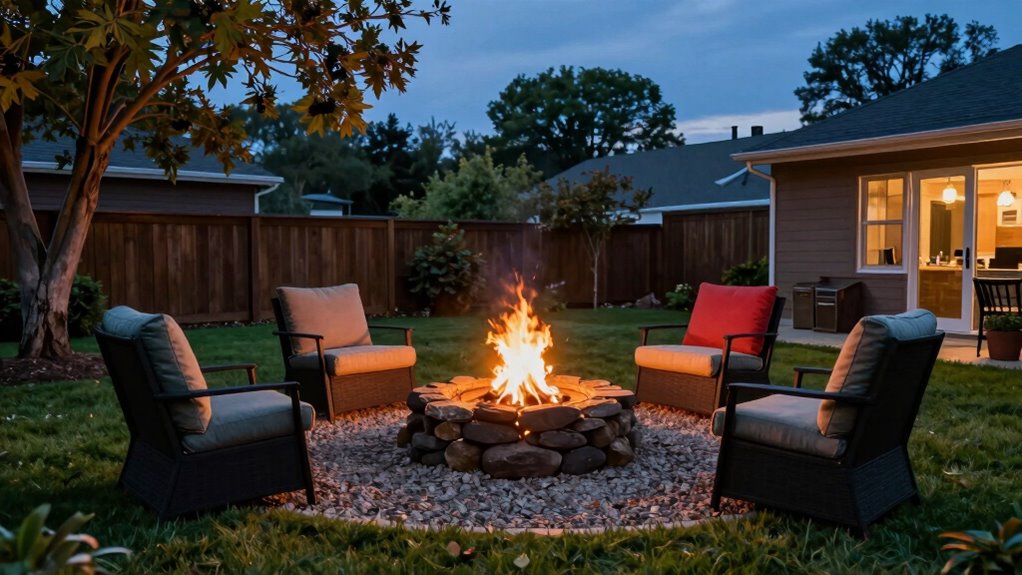
- Maintain at least 3 feet of clearance between the fire pit and seating, arranging seating in a safe, semi-circular layout.
- Position the fire pit downwind from structures and vegetation to minimize sparks and smoke blowing toward safety zones.
Amazon Product B0CL21LNYG
As an affiliate, we earn on qualifying purchases.
Why Proper Fire Pit Placement Matters
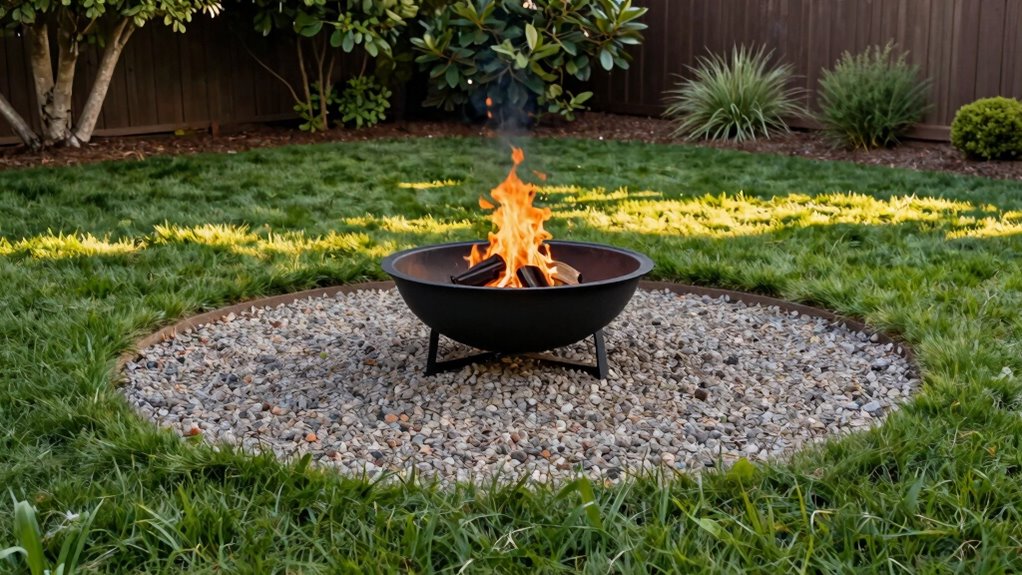
Proper fire pit placement is essential for safety and enjoyment. Where you position your fire pit impacts its fire pit aesthetics, shaping how it blends with your backyard design. Placing it on a flat, stable surface made from fire-resistant materials ensures stability and reduces the risk of accidents. Choosing durable fire pit materials, like stone or concrete, helps the structure withstand weather and heat. Proper placement also prevents sparks or heat from damaging nearby furniture or plants. Additionally, setting your fire pit away from overhanging structures and flammable items creates a safer environment. For added safety, consider the surrounding landscape when choosing a spot to help contain sparks and minimize hazards. Ensuring the fire pit installation site has adequate clearance from structures and foliage is also crucial for safety. Proper fire safety considerations are vital to prevent accidents and ensure long-term enjoyment of your outdoor fire feature. Conducting a thorough risk assessment can help identify potential hazards and improve overall safety. Paying attention to fire-resistant surfaces and ensuring proper distance from combustible materials further enhances safety.
Amazon Product B0GWGP4R7R
As an affiliate, we earn on qualifying purchases.
Keep Your Fire Pit Away From Trees and Overhanging Structures
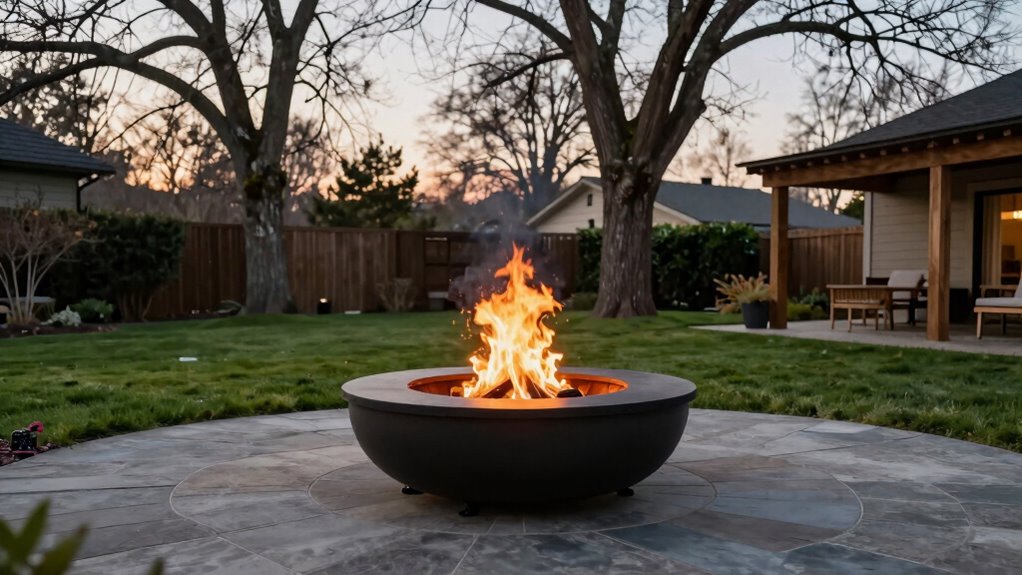
Placing your fire pit in a safe location means paying attention to nearby trees and overhanging structures. Tree hazards, such as low-hanging branches, can easily catch fire or obstruct your view, creating safety risks. Overhang risks from roofs, awnings, or branches above the fire pit can cause flames or sparks to ignite these structures. To minimize danger, keep your fire pit at least several feet away from any trees or overhangs. Trim back low-hanging branches and remove dead or dry foliage that could pose a fire risk. Avoid placing your fire pit directly beneath overhanging structures, especially if they’re made of combustible materials. Staying vigilant about these hazards ensures a safer environment for everyone enjoying your backyard fire pit. Additionally, understanding fire safety principles can help you further reduce risks and enjoy your fire pit responsibly. Being aware of fire hazards such as dry leaves or debris around the area can also significantly decrease the chance of accidental fires. Regularly inspecting the area for combustible materials and keeping a fire extinguisher nearby further enhances safety measures. Incorporating fire-resistant landscaping can also provide an extra layer of protection around your fire pit zone. Moreover, consulting regulatory guidelines can ensure that your setup complies with local safety codes and ordinances.
Amazon Product B0CJRRSDBH
As an affiliate, we earn on qualifying purchases.
Find Flat Ground With a Safe, Clear Surface
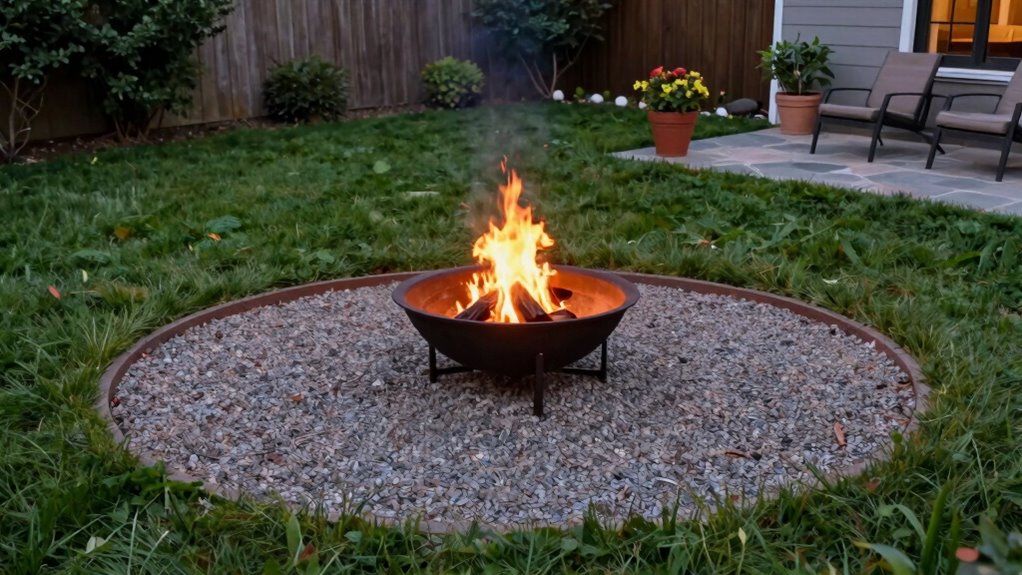
Look for level ground that keeps your fire pit stable and safe. Make sure the area around it is free of leaves, sticks, and other debris. A clear, flat surface helps prevent accidents and makes your fire pit easier to enjoy. Additionally, selecting a spot with emerging safety features can provide extra protection during use. Choosing a location with good drainage can also help prevent water accumulation and related hazards. Ensuring proper tool storage nearby can keep your safety gear accessible and your area organized. Incorporating surrounding barriers can further enhance safety by keeping children and pets at a safe distance. Considering fire-resistant landscaping can add an extra layer of safety by reducing the risk of accidental fires.
Identify Level Ground
Finding a flat, level spot for your fire pit is essential for safety and stability. Look for an area with level ground that doesn’t slope or unevenly rise. A flat surface guarantees the fire pit remains steady and reduces the risk of tipping or shifting during use. Check the ground by placing a level or a straight board across the surface; if it doesn’t tilt, you’ve found a suitable spot. Avoid areas with slopes, dips, or uneven patches. Clear away any rocks, roots, or debris that could cause instability or hazards. A level ground foundation not only improves safety but also makes maintenance easier. Using weatherproof tool storage can protect your equipment from the elements and extend its lifespan. Ensuring proper fire safety measures are in place is crucial for preventing accidents or damage. Conducting a site assessment beforehand helps identify potential risks and ensures the area remains safe during use. Taking the time to identify a proper flat surface and considering ground stability helps ensure your fire pit remains safe, stable, and enjoyable for everyone.
Clear Surrounding Area
Once you’ve identified a flat, level ground for your fire pit, it’s important to clear the surrounding area of any hazards. Remove any debris, rocks, or combustible materials that could catch fire or cause accidents. Trim back overgrown bushes and ensure fire resistant plants are kept at a safe distance, reducing fire risk. Consider adding landscaping privacy elements like tall hedges or fencing to create a barrier that keeps sparks contained and adds a layer of safety. Make sure the surface beneath and around the fire pit is stable and free of loose soil or mulch that could shift or ignite. proper workspace setup principles can help you maintain a clear and organized outdoor area, minimizing hazards. Regular assessments of the outdoor safety measures ensure ongoing protection and peace of mind. Incorporating hazard prevention techniques further contributes to a secure environment for enjoyable fires. Additionally, maintaining a fire-safe zone around the fire pit is essential for preventing accidental fires and ensuring safety for all users.
Amazon Product B0DRGDK4XV
As an affiliate, we earn on qualifying purchases.
Position Your Fire Pit at a Safe Distance From Your Home and Fences

To keep everyone safe, make sure your fire pit is positioned a proper distance from your home and fences. Think about the wind direction to prevent smoke or flames from drifting toward structures. Using non-flammable barriers can provide extra safety and peace of mind during fires.
Maintain Adequate Clearance
Positioning your fire pit at a safe distance from your home and fences is vital to prevent accidental fires and guarantee safety. Proper clearance ensures good fire safety and preserves your outdoor decor’s appeal. To maintain adequate space:
- Keep at least 10-20 feet between the fire pit and any structures or fences.
- Clear away any overhanging branches or dry leaves nearby.
- Ensure the area beneath and around the fire pit is free of combustible materials.
These steps help minimize fire risks and create a safe, inviting outdoor space. Maintaining adequate clearance not only enhances fire safety but also allows for better airflow and easier access. Remember, careful placement is key to enjoying your backyard safely and stylishly.
Consider Wind Direction
Since wind can carry sparks and smoke, it’s important to think about its direction when placing your fire pit. Ignoring wind safety increases the fire hazard, as sparks may blow toward your home, fences, or other flammable structures. To minimize risks, position your fire pit so that the prevailing wind blows smoke away from your house and outdoor living areas. Avoid placing it downwind of trees or overhanging branches that could catch fire. Monitoring wind conditions helps prevent accidental fires and ensures safe operation. Remember, even a gentle breeze can shift the direction of sparks, so plan your fire pit placement with wind patterns in mind. Prioritizing wind safety reduces the chance of fire hazards and keeps your backyard a safe, enjoyable space.
Use Non-Flammable Barriers
Placing your fire pit at a safe distance from your home and fences is essential to prevent accidental fires. To enhance safety, use fire-resistant barriers and non-flammable surfaces around your fire pit. These barriers create a protective zone that minimizes the risk of flames spreading. Here are three effective options:
- Fire-resistant barriers like metal screens or specialized fencing can contain sparks and embers.
- Non-flammable surfaces such as concrete, stone, or brick pads prevent heat transfer to combustible materials.
- Clear surrounding area by removing any dry leaves, wood, or mulch that could ignite easily.
Using these precautions guarantees your backyard remains safe while enjoying your fire pit, reducing fire hazards and providing peace of mind.
Use a Non-Flammable Surface for Stability and Safety
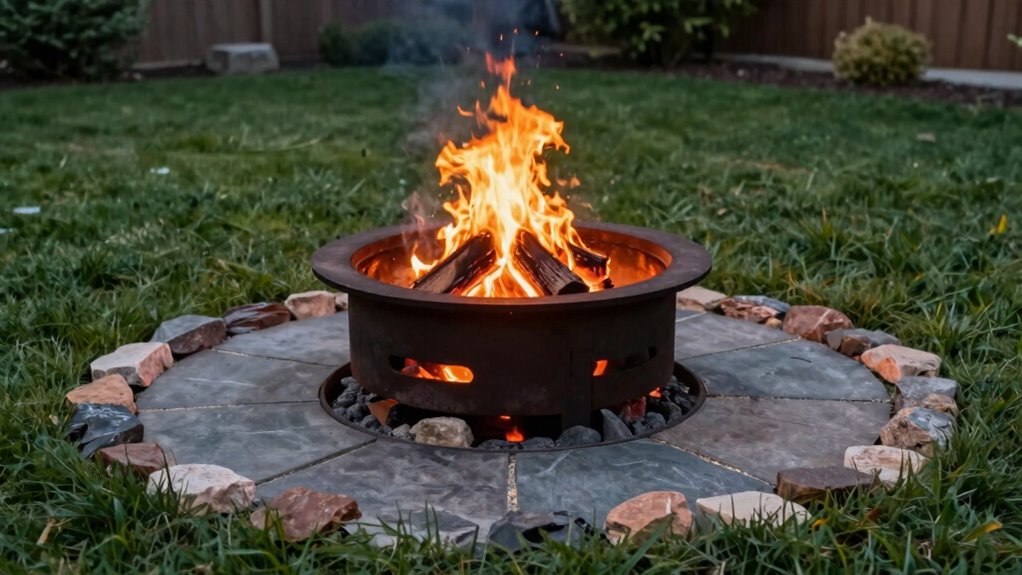
Choosing a non-flammable surface for your fire pit is essential to guarantee stability and prevent accidents. Using fire resistant materials ensures your setup stays safe even during intense flames. Opt for non flammable surfaces like gravel, paving stones, or concrete to create a sturdy base. These surfaces prevent heat transfer and reduce fire risks. To help you decide, here’s a quick comparison:
| Material | Benefits |
|---|---|
| Gravel | Good drainage, easy to replace |
| Paving Stones | Stable, durable, fire resistant |
| Concrete | Highly stable, long-lasting |
Selecting the right non flammable surface helps keep your backyard safe and minimizes hazards. Always prioritize fire resistant materials for maximum safety and peace of mind.
Leave Enough Space for Seating and Easy Movement
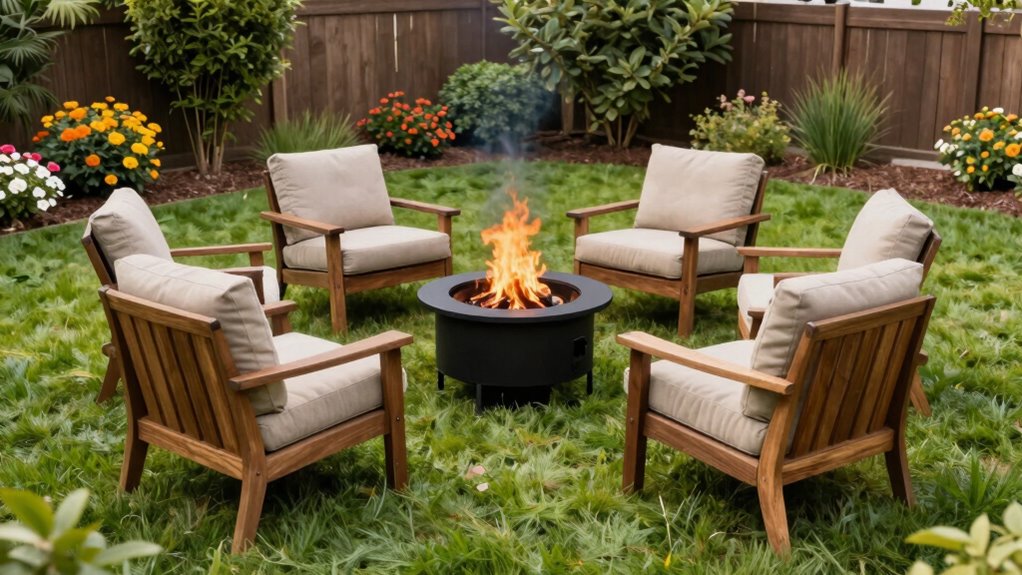
After establishing a sturdy, fire-resistant surface, the next step is to plan for comfortable seating and smooth movement around your fire pit. Proper spacing enhances fire pit aesthetics and guarantees safety. To make your backyard inviting and functional, consider these tips:
Ensure safe, inviting fire pit seating with proper spacing and thoughtful arrangement for comfort and style.
- Leave at least 3 feet of space between the fire pit and seating to allow easy movement and prevent crowding.
- Arrange seating in a semi-circle or circle to promote conversation and maintain clear pathways.
- Choose seating options that complement your overall design, ensuring they don’t obstruct access or create hazards.
Consider Wind Direction and Ventilation to Reduce Smoke and Risks
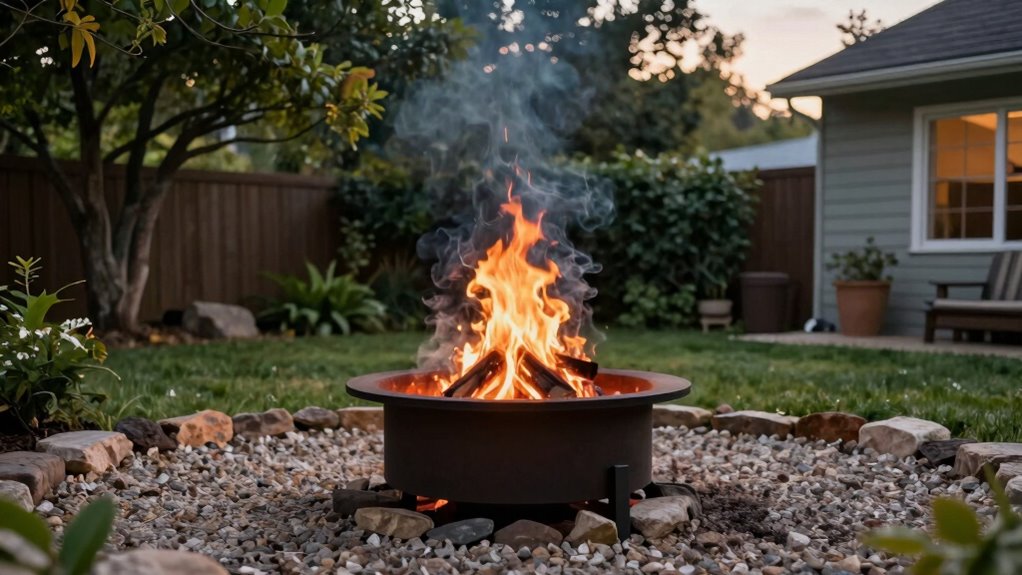
To minimize smoke and ensure safety, it’s essential to take wind direction and ventilation into account when placing your fire pit. Proper ventilation helps with fire suppression and reduces smoke buildup around your backyard. Position your fire pit so that wind blows smoke away from your seating area and nearby structures. Use this table to guide your placement:
| Wind Direction | Placement Tip |
|---|---|
| Wind toward house | Keep fire pit downwind to prevent smoke inhalation |
| Wind away from neighbors | Maximize smoke ventilation for safety |
| Calm days | Choose a sheltered spot with good airflow |
Monitoring wind helps prevent smoke inhalation and reduces fire risks, making your fire pit safer for everyone.
How to Check Local Fire Pit Regulations
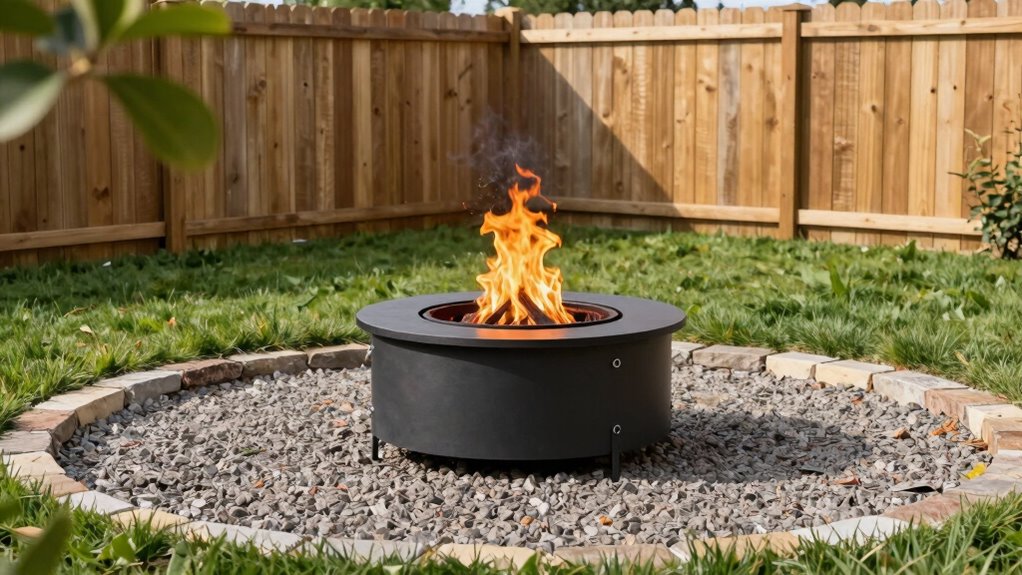
Before setting up your fire pit, it’s important to check local regulations to guarantee you’re in compliance with safety and zoning laws. Start by researching local ordinances related to outdoor fires in your area. These rules often specify fire pit size, distance from structures, and materials allowed. Next, verify if you need to obtain a permit; some municipalities require one for safety and liability reasons. Finally, contact your local fire department or zoning office for clarification on regulations specific to your property.
Check local regulations and permits before installing your fire pit to ensure safety and compliance.
Here are three key steps:
- Review local ordinances on fire pit placement and safety.
- Check permit requirements and application procedures.
- Confirm any restrictions or additional safety guidelines.
Frequently Asked Questions
What Are the Best Materials for a Fire Pit Safety Surface?
You should choose fire-resistant materials like fire bricks, concrete, or stone for your fire pit safety surface. Non-combustible surfaces such as gravel or pavers also work well, preventing flames from spreading. These materials withstand high heat and minimize fire hazards, keeping your backyard safe. Always guarantee the surface extends well beyond the fire pit’s edge to reduce the risk of accidents and make your outdoor space safer for everyone.
How Can I Prevent Sparks From Escaping My Fire Pit?
Did you know that proper spark containment can reduce fire hazards by up to 90%? To prevent sparks from escaping your fire pit, use spark shields or screens designed specifically for fire pits. These barriers catch and contain flying embers, keeping your backyard safe. Always make certain your fire pit has a sturdy, fitted spark shield, and keep an eye on the fire at all times to avoid accidents.
What Is the Ideal Height for a Fire Pit Rim?
The ideal fire pit height is around 12 to 24 inches, with a safety rim height of about 12 inches to prevent sparks from escaping and guarantee safe handling. You should choose a height that keeps flames at a manageable level, making it easy to add or adjust wood. A proper fire pit height enhances safety and comfort, so adjust it based on your space and usage preferences.
How Often Should I Inspect My Fire Pit for Safety Hazards?
You should inspect your fire pit for safety hazards at least once a month. Regular fire pit maintenance helps catch issues like cracks, rust, or loose stones early. After heavy use or extreme weather, do a quick safety inspection to make sure everything remains secure. Keeping a consistent safety inspection schedule minimizes risks, so you can enjoy your fire pit without worries. Stay vigilant and proactive for safe, cozy fires.
Are There Specific Safety Tips for Fire Pits in Windy Areas?
In windy conditions, you should take extra safety precautions for your fire pit. Always use a fire pit cover to prevent embers from escaping and causing fires. Keep a safe distance from trees, fences, and other flammable objects, and avoid lighting the fire during strong gusts. Regularly monitor the wind and extinguish the fire if it becomes unsafe. These steps help guarantee your fire pit remains a safe backyard feature.
Conclusion
So, you’d think placing your fire pit anywhere wouldn’t matter — after all, what’s a little smoke or a stray spark? But ignoring safety tips could turn your cozy backyard into a smoky disaster or worse. Ironically, the safest spot is often the least obvious, like away from overhanging branches or your house. Take the time to choose wisely, and enjoy your fireside nights without turning your backyard into a fiery fiasco.