If your home feels stale or contains lingering odors despite cooling efforts, it’s a sign you need better air movement, not just more cooling. You might notice uneven temperatures, dust settling quickly, or frequent allergy symptoms. Poor ventilation can trap moisture, leading to mold or condensation issues. Improving airflow through fans, ventilation systems, or natural methods can enhance air quality and comfort. Keep exploring to discover effective solutions to optimize your home’s airflow and health.
Key Takeaways
- Persistent odors and stale smells indicate poor ventilation rather than the need for additional cooling.
- Uneven temperatures across rooms suggest inadequate air circulation, not just insufficient cooling.
- Frequent allergies or respiratory issues may result from stagnant air and poor indoor airflow.
- Signs of excess humidity, such as condensation and mold, point to ventilation problems needing airflow improvements.
- Improving airflow through fans or ventilation systems can enhance air quality and comfort without increasing cooling efforts.
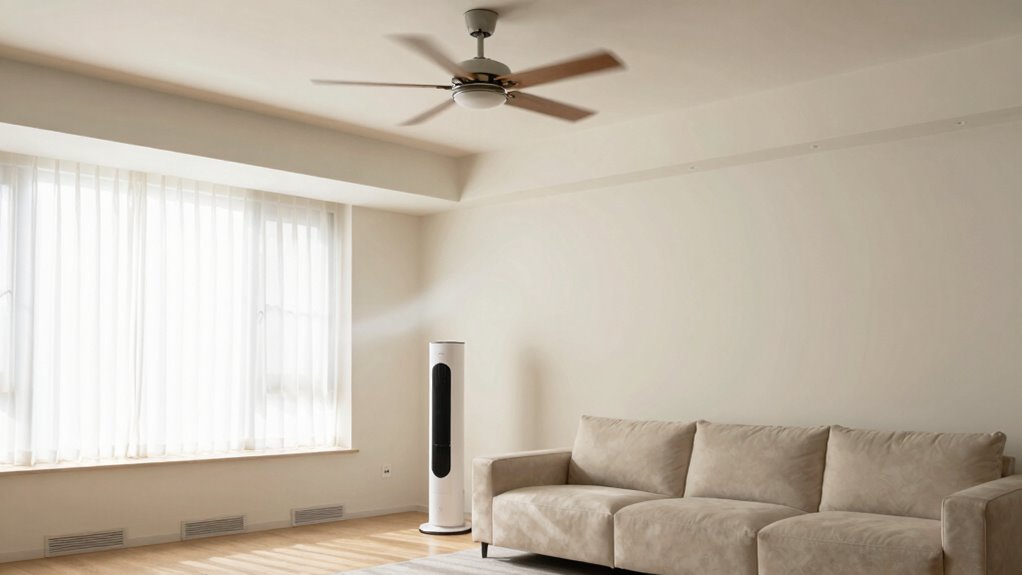
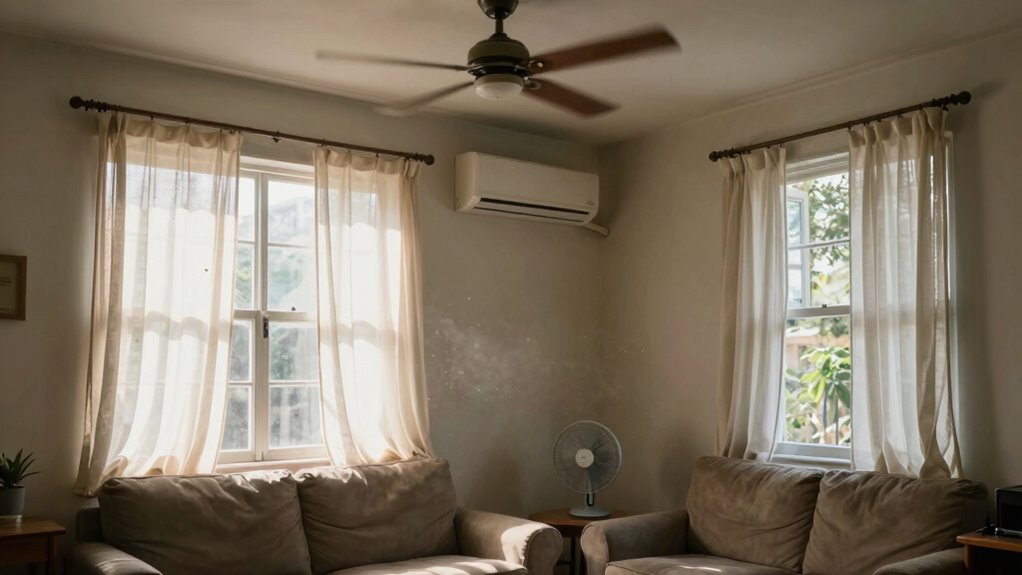
Poor air movement in your home can lead to discomfort and health issues, even if your HVAC system is working properly. When the air isn’t circulating well, you might notice stale smells, lingering odors, or a feeling of stuffiness that just doesn’t go away, no matter how much you crank the air conditioning. This is often a sign that your indoor air quality is suffering because poor ventilation allows pollutants, allergens, and humidity to build up. Instead of simply trying to cool your home more, you need to focus on improving how air moves throughout your space.
Poor air circulation can cause stale odors and indoor air quality issues, even with a functioning HVAC system.
When you feel like the air is stagnant or if you notice dust settling quickly and lingering in the air, it’s a clear sign that your ventilation improvements are needed. Proper air movement isn’t just about temperature; it’s about ensuring fresh air replaces the stale air in your home. If you’re experiencing frequent allergies, respiratory issues, or headaches that seem to correlate with indoor conditions, it’s probably time to assess your ventilation system. Increasing airflow can reduce airborne contaminants and boost indoor air quality, making your environment healthier and more comfortable. Indoor air quality is directly affected by ventilation, so addressing airflow issues can lead to significant health benefits.
Another common sign of inadequate air movement is uneven cooling or heating, where some rooms feel too warm or too cold while others seem just right. This uneven distribution indicates that the air isn’t circulating evenly, leading you to believe you need more cooling or heating, when in reality, the problem is airflow. Installing or upgrading exhaust fans, ceiling fans, or ventilation systems can help distribute conditioned air more uniformly, ensuring every room gets fresh air and temperature consistency. Improving air circulation can also enhance the effectiveness of your existing HVAC system and reduce energy consumption. Additionally, ensuring proper ventilation design can help optimize airflow throughout your home.
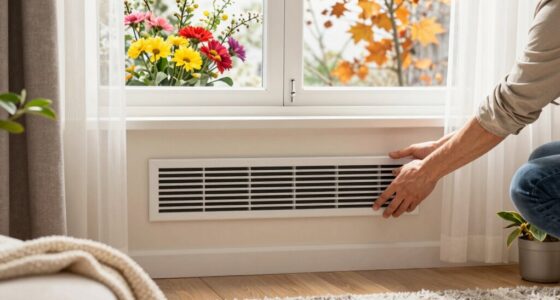
You might also notice condensation on windows or walls, which suggests excess humidity trapped inside your home. High humidity not only feels uncomfortable but can cause mold growth and damage to your property. Improving ventilation helps regulate moisture levels, preventing these issues and enhancing your indoor air quality. Simple measures like opening windows, using exhaust fans in bathrooms and kitchens, or adding an air exchanger can considerably improve air movement and moisture control.
In essence, if your home feels stale, smells off, or you notice uneven temperatures and humidity problems, it’s a sign that your air movement needs attention. Focusing on ventilation improvements will not only make your living space more comfortable but also healthier. Better airflow reduces pollutants, controls humidity, and creates a fresher, more balanced indoor environment. Remember, more cooling alone won’t solve these issues—improving how air circulates is key to a truly comfortable and healthy home. Additionally, incorporating natural ventilation methods can further enhance airflow without relying solely on mechanical systems.
best indoor ceiling fans for air circulation
As an affiliate, we earn on qualifying purchases.
As an affiliate, we earn on qualifying purchases.
Frequently Asked Questions
How Can Poor Air Movement Affect Indoor Air Quality?
Poor air movement can markedly lower your indoor air quality by causing stale air and increasing pollutants. When airflow patterns are weak, ventilation strategies become ineffective, trapping dust, allergens, and humidity inside. This can lead to respiratory issues and discomfort. To improve air quality, you should enhance airflow by opening windows, using fans, or upgrading your ventilation system, ensuring better circulation and healthier indoor environments.
What Are the Health Risks of Stagnant Indoor Air?
Stagnant indoor air is like a crowded room with no fresh air, putting your health at risk. You might breathe in airborne allergens and pollutants that cause allergy symptoms, asthma, or respiratory issues. Plus, moisture buildup fosters mold growth, which can worsen allergies and lead to infections. Poor air movement traps these hazards, making your home less safe and comfortable—so improving airflow helps protect your health and well-being.
Can Improved Air Circulation Reduce Energy Bills?
Yes, improving air circulation can reduce your energy bills. When you enhance ventilation systems and promote better air movement, your home maintains a consistent temperature more efficiently. This means your cooling or heating systems don’t have to work as hard, leading to better energy efficiency. Proper air circulation not only saves you money but also improves indoor air quality, creating a healthier, more comfortable living environment.
How Do You Measure Air Movement in Your Home?
Think of your home’s airflow like a gentle river flowing through a landscape. To measure it, you can perform an airflow assessment or ventilation testing using tools like an anemometer or smoke pencils. These methods reveal how well air circulates, helping you spot stagnation or drafts. By actively testing ventilation, you gain insight into your home’s breathing space, ensuring fresh air flows freely and keeps your environment comfortable and healthy.
What Are Cost-Effective Ways to Enhance Home Airflow?
You can enhance your home airflow cost-effectively by installing ceiling fans in key rooms to circulate air better. Keep interior doors open to promote cross-ventilation, especially when outdoor conditions allow. Using air purifiers with oscillating features also helps improve airflow while filtering pollutants. These simple additions boost air movement without high energy costs, creating a more comfortable and healthier living environment.
home ventilation exhaust fans
As an affiliate, we earn on qualifying purchases.
As an affiliate, we earn on qualifying purchases.
Conclusion
If your home feels stuck in a stagnant breeze and comfort seems just out of reach, it’s time to boost your air movement. Think of your space as a lively dance floor—without enough airflow, everyone’s just standing still. Improving air circulation isn’t just about comfort; it’s about turning your home into a refreshing gust of air where energy and newness flow freely. Don’t let poor airflow turn your sanctuary into a stuffy cave—revitalize it today.
air purifiers for allergies and odors
As an affiliate, we earn on qualifying purchases.
As an affiliate, we earn on qualifying purchases.
whole house ventilation systems
As an affiliate, we earn on qualifying purchases.
As an affiliate, we earn on qualifying purchases.