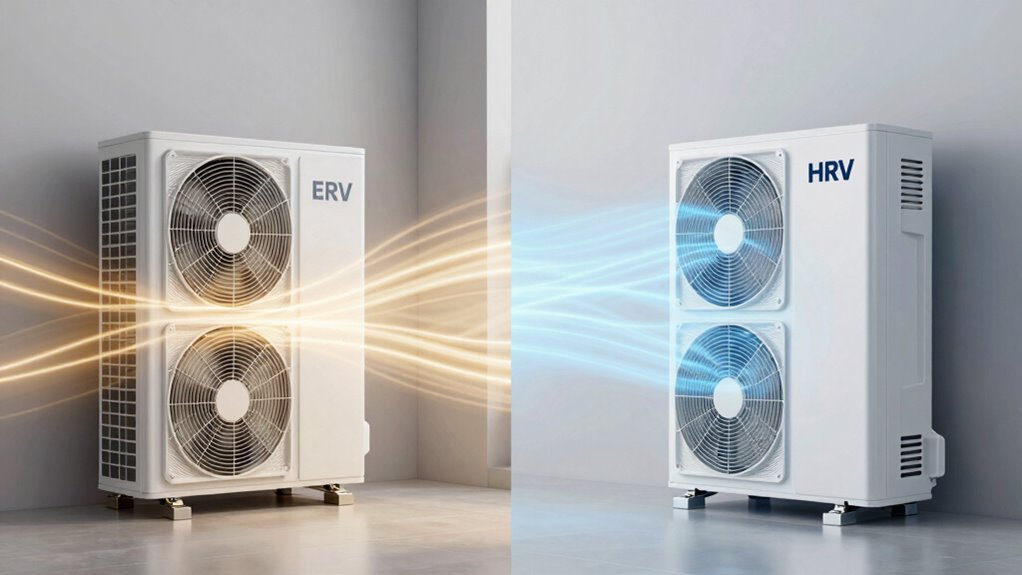

ERVs and HRVs both improve indoor air quality but work differently. ERVs transfer heat and moisture to balance humidity and conserve energy, making them great for humid climates. HRVs focus solely on heat recovery, suited for colder, dry areas. Choosing the right system depends on your climate and home needs. Exploring these differences further reveals which ventilation approach benefits your comfort, energy savings, and health the most.

Get home appliances delivered free with Prime
- Fast, free delivery on millions of items
- Prime Video, Amazon Music and more included
- Member-only deals all year
Key Takeaways
- ERVs transfer both heat and moisture, balancing humidity, while HRVs focus solely on heat recovery without affecting humidity levels.
- ERVs are ideal for humid climates to prevent excess moisture, whereas HRVs conserve heat in colder, dry environments.
- Both systems improve indoor air quality by exchanging stale indoor air with fresh outdoor air, but ERVs also help control indoor humidity.
- HRVs typically have lower initial costs and are better suited for colder regions where moisture control is less critical.
- Proper maintenance of filters and components is essential for both systems to ensure optimal indoor air quality and energy efficiency.
Products Worth Considering

Blueair Blue Pure 211i Max Air Purifier

Levoit Vital 200S-P Smart Air Purifier for Large Rooms

Levoit Core 600S-P Smart Air Purifier for Large Rooms
As an affiliate, we earn on qualifying purchases.
What Are ERVs and HRVs, and How Do They Work?

Because they play an essential role in indoor air quality, understanding ERVs (Energy Recovery Ventilators) and HRVs (Heat Recovery Ventilators) is crucial. Both systems improve air exchange by bringing fresh air in and exhausting stale air out, maintaining healthy indoor environments. They use heat exchange cores to transfer energy between incoming and outgoing air streams, which conserves energy. Filter efficiency is a critical feature; high-quality filters trap airborne particles, improving air purity and protecting your HVAC system. ERVs also transfer moisture, balancing humidity levels, while HRVs focus solely on heat recovery. These systems operate actively, ensuring continuous ventilation without sacrificing energy efficiency or indoor comfort. Proper understanding helps you choose the right system tailored to your home’s needs. Additionally, selecting systems with high-quality filters can significantly reduce indoor microplastics and dust, further enhancing air quality. Incorporating energy-efficient components can further optimize system performance and reduce long-term operational costs. Understanding air exchange systems is vital for maintaining a healthy and sustainable indoor environment.
How Do ERV and HRV Systems Manage Indoor Air Quality?
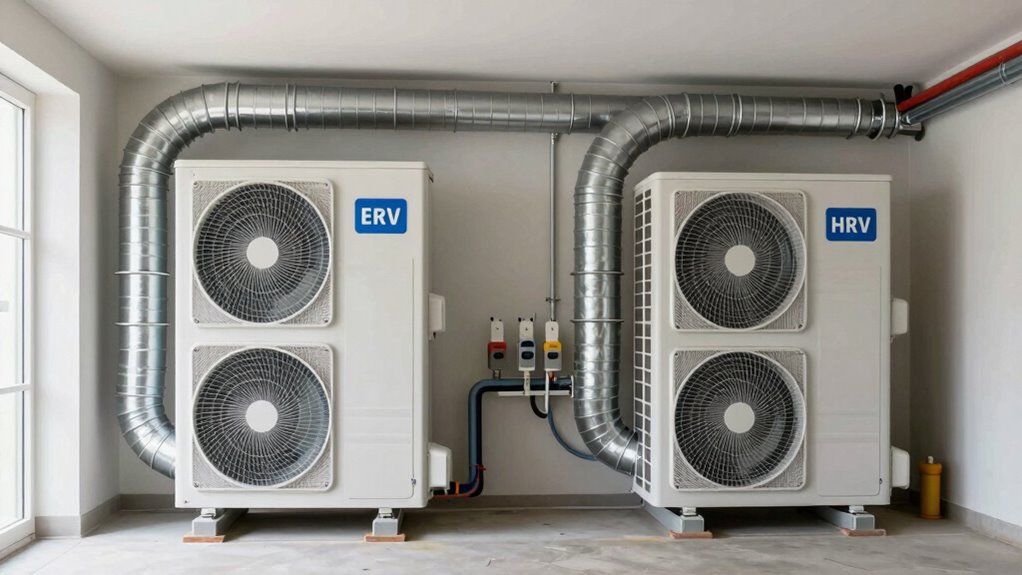
ERV and HRV systems actively improve indoor air quality by continuously exchanging stale indoor air with fresh outdoor air. They do this through several key methods:
ERV and HRV systems enhance indoor air quality by exchanging stale air with fresh outdoor air.
- They incorporate air filtration to remove dust, allergens, and pollutants, ensuring cleaner air inside your home.
- They regulate humidity levels, helping with moisture control to prevent mold growth and dampness.
- By balancing incoming and outgoing air, they reduce indoor odors and volatile organic compounds (VOCs).
- They optimize ventilation to maintain fresh air circulation, which boosts overall air quality and comfort. Proper ventilation plays a crucial role in preventing indoor air stagnation and ensuring a healthy environment.
- Additionally, energy efficiency plays a vital role in how effectively these systems operate without excessive energy consumption.
Together, these features help create a healthier living environment, making sure your indoor air stays clean, fresh, and well-balanced at all times.
Which Ventilation System Is Best for Your Climate and Home?
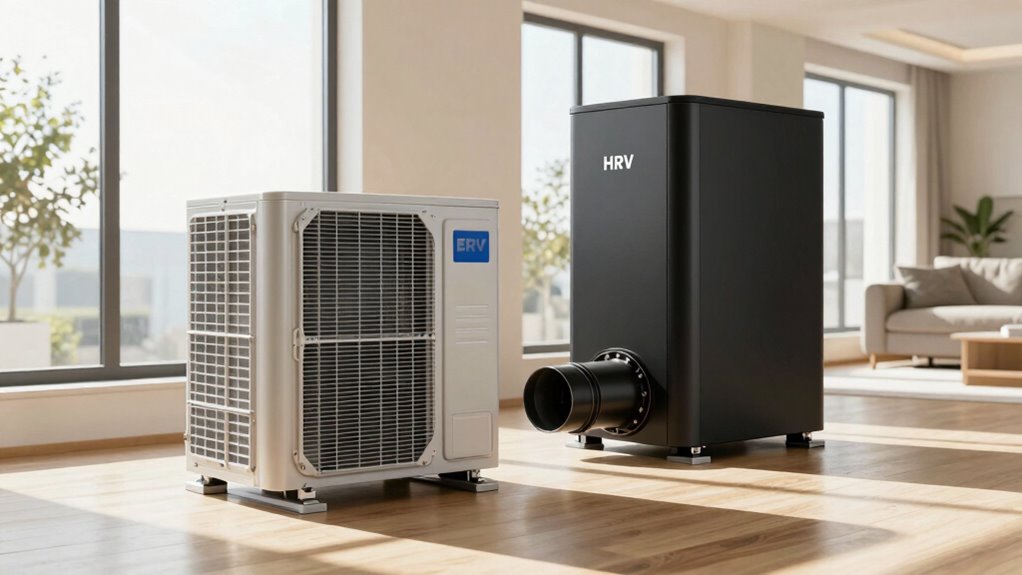
Choosing the right ventilation system depends on your climate and home layout. If you live in a cold or humid area, certain systems may perform better than others. Consider your home’s size and design to guarantee ideal airflow and energy efficiency. Additionally, integrating smart home technology can optimize ventilation performance through automated adjustments based on indoor air quality and occupancy patterns. Incorporating energy-efficient components can further reduce operating costs and improve system sustainability. Understanding climate-specific ventilation needs can help you select the most effective system for your environment. Moreover, understanding ventilation system technology is essential for making informed decisions that enhance both comfort and energy savings.
Climate Compatibility Considerations
Selecting the right ventilation system depends heavily on your climate, as each type performs best under specific conditions. Your choice should align with ventilation standards and climate adaptation needs. Consider these factors:
- Humid climates benefit from HRVs that remove excess moisture and prevent mold. Properly installed, HRVs can also help control indoor humidity levels effectively.
- Cold regions require systems that minimize heat loss, favoring ERVs for better climate adaptation.
- Hot, dry areas might need HRVs to maintain indoor humidity and improve air quality.
- Mild climates could work well with either system but should adhere to ventilation standards that optimize energy efficiency.
- Understanding the different ventilation systems and their environmental benefits can help you make an informed decision for your home, especially when considering the climate compatibility of each option. Additionally, evaluating the system efficiency ensures that your choice will provide long-term performance and cost savings. Recognizing the importance of environmental adaptability can further guide your selection to ensure resilience against changing weather patterns.
Matching your home’s needs with your climate ensures effective ventilation, reduces energy costs, and maintains indoor air quality. Proper consideration guarantees your system’s performance and longevity.
Home Size and Layout
How your home’s size and layout influence your ventilation needs can be significant when determining the best system for your climate. A larger home or one with an open floor plan may require a more robust ventilation system to ensure even airflow and fresh air distribution. The home’s design, including room placement, impacts how effectively ventilation units operate. For example, placing bedrooms and living spaces strategically can optimize air exchange and reduce energy loss. If your home has multiple levels or separated zones, you might need a system capable of balancing airflow across different areas. Choosing between an ERV or HRV depends on these factors, as well as how your space is organized. Proper assessment of your home’s size and layout guarantees you select a ventilation system that meets your needs efficiently.
How Do ERVs and HRVs Impact Energy Efficiency and Costs?
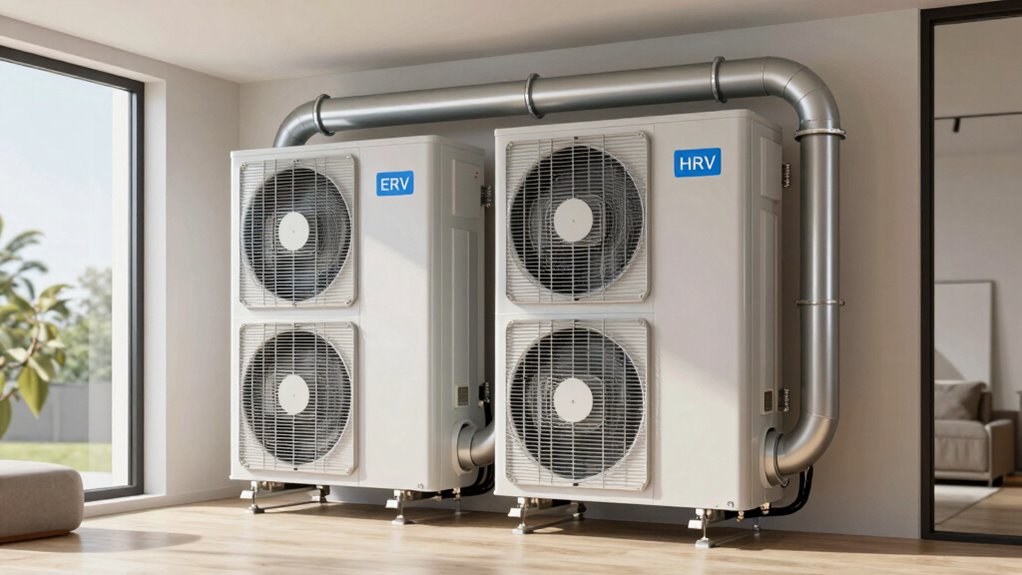
Energy efficiency and costs are substantially influenced by whether you install an ERV or an HRV in your home. An ERV typically offers better energy savings in climates with high humidity, reducing overall energy use. Conversely, an HRV may have lower initial costs, but can lead to higher energy expenses over time. Consider these key points:
- Energy Savings: ERVs recover more heat and moisture, lowering heating and cooling costs. Additionally, understanding ventilation system efficiency can help you choose the most suitable option for your home. Proper system maintenance also plays a role in maximizing energy savings and system longevity. Properly integrated home ventilation design can further enhance efficiency and indoor air quality. Evaluating system performance metrics can help determine which system offers the best long-term benefits.
- Initial Cost: HRVs are generally less expensive to install upfront.
- Operational Costs: ERVs tend to have slightly higher maintenance but save money long-term.
- Climate Suitability: Your local climate impacts cost implications, with ERVs being more efficient in humid regions.
- System Selection: When choosing between an ERV and HRV, understanding battery inverter generator capacity can help optimize energy efficiency and ensure your home’s ventilation system operates effectively.
Choosing the right system directly affects your energy bills and overall home efficiency.
How to Choose Between an ERV and an HRV for Your Home?

When choosing between an ERV and an HRV, consider your indoor air quality needs and how much humidity control you require. Think about your local climate and humidity levels, as they influence which system performs best. Also, align your decision with your energy efficiency goals to make certain you pick the option that saves you the most in the long run. Additionally, understanding ventilation technology can help you select the system that best fits your home’s specific needs. Recognizing the differences in heat exchange processes can also enhance your understanding of each system’s efficiency and suitability. Being aware of moisture transfer mechanisms can further inform your choice based on your home’s humidity management requirements, especially since humidity control plays a vital role in indoor comfort and health. Exploring air filtration options within these systems can additionally improve indoor air quality by reducing pollutants and allergens.
Indoor Air Quality Needs
Choosing between an ERV and an HRV depends on your home’s indoor air quality needs and your local climate. If you prioritize cleaner air, consider these factors:
- Air filtration: Look for systems with integrated filters to trap dust, pollen, and other pollutants.
- Filter replacement: Regularly changing filters guarantees ideal air quality and system efficiency.
- Humidity control: ERVs help balance indoor humidity, reducing mold and musty odors.
- Air exchange rate: Ensure the unit provides adequate fresh air without over-ventilating, which can bring in more pollutants.
Your choice should reflect your specific air quality issues. Proper filtration and timely filter replacement are key to maintaining healthy indoor air, regardless of whether you opt for an ERV or an HRV.
Climate and Humidity Levels
Your local climate and humidity levels play a crucial role in deciding whether an ERV or an HRV is right for your home. If you experience high humidity or frequent temperature fluctuations, an ERV offers better humidity control and climate adaptability by exchanging both heat and moisture with incoming air. This helps prevent excess moisture buildup and maintains a comfortable indoor environment. Conversely, in dry or moderate climates, an HRV efficiently exchanges heat without adding humidity, making it suitable for cooler conditions. By understanding your climate, you can select a ventilation system that not only improves indoor air quality but also adapts effectively to your environment’s humidity needs. This choice ensures your home remains comfortable, healthy, and energy-efficient year-round.
Energy Efficiency Goals
The energy efficiency of your home’s ventilation system directly impacts both energy bills and indoor comfort. When choosing between an ERV and an HRV, consider your specific goals. First, if air filtration is a priority, an ERV often provides better filtration options, improving indoor air quality. Second, if moisture control is essential—especially in humid climates—an ERV helps manage humidity levels more effectively. Third, evaluate your climate: in colder environments, an HRV reduces energy loss by exchanging heat efficiently, while ERVs conserve energy and moisture in milder conditions. Fourth, consider overall energy savings: ERVs typically use less energy due to their ability to transfer both heat and moisture, leading to lower bills. Your choice should align with your climate, air quality needs, and moisture management goals.
Maintenance, Lifespan, and Long-Term Costs of ERV and HRV Units
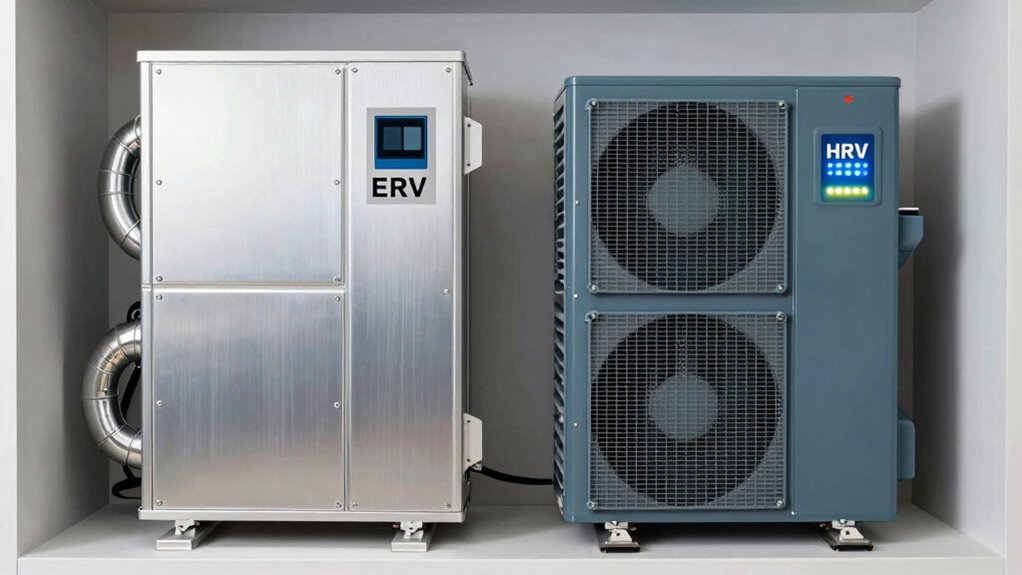
Maintaining ERV and HRV units is essential to guarantee their peak performance and longevity. Regular filter upkeep is key to ensuring clean airflow and preventing strain on the system. Proper upkeep extends the unit lifespan and reduces long-term costs. On average, ERV and HRV units last between 10 to 15 years with routine care. Neglecting filter replacement or ignoring signs of wear can shorten their lifespan and increase repair expenses. Here’s a quick comparison:
| Aspect | ERV | HRV |
|---|---|---|
| Filter Maintenance | Frequent, due to moisture exchange | Less frequent, simpler cleaning |
| Unit Lifespan | 12-15 years | 10-14 years |
| Long-Term Costs | Slightly higher, due to moisture control | Usually lower, simpler design |
| Maintenance Complexity | Moderate | Low |
| Cost of Replacement | Moderate | Lower |
Proper maintenance ensures you get the most out of your ventilation system.
Which Ventilation System Is Right for You? A Final Decision Guide
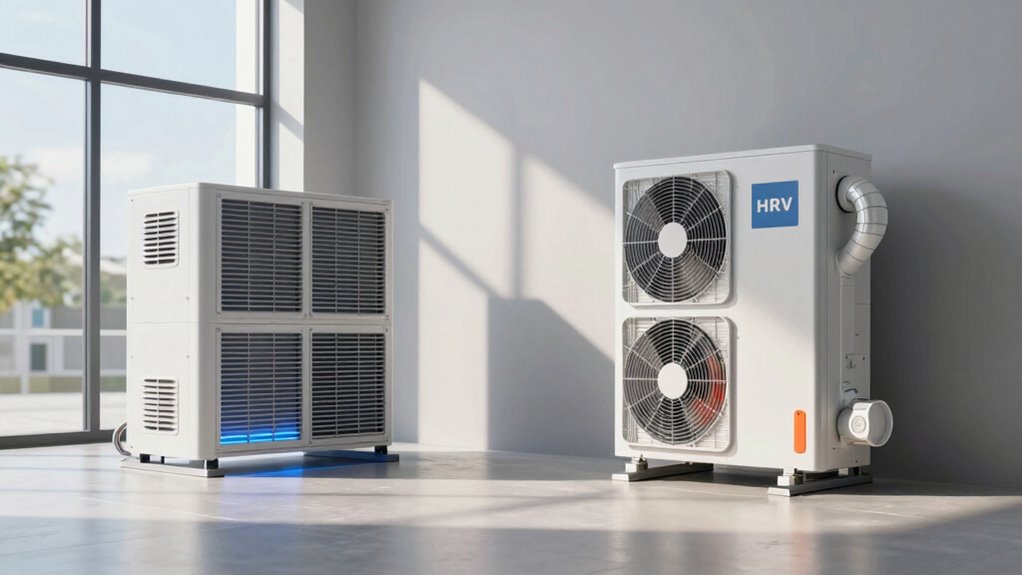
Deciding between an ERV and an HRV depends on your home’s specific needs and your priorities for indoor air quality and energy efficiency. Consider these factors:
- If moisture control is essential, an ERV helps balance humidity levels, reducing mold and dampness.
- For homes in colder climates, an HRV provides effective air filtration while minimizing moisture transfer.
- If you prioritize fresh air and air filtration, both systems improve indoor air quality, but ERVs also help with humidity control.
- Your home’s existing ventilation and insulation will influence which system works best for energy conservation and comfort.
Evaluate your climate, moisture concerns, and air quality needs to choose the right system. Both can improve indoor air, but your specific priorities will determine the best fit.
Frequently Asked Questions
Can ERVS and HRVS Be Integrated With Smart Home Systems?
Yes, ERVs and HRVs can be integrated with smart home systems. You can connect them for smart home integration, enabling automation features that adjust ventilation based on your preferences or indoor air quality. This setup allows you to control airflow remotely, set schedules, and optimize ventilation for energy efficiency and comfort. With compatible smart systems, you get seamless automation, making indoor air management more convenient and tailored to your lifestyle.
How Do ERV and HRV Systems Affect Mold and Moisture Control?
You’ll find that ERV and HRV systems gently support moisture mitigation and mold prevention in your home. By continuously exchanging stale air for fresh, these systems reduce excess humidity and dampness, creating an environment less welcoming to mold growth. This subtle balance helps maintain healthier indoor air quality, ensuring your space stays comfortable and safe. Proper ventilation becomes a quiet guardian against moisture issues, giving you peace of mind.
Are ERV and HRV Units Suitable for Small or Apartment Spaces?
Yes, ERV and HRV units are suitable for small or apartment spaces. They’re designed to be space-efficient, fitting into tight areas like closets or utility rooms. However, you should consider installation challenges, as proper venting and electrical access are essential. If space is limited, choose compact models and consult a professional to guarantee seamless installation without compromising air quality.
What Are Common Issues or Troubleshooting Tips for ERV and HRV Systems?
You might encounter issues like filter maintenance needs or system noise with your ERV or HRV. Regularly check and replace filters to guarantee peak airflow and filtration. If your system becomes noisy, inspect for loose parts or debris, and tighten or clean components as needed. Proper maintenance keeps your ventilation system running smoothly, improves air quality, and reduces the chances of breakdowns, helping your indoor air stay fresh and healthy.
How Do Climate Changes Influence the Long-Term Performance of These Systems?
Climate changes considerably influence your ERV or HRV systems’ long-term performance by impacting system durability. Extreme temperatures, humidity, and weather fluctuations can strain components, causing wear and reducing efficiency over time. To maintain ideal operation, you should regularly inspect and maintain your system, consider climate-specific adjustments, and use high-quality filters. Staying proactive helps your ventilation system adapt to climate impacts, ensuring it continues to provide fresh, healthy indoor air efficiently.
Conclusion
So, whether you pick an ERV or an HRV, just remember: your home’s air quality depends on your choice, not magic. Don’t let the endless options drown you—after all, who needs fresh air when you can have a fancy machine doing the work? Pick the one that suits your climate, budget, and ego. Either way, your lungs will thank you, or at least pretend to. Happy ventilating!