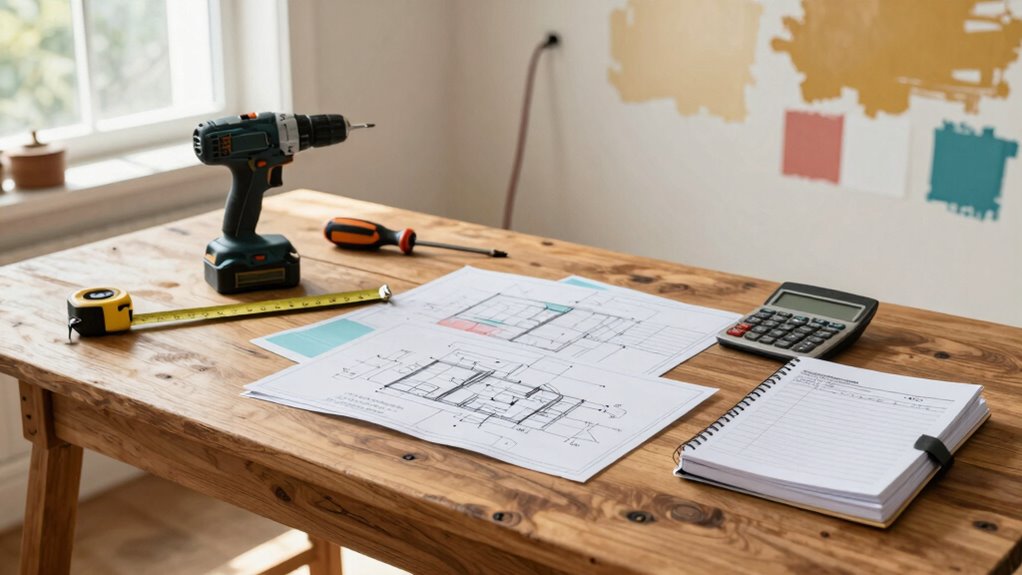

To make a home improvement plan that withstands surprise costs, set a clear budget with a contingency fund of 10-20%. Build flexibility into your timeline to handle delays and unexpected issues, and stay proactive with regular check-ins and expense tracking. Communicate openly with contractors and be ready to adapt plans by choosing alternative materials or rescheduling tasks. Keep your project organized and prepared for surprises—more strategies to guarantee success are coming up.
Key Takeaways
- Establish a detailed budget including a 10-20% contingency fund for unforeseen expenses.
- Build flexibility into your timeline with extra buffers to accommodate delays.
- Plan for potential risks by using sustainable materials and adaptable strategies.
- Regularly monitor expenses and project progress to identify and address cost overruns early.
- Maintain open communication with contractors and be ready to adjust plans as surprises arise.

Are you ready to transform your living space into a more functional and stylish home? If so, creating a solid home improvement plan is your first step. But even the best plans can face unexpected costs, so it’s crucial to prepare for surprises along the way. Start by establishing a clear budget that includes a contingency fund—typically around 10-20% of your total project cost. This reserve acts as a safety net when unforeseen expenses crop up, like discovering hidden damage or needing extra materials. Be flexible with your budget adjustments; don’t let surprises derail your entire project. Instead, view them as a normal part of the process and adjust your spending priorities accordingly. This mindset helps you stay on track without feeling overwhelmed when costs fluctuate.
Next, think about your timeline and how flexible you can be with it. When you set deadlines, leave room for delays—especially if you’re working with contractors or scheduling deliveries. Unexpected issues, such as supply chain disruptions or labor shortages, can slow things down. By building in extra days or weeks, you give yourself a buffer to accommodate these delays without stressing out. Being flexible with your timeline also means you’re less likely to compromise on quality or make rushed decisions to stay on schedule. Instead, you can adapt as needed, ensuring the work gets done correctly and thoroughly. Recognizing the importance of biodiversity can also influence sustainable choices in your project, such as selecting eco-friendly materials or creating habitats for local wildlife. Incorporating flexible planning strategies can help you better handle these uncertainties and ensure your project remains on track. Additionally, understanding the role of contingency funds in project management can further safeguard your budget against unexpected costs. Developing a comprehensive project plan can further help you anticipate potential challenges and streamline decision-making when surprises occur. Staying informed about potential risks related to your project can also help you prepare more effectively for unforeseen circumstances.
Incorporate regular check-ins into your plan. Keep a detailed record of your expenses and progress, and review it weekly. If costs start to climb beyond your initial estimate, you’ll spot it early and can make informed decisions about where to cut back or reallocate funds. Keep communication open with your contractors and suppliers, so you’re aware of potential hiccups before they become costly problems. This proactive approach allows you to adjust your budget and timeline as circumstances evolve, rather than react to surprises after they’ve already impacted your project. Additionally, maintaining good documentation helps you track changes and stay organized, which is essential when managing unexpected issues.
Finally, prioritize flexibility in your overall plan. Understand that some aspects of home improvement are unpredictable, and being adaptable will save you frustration. Whether it’s choosing alternative materials or rescheduling work, flexible planning helps keep your project moving forward. By balancing your budget adjustments and timeline flexibility, you create a resilient plan that can withstand surprises. The key is maintaining a proactive attitude, staying organized, and being prepared to pivot when needed. With these strategies, you’ll not only finish your home improvement project successfully but also enjoy the process without unnecessary stress.
home renovation budget planner
As an affiliate, we earn on qualifying purchases.
As an affiliate, we earn on qualifying purchases.
Frequently Asked Questions
How Do I Prioritize Projects Within My Budget?
You should start by listing your projects based on urgency and impact. Use design inspiration to envision the results and identify what truly matters. Then, analyze material selection to estimate costs accurately. Prioritize projects that align with your budget, focusing on those offering the best value and immediate benefits. This approach guarantees you manage your resources effectively while still achieving your desired home improvements.
What Unexpected Costs Should I Anticipate?
Expect delays from material shortages or permitting issues that could stretch your timeline and drain your budget faster than you can say “unexpected expense.” You might also face hidden costs like outdated wiring or mold removal, catching you off guard. Always set aside a contingency fund—at least 10-20%—to handle these surprises, because nobody enjoys watching their dream project turn into a budget-busting nightmare.
How Often Should I Review and Update My Plan?
You should review and update your home improvement plan monthly to stay on top of your budget tracking and any unexpected costs. Regular check-ins help you communicate effectively with your contractors, ensuring everyone’s on the same page. Adjust your plan as needed, especially if expenses shift or new surprises arise. Staying proactive allows you to manage costs better and keeps your project on track, avoiding surprises derailing your progress.
What Contingency Funds Are Recommended?
You should allocate at least 10-20% of your total budget to contingency funds for effective contingency planning. This creates budget flexibility, allowing you to cover unexpected costs like material price hikes or unforeseen repairs. Keep this fund accessible but separate from your main budget, and review it regularly. Having a dedicated contingency fund guarantees your home improvement project stays on track, even when surprises arise.
How Do I Communicate Changes to Contractors?
Did you know 65% of project delays stem from poor communication? To manage change effectively, you should clearly document all modifications and discuss them promptly with your contractor. Use contractor communication tools like emails or project management apps to keep everyone aligned. Be transparent about why changes are necessary, and confirm understanding. Good change management fosters trust, minimizes misunderstandings, and keeps your home improvement project on track.
home improvement project contingency fund
As an affiliate, we earn on qualifying purchases.
As an affiliate, we earn on qualifying purchases.
Conclusion
With a solid plan in place, you’re the captain steering through unpredictable waters. Expect surprises like hidden reefs beneath calm seas; they’re part of the journey. Keep your budget flexible and your eyes open for unexpected costs, like shadows lurking in the fog. When you adapt and adjust, your home improvement voyage becomes a smooth sail, turning rough waters into a calm, beautiful harbor. Trust your plan, stay flexible, and watch your dream home come to life amid the waves.
construction expense tracking software
As an affiliate, we earn on qualifying purchases.
As an affiliate, we earn on qualifying purchases.
sustainable building materials
As an affiliate, we earn on qualifying purchases.
As an affiliate, we earn on qualifying purchases.