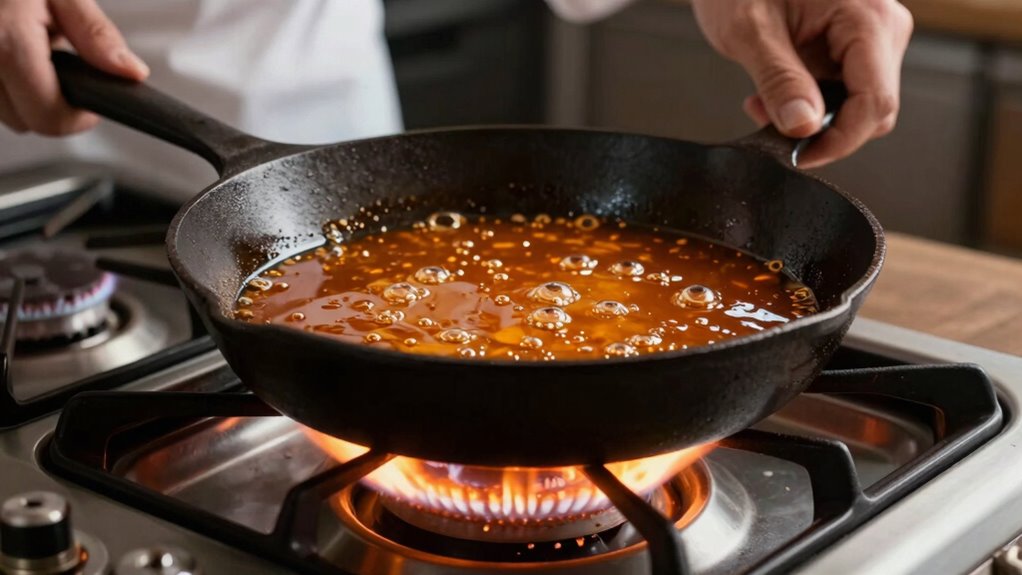

As a serious home cook, you know that consistent heat is key to perfect results. Power alone won’t produce even cooking or proper flavor development if the heat fluctuates. Fluctuations can cause burnt edges, undercooked centers, or uneven textures. Proper calibration and understanding of your equipment matter more than raw power. mastering heat control helps you achieve reliable, delicious dishes every time. Keep going, and you’ll discover how fine-tuning your heat can elevate your cooking even further.

Get home appliances delivered free with Prime
- Fast, free delivery on millions of items
- Prime Video, Amazon Music and more included
- Member-only deals all year
Key Takeaways
- Consistent heat ensures even cooking and flavor development, regardless of the stove’s power output.
- Reliable temperature control prevents burnt edges or undercooked centers, leading to better results.
- Proper calibration and heat management yield predictable outcomes, crucial for delicate baking and precise dishes.
- Power alone cannot compensate for uneven heat distribution or fluctuating temperatures.
- Mastering heat consistency enhances overall cooking quality, moving beyond mere power to controlled precision.

Achieving consistent heat is one of the biggest challenges home cooks face in the kitchen. When your stove or oven wildly fluctuates in temperature, it’s hard to produce dishes that turn out perfectly every time. You might notice that your sauce burns at the edges while the center remains undercooked, or your baked goods come out uneven. These issues stem from temperature fluctuation, which can be caused by several factors. One of the most overlooked is equipment calibration—how accurately your appliances are set to the temperature you choose. Even a small deviation can throw off your cooking process, making it harder to control heat and get reliable results.
Consistent heat is essential for perfect dishes; calibration ensures your oven and stove cook at the right temperatures.
When you care about heat consistency, you start paying close attention to your equipment. You might think that more power or a higher wattage stove automatically means better cooking, but that’s not always the case. Instead, it’s about how well your appliances maintain the set temperature over time. If your oven isn’t properly calibrated, it could be running hotter or cooler than the dial indicates. This inconsistency leads to unpredictable results, and as a serious home cook, you learn that temperature control is often more important than raw power. You want your heat to stay steady, so your ingredients cook evenly, and your flavors develop as intended.
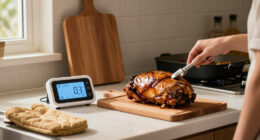
To tackle this, you might invest in an oven thermometer or a probe that provides real-time temperature readings. Regularly checking your oven’s actual temperature against the dial helps you understand how it behaves. If you find your oven runs hot, you can adjust the calibration or set the temperature slightly lower to compensate. Many modern ovens have calibration settings built in, allowing you to fine-tune the temperature for more reliable performance. This small step can drastically improve your results, especially for baked goods or delicate sauces that require precise heat. Additionally, understanding your stove’s hot spots and how your cookware distributes heat can make a big difference. Using good-quality cookware and learning the hot spots helps you manage heat better, even if your equipment isn’t perfectly calibrated. Proper equipment calibration and understanding your tools can help you achieve more consistent results in the kitchen. Recognizing the importance of temperature stability can also lead you to invest in advanced appliances designed for more precise control.
Furthermore, paying attention to thermal mass and how it influences heat retention can help you better anticipate how your cookware responds to heat adjustments. Ultimately, your goal is to create a stable cooking environment. Power alone won’t give you that; consistent heat through proper calibration and understanding your equipment’s quirks allows you to produce consistently excellent dishes. That’s what separates a good cook from a great one—knowing how to control heat, not just how much power you have.
Products Worth Considering

TCL 75-Inch Class 4-Series 4K UHD HDR Smart Google TV (75S446, 2022)

Shark PowerPro Reveal Plus Cordless Stick Vacuum, Charcoal (IZ376H)

Dyson Airwrap i.d. 6-in-1 Multi-Styler and Dryer
As an affiliate, we earn on qualifying purchases.
Frequently Asked Questions
How Does Heat Consistency Affect Cooking Times?
Heat consistency directly impacts your cooking times by minimizing temperature fluctuations, allowing for more precise cooking. When your heat source maintains a steady temperature, your dishes cook evenly and predictably, saving you time and avoiding undercooked or overcooked results. Inconsistent heat causes delays and guesswork, making it harder to achieve perfect cooking precision. So, reliable heat control helps you stick to recipes and get consistent, delicious results every time.
Can Poor Heat Consistency Ruin a Dish?
Yes, poor heat consistency can ruin a dish. Temperature fluctuations cause uneven cooking, leaving parts underdone or overcooked. This inconsistency can lead to flavor degradation, as ingredients don’t cook properly and lose their ideal taste. When heat isn’t steady, it’s hard to control the cooking process, making your dish unpredictable. For the best results, you need reliable heat to maintain steady temperatures and preserve flavors.
Are Certain Stove Types Better for Heat Stability?
Yes, certain stove types, like induction cooktops, offer better heat stability because of their high induction efficiency, providing precise control and quick adjustments. Gas stoves can also be reliable if the gas flame calibration is accurate, ensuring steady heat. You’ll notice fewer temperature fluctuations with these options, making them ideal for dishes requiring consistent heat. Proper calibration and technology directly impact your cooking precision and overall results.
How Can I Test My Stove’s Heat Consistency?
Think of your stove as a skilled musician tuning an instrument. To test its heat consistency, you can perform a simple experiment: place an infrared thermometer on a pot or pan and turn on each burner, noting the temperature calibration over time. Observe burner performance by checking if the heat remains steady. If it fluctuates, your stove may need professional calibration or maintenance to guarantee even cooking.
Does Heat Consistency Impact Energy Efficiency?
Yes, heat consistency impacts energy efficiency because uneven heat can cause you to overuse energy, trying to maintain the right cooking temperature. When your stove isn’t properly calibrated, it wastes energy by fluctuating heat levels, making it harder to cook efficiently. By ensuring your stove maintains steady heat, you conserve energy, reduce waste, and improve overall cooking performance. Regularly checking stove calibration helps you achieve ideal energy conservation.
Conclusion
You might be surprised to learn that over 60% of home cooks prioritize consistent heat over raw power in their stoves. That’s because steady heat ensures your dishes cook evenly, preventing burning or undercooking. When you concentrate on heat consistency, you gain better control and improve your cooking results. So, next time you choose a stove, remember: reliable heat is often more important than sheer power, helping you create perfect meals every time.