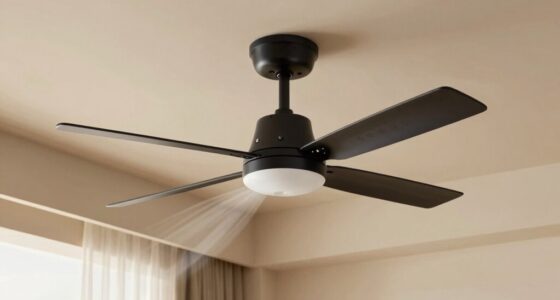

To help your HVAC work smarter, use a seasonal fan strategy by adjusting your ceiling fans based on the time of year. In summer, set fans to rotate counterclockwise for a cooling breeze, and in winter, reverse them to circulate warm air. Proper airflow improves comfort, reduces energy bills, and extends your system’s lifespan. You’ll see better performance and savings when you follow these tips, and if you stick around, you’ll discover more ways to optimize your home’s efficiency.

Get home appliances delivered free with Prime
- Fast, free delivery on millions of items
- Prime Video, Amazon Music and more included
- Member-only deals all year
Key Takeaways
- Adjust ceiling fan direction seasonally: counterclockwise in summer for cooling, clockwise in winter to circulate warm air.
- Use fans to create a wind-chill effect, reducing the need for lower thermostat settings.
- Properly size, position, and maintain fans to optimize airflow and HVAC efficiency.
- Integrate fans with insulation and sealing for enhanced energy savings and airflow management.
- Automate fan operation with smart controls or timers to ensure optimal seasonal performance.
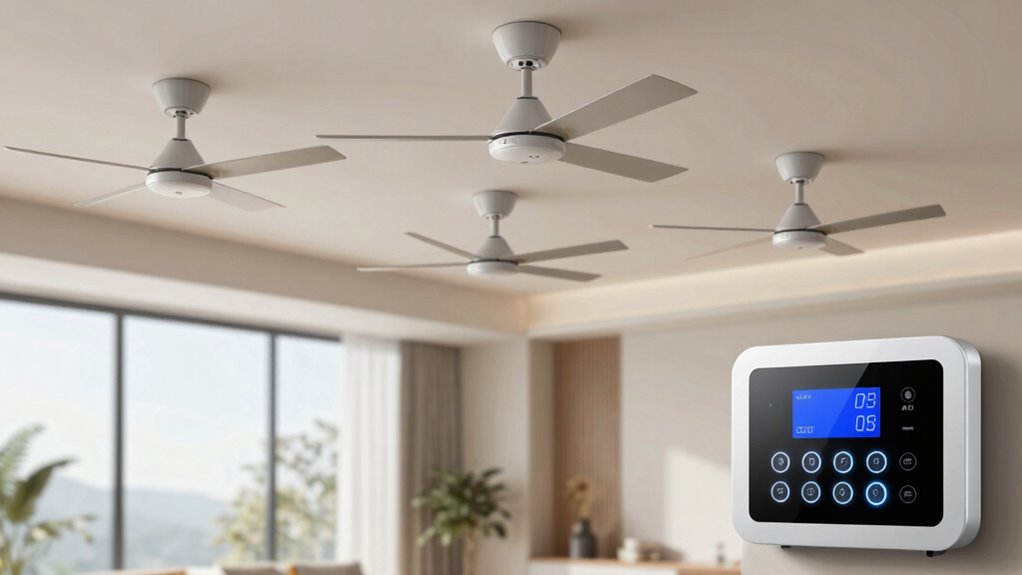
Ever wondered how to enhance your HVAC system’s efficiency and comfort? One of the most effective ways is to adopt a seasonal fan strategy that leverages your ceiling and portable fans to work smarter, not harder. When you use fans strategically, you can greatly improve energy efficiency and airflow optimization, reducing your reliance on your HVAC system and lowering energy bills. During warmer months, setting ceiling fans to rotate counterclockwise creates a cool breeze that cools the room without lowering the thermostat. This airflow promotes better air circulation, making you feel cooler even if the actual temperature remains unchanged. Conversely, in winter, reversing the fan blades to rotate clockwise helps circulate warm air trapped near the ceiling throughout the room, ensuring consistent temperature distribution and reducing the workload on your heating system.
Adjust fans seasonally to boost airflow, efficiency, and comfort year-round.
Implementing a seasonal fan strategy requires understanding how airflow impacts comfort. Fans don’t actually cool the air but create a wind-chill effect that makes you feel cooler. By adjusting your fans based on the season, you maximize their ability to enhance your HVAC system’s performance. During summer, synchronized operation of ceiling fans with your air conditioning system can allow you to set your thermostat a few degrees higher without sacrificing comfort. This reduces energy consumption and extends the lifespan of your AC unit. In winter, using fans to push warm air downward helps maintain a cozy environment without increasing the heat setting, again improving energy efficiency.
Another key component is guaranteeing airflow optimization within your home. Properly sized and positioned fans help distribute air evenly, preventing hot or cold spots. Keep your ceiling fans clean and well-maintained to ensure peak performance. Using smart controls or timers can help you automate fan operation, ensuring they run only when needed, which conserves energy. Additionally, combining fans with other energy-saving practices, like sealing leaks and insulating your home, amplifies the benefits of your seasonal fan strategy. Understanding airflow dynamics further empowers you to optimize your home’s comfort and efficiency. Incorporating home ventilation strategies can also support better airflow and air quality, ensuring a healthier living environment. Properly managing airflow patterns within your home can significantly impact energy use and comfort levels.
Ultimately, adopting a seasonal fan strategy isn’t just about comfort; it’s about making your HVAC system work smarter. By adjusting fan directions and operating times based on the season, you boost airflow optimization and improve energy efficiency. This approach minimizes your system’s workload, cuts down on energy costs, and extends its lifespan—all while maintaining a comfortable home environment year-round. Understanding airflow management and how it integrates with other home systems can help you achieve the best results. With a little planning and regular adjustments, you can enjoy a more efficient, cost-effective, and comfortable living space that adapts seamlessly to changing seasons.
ceiling fans with reversible blades
As an affiliate, we earn on qualifying purchases.
As an affiliate, we earn on qualifying purchases.
Frequently Asked Questions
How Often Should I Adjust My Fan Settings Seasonally?
You should adjust your fan settings seasonally, typically every few months, to optimize air circulation and fan placement. In summer, set your fan to circulate air more frequently to stay cool, while in winter, reduce its use to retain warmth. Regular adjustments guarantee your HVAC system works smarter, improves air flow, and maintains comfort, preventing energy waste and prolonging system life. Keep an eye on how your home feels and tweak accordingly.
Does Using Fans Increase Electricity Bills Significantly?
Using fans doesn’t necessarily blow up your electricity bills like a wildfire; instead, they’re more like gentle breezes that boost comfort without draining energy consumption. When used wisely, fans can cut down your reliance on air conditioning, leading to significant cost savings. They help circulate air efficiently, so your HVAC doesn’t work overtime. Overall, fans are smart allies in balancing comfort and cost, keeping bills manageable while maintaining a cool, pleasant home.
Can Fan Strategy Improve Indoor Air Quality?
Yes, using fans can improve indoor air quality by enhancing air circulation and promoting air purification. When you run fans strategically, they help disperse airborne pollutants and bring fresh air into your space. This reduces stagnation, prevents mold growth, and clears out dust and allergens. By boosting air circulation, fans support a healthier indoor environment, making your home more comfortable and reducing reliance on air purifiers or HVAC filters.
Are There Specific Fan Settings for Energy Efficiency?
Think of your fan settings as the gears in a well-oiled machine. To maximize energy efficiency, set your fan to the “Auto” mode, which adjusts based on your thermostat needs. Proper fan placement guarantees even airflow, while noise reduction features help you enjoy comfort without disruption. These settings save energy by running only when necessary, making your HVAC system work smarter, not harder.
How Does Fan Usage Impact HVAC System Lifespan?
Fan usage directly impacts your HVAC system’s lifespan, especially if you neglect fan maintenance or choose incompatible systems. Running fans too often can cause wear and tear, leading to early breakdowns. To avoid this, guarantee your fan settings match your system’s compatibility and schedule regular maintenance. Properly maintained fans reduce strain on your HVAC, extend its life, and improve efficiency, saving you money over time.
smart ceiling fan with remote control
As an affiliate, we earn on qualifying purchases.
As an affiliate, we earn on qualifying purchases.
Conclusion
Now that you’ve uncovered this seasonal fan strategy, imagine what your HVAC system could achieve all year round. The secret isn’t just in the technology, but in how you use it—adjusting, timing, optimizing. Are you ready to access these hidden efficiencies and take your comfort to the next level? Don’t wait—your smarter, more efficient HVAC system is just a fan away. The next season’s savings and comfort depend on what you do now.
As an affiliate, we earn on qualifying purchases.
HVAC airflow optimization products
As an affiliate, we earn on qualifying purchases.
As an affiliate, we earn on qualifying purchases.
Halloween Picks
halloween
As an affiliate, we earn on qualifying purchases.