
TL;DR

Get home appliances delivered free with Prime
- Fast, free delivery on millions of items
- Prime Video, Amazon Music and more included
- Member-only deals all year
Product descriptions for Apple’s announced Home hardware and partner accessories point to five possible Apple Home changes: NFC pairing, native Matter Binding, wider Thread use, more local control and expanded device management. The source report treats these as indications from product-page wording, not fully confirmed platform features; Apple has not clarified key technical details or third-party availability.
Apple’s announced HomeView display, updated Apple TV 4K and second-generation HomePod mini, along with accessories co-designed with LG Electronics and Schneider Electric, appear to point to broader changes in Apple Home. A report by Matter Alpha says product descriptions suggest NFC-based pairing, native Matter Binding and wider Thread support, though Apple has not confirmed that all five inferred platform features will be available as described.
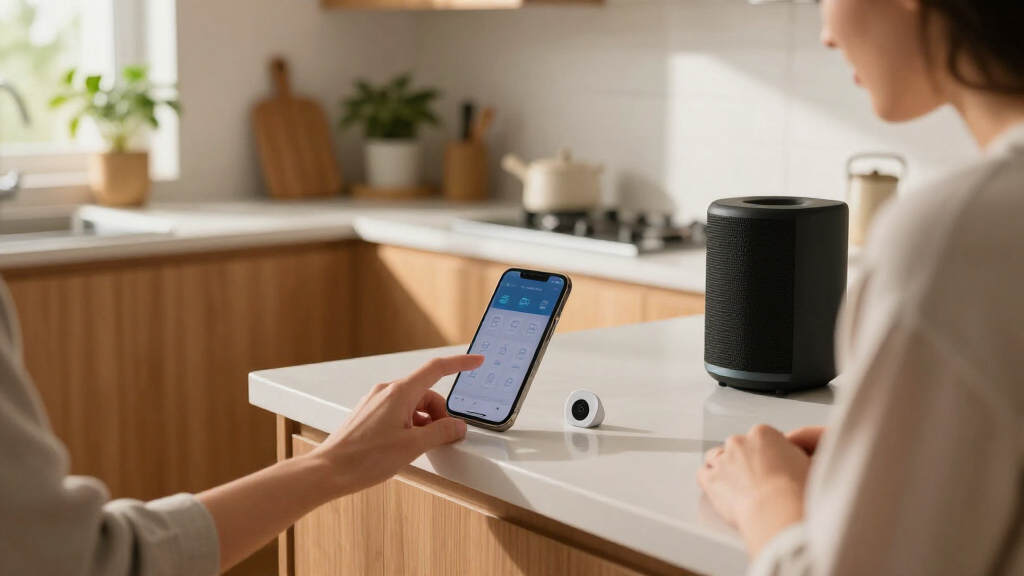
The clearest setup clue comes from descriptions for the LG Smart Thermostat and LG Smart Deadbolt Lock. Their pairing flow appears to let users tap an iPhone against an accessory to begin setup, rather than locate a QR code or enter a manual code. Matter Alpha says this could make commissioning easier for devices that are already mounted or in hard-to-reach places. Apple has not said whether the method uses the Connectivity Standards Alliance’s Matter 1.6 NFC commissioning standard or a proprietary Apple process.
A separate listing for the LG Temperature Sensor says it can pair through the Home app with the LG thermostat or other Matter-compatible thermostats to help balance room comfort. Matter Alpha interprets this as evidence that Apple may add Matter Binding to its app. Binding lets supported devices communicate directly on a local network, such as a sensor sending readings to a thermostat, without relying on a smart-home hub to relay each action.
The report also points to Thread radios across the Apple Home Collection, including cameras, a video doorbell, a deadbolt and thermostats. Its other suggested changes concern stronger local operation during internet or Wi-Fi interruptions and easier management of mixed-brand devices. The supplied product details do not establish the exact scope or user-facing controls for those capabilities, so they should be treated as indications rather than confirmed Apple Home features.
What Local Pairing Could Change
If these capabilities reach the Home app as described, they could make setup less cumbersome and improve how devices from different brands work together. Tapping an iPhone to an accessory would avoid scanning a code in a cramped installation area. Native Binding could let compatible sensors and thermostats continue communicating locally when a hub is unavailable, reducing dependence on cloud services or central routing for some automations.
More Thread-capable, mains-powered accessories could also add router nodes to a home’s low-power mesh network, potentially improving reach for battery-powered sensors. That may benefit households adding devices room by room without purchasing dedicated repeaters. These are potential outcomes, not performance guarantees: coverage depends on the devices, placement and network, while video traffic still requires a higher-bandwidth connection such as Wi-Fi.
The broader significance is whether Apple makes these functions available beyond its co-designed products. A standard Matter implementation could help customers mix brands and encourage more manufacturers to support common setup and control features. If access is limited to Apple Home Collection hardware or Apple-specific software, the effect on the wider Matter ecosystem would be narrower.
Products Worth Considering

Blueair Blue Pure 511i Max Smart Air Purifier

Samsung 43-Inch M70H Series 4K Mini LED Smart TV (2026)

Google Nest Learning Thermostat (4th Gen) with Nest Temperature Sensor (2nd Gen), Silver
As an affiliate, we earn on qualifying purchases.
How the Product Clues Emerged
Apple’s announcement combined new home hubs with a partner accessory range developed with LG Electronics and Schneider Electric. Matter Alpha says the main attention went to the screens and processors, while details on accessory product pages suggested platform changes. Its account identifies five areas: NFC onboarding, Matter Binding, Thread in partner devices, improved local access and device-management changes.
The distinction between a product specification and a platform announcement matters here. A listing describing a sensor’s compatibility with a thermostat can indicate a planned feature, but it does not by itself confirm how Apple will implement that connection, which Matter version it will use or what other manufacturers can access. The report also notes that other companies have offered forms of NFC pairing or Matter Binding through their own apps; those precedents do not confirm Apple’s implementation.
The source report says the new devices are expected to ship in December. It does not provide a year in the supplied material, and it does not quote an Apple statement confirming the inferred platform features.
“The setup flow described for the new LG Smart Thermostat and LG Smart Deadbolt Lock suggests that tap-to-pair NFC commissioning is coming to the Apple Home onboarding experience.”
— Matter Alpha, describing the LG accessory listings
Details Apple Has Not Settled
The main unresolved issue is whether NFC commissioning follows the Matter 1.6 standard or uses an Apple-specific method. It is also unclear whether third-party manufacturers will be able to use the same setup flow, or whether it will be limited to Apple Home Collection accessories.
Apple has not confirmed that the Home app will expose Matter Binding controls, which device types will support them, or whether a bound connection will keep working under every hub or network failure condition. The source material also does not specify what the other suggested management and local-access changes involve, or how they would be configured. Until Apple publishes technical documentation or the products ship, the five changes remain a mix of product-page clues and report interpretation.
What to Watch at Launch
The next useful evidence should come from Apple’s final product specifications, Home app software and device testing as the announced accessories approach their reported December availability. Those materials can show whether NFC pairing appears in the shipping setup flow, whether the app supports Matter Binding directly, and which devices can participate.
Readers should also watch for confirmation of Matter version support, Thread behavior during internet outages and compatibility with accessories from other manufacturers. Until Apple or the device makers publish those details, it is not possible to say how broadly the changes will apply or whether every feature described by Matter Alpha will ship.
Key Questions
Has Apple confirmed all five Apple Home changes?
No. Matter Alpha inferred the changes from product-page details. The supplied material does not include Apple confirmation of all five features or their scope.
What is NFC pairing supposed to do?
It would let a user tap an iPhone against an accessory to start pairing, potentially avoiding a printed QR code or manual setup code. Whether Apple will use the standard Matter 1.6 method remains unclear.
What does Matter Binding mean for a smart home?
Matter Binding allows supported devices, such as a sensor and thermostat, to communicate directly over a local network. That can reduce reliance on a central hub to relay an action, but Apple’s support and device requirements have not been confirmed.
Will Thread accessories work if Wi-Fi goes down?
The report says Apple’s product information describes Thread accessories as remaining accessible when a home Wi-Fi connection drops. That does not mean every function will continue: video still needs a higher-bandwidth connection, and Apple has not detailed the limits of offline access.
When are the new devices expected?
Matter Alpha says the devices are expected to ship in December. The supplied report does not state the year or provide a more precise release date.
Source: rss