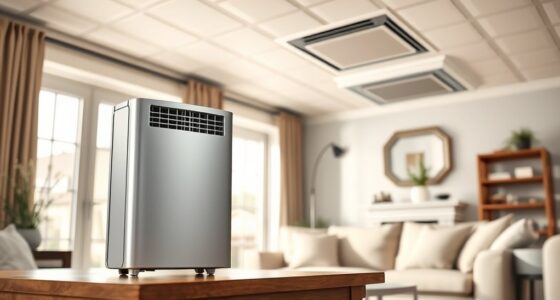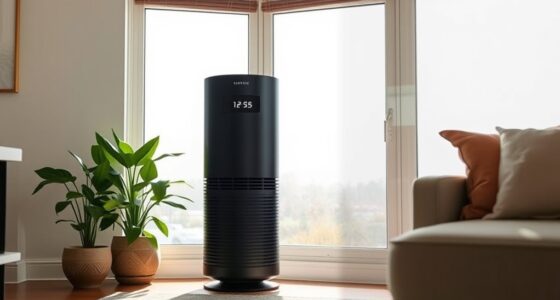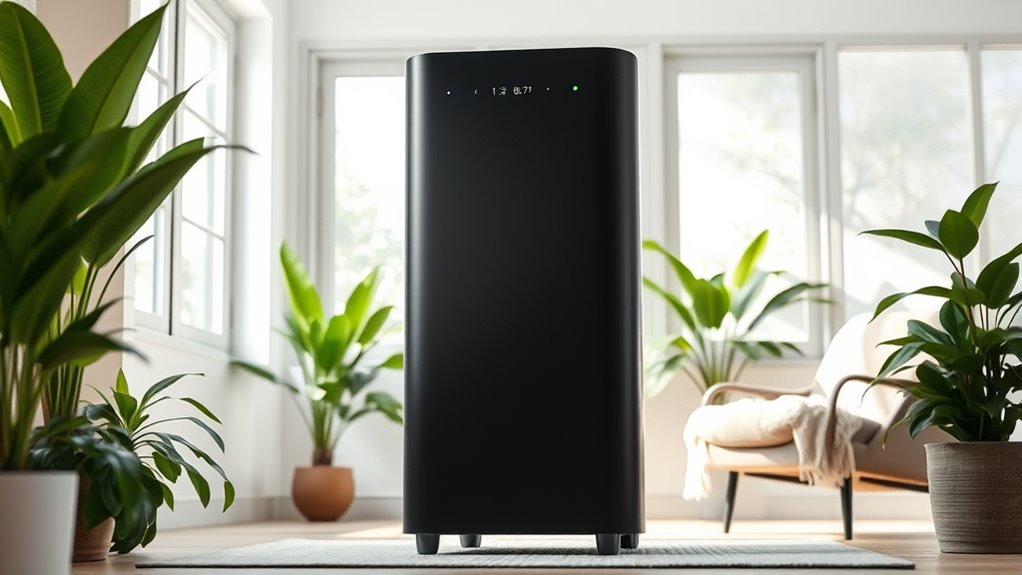

Wi-Fi isn’t essential for a smart air purifier to clean your air effectively, but it offers many benefits. With Wi-Fi, you can control the device remotely, receive real-time air quality updates, and customize settings easily. Many models adjust automatically based on environmental sensors, ensuring cleaner air without much effort. If you’re interested in convenience and smarter features, exploring Wi-Fi-enabled options can enhance your indoor air quality experience—there’s more to uncover if you keep looking.

Get home appliances delivered free — and shop member deals
- Fast, free delivery on millions of items
- Access to Prime Big Deal Days deals on October 6–7
- Prime Video, Amazon Music and more included
Key Takeaways
- Wi-Fi enables remote control and real-time air quality monitoring for better convenience and management.
- Connected purifiers can automatically adjust settings based on indoor air quality data.
- Wi-Fi allows integration with smart home systems and voice assistants for hands-free operation.
- Not all effective purifiers require Wi-Fi; many work well with manual controls.
- Wi-Fi-capable models typically offer enhanced features but may consume more energy and cost more.
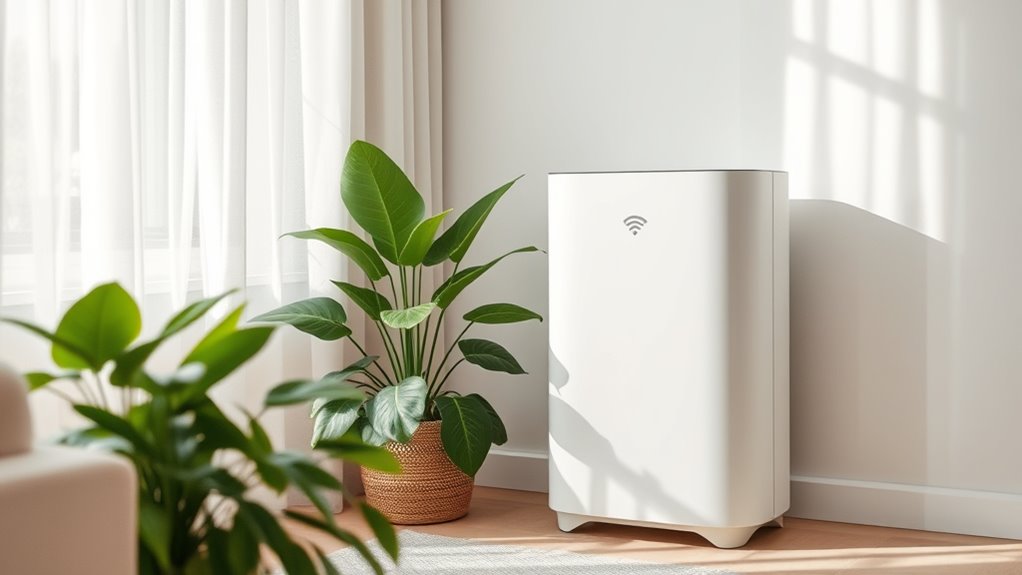
Have you ever wondered how modern technology can help improve the air you breathe? Smart air purifiers are changing the way you approach indoor air quality, offering more convenience and control than ever before. These devices use advanced filtering technology to capture pollutants like dust, pollen, pet dander, and even microscopic bacteria and viruses. With smart features, you can monitor and manage your air quality remotely, ensuring your space stays fresh without constantly checking on the purifier itself.
One of the main benefits of smart air purifiers is their ability to leverage filtering technology effectively. They often incorporate HEPA filters, activated carbon filters, or a combination of both to target a wide range of airborne contaminants. These filters work efficiently, often capturing particles as small as 0.3 microns, which is essential for maintaining a healthier environment. Plus, many models automatically adjust their operation based on real-time air quality readings, so you don’t have to manually change settings constantly. This automatic adjustment not only improves air quality but also conserves energy, making the device more energy efficient overall.
Smart air purifiers use HEPA and activated carbon filters to efficiently remove airborne pollutants and automatically adjust for optimal air quality.
Energy efficiency is a key factor when considering a smart air purifier, especially if you plan to run it continuously. Modern units are designed to consume less power while maintaining high performance. They often include features like auto mode, where the purifier ramps up or down depending on the detected air quality, reducing unnecessary energy use. Not only does this help cut down your electricity bills, but it also benefits the environment by reducing your carbon footprint. With Wi-Fi connectivity, you can schedule your purifier to operate only when needed, further optimizing energy consumption.
A Wi-Fi connection adds significant value to these devices. It allows you to control your air purifier from anywhere using a smartphone app, giving you real-time updates on air quality and enabling remote adjustments. Imagine arriving home after a long day, and with a few taps, you can turn on your purifier, set it to a higher fan speed, or check if the air quality has improved—all without leaving your couch. Many smart purifiers also integrate with voice assistants like Alexa or Google Assistant, making it even easier to manage your indoor air quality hands-free.
In essence, whether you need Wi-Fi isn’t just about convenience; it’s about optimizing your indoor environment efficiently. Smart air purifiers equipped with filtering technology and energy-saving features empower you to breathe cleaner air without wasting energy or effort. They adapt to your lifestyle, offer peace of mind, and help create a healthier home environment—making the investment well worth it. Additionally, choosing models with air quality sensors can further enhance their effectiveness by providing more precise adjustments based on real-time conditions.
Frequently Asked Questions
Can Smart Air Purifiers Improve Air Quality Without Wi-Fi?
You can definitely improve air quality without Wi-Fi by choosing a smart air purifier that doesn’t rely on app control. Many devices offer manual settings and filters that work independently, ensuring device compatibility and effective air cleaning. While Wi-Fi adds convenience for remote control and monitoring, it’s not essential. Focus on the purifier’s features, filtration system, and user-friendly controls to maintain cleaner air without needing internet connectivity.
Are Wi-Fi-Enabled Purifiers More Energy-Efficient Than Traditional Models?
Wi-Fi-enabled purifiers often use more energy because they maintain constant connectivity and run additional features like app control. However, they can optimize energy consumption through smart scheduling and remote adjustments, saving power in the long run. Device compatibility also plays a role; newer models integrate better with home systems, improving efficiency. Overall, while they might consume slightly more energy initially, smart features can help reduce overall energy use.
How Secure Is My Data When Using a Wi-Fi Connected Air Purifier?
Think of your Wi-Fi-connected air purifier as a guarded castle. While it’s designed to protect your data with encryption, privacy concerns remain, just like a castle’s watchful guards. Your data is generally safe, but vulnerabilities can exist if security updates aren’t installed. To keep your information secure, make certain your device uses strong data encryption and updates regularly. Stay vigilant, and you’ll enjoy cleaner air without risking your privacy.
Do Wi-Fi Purifiers Require Professional Installation or Setup?
Wi-Fi purifiers usually don’t require professional installation; they’re designed for easy user setup. Most models have straightforward installation processes, involving plugging in the device, connecting to your Wi-Fi, and downloading a user app. The installation complexity is minimal, so you can set it up yourself quickly. Just follow the manufacturer’s instructions, and you’ll have your purifier operational without needing any technical expertise or professional assistance.
Can Multiple Smart Air Purifiers Be Controlled Simultaneously?
Think of your smart air purifiers as a symphony of clean air, all playing in harmony. Yes, you can control multiple devices simultaneously through group control and device synchronization. This means you can orchestrate the entire air-cleaning process with a tap, ensuring consistent freshness across rooms. No need to juggle each purifier individually—just sync them up and enjoy the seamless flow of purified air, effortlessly.
Conclusion
If you’re considering a smart air purifier, think about whether Wi-Fi is essential for your needs. While Wi-Fi-enabled models offer remote control and app integration, they aren’t necessary for basic air cleaning. Imagine a purifier working silently, filtering your air without any internet connection—proving that simple, offline devices can still do the job well. Ultimately, choose what suits your lifestyle, whether that’s connectivity or straightforward efficiency. Clean air doesn’t always require smart features.
NFL season / tailgating Picks
team gear
As an affiliate, we earn on qualifying purchases.