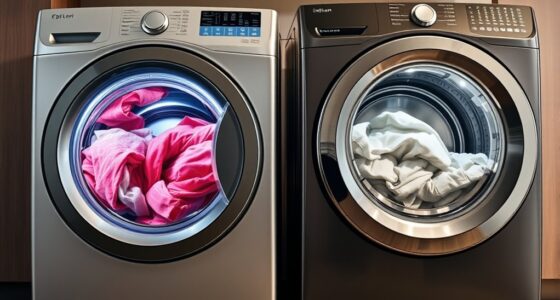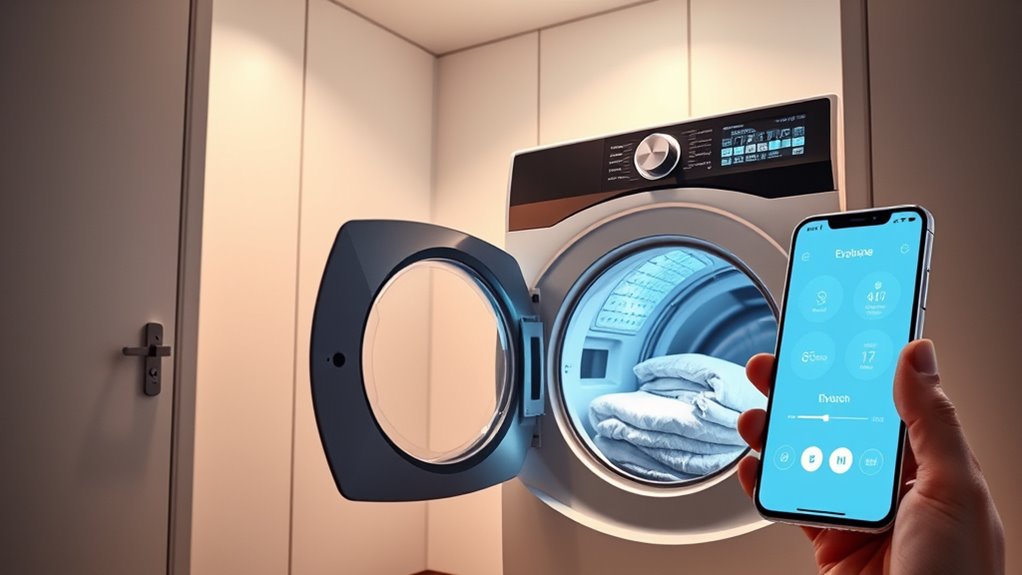

To reduce drying time with smart dryer settings, use sensor dry or eco modes that automatically adjust based on moisture levels. Make sure to load your dryer properly, avoiding over or underloading, and keep sensors clean for peak performance. Select the right cycle for your fabric type to speed up drying and prevent over-drying. If you want to learn more tips on maximizing your dryer’s efficiency, keep exploring these helpful strategies.
Key Takeaways
- Use moisture sensor settings like “sensor dry” or “eco mode” for automatic, efficient drying.
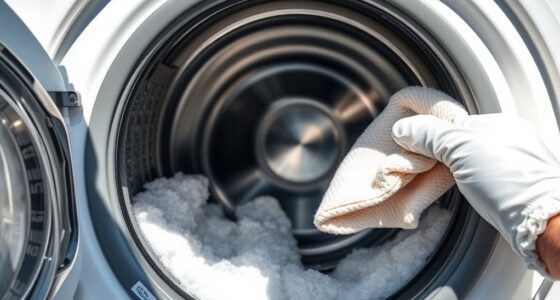
- Keep moisture sensors clean and free of lint to ensure accurate moisture detection.
- Load the dryer properly with balanced, not overcrowded, clothes to improve air circulation and drying speed.
- Select the appropriate cycle based on fabric type and load moisture level to optimize drying time.
- Regularly maintain and inspect sensors and dryer components to ensure consistent, energy-efficient performance.
Drying time can often feel like the longest part of any project, but there are practical steps you can take to speed it up. One of the most effective ways is by enhancing your dryer’s smart settings, especially those designed to boost energy efficiency. Modern dryers equipped with moisture sensors can dramatically reduce drying time by precisely detecting when your clothes are dry, eliminating unnecessary cycles. These sensors monitor the moisture level in your laundry, allowing the dryer to automatically shut off once the perfect dryness is achieved. This not only shortens drying times but also conserves energy, saving you money on utility bills and extending the lifespan of your appliance.
When you use moisture sensors properly, you avoid over-drying your clothes, which is common with traditional timers that run until manually stopped. Over-drying wastes energy and can damage fabrics, so relying on sensor technology ensures your clothes are dried efficiently and gently. To maximize this feature, make sure your dryer’s sensors are clean and unobstructed, as lint or residue can impair their accuracy. Regular maintenance of these sensors helps keep drying times minimized and energy consumption low. Additionally, selecting the right drying cycle for your load can boost efficiency. Many smart dryers offer specialized settings such as “eco mode” or “sensor dry” options, which tailor the drying process based on moisture levels, resulting in faster, more energy-efficient drying.
Another helpful tip is to properly load your dryer, ensuring good air circulation around each item, which is essential for quicker drying. Your approach to loading the dryer also impacts drying time. Avoid overloading the drum, as densely packed laundry prevents air circulation and prolongs drying. Conversely, underloading can be inefficient as well, since it doesn’t utilize the dryer’s capacity effectively. Aim for a balanced load that allows air to circulate freely around each item, ensuring moisture is extracted quickly. Using the proper cycle and load size in conjunction with moisture sensors makes a noticeable difference in reducing overall drying time and energy use.
Frequently Asked Questions
Can Smart Dryers Learn My Preferred Drying Settings Over Time?
Yes, smart dryers can learn your preferred drying settings over time. They use machine learning algorithms to analyze your user preferences and drying habits. As you use the dryer, it adjusts its settings automatically to match your desired results, saving you time and energy. Over time, the dryer becomes better at predicting your needs, making your laundry routine more efficient and personalized without requiring manual adjustments each cycle.
Are There Specific Fabric Types That Dry Faster With Smart Settings?
They say, “know your enemy,” but in this case, knowing your fabric can speed things up. With smart dryer settings, fabric-specific cycles help you dry faster by adjusting heat and time accordingly. Lightweight fabrics like polyester or nylon tend to dry quicker, while heavy towels or denim take longer. Using these tailored settings guarantees ideal drying speed, saving you time and energy every load.
How Do Smart Dryers Detect When Clothes Are Fully Dry?
Smart dryers detect when your clothes are fully dry using advanced sensor technology. They rely on moisture detection sensors, which monitor the moisture levels in your laundry throughout the cycle. When these sensors sense that the moisture has dropped to an ideal level, the dryer automatically stops, preventing over-drying and saving energy. This precise moisture detection ensures your clothes are perfectly dry without unnecessary running time.
Do Energy-Efficient Cycles Impact Drying Time?
Did you know energy-efficient cycles can cut drying time by up to 20%? When you select eco-friendly cycles or energy-saving modes, your smart dryer adjusts heat and duration to save power. While these settings help reduce energy use, they might slightly extend drying time compared to standard cycles. However, many models optimize drying efficiency, balancing eco-friendliness with quick results, so you get dry clothes without wasting energy.
Can Smart Dryer Settings Prevent Over-Drying and Fabric Damage?
Smart dryer settings can help prevent over-drying and fabric damage by adjusting drying time based on load type and moisture levels. You should still use fabric softener to keep clothes soft and lint removal to maintain dryer efficiency. These settings optimize drying, reducing wear and tear on your fabrics while saving energy. This way, your clothes stay in good condition longer, and you avoid unnecessary damage.
Conclusion
By mastering your smart dryer’s settings, you’re taking control like a skilled captain steering a ship through calm waters. Adjusting the cycle and moisture sensors guarantees your clothes dry efficiently, saving time and energy. Remember, even Sherlock would say, “The game is afoot,” when you uncover these simple tricks. Embrace these tips, and you’ll find drying becomes swift and effortless, turning what once felt like an endless task into a quick, manageable routine.