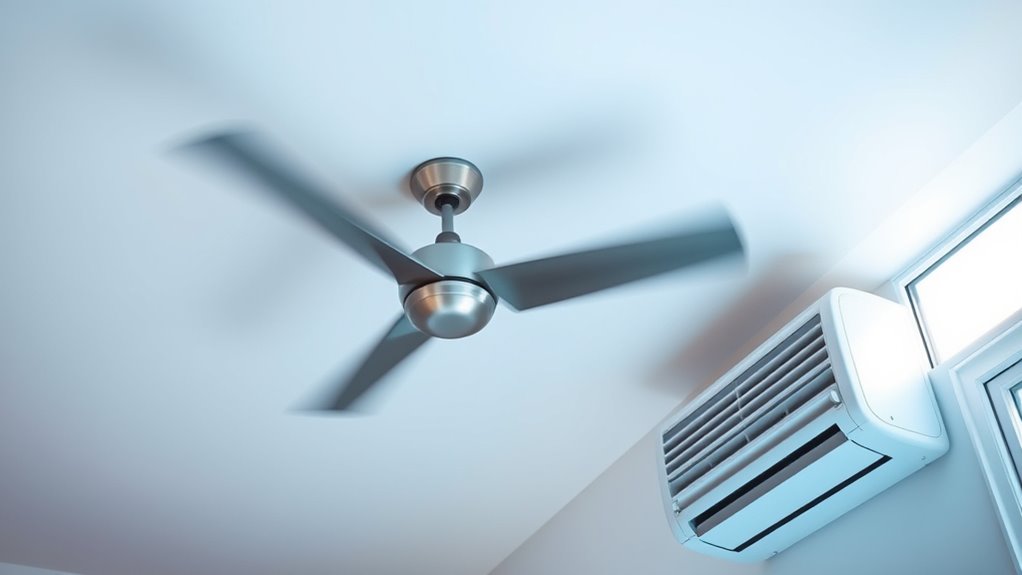

To balance temperature when using ceiling fans and air conditioning together, set your fan to spin counterclockwise in summer to push cool air downward, and raise your thermostat slightly to save energy. Use the fans to circulate air efficiently, making your room feel cooler without lowering the ac setting too much. Remember to turn off fans when rooms are empty. For more tips on optimizing your setup for comfort and savings, keep exploring.
Key Takeaways
- Use ceiling fans to circulate air and distribute cooled air evenly, reducing hot spots and enhancing overall comfort.
- Set the AC thermostat higher when running fans to save energy without sacrificing comfort.
- Adjust fan direction seasonally: counterclockwise in summer for cooling, clockwise in winter for warmth.
- Turn off fans when rooms are unoccupied to prevent unnecessary energy use and maximize efficiency.
- Combine ceiling fans with AC for optimal cooling, lowering energy bills and extending the lifespan of your air conditioning system.
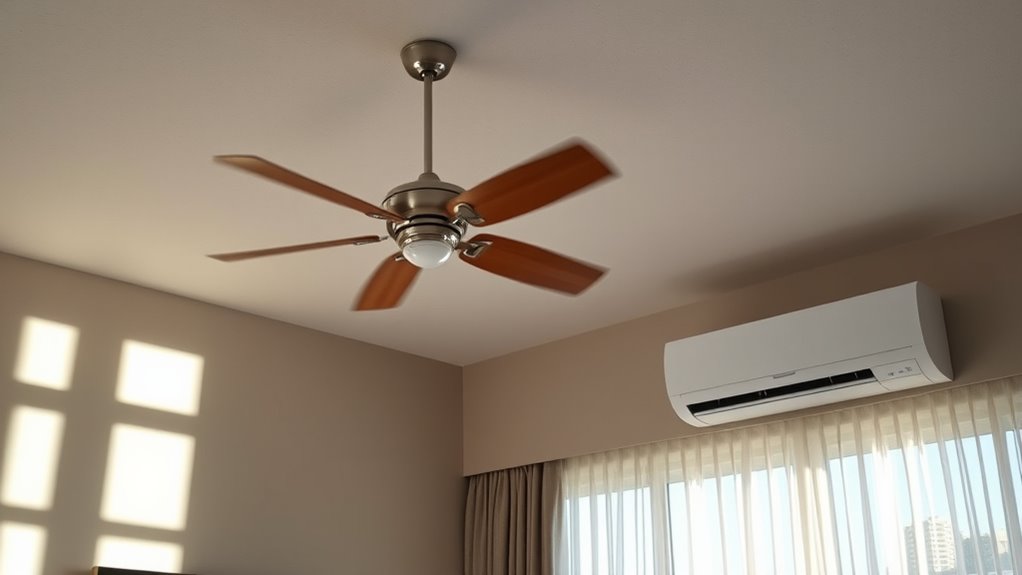
Using ceiling fans alongside your air conditioner can be an effective way to enhance cooling efficiency and save energy. When you run both together properly, you can feel cooler at higher thermostat settings, which reduces your AC’s workload and lowers your energy bills. The key lies in understanding how to optimize their use for maximum air circulation and energy efficiency.
Ceiling fans help distribute cool air more evenly throughout a room, reducing hot spots and creating a comfortable environment without relying solely on the AC. When the fan blades turn counterclockwise in summer, they push air downward, creating a breeze that makes you feel cooler. This breeze enhances your body’s natural cooling process through evaporation, so you don’t need to run the AC at its lowest setting. By raising the thermostat a few degrees and relying on the fan to circulate air, you conserve energy while maintaining comfort. This approach not only cuts costs but also prolongs the lifespan of your air conditioning system by reducing its operational strain.
Ceiling fans distribute cool air evenly, reducing hot spots and saving energy by allowing higher thermostat settings.
Air circulation is central to this strategy. Properly positioned ceiling fans can markedly improve airflow, preventing stagnant air and uneven temperatures. Keep in mind that fans cool people, not rooms, so it’s important to turn them off when the room is unoccupied to avoid unnecessary energy use. When used correctly, ceiling fans allow you to set your AC at a higher temperature without sacrificing comfort, which translates to less energy consumption and a smaller environmental footprint. This synergy between fans and air conditioning maximizes efficiency, especially during peak summer months when cooling demands spike.
Another tip for balancing temperature is to ensure your ceiling fan’s direction is appropriate for the season. During summer, blades should spin counterclockwise to create a breeze, while in winter, reversing the direction helps distribute warm air that rises to the ceiling. This seasonal adjustment enhances overall air circulation and maintains a stable, comfortable temperature in your home.
Additionally, understanding the contrast ratio of your air conditioning system can help optimize cooling performance and energy efficiency by ensuring your system effectively manages dark and bright scenes, similar to how projectors balance black levels for clear images.
Frequently Asked Questions
Can Ceiling Fans Lower Room Temperature Directly?
Ceiling fans can’t directly lower room temperature, but they boost cooling efficiency by creating a breeze. Your fan’s blade design plays a key role in airflow, helping you feel cooler even if the air isn’t warmer. By circulating air effectively, fans make the room feel more comfortable, reducing reliance on air conditioning. Remember, fans don’t change the temperature—they enhance your comfort by improving airflow and cooling efficiency.
Do Ceiling Fans Increase Energy Costs When Used With AC?
Think of your energy bill as a garden needing careful watering. When you run ceiling fans with your AC, they can actually help lower energy consumption by making the cool air feel more comfortable, which may reduce your AC’s workload. While fans do use some power, their cost efficiency often outweighs the extra energy cost, making them a smart way to keep your home cool without skyrocketing your bills.
How Should I Position Ceiling Fans for Optimal Cooling?
To optimize cooling, you should focus on proper ceiling fan placement and fan blade angles. Position your fan so it circulates air across the room, ideally near the center and away from walls. Adjust the fan blade angles to create a gentle, downward airflow that enhances cooling without causing drafts. Remember, reversing the fan direction seasonally helps; clockwise in winter, counterclockwise in summer for efficient comfort.
Are There Specific Fan Speeds Recommended for Combined Use?
Did you know that using the right fan speed settings can cut your energy costs by up to 15%? When combining ceiling fans with your AC, it’s best to keep fans on a medium or low setting to maximize energy efficiency and avoid overcooling. High speeds can waste energy and create uneven cooling, so adjust your fan speed based on your comfort and room temperature for ideal comfort and savings.
How Often Should I Maintain Ceiling Fans in a Climate-Controlled Room?
You should maintain your ceiling fans at least once a year in a climate-controlled room. During maintenance, focus on fan blade cleaning to keep airflow efficient and perform fan motor lubrication to prevent noise and ensure smooth operation. Regular fan blade maintenance also helps avoid dust buildup, which can reduce cooling effectiveness. Proper maintenance keeps your fan running quietly and efficiently, helping you stay comfortable without overworking your AC.
Conclusion
By using your ceiling fan and AC together wisely, you’ll keep your home comfortable without skyrocketing energy bills. Remember, even in this age of smart gadgets, sometimes the simplest tricks—like turning on the fan before the AC—work best. Think of it like Shakespeare’s advice: “If music be the food of love, play on,” but in your case, “if cooling is the goal, use fan and AC in harmony.” Balance is key to a cozy, efficient space.