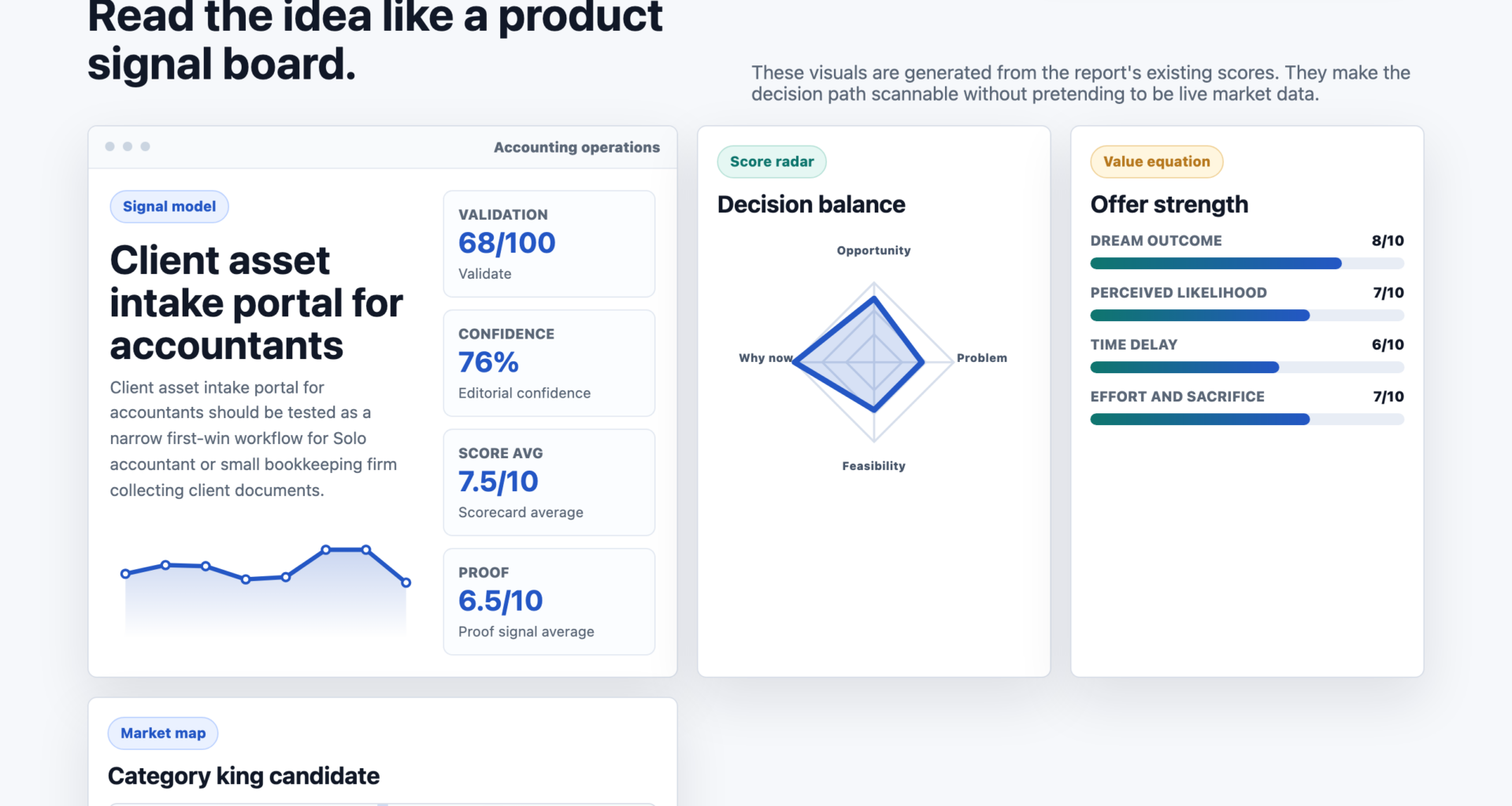

📊 Full opportunity report: Client asset intake portal for accountants on IdeaNavigator AI — validation score, market gap, and execution plan.

Get home appliances delivered free — and shop member deals
- Fast, free delivery on millions of items
- Access to Prime Big Deal Days deals on October 6–7
- Prime Video, Amazon Music and more included
TL;DR
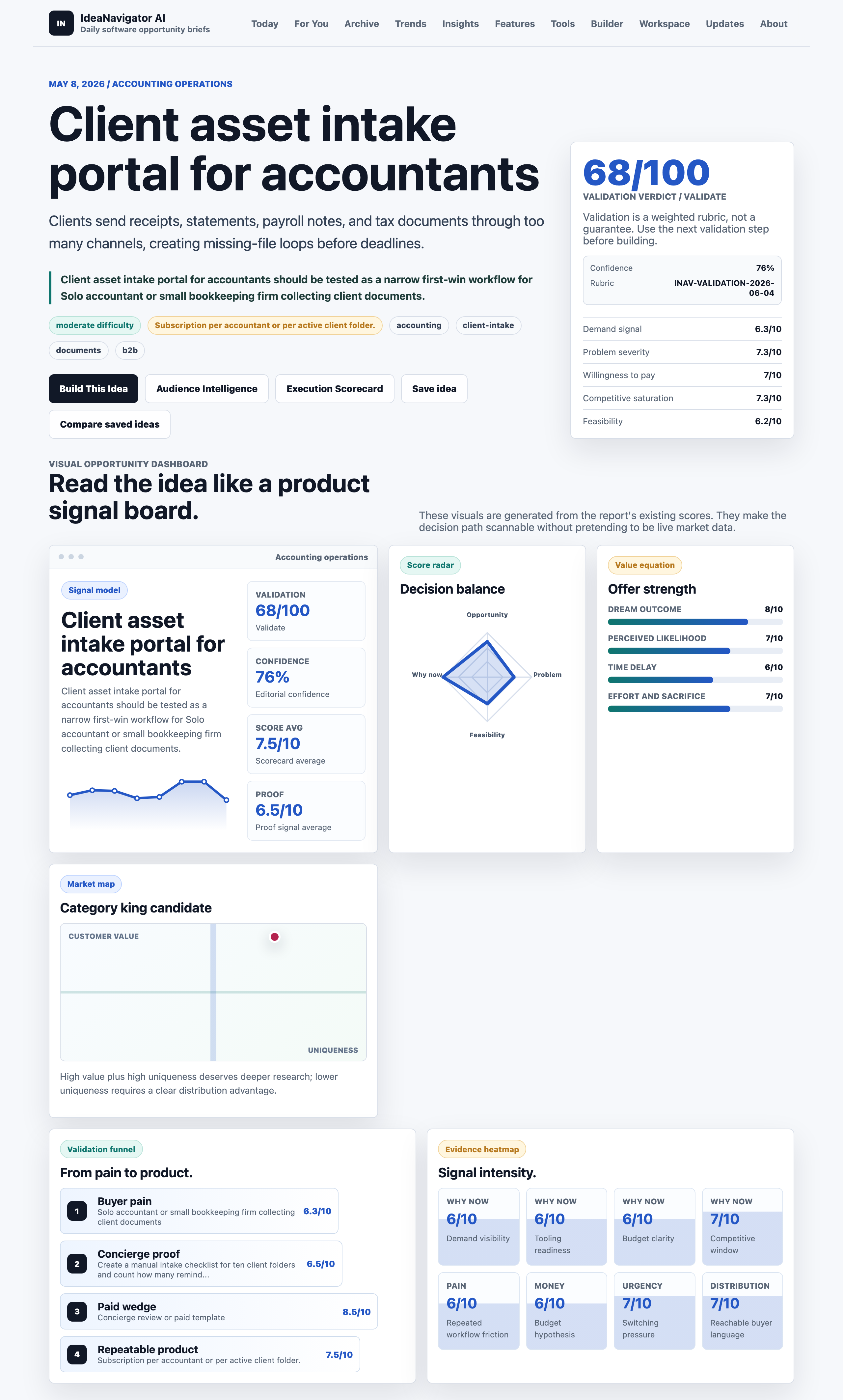
A prototype client asset intake portal for solo accountants and small bookkeeping firms is being tested to simplify document collection. Early validation involves tracking how many reminder loops are eliminated. This development could improve efficiency and client service for small firms.
A new client asset intake portal designed for solo accountants and small bookkeeping firms is entering a testing phase to improve the process of collecting client documents and reduce administrative inefficiencies.
The portal features a client-facing checklist that tracks required files, monitors upload status, identifies missing items, and sends reminder messages. It is intended as a minimal viable product (MVP) to streamline workflows and eliminate common communication loops that delay compliance before tax deadlines. The initial validation involves creating manual checklists for ten client folders and measuring how many reminder loops are avoided, with the goal of demonstrating tangible efficiency gains.This development is targeted at small firms under pressure to serve more clients without increasing administrative staff. The subscription-based model proposes charging per accountant or per active client folder, making it accessible for solo practitioners and small teams.
Why It Matters
This initiative could significantly impact small accounting practices by reducing time spent on administrative follow-ups, thereby allowing firms to serve more clients efficiently. It addresses a common pain point—clients sending documents through multiple channels, leading to missing files and last-minute rushes. If successful, it could set a new standard for client onboarding and document collection in the accounting industry, especially for firms with limited administrative resources.
client document upload portal for accountants
As an affiliate, we earn on qualifying purchases.
As an affiliate, we earn on qualifying purchases.
Background
Small accounting firms face increasing pressure to handle more clients with limited staff, especially as compliance deadlines tighten. Currently, many rely on manual, multi-channel communication methods for collecting client documents, which often results in delays and missing files. The concept of a dedicated intake portal has been discussed as a way to streamline this process, but practical testing and validation are still in early stages. This effort aligns with broader trends toward automation and digital workflows in accounting operations.
“The intake portal aims to reduce the number of reminder loops and missing file issues, ultimately saving time and improving client communication.”
— an anonymous researcher
accounting firm document management software
As an affiliate, we earn on qualifying purchases.
As an affiliate, we earn on qualifying purchases.
What Remains Unclear
It is not yet clear how well the portal will perform in real-world settings or how much it will reduce administrative overhead. The validation process is still in the early testing phase, and broader adoption depends on the results of initial trials.
client onboarding checklist software
As an affiliate, we earn on qualifying purchases.
As an affiliate, we earn on qualifying purchases.
What’s Next
The next step is to complete the manual checklist testing for the initial ten client folders and analyze the reduction in reminder loops. If results are positive, the portal may undergo further development and wider rollout, potentially including automation features and integration with existing accounting software.
small business client intake portal
As an affiliate, we earn on qualifying purchases.
As an affiliate, we earn on qualifying purchases.
Key Questions
How will the portal be implemented in small accounting firms?
The portal will initially be tested as a manual checklist system, with plans to develop an automated, client-facing interface based on early validation results.
What are the costs associated with using the portal?
The proposed revenue model is a subscription fee charged per accountant or active client folder, making it affordable for solo practitioners and small firms.
Will the portal integrate with existing accounting software?
This feature is not yet confirmed; initial testing focuses on manual workflows. Integration may be considered in future development phases based on user feedback.
When will the portal be available for broader use?
There is no confirmed rollout timeline yet. The next steps depend on the success of initial testing and validation results.
Source: IdeaNavigator AI
NFL season / tailgating Picks
team gear
As an affiliate, we earn on qualifying purchases.